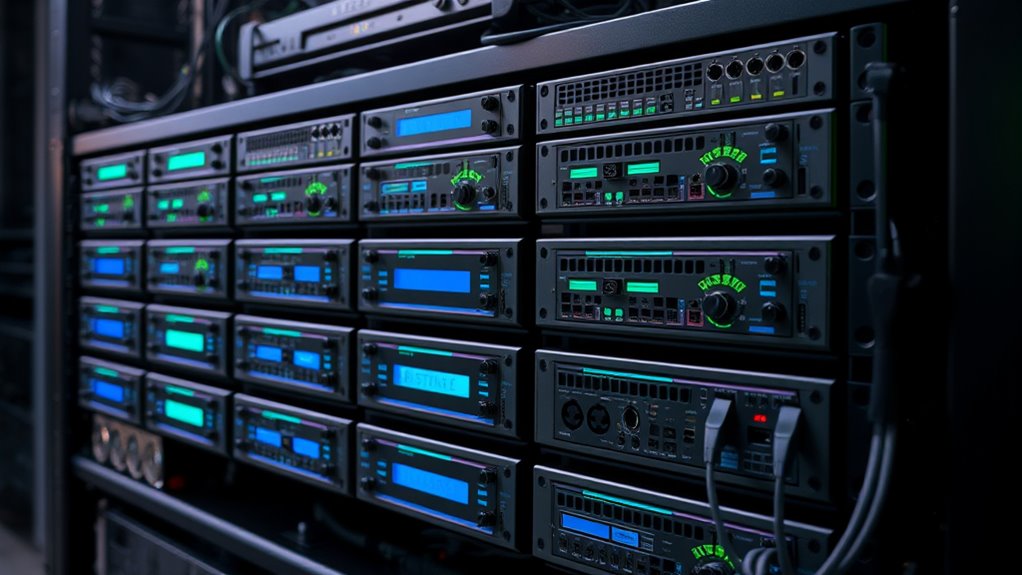
For anyone exploring Dante network audio devices, the key considerations are performance, compatibility, and ease of use. The Audinate Dante AVIO – 2-Channel Analog Output Adapter stands out as the best overall choice for its versatility and reliable audio quality. The RME Digiface Dante offers advanced features suited for professional studios, while the ToVi Dante XLR Audio Encoder is ideal for live sound applications with its high-resolution support. However, buyers face tradeoffs between affordability, expandability, and feature complexity. Continue reading for a detailed breakdown of the top options and their best use cases.

Get business pricing on networking and server gear
- Business-only prices and quantity discounts
- Tax-exempt purchasing
- Multiple users, one account, clear invoices
Key Takeaways
- The top picks balance between professional-grade performance and user-friendly features.
- Many devices share compatibility with AES67, but true interoperability varies by implementation.
- Build quality and power options (PoE vs. external power) significantly impact deployment flexibility.
- Analog and digital connectivity options define the device’s suitability for different audio setups.
- Price points reflect differing levels of expandability and feature sets, requiring buyers to prioritize their needs.
| Audinate ADP-AES3-AU-2X2 Dante AVIO AES3 IO Adapter |  | Best for Digital AES3/EBU Integration | Input/Output: 2 AES3/EBU ports | Compatibility: Dante audio networks | VIEW ON AMAZON | See Our Full Breakdown | |
| Audinate Dante AVIO – 2-Channel Analog Output Adapter |  | Best for Analog Output in Dante Networks | Channels: 2 | Type: Analog Output Adapter | VIEW ON AMAZON | See Our Full Breakdown | |
| ToVi Dante XLR Audio Encoder – 2CH XLR to Dante Converter, 96kHz/24bit, AES67, PoE & USB-C Powered |  | Best for High-Resolution Professional Audio Conversion | Interface: XLR | Channels: 2 | Audio Output Mode: Dante | VIEW ON AMAZON | See Our Full Breakdown |
| RME Digiface Dante |  | Best High-Channel Count Interface | Input/Output: 128 Dante in/out, MADI, USB 3.0 | Sample Rate: 24-bit/192kHz | Power: Bus powered | VIEW ON AMAZON | See Our Full Breakdown |
| ToVi Dante Optical Decoder – 2CH Network Audio to Optical TOSLINK, AES67 Compatible, 96kHz/24bit, PoE or USB-C |  | Best for Dante to Optical Conversion | Audio Channels: 2 | Supported Sample Rate: 44.1kHz to 96kHz | Bit Depth: 16/24-bit | VIEW ON AMAZON | See Our Full Breakdown |
| Dante 2 Channel AVIO Analogue Output Adapter |  | Best for Simple Analog Output Integration | Sample Rate: 44.1, 48, 96kHz | Bit Depth: 24bit | Power: PoE | VIEW ON AMAZON | See Our Full Breakdown |
| Dante Audio 2-Channel Analog Input Adapter, PoE, Aluminum Housing |  | Best for Versatile Analog Input with Durability | Channels: 2 | Power Options: PoE, USB-C | Housing Material: Aluminum | VIEW ON AMAZON | See Our Full Breakdown |
| ToVi Dante USB to Network Audio Adapter – 2-Channel Audio Converter for Dante Network |  | Best for Studio and Broadcast Integration | Audio Resolution: 24-bit | Sampling Rates: 44.1kHz, 48kHz, 96kHz | Compatibility: AES67, Dante | VIEW ON AMAZON | See Our Full Breakdown |
| Audinate ADP-USBC-AU-2X2 Dante AVIO USB-C I/O Adapter |  | Best Rugged USB-C Dante Interface | Audio Channels: 2 inputs, 2 outputs | Digital Resolution: 24-bit / 48 kHz | Connectivity: RJ45, USB Type-C | VIEW ON AMAZON | See Our Full Breakdown |
| Audinate Dante AVIO – USB Adapter I/O 2-CH |  | Best for Basic USB Dante Connectivity | Connectivity: USB | Channels: 2-channel bidirectional | Power: PoE or USB | VIEW ON AMAZON | See Our Full Breakdown |
| Dante AVIO 1-Channel Analog Output Adapter |  | Best for Simple Mono Output Integration | Number of channels: 1 | Output type: Analog | Signal level: +18dBu / +4dBu / 0dBu / 0dBV / -10dBV | VIEW ON AMAZON | See Our Full Breakdown |
| Dante Audio 4 Channel Analog Audio Network Interface Box, 4 XLR Inputs, PoE, Aluminum Housing, TAA Compliant |  | Best for Multi-Channel Professional Use | Inputs: 4 x 3-pin XLR | Sample Rates: 44.1kHz, 48kHz, 96kHz | Power: PoE, Type-C input | VIEW ON AMAZON | See Our Full Breakdown |
| Dante Digital Audio Box, Bi-directional Dante Audio, Lip Sync Delay Adjustable, AES67 RTP, PoE, RCA, Stereo 3.5mm, TAA Compliant |  | Best for Audio-Video Synchronization and Flexible Routing | Audio Transmission: Bi-directional Dante over IP, AES67 RTP | Connectivity: RCA, Stereo 3.5mm, Ethernet | Adjustable Lip Sync Delay: 0-170 ms | VIEW ON AMAZON | See Our Full Breakdown |
| Audinate Dante AVIO – Analog Input Adapter 1-Channel |  | Best for High-Quality Single-Channel Inputs | Number of channels: 1 | Input type: Balanced line level | Adjustable signal levels: +24dBu / +4dBu / 0dBu / 0dBV / -10dBV | VIEW ON AMAZON | See Our Full Breakdown |
| dante network audio device | Power |
|---|---|
| Audinate ADP-AES3-AU-2X2 Dante | — |
| Audinate Dante AVIO | — |
| ToVi Dante XLR Audio Encoder | — |
| RME Digiface Dante | Bus powered |
| ToVi Dante Optical Decoder | — |
| Dante 2 Channel AVIO Analogue | PoE |
| Dante Audio 2-Channel Analog I | — |
| ToVi Dante USB to Network Audi | — |
| Audinate ADP-USBC-AU-2X2 Dante | PoE or USB |
| Audinate Dante AVIO | PoE or USB |
| Dante AVIO 1-Channel Analog Ou | Class 1 802.3af PoE |
| Dante Audio 4 Channel Analog A | PoE, Type-C input |
| Dante Digital Audio Box | — |
| Audinate Dante AVIO | PoE (Power over Ethernet) |
More Details on Our Top Picks
Audinate ADP-AES3-AU-2X2 Dante AVIO AES3 IO Adapter
The Audinate ADP-AES3-AU-2X2 is designed for professional environments requiring seamless AES3 digital audio connections. Compared with the Dante AVIO 2-Channel Analog Output Adapter, it offers digital inputs and outputs, making it ideal for integrating high-quality digital sources. Its compact, durable design ensures reliable performance in rack setups, but it’s limited to AES3/EBU format, which may restrict compatibility with other digital standards. It requires a Dante-enabled system, so it’s less suitable for simpler setups or those outside Dante ecosystems.
Best for professionals needing robust AES3 digital connection points in Dante networks, such as broadcasters or post-production facilities.
NotIdealFor users seeking analog connectivity or those working with non-Dante systems, as it lacks analog outputs and broader compatibility.
- Easy integration with Dante networks
- Compact and durable design
- Supports professional digital audio connections
- Limited to AES3/EBU format
- Requires Dante-enabled system
Verdict: This adapter fits professionals needing reliable AES3 digital inputs within Dante environments, accepting limited format scope for digital only.
Pros:- Easy integration with Dante networks
- Compact and durable design
- Supports professional digital audio connections
Cons:- Limited to AES3/EBU audio format
- Requires Dante-enabled system
Best for: Broadcasters and post-production facilities needing professional AES3 digital audio inputs
Not ideal for: Users requiring analog outputs or working outside Dante networks
- Input/Output:2 AES3/EBU ports
- Compatibility:Dante audio networks
Our verdict“Ideal for digital AES3/EBU integration within Dante, but unsuitable for analog or non-Dante setups.”
Audinate Dante AVIO – 2-Channel Analog Output Adapter
The Audinate Dante AVIO 2-Channel Analog Output Adapter offers a straightforward solution for adding analog outputs to a Dante network. Compared to the AES3-focused ADP-AES3-AU-2X2, this model emphasizes reliable analog signal delivery, making it perfect for feeding amplifiers or speakers directly. Its simple, professional design suits installation environments, but it’s limited to analog output only, requiring existing Dante infrastructure. It’s less flexible for digital sources, which makes it less suitable for complex digital workflows.
Best for audio professionals needing to distribute analog signals over Dante networks, especially in live or installed sound applications.
NotIdealFor those who want digital audio transmission or broader input options, as it only offers analog outputs.
- Reliable audio output quality
- Easy to integrate into Dante networks
- Compact, professional build
- Limited to analog output only
- Dependent on existing Dante infrastructure
Verdict: This adapter makes the most sense for users who need to extend analog signals over Dante, accepting digital limitations for simplicity and reliability.
Pros:- Reliable audio output quality
- Easy to integrate into Dante networks
- Compact, professional build
Cons:- Limited to analog output only
- Dependent on existing Dante infrastructure
Best for: Live sound engineers and installed audio installers needing analog distribution over Dante
Not ideal for: Users seeking digital-only solutions or multi-format connectivity
- Channels:2
- Type:Analog Output Adapter
Our verdict“A dependable choice for analog signal distribution within Dante environments, but not suited for digital source transmission.”
ToVi Dante XLR Audio Encoder – 2CH XLR to Dante Converter, 96kHz/24bit, AES67, PoE & USB-C Powered
The ToVi Dante XLR Audio Encoder excels at converting high-quality analog XLR signals into Dante streams, supporting up to 96kHz/24-bit audio. Unlike the simpler Dante AVIO adapters, this device is tailored for professional AV, broadcast, and live sound applications requiring detailed audio fidelity. Its flexible power options—PoE and USB-C—offer convenient deployment, and its adjustable input sensitivity makes it adaptable to various sources. However, it’s limited to professional use, and setup demands a network infrastructure, making it less suited for casual or consumer environments.
Best for audio engineers and broadcast professionals who need precise, high-resolution analog-to-Dante conversion with flexible power options.
NotIdealFor hobbyists or consumer users, as it’s designed solely for professional environments with network infrastructure.
- High-resolution audio support up to 96kHz/24-bit
- Flexible power options with PoE and USB-C
- Adjustable gain levels for compatibility
- Limited to professional audio applications
- Requires network infrastructure for Dante
Verdict: This encoder is ideal for high-fidelity professional audio conversion, with flexible power but a clear focus on enterprise-level setups.
Pros:- High-resolution audio support up to 96kHz/24-bit
- Flexible power options with PoE and USB-C
- Adjustable input sensitivity
Cons:- Limited to professional applications
- Requires network infrastructure for Dante
Best for: Broadcast and live sound engineers needing high-res XLR to Dante conversion
Not ideal for: Casual users or those without professional network setups
- Interface:XLR
- Channels:2
- Audio Output Mode:Dante
Our verdict“Perfect for high-quality, professional XLR to Dante conversion, accepting infrastructure complexity for superior audio fidelity.”
RME Digiface Dante
The RME Digiface Dante stands out for its massive channel capacity, offering 128 in and 128 out Dante streams alongside MADI and USB 3.0 interfaces. This makes it an unmatched choice for large-scale installations, live recordings, or complex studio setups. Compared to the ToVi Dante Optical Decoder, which focuses on converting Dante to optical, this device provides extensive routing options and high sample rates up to 192kHz. Its bus-powered design enhances portability, but the price and size mean it’s less suited for small setups or casual users who don’t need such extensive connectivity.
Best for large-scale audio production, broadcast facilities, or complex live sound environments requiring high channel density.
NotIdealFor smaller studios or users with limited budgets, due to its cost and comprehensive feature set.
- High channel count for complex routing
- Supports multiple digital protocols including MADI and USB
- Bus-powered for portability
- Expensive for smaller setups
- Requires compatible infrastructure to fully utilize
Verdict: This high-capacity interface is best for large, demanding audio environments where extensive routing and high fidelity are priorities, accepting a premium price tag.
Pros:- 128-in/128-out Dante streams
- Supports multiple protocols like MADI and USB
- Bus-powered and portable
Cons:- High cost for smaller applications
- Requires compatible infrastructure
Best for: Large broadcast, studio, or live production environments needing extensive channel routing
Not ideal for: Small studios or budget-conscious audio users who don’t require high channel counts
- Input/Output:128 Dante in/out, MADI, USB 3.0
- Sample Rate:24-bit/192kHz
- Power:Bus powered
- Compatibility:Mac/PC
Our verdict“Best suited for large-scale, high-demand audio projects seeking maximum connectivity and flexibility, with a premium investment.”
ToVi Dante Optical Decoder – 2CH Network Audio to Optical TOSLINK, AES67 Compatible, 96kHz/24bit, PoE or USB-C
The ToVi Dante Optical Decoder specializes in converting Dante digital audio streams into high-quality optical TOSLINK output. It’s ideal for connecting Dante networks to traditional optical devices, making it a practical choice for installations requiring high-resolution audio at up to 96kHz/24-bit. Its AES67 compatibility broadens its network integration, and flexible power options via PoE or USB-C facilitate installation in various environments. Unlike the Dante AVIO adapters, which focus on analog conversion, this device excels where optical transmission is required, though it’s limited to two channels and demands compatible Dante or AES67 networks.
Best for AV professionals needing to connect Dante audio to optical devices or integrate with AES67 networks in studio or live environments.
NotIdealFor users needing multi-channel outputs or non-networked setups, as it only handles 2 channels and depends on network infrastructure.
- Supports high-res audio up to 96kHz/24-bit
- Flexible power options with PoE and USB-C
- AES67 compatible for broad network integration
- Limited to 2-channel output
- Requires compatible Dante or AES67 infrastructure
Verdict: This decoder is perfect for bridging Dante networks to optical systems with high fidelity, accepting channel limitations for streamlined optical integration.
Pros:- Supports high-res audio up to 96kHz/24-bit
- Flexible PoE and USB-C power options
- AES67 compatibility for network versatility
Cons:- Limited to 2 channels
- Dependent on Dante or AES67 network infrastructure
Best for: Audio installers and broadcasters needing optical output from Dante streams
Not ideal for: Small-scale or consumer projects requiring multi-channel or analog solutions
- Audio Channels:2
- Supported Sample Rate:44.1kHz to 96kHz
- Bit Depth:16/24-bit
- Connectivity:PoE or USB-C
Our verdict“A strong choice for high-quality optical conversion in professional Dante setups, with a focus on fidelity over channel count.”
Dante 2 Channel AVIO Analogue Output Adapter
This Dante AVIO Adapter stands out for transforming digital signals into high-quality analog audio with support up to 96kHz/24bit, making it ideal for systems that need clear, reliable sound. Compared with the Dante Audio 2-Channel Analog Input Adapter, it offers straightforward plug-and-play operation but is limited to just two channels, which could be restrictive for larger setups. Its PoE power supply simplifies installation, but it requires a PoE injector, adding a small extra step. This model is best suited for users who need a quick, reliable analog output solution without complex configuration.
Pros:- High-quality 96kHz/24bit audio output supports professional clarity
- Plug-and-play setup with Dante software simplifies deployment
- Powered via PoE reduces cable clutter and simplifies wiring
Cons:- Limited to two channels, restricting scalability
- Requires PoE injector, which adds to setup complexity
Best for: Small venues or fixed installations needing high-quality analog output with minimal fuss
Not ideal for: Large multi-channel setups or users requiring extensive digital interface options
- Sample Rate:44.1, 48, 96kHz
- Bit Depth:24bit
- Power:PoE
- Connectivity:USB 2.0
Our verdict“This adapter is perfect for users who need a straightforward, high-quality analog output in small-scale Dante systems.”
Dante Audio 2-Channel Analog Input Adapter, PoE, Aluminum Housing
This Dante input adapter excels by converting two channels of analog audio into a Dante stream, supporting low latency and high-quality sound. It surpasses the ToVi Dante USB to Network Audio Adapter in durability and dual power options, making it suitable for more permanent installations. However, its requirement for Dante network setup can be challenging for beginners, and it’s limited to analog inputs only, which could be restrictive for those seeking digital flexibility. It’s an excellent choice for environments emphasizing robustness and reliable audio conversion.
Pros:- Supports high-quality, low-latency audio transmission
- Dual power options increase installation flexibility
- Durable aluminum housing protects against physical damage
- Facilitates easy network management within Dante systems
Cons:- Requires familiarity with Dante network setup
- Limited to analog inputs, restricting digital versatility
Best for: Professionals installing durable, high-quality analog-to-Dante converters in fixed venues
Not ideal for: Beginners or those needing digital inputs or multi-channel expansion
- Channels:2
- Power Options:PoE, USB-C
- Housing Material:Aluminum
- Compliance:TAA, CE, FCC, RoHS
- Power Consumption:Less than 1W
Our verdict“This adapter is well-suited for professionals needing reliable, durable analog-to-Dante conversion in fixed setups.”
ToVi Dante USB to Network Audio Adapter – 2-Channel Audio Converter for Dante Network
The ToVi Dante USB to Network Audio Adapter is tailored for professional environments needing seamless USB-to-Dante conversion, supporting up to 96kHz. It stands out for integrating USB audio devices into Dante networks easily, unlike the Audinate ADP-USBC-AU-2X2, which is more rugged. Its analog inputs and outputs add versatility, but it requires some familiarity with Dante setup, which could challenge newcomers. This adapter makes the most sense for studios or broadcasters seeking high-res audio with straightforward connectivity.
Pros:- High-quality 24-bit audio with support up to 96kHz
- Seamless integration with Dante and AES67 networks
- Includes analog inputs and outputs for versatile use
- Ideal for professional studio and broadcast applications
Cons:- Requires some Dante network knowledge for setup
- Limited to 2-channel audio, not scalable for larger systems
Best for: Studio engineers and broadcast technicians needing reliable USB-to-Dante conversion
Not ideal for: Casual users or setups without existing Dante network familiarity
- Audio Resolution:24-bit
- Sampling Rates:44.1kHz, 48kHz, 96kHz
- Compatibility:AES67, Dante
- Inputs:Microphone
- Outputs:Speaker
Our verdict“This device excels in professional audio environments demanding high-resolution USB-to-Dante conversion with flexible analog connectivity.”
Audinate ADP-USBC-AU-2X2 Dante AVIO USB-C I/O Adapter
The Audinate ADP-USBC-AU-2X2 combines durability with plug-and-play simplicity, connecting computers to Dante networks with bidirectional 24-bit/48kHz audio. It’s an excellent option for environments demanding rugged hardware, standing out against the ToVi USB adapter by offering a tough ABS enclosure. Its main limitation is its focus on only 2×2 channels, which suits small to medium setups but not larger systems. For users needing a reliable, portable interface, this model delivers toughness and ease of use.
Pros:- No drivers needed, plug-and-play operation
- Rugged ABS enclosure withstands harsh environments
- Supports 24-bit/48kHz high-quality audio
- Compatible with Mac and Windows
Cons:- Limited to 2×2 channels, restricting scalability
- Dependent on PoE or USB power sources
Best for: Field technicians and live sound operators requiring rugged, portable Dante interfaces
Not ideal for: Large-scale installations or users needing digital or multi-channel expansion
- Audio Channels:2 inputs, 2 outputs
- Digital Resolution:24-bit / 48 kHz
- Connectivity:RJ45, USB Type-C
- Power:PoE or USB
- Enclosure:Rugged ABS
Our verdict“Ideal for professionals needing a tough, portable Dante interface for small-scale or field applications.”
Audinate Dante AVIO – USB Adapter I/O 2-CH
The Dante AVIO USB Adapter offers a straightforward 2-channel bidirectional connection to Dante networks, with simple plug-and-play operation powered via PoE or USB. Compared to the more rugged ADP-USBC-AU-2X2, this model is lighter and less robust but still effective for basic applications. It’s ideal for users who want a no-fuss interface without extra features, though its limited channels may restrict future expansion. This makes it a sound choice for entry-level or smaller setups where simplicity is paramount.
Pros:- No drivers needed for quick setup
- Flexible power options with PoE or USB
- Durable, lightweight ABS enclosure
Cons:- Limited to 2 channels, restricting expansion
- Lacks advanced features or digital inputs/outputs
Best for: Entry-level users or small offices seeking easy USB-to-Dante integration
Not ideal for: High-demand environments or large-scale audio systems requiring multiple channels
- Connectivity:USB
- Channels:2-channel bidirectional
- Power:PoE or USB
- Enclosure:Rugged ABS
Our verdict“This adapter suits those needing an uncomplicated, reliable USB Dante connection for small or basic setups.”
Dante AVIO 1-Channel Analog Output Adapter
This adapter stands out for its straightforward approach to sending mono audio from a Dante network to analog equipment. Compared with multi-channel options like the Dante Audio 4 Channel Interface, it offers a focused, easy-to-deploy solution for single-channel needs. The adjustable signal levels and PoE power make setup flexible, but its limited to mono output and requires a PoE switch, which could be a hurdle in some setups. This makes it ideal for smaller installations or where only one analog output is needed, though it won’t suit complex multi-channel environments.
Pros:- Simple integration with Dante networks
- Adjustable signal levels for versatile use
- Powered via standard PoE switch or injector
Cons:- Limited to mono output, restricting use cases
- Requires PoE compatible network switch, adding setup complexity
Best for: Audio technicians integrating mono outputs into small or existing Dante systems
Not ideal for: Large-scale installations requiring multiple channels or stereo outputs
- Number of channels:1
- Output type:Analog
- Signal level:+18dBu / +4dBu / 0dBu / 0dBV / -10dBV
- Frequency response:20Hz to 20kHz
- Impedance:150 Ohm balanced, 75 Ohm unbalanced
- Power:Class 1 802.3af PoE
Our verdict“Best suited for users needing a straightforward, single-channel analog Dante output solution.”
Dante Audio 4 Channel Analog Audio Network Interface Box, 4 XLR Inputs, PoE, Aluminum Housing, TAA Compliant
This model excels at delivering four high-quality analog inputs with support for up to 96kHz sample rates, making it ideal for professional audio environments. While the Dante AVIO 2-Channel Analog Input Adapter offers a single input, this unit’s four XLR inputs support more extensive setups, with the added durability of an aluminum housing. The need for a PoE network switch and its focus on professional use mean it’s less suited for simple or consumer-level setups. This pick makes the most sense for installations where multiple high-fidelity channels are required, and durability matters.Pros:- Supports four high-quality analog inputs
- High sample rate support up to 96kHz
- Heavy-duty aluminum housing for durability
- Flexible power options including PoE and Type-C
Cons:- Requires PoE switch, adding network complexity
- Designed primarily for professional environments, less portable
Best for: Audio engineers managing multi-mic or multi-source installations in live venues or studios
Not ideal for: Small-scale or portable applications needing only a single input device
- Inputs:4 x 3-pin XLR
- Sample Rates:44.1kHz, 48kHz, 96kHz
- Power:PoE, Type-C input
- Housing Material:Aluminum
- Certifications:CE, FCC, RoHS
- Manufacture Location:Taiwan
Our verdict“Ideal for professional setups demanding multiple high-quality analog inputs with robust construction.”
Dante Digital Audio Box, Bi-directional Dante Audio, Lip Sync Delay Adjustable, AES67 RTP, PoE, RCA, Stereo 3.5mm, TAA Compliant
This device is designed for low-latency, bi-directional digital audio transmission, making it perfect for complex AV setups that require tight lip sync adjustments. Compared to the simpler analog adapters, its adjustable delay (up to 170 ms) helps align audio with video sources, a feature that’s especially valuable in broadcasting or live production. Its multiple power options and seamless Dante integration come with some setup complexity, making it less ideal for casual users. This makes it a strong choice for AV professionals needing precise control over audio-video sync and flexible routing.Pros:- Supports low-latency, high-quality bi-directional Dante audio
- Adjustable lip sync delay for precise AV sync
- Multiple power options increase deployment flexibility
- Supports AES67 RTP for interoperability
Cons:- Requires technical expertise for optimal setup
- Limited user-friendly features for non-professionals
Best for: AV professionals managing live productions, broadcasting, or complex multimedia setups
Not ideal for: Casual or small-scale users seeking straightforward audio transmission
- Audio Transmission:Bi-directional Dante over IP, AES67 RTP
- Connectivity:RCA, Stereo 3.5mm, Ethernet
- Adjustable Lip Sync Delay:0-170 ms
- Power Options:Micro-USB, Ethernet, DC 5V adapter
- Certification:CE, FCC, RoHS, TAA
- Made in:Taiwan
Our verdict“Best suited for AV professionals needing adjustable lip sync and bidirectional Dante audio in complex environments.”
Audinate Dante AVIO – Analog Input Adapter 1-Channel
This adapter provides a professional-grade, single balanced line-level input with adjustable levels, matching the capabilities of the Dante AVIO 1-Channel Analog Output Adapter but in reverse. It’s a precise, simple solution for adding one analog source into a Dante network, with the advantage of high-quality frequency response. However, its single-channel limit and dependence on PoE switch or injector make it less suitable for multi-source or portable applications. It’s ideal for users who need a reliable, high-quality input for a single device, especially when space or simplicity is a priority.Pros:- Professional-grade analog input with adjustable levels
- High-quality frequency response from 20Hz to 20kHz
- Powered via standard PoE, simplifying installation
Cons:- Limited to one channel, restricting use cases
- Requires PoE switch or injector for power
Best for: Audio professionals adding a single high-quality analog source to Dante networks
Not ideal for: Multi-source setups or users requiring multiple inputs or portable configurations
- Number of channels:1
- Input type:Balanced line level
- Adjustable signal levels:+24dBu / +4dBu / 0dBu / 0dBV / -10dBV
- Frequency Response:20Hz to 20kHz
- Impedance:20k Ohm balanced, 10k Ohm unbalanced
- Power:PoE (Power over Ethernet)
Our verdict“Ideal for single-source, high-quality analog input integration into Dante networks.”

How We Picked
The products in this roundup were selected based on their performance, build quality, connectivity options, ease of integration, and value for money. We prioritized devices that are compatible with Dante’s ecosystem, support standard audio formats like AES67, and are suitable for various applications from live sound to studio recording. Devices were evaluated for their reliability, expandability, and user interface, ensuring they meet the needs of both professionals and advanced enthusiasts. The ranking considers how well each device balances these factors, along with price and support options.| dante network audio device | Power |
|---|---|
| Audinate ADP-AES3-AU-2X2 Dante | — |
| Audinate Dante AVIO | — |
| ToVi Dante XLR Audio Encoder | — |
| RME Digiface Dante | Bus powered |
| ToVi Dante Optical Decoder | — |
| Dante 2 Channel AVIO Analogue | PoE |
| Dante Audio 2-Channel Analog I | — |
| ToVi Dante USB to Network Audi | — |
| Audinate ADP-USBC-AU-2X2 Dante | PoE or USB |
| Audinate Dante AVIO | PoE or USB |
| Dante AVIO 1-Channel Analog Ou | Class 1 802.3af PoE |
| Dante Audio 4 Channel Analog A | PoE, Type-C input |
| Dante Digital Audio Box | — |
| Audinate Dante AVIO | PoE (Power over Ethernet) |
Factors to Consider When Choosing Dante Network Audio Devices
Choosing the right Dante network audio device depends on your specific setup and needs. Consider the device’s compatibility with your existing equipment, the type of audio signals it supports, and how scalable your system needs to be. Ease of installation and management can significantly affect long-term usability, especially in complex environments. Budget also plays a key role, as some devices offer extensive features at a premium, while others deliver reliable basic functionality at a lower cost. Carefully weighing these factors ensures you select a device that delivers both value and performance.Compatibility and Connectivity
When selecting a Dante device, verify it supports your current hardware and software ecosystem. Devices with multiple connection types—such as analog, AES3, AES67, or optical—offer greater flexibility. Compatibility with PoE (Power over Ethernet) can simplify installation by reducing cable clutter, making it easier to deploy in various environments. Consider whether the device’s existing connectors match your audio sources and destinations, avoiding costly adapters or conversions later.
Audio Quality and Sample Rate Support
High-resolution audio support, such as 96kHz/24-bit, is essential for professional applications requiring pristine sound quality. Devices that support AES67 ensure interoperability with other IP-based audio systems, broadening your options. Be cautious of devices that advertise high sample rates but lack consistent performance at those levels. Matching the device’s capabilities to your application—whether live sound, recording, or installations—ensures optimal audio fidelity.
Scalability and Expandability
Consider how your system might grow over time. Devices with multiple input/output channels and support for daisy-chaining can reduce future upgrade costs. Some products, like multi-channel interfaces, are better suited for large venues or complex setups, while simple adapters work well for small-scale needs. Think about your long-term requirements, not just immediate needs, to avoid bottlenecks or costly replacements down the line.
Ease of Installation and Management
Simplicity in setup and ongoing management can save hours of troubleshooting. Devices with user-friendly interfaces, clear configuration options, and remote management features are advantageous—especially in large or distributed systems. PoE-enabled units reduce wiring complexity, but ensure your network infrastructure supports reliable power delivery. Don’t overlook firmware update processes and vendor support, which impact device longevity and reliability.
Price and Value
Price varies widely based on features, channel count, and build quality. While budget options may suffice for small or temporary setups, professional environments often justify investing in higher-end models with greater durability and expandability. Consider total cost of ownership—including maintenance, support, and upgrade potential—when evaluating options. Sometimes, paying more upfront results in better long-term performance and fewer compatibility issues.
Frequently Asked Questions
Can I use a Dante device with non-Dante audio systems?
Most Dante devices are designed to work within the Dante ecosystem and rely on Dante-specific networking protocols. However, many support AES67, which allows interoperability with other IP-based audio systems. Achieving seamless integration may require additional hardware or software bridging solutions, but for optimal performance, sticking within the Dante ecosystem is recommended. This approach ensures low latency, synchronization, and reliable audio transfer.
What is the main advantage of PoE-powered Dante devices?
PoE (Power over Ethernet) simplifies installation by combining power and data over a single cable, reducing clutter and minimizing the number of connections needed. It is especially useful in large or hard-to-reach installations where power outlets are limited. However, PoE requires a compatible network switch and stable power delivery, so ensure your infrastructure supports it to avoid connectivity issues.
Are there any downsides to choosing a multi-channel Dante interface?
While multi-channel interfaces offer extensive connectivity, they tend to be more expensive and larger in size, which can complicate installation in tight spaces. They also require more configuration and management, which may be a challenge for less experienced users. Additionally, if only a few channels are needed, investing in a larger device could be unnecessary and less cost-effective.
How do I determine how many channels I need for my setup?
Assess your current audio sources and destinations, considering both present and future needs. Count all input and output points, including microphones, instruments, speakers, and recording devices. Remember that some devices are expandable, so choosing a slightly larger channel count than your immediate need can save money later. Planning ahead prevents bottlenecks and ensures smooth scalability.
Is it worth investing in a premium Dante device?
Premium Dante devices typically offer higher build quality, better noise rejection, and more advanced management features, which can be vital in professional or high-stakes environments. They often support more channels, higher sample rates, and multiple redundant network options, increasing reliability. For smaller or less critical setups, however, more affordable models may meet your needs without overextending your budget.
Conclusion
For most users seeking a reliable all-around performer, the Audinate Dante AVIO – 2-Channel Analog Output Adapter offers a balanced mix of features and affordability. Professionals prioritizing expandability and high-resolution audio should consider the RME Digiface Dante as a premium option. Beginners or small setups will find the ToVi Dante XLR Audio Encoder straightforward and cost-effective. Large venues or complex systems benefit from multi-channel, robust solutions like the Dante Audio 4-Channel Interface. Your choice should align with your current needs and anticipated growth, ensuring seamless integration and future-proofing.
As an affiliate, we earn on qualifying purchases.Halloween Picks
halloween