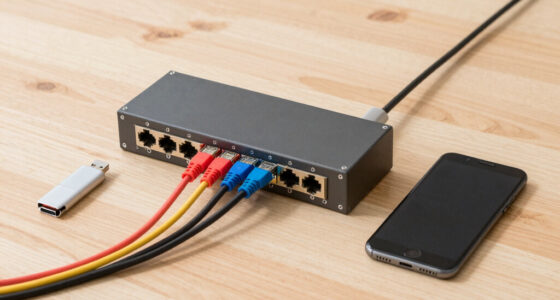
When searching for a network switch with PoE and fiber, you need a device that balances high performance, scalability, and ease of management. The NETGEAR GS305P stands out as the best overall choice for small to medium setups, offering reliable PoE and straightforward installation. For industrial environments, the 6-Port Hardened Industrial Switch provides rugged durability and fiber support, though it comes at a higher cost. Meanwhile, the MokerLink 11 Port Switch combines advanced features like AI detection and QoS at a competitive price point. These options highlight the main tradeoffs: affordability versus advanced features, and simplicity versus ruggedness. Continue reading for a detailed breakdown of each product’s strengths and weaknesses.

Get business pricing on networking and server gear
- Business-only prices and quantity discounts
- Tax-exempt purchasing
- Multiple users, one account, clear invoices
Key Takeaways
- The best overall switches balance ease of use, reliable PoE power, and fiber support without excessive complexity.
- Industrial-grade switches prioritize ruggedness and fiber over features like managed ports or aesthetics.
- Higher-priced options tend to offer advanced management features like VLAN, QoS, and SFP flexibility.
- Most switches with fiber support are designed for specific network sizes; choosing the right port count is key.
- Tradeoffs often involve cost, complexity, and durability—buyers should match these to their environment and needs.


More Details on Our Top Picks
NETGEAR 5-Port PoE Gigabit Ethernet Unmanaged Switch (GS305P)
This compact, fanless switch stands out for its simplicity and reliability, making it ideal for small offices or retail setups that require quick, hassle-free deployment. Compared with larger managed switches like the TP-Link TL-SG1218MP, the GS305P offers plug-and-play convenience, but it sacrifices advanced control features. Its 63W PoE budget is sufficient for a handful of low to moderate power devices but falls short if you need to power multiple high-power IP cameras or access points simultaneously. Despite its limited management capabilities, this switch’s energy efficiency and silent operation make it a preferred choice for those prioritizing ease of use over configurability.
Pros:- Plug-and-play setup with no configuration required
- Energy-efficient, silent fanless operation
- Flexible mounting options for versatile placement
- Supports high-speed Gigabit Ethernet connections
Cons:- Limited to unmanaged switch features, no advanced controls
- PoE power budget may be too low for multiple high-power devices
Best for: Small business owners or home users needing reliable, straightforward PoE networking without management complexity
Not ideal for: Large enterprise environments requiring detailed network management or higher PoE budgets for numerous high-power devices
- Number of Ports:5
- PoE Ports:4
- Total PoE Power Budget:63W
- Ethernet Speed:1.0Gbps
- Design:Fanless, metal enclosure
- Mounting Options:Desktop or wall-mount
Our verdict“This switch makes the most sense for small setups where simplicity and quiet operation are priorities over advanced management features.”
Industrial 4-Port Gigabit PoE Ethernet Switch with SFP Slot, DIN Rail Mount, 120W Max Power
This industrial-grade switch excels in demanding environments, supporting wide temperature ranges and redundant power inputs, making it suitable for factories or outdoor deployments. Compared to the SICSOLINK 8 Port Gigabit PoE+ Switch, it offers a more rugged build and higher PoE power capacity, but it remains unmanaged, lacking advanced network controls. Its 120W PoE budget supports multiple high-power devices, including IP cameras and wireless access points, while its IP40 rating and lightning protection enhance durability. Its limited management features mean it’s best for straightforward setups where reliability in harsh conditions outweighs the need for network configuration.
Pros:- Supports high power PoE+ for multiple devices
- Wide operating temperature range from -40°C to 80°C
- Redundant power inputs enhance reliability
- Industrial-grade durability with IP40 rating
Cons:- Limited to unmanaged features, no network management
- No advanced monitoring or configuration options
- Requires compatible PoE devices for full functionality
Best for: Industrial environments or outdoor facilities needing rugged, reliable PoE switches with fiber connectivity
Not ideal for: Small offices or indoor home networks where environmental durability is unnecessary and advanced management might be desired
- Ports:4 Gigabit Ethernet, 1 SFP fiber
- PoE Standard:IEEE802.3af/at
- Max Power per Port:30W
- Total PoE Power:120W
- Power Input:DC 12-48V, dual redundant
- Operating Temperature:-40°C to 80°C
Our verdict“This switch is designed for tough industrial settings where reliability and high PoE capacity trump management complexity.”
SICSOLINK 8 Port Gigabit PoE+ Switch 120W
This unmanaged 8-port switch combines PoE+ support with fiber connectivity via SFP, making it suitable for extensive video surveillance or Wi-Fi deployments. Compared with the NETGEAR GS305P, it offers more PoE ports and longer reach thanks to its fiber options, but it lacks management features for network tuning. The 120W total power supports devices like IP cameras and access points, though each port is capped at 30W, limiting its use with high-power devices. Its auto-detection of PoE devices and lightning protection add to its robustness, but it’s best for straightforward, unmanaged deployments.
Pros:- Supports long-distance fiber connectivity with SFP ports
- Built-in lightning protection enhances durability
- Auto-detects PoE devices to prevent damage
- Versatile mounting options
Cons:- Limited to unmanaged features, no network management
- Maximum 30W per port may limit high-power devices
- No external power supply included
Best for: Security installations or Wi-Fi networks requiring fiber links and PoE power in unmanaged setups
Not ideal for: High-traffic enterprise networks needing VLANs or detailed traffic prioritization
- Number of Ports:8
- Compatible Devices:IP Camera, WiFi AP, VoIP
- Interface:RJ45, SFP
- Maximum Power:120W
- Lightning Protection:4KV
- Auto-Negotiation:Yes
Our verdict“Ideal for simple, fiber-enabled PoE deployments where management features are not necessary.”
MokerLink 11 Port Gigabit PoE Switch with 8 PoE+ Ports, 2 Gigabit Uplink, 1 SFP Port, 120W Power, AI Detection, QoS, Fanless Metal Design
This unmanaged switch offers a robust 11-port setup with 8 PoE+ ports supporting up to 120W total, making it suitable for extensive IP camera systems and wireless access points. Compared to the Binardat 12 Port Gigabit POE Switch, it provides AI detection and QoS features for traffic prioritization, but it lacks advanced management options. Its metal, fanless design ensures durability and silent operation, while the long-distance fiber SFP port expands deployment options. The main tradeoff is the absence of passive 24V PoE support and limited configuration capabilities, which might be a concern for more complex networks.
Pros:- Supports high power output up to 120W for PoE devices
- AI detection and QoS for traffic management
- Durable metal, fanless design for silent operation
- Supports long-distance fiber via SFP
Cons:- No support for passive 24V PoE
- Limited to unmanaged features, lacks configuration options
- No external power adapter included
Best for: Large-scale IP surveillance or Wi-Fi deployments needing intelligent traffic handling and high PoE power
Not ideal for: Home users or small offices seeking simple plug-and-play switches without AI or QoS features
- Number of Ports:11
- PoE Ports:8
- Uplink Ports:2 Gigabit
- SFP Port:1
- Total Power Support:120W
- Features:AI detection, QoS
Our verdict“This switch fits well into large, intelligent networks where traffic prioritization and high PoE capacity are needed, but not if advanced management is required.”
Binardat 12 Port Gigabit POE Switch, 8 POE+ Ports 1000Mbps, 2 Gigabit Uplink, 2 Gigabit SFP, IEEE802.3af/at, 135W Power Supply, Metal Case Unmanaged Plug and Play
This unmanaged switch combines a high port count with strong PoE capabilities, supporting 8 PoE+ ports at 30W each and multiple gigabit uplinks, making it well-suited for busy office environments with many IP devices. Compared with the NETGEAR GS305P, it offers more ports and a higher overall power budget, but it still lacks management features for network tuning. The 135W power supply supports numerous PoE devices simultaneously, while its fanless, metal construction promises durability and quiet operation. The main compromise is the absence of advanced features like VLANs or traffic prioritization, which could be necessary in complex setups.
Pros:- Supports high-speed gigabit and PoE+ ports for many devices
- Plug-and-play setup with no configuration needed
- Durable, fanless metal housing for quiet operation
- High total power capacity of 135W
Cons:- No management features for VLANs or traffic control
- Limited to unmanaged operation, less control over traffic
- Power limited to 30W per PoE+ port
Best for: Office networks with numerous IP cameras, VoIP phones, and Wi-Fi access points needing reliable, high-bandwidth connectivity
Not ideal for: Home or small-scale deployments where fewer ports and management capabilities are sufficient
Our verdict“This switch is ideal for busy office environments that require many high-speed PoE connections without the need for network management features.”
UGREEN 10-Port PoE Ethernet Switch with 8 PoE+ Ports and 2 Gigabit Uplink Ports
This UGREEN switch stands out through its flexibility, supporting multiple operation modes that allow for tailored network management—ideal for small offices or surveillance setups. Compared with the NETGEAR GS324TPv2, it offers a lower overall PoE power budget of 60W, which limits high-power device support but keeps it more affordable and straightforward. Its long-distance PoE extension of up to 820 ft makes it a strong choice for security camera networks without additional extenders. However, its unmanaged nature means advanced features like VLAN or QoS are absent, and the total power budget may restrict larger deployments. This pick makes the most sense for users needing reliable PoE extension and flexible operation modes on a budget, without complex network management requirements.
Pros:- Supports multiple operation modes for flexible network management
- Auto-detects and supplies power efficiently to PoE devices
- Long-distance PoE extension up to 820 ft for surveillance or outdoor cameras
Cons:- Limited total power of 60W restricts high-power devices
- Unmanaged switch lacks advanced features like VLAN or QoS
- Power management depends on correct configuration and load
Best for: Small business or security-focused users requiring long-distance PoE delivery with simple setup
Not ideal for: Large enterprises or high-power device environments, due to limited power budget and unmanaged features
- Number of Ports:10
- PoE+ Ports:8
- Uplink Ports:2
- PoE Power Budget:60W
- Max PoE Power per Port:30W
- Extend Mode Range:up to 820 ft
Our verdict“This switch is best suited for small-scale deployments needing flexible PoE extension without complex management features.”
PoE Switch, 16 Port Managed PoE+ Ethernet Switch with 2 Gigabit Uplink and SFP, 240W Power, VLAN, QoS, Fanless Metal Design
This 16-port managed switch offers a substantial 240W PoE power budget and advanced management features such as VLAN and QoS, making it ideal for small business networks requiring precise control. Compared with the NETGEAR GS324TPv2, it provides a higher PoE capacity, supporting more demanding IP devices, but at the expense of a slightly more complex setup process. The fanless design ensures silent operation, perfect for quiet office environments. However, its data transfer rate is limited to 100 Mbps per port, which could bottleneck high-speed local data traffic. This switch is best suited for users with some network expertise who need reliable PoE power and management without investing in larger enterprise gear.
Pros:- Supports high-power PoE+ for demanding devices
- Silent operation thanks to fanless design
- Includes VLAN and QoS features for network segmentation and traffic control
Cons:- Limited to 100 Mbps data transfer rate per port
- Requires some network knowledge for optimal setup
- No built-in Wi-Fi or wireless features
Best for: Small to medium-sized businesses with IP cameras, VoIP, or Wi-Fi access points needing managed power and traffic prioritization
Not ideal for: Home users or environments prioritizing very high data throughput, due to the 100 Mbps port speed limitation
- Number of Ports:16 PoE+
- PoE Power Budget:240W
- Data Transfer Rate:100 Mbps
- Uplink Ports:2 Gigabit
- SFP Port:1
- Case Material:Metal
Our verdict“This switch is perfect for small business users who need reliable PoE management and network control without the complexity of larger systems.”
8 Port Gigabit PoE+ Switch with SFP Fiber Slot and Uplink Ports
This unmanaged 8-port switch provides a straightforward solution for powering IP cameras and access points over long distances, thanks to its SFP fiber port and 250-meter extend mode. When compared with the larger NETGEAR GS324TPv2, it offers fewer ports but excels in long-range deployments, making it suitable for remote surveillance or small setups needing fiber connectivity. Its 120W PoE budget supports high-power devices, but speed drops to 10 Mbps in extend mode, which can significantly slow data transfer. The switch’s fanless, durable metal casing supports 24/7 operation in harsh environments. It’s ideal for users who need a compact, reliable PoE switch with fiber options and are willing to accept lower speeds during extended operation.
Pros:- Supports high-power PoE+ devices with 120W budget
- Long-distance extend mode up to 250m
- Durable metal housing with built-in power supply
Cons:- Speed reduces to 10 Mbps in extend mode
- SFP port requires a compatible module not included
- Unmanaged design limits configuration options
Best for: Surveillance or remote network installations requiring PoE over fiber in limited space
Not ideal for: High-speed data centers or environments with heavy data traffic, due to speed reduction in extend mode
- Number of Ports:8 PoE+
- Uplink Ports:2 Gigabit
- SFP Slot:1
- PoE Power Budget:120W
- Extend Mode Distance:250 meters
- Housing Material:Metal
Our verdict“Suitable for remote or surveillance setups needing fiber and PoE over long distances, accepting lower speeds for extended reach.”
NETGEAR 26-Port Gigabit Ethernet PoE Smart Managed Switch (GS324TPv2)
This NETGEAR model offers a high port count with 24 Gigabit Ethernet PoE+ ports and 2 SFP slots, making it a robust choice for dense networks needing managed PoE with fiber support. Compared with the smaller managed switches, its 190W power budget might limit very high-power devices but is sufficient for most security cameras and APs. Its compact design allows flexible placement, either on a desk or rack. The main tradeoff is that it requires some networking knowledge to leverage advanced features like VLAN and QoS fully. This switch is best for organizations that want high-speed, managed PoE with fiber integration in a scalable, relatively straightforward package.
Pros:- High-speed Gigabit ports with PoE+ support
- Includes two SFP ports for fiber connectivity
- Compact, versatile design for various installation types
Cons:- Limited to 190W total PoE power capacity
- Complex configuration needed for advanced features
- No wireless capabilities included
Best for: Medium to large offices requiring a managed, scalable network with PoE and fiber support
Not ideal for: Home users or small setups with minimal network complexity and lower port needs
- Number of Ports:26
- PoE+ Ports:24
- PoE Power Budget:190W
- SFP Ports:2
- Mounting Options:Desktop or rack-mount
- Housing Material:Metal
Our verdict“Ideal for expanding networks requiring managed PoE with fiber options, suitable for professional environments with some network expertise.”
Cudy 26-Port Gigabit 24-Port PoE+ Unmanaged Ethernet Switch, GS1026PS2
The Cudy GS1026PS2 provides a substantial 24 PoE+ ports with a 250W power budget, designed for straightforward, reliable power delivery in professional settings. Compared with managed switches like the NETGEAR GS324TPv2, it emphasizes simplicity, lacking VLAN or QoS, but excels in plug-and-play ease and robust power support. Its support for VLAN and Extend Mode enhances security and long-distance deployment, making it suitable for IP camera systems or VoIP installations. Its steel chassis ensures durability, but as an unmanaged switch, it offers limited configuration, which may be a drawback for complex network setups. This product is best for professionals needing a durable, high-power PoE switch with minimal fuss.
Pros:- Supports 24 PoE+ ports with 250W budget for demanding devices
- Supports VLAN and Extend Mode for security and distance
- Steel chassis for durability and rack-mount readiness
Cons:- Lacks advanced management features
- Limited to IEEE 802.3af/at devices, not future-proof for new standards
- No fanless operation, potential noise in some environments
Best for: Professional network installations needing high-power PoE and long-distance capabilities without advanced management
Not ideal for: Environments requiring detailed traffic control or network segmentation, due to unmanaged design
- Number of Ports:26
- PoE+ Ports:24
- Total Power Budget:250W
- VLAN Support:Yes
- Extend Mode:Yes
- Housing Material:Steel
Our verdict“This switch offers high power and durability for professionals needing simple, reliable PoE distribution over long distances.”
YuanLey 8 Port Gigabit PoE Switch with 2 Gigabit Uplink, 8 PoE+ Ports, 1 SFP Port, 120W, Metal, Unmanaged, Plug and Play
This unmanaged YuanLey switch stands out for its combination of 8 PoE+ ports and a dedicated SFP port, making it ideal for small businesses or security setups that require fiber connectivity without complex management. Compared with the MokerLink 11 Port Gigabit PoE Switch, it offers fewer ports but integrates fiber directly via SFP, simplifying long-distance links. Its plug-and-play design benefits those who prioritize ease of setup over advanced features, but the absence of cooling or managed options limits its scalability. The 120W power budget supports multiple PoE devices, although it doesn’t support passive PoE or advanced network controls. This model is best suited for straightforward deployments where fiber uplinks are necessary but management features are not critical.
Pros:- Supports 8 PoE+ ports with a total 120W power budget
- Includes SFP port for fiber connections over long distances
- Plug-and-play with no configuration needed
- AI watchdog for device recovery
Cons:- Limited to unmanaged switch features, lacking advanced management
- No cooling fan, which could impact performance in enclosed environments
Best for: Small offices or surveillance systems needing fiber links and PoE+ power in a simple, unmanaged switch
Not ideal for: Large enterprise networks requiring managed features or extensive port configurations
- Number of Ports:11
- Compatible Devices:Camera, IP phone
- Voltage:48 volts
- Maximum Power:120 watts
- Interface:SFP
- Data Transfer Rate:1000 megabits_per_second
Our verdict“This pick is ideal for small-scale setups that need fiber and PoE without complex management.”
TRENDnet 10-Port Gigabit PoE++ Switch, TPE-BG102g
Compared to the YuanLey model, the TRENDnet TPE-BG102g offers a higher power budget of 240W across 8 PoE++ ports, making it suitable for powering demanding devices like high-end access points or multiple cameras. Its 20Gbps switching capacity and inclusion of two SFP ports provide robust fiber connectivity options, perfect for professional environments needing reliable, high-throughput links. The sturdy metal housing and rackmount capability emphasize durability and enterprise readiness, but its unmanaged design limits fine-tuning or network segmentation. The smart fan and jumbo frame support add efficiency and performance for heavy-duty applications. This switch makes the most sense for environments where high power and fiber integration are required, but advanced management features are not necessary.
Pros:- High PoE power budget of 240W supports multiple high-power devices
- Includes two SFP ports for fiber connectivity
- Rackmountable with durable metal housing
- Smart fan for energy efficiency
Cons:- Lacks advanced management features, limiting network control
- Unmanaged switch—no VLAN or QoS options
Best for: Network professionals deploying high-power PoE devices in enterprise or industrial settings
Not ideal for: Small businesses or home users seeking budget-friendly or managed switches
- Device Interface:8 x Gigabit PoE++ Ports; 2 x Gigabit SFP Ports
- Switching Capacity:20Gbps
- PoE Power Budget:240W
- PoE Port Power:Up to 95W per port
- Housing:Sturdy metal, rackmountable
- Additional Features:Jumbo Frame support, smart fan
Our verdict“This switch is tailored for professional deployments needing high PoE power and fiber, but without management complexity.”
TP-Link TL-SG1218MP 16-Port Gigabit PoE Switch
Compared to the previous unmanaged options, the TP-Link TL-SG1218MP offers a substantial 16 PoE+ ports with up to 30W per port, suitable for larger deployments like campus networks or office environments. Its 250W power budget and two gigabit uplinks with SFP slots provide scalability, but its unmanaged nature means less control over traffic prioritization and security. The metal case ensures durability, and setup remains straightforward, fitting users who want reliable, high-capacity PoE without the complexity of full management. However, the absence of advanced features like VLAN or QoS may restrict performance tuning in complex setups. This switch shines in environments where high port density and fiber uplinks are priorities over management sophistication.
Pros:- 16 PoE+ ports with up to 30W per port for high-power devices
- Includes two gigabit uplink ports and SFP slots for fiber
- Durable metal case suitable for professional environments
- Plug-and-play setup
Cons:- Limited to unmanaged operation, lacking VLAN or QoS controls
- Power supply limited to 240V, potentially incompatible internationally
Best for: Medium to large businesses needing extensive PoE coverage with fiber uplinks but without managed switches
Not ideal for: Home users or small offices that do not require many PoE ports or fiber connections
- Number of Ports:18
- PoE Ports:16 PoE+
- PoE Power Budget:250W
- Uplink Ports:2 Gigabit
- SFP Slots:2
- Switch Type:Gigabit Ethernet
Our verdict“This switch suits larger networks needing many PoE ports and fiber uplinks, with simplicity over management features.”
6-Port Hardened Industrial Gigabit PoE+ DIN-Rail Fiber Network Switch
Unlike the previous options, this rugged industrial switch is designed for outdoor and challenging environments, featuring 4 PoE+ ports and 2 SFP fiber ports, making it ideal for industrial facilities or outdoor surveillance. Its wide temperature range up to 75°C and dual redundant power inputs provide resilience in harsh conditions, but it comes with the tradeoff of requiring separate power supplies and SFP modules, increasing setup complexity. Its small, DIN-rail form factor emphasizes durability and reliability over high port count or management features. This switch is best for industrial applications where environmental resilience is paramount, rather than typical office networking.
Pros:- Rugged design suitable for outdoor and industrial use
- Supports high power PoE+ on four ports
- Operates across wide temperature range from -40°C to 75°C
- Dual redundant power inputs for reliability
Cons:- Power supply sold separately, increasing setup complexity
- Requires additional SFP modules and power adapters not included
- Limited port count for small or standard networks
Best for: Outdoor, industrial, or harsh environment network setups requiring rugged PoE and fiber connectivity
Not ideal for: Home or typical office networks where environmental factors are minimal
- Number of Ports:6
- Compatible Devices:Desktop
- Voltage:48 volts
- Maximum Power:120 watts
- Upper Temperature Rating:75 °C
- Data Transfer Rate:1 gigabit per second
Our verdict“This switch is the choice for industrial environments needing rugged, reliable PoE and fiber in extreme conditions.”

How We Picked
The products in this roundup were selected based on a combination of performance, build quality, and versatility. I prioritized switches with robust PoE power budgets, reliable fiber support (including SFP ports), and ease of setup, especially for small to medium deployments. Managed versus unmanaged features were considered, depending on whether users need advanced network controls. Price-to-value ratios and user reviews also influenced rankings, ensuring options are suitable for different budgets and technical levels. The ranking emphasizes practical deployment scenarios, durability, and future scalability, aiming to serve both beginners and experienced network professionals.Factors to Consider When Choosing Network Switch With Poe And Fiber
Choosing the right network switch with PoE and fiber support involves understanding several key factors. Beyond basic port counts, you should consider power budgets, management features, and physical durability. Matching these aspects to your network size, environment, and future growth plans ensures you avoid overspending or under-provisioning. A well-chosen switch can simplify your setup and improve network reliability, so it pays to evaluate your needs carefully before purchasing.Port Count and Fiber Support
Determining the correct number of ports is fundamental. Consider how many devices you need to connect now and in the future, including PoE-powered devices like cameras or access points. Fiber ports (SFP or SFP+ slots) enable long-distance links and high throughput, but they typically come at a higher cost. It’s wise to select a switch with enough ports and fiber options to accommodate growth, rather than overpaying for excess capacity you won’t use immediately.
PoE Power Budget
The PoE budget indicates the total power the switch can supply across all PoE ports. For powering high-demand devices like PTZ cameras or multiple access points, a higher budget is essential. Underestimating your needs may result in insufficient power delivery, forcing you to upgrade early. Conversely, a very high budget might be unnecessary for small setups, adding cost without benefit. Balance your current device requirements with future expansion plans.
Management and Configuration
Managed switches provide greater control through features like VLANs, QoS, and port monitoring, which are vital for larger or more complex networks. Unmanaged options are simpler and plug-and-play, suitable for small setups or temporary deployments. Consider whether you need advanced management or prefer a straightforward device—this decision impacts deployment complexity and long-term flexibility.
Build Quality and Environment Suitability
Durability is a key factor, especially for industrial or outdoor environments. Ruggedized switches with metal enclosures and industrial-grade components withstand harsh conditions better than consumer-grade models. If you plan to install the switch in a challenging environment, investing in a hardened device prevents future failures and reduces maintenance costs.
Price and Future Scalability
While budget constraints matter, opting for a slightly higher investment can provide features that extend the switch’s lifespan and functionality. Think about your network’s growth trajectory; a switch with extra ports or higher management capabilities now can save you from replacing devices later. Avoid overspending on features you won’t need immediately, but also don’t skimp on essential capabilities that could hinder expansion.
Frequently Asked Questions
Can a switch with fiber support be used for both local and long-distance connections?
Yes, switches with fiber support typically include SFP or SFP+ ports that allow for both short and long-distance links. These ports can connect to other switches or network devices via fiber optic cables, which provide higher speeds and better interference resistance than copper. For local connections, fiber can still be beneficial in environments with high electromagnetic interference or where future expansion over longer distances is anticipated.
Is managed or unmanaged better for a network switch with PoE and fiber?
The choice depends on your network complexity. Managed switches offer advanced features like VLAN segmentation, traffic prioritization, and remote management, making them suitable for larger or more dynamic networks. Unmanaged switches are simpler and faster to set up, ideal for small setups or temporary deployments. If you expect your network to grow or require tighter control, managed options provide flexibility and future-proofing.
How much PoE power should I look for in a switch?
The required PoE power depends on your connected devices. High-power devices like PTZ cameras or Wi-Fi access points often need more wattage, so a switch with a larger PoE budget is necessary. For typical surveillance cameras or access points, 60-90W may suffice, but for multiple high-demand devices, consider switches with 120W or more. Always calculate your total power needs to avoid outages or insufficient power delivery.
Are fiber ports on switches compatible with all fiber optic cables?
Fiber ports on switches typically support specific types of fiber cables and connectors, such as LC or SC. It’s important to match the port type and fiber cable specifications for compatibility. You also need to consider the fiber type—single-mode or multi-mode—based on the distance and speed requirements. Proper matching ensures optimal performance and reliable connections across your network.
What is the typical lifespan of a PoE switch with fiber support?
The lifespan of a PoE switch with fiber depends on build quality, operating environment, and usage intensity. Well-made, industrial-grade switches can last 5-10 years, especially if maintained properly and used within specified conditions. Cheaper or consumer-grade models may fail sooner due to heat, dust, or physical stress. Investing in quality from the start can extend the useful life and reduce replacement costs over time.
Conclusion
For most small to medium networks, the NETGEAR GS305P offers a balanced mix of ease of use, reliable PoE, and fiber support, making it the best overall choice. If you need rugged hardware for industrial environments, the 6-Port Hardened Switch provides durability and fiber options, though at a higher price. Users seeking advanced network controls should consider managed options like the PoE Switch with 16 Ports. Beginners or those with simple setups will find unmanaged switches like the YuanLey 8 Port to be straightforward and cost-effective. Ultimately, selecting the right switch depends on your environment, expansion plans, and technical comfort—match these factors carefully to make the best investment.
Fall Picks
fall essentials
As an affiliate, we earn on qualifying purchases.