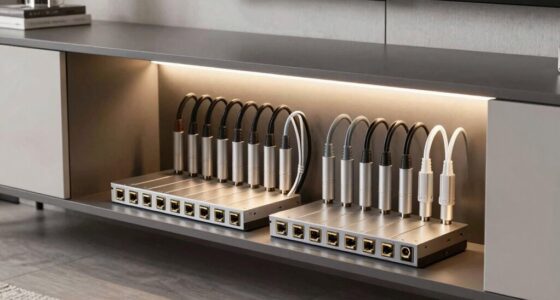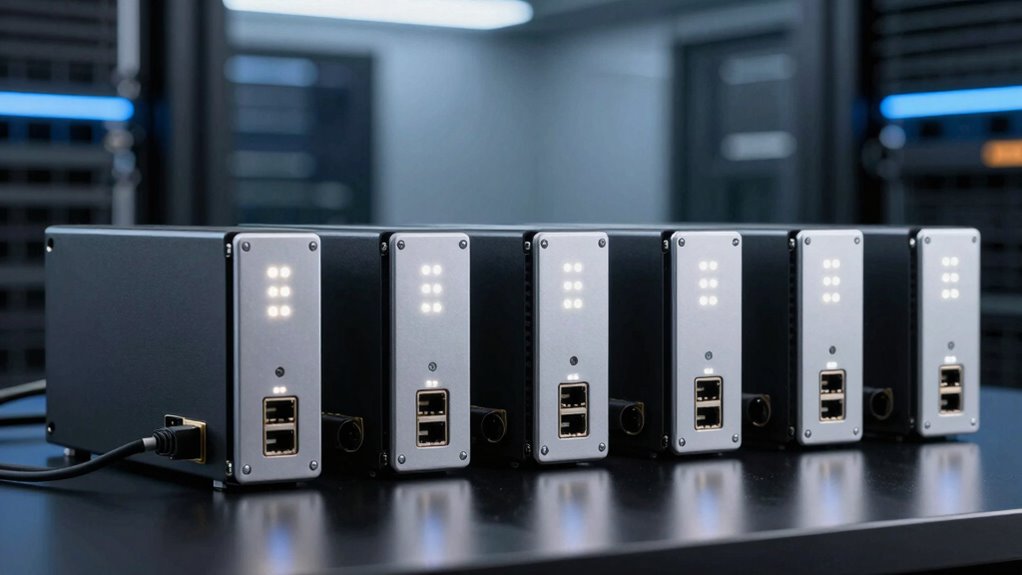

Finding the right PoE splitters for legacy equipment can be challenging, especially when balancing affordability, compatibility, and power delivery. The best overall pick in this category is the Procet Gigabit PoE Splitter, which offers reliable performance and broad voltage support. For those prioritizing cost-effectiveness, the PoE Splitter Injector Kit provides a simple, budget-friendly solution, while the LINOVISION PoE Extender excels for long-distance setups. The main tradeoffs involve choosing between raw power, ease of installation, and compatibility with older gear. Keep reading for a detailed breakdown of each option to help you make the right choice for your setup.

Get business pricing on networking and server gear
- Business-only prices and quantity discounts
- Tax-exempt purchasing
- Multiple users, one account, clear invoices
Key Takeaways
- Top-ranked products balance power delivery with ease of use and compatibility with legacy equipment.
- Gigabit-capable splitters tend to cost more but future-proof your network for higher speeds.
- Passive splitters are more affordable but often lack surge protection and advanced features.
- Long-distance PoE extenders are essential for sprawling setups but introduce additional complexity and cost.
- Feature-rich options like passthrough switches are best for advanced setups needing multiple connections.
| PoE Splitter Injector Kit, 1 Pair Power Over Ethernet Passive PoE Adapter Splitter Cable with 5.5×2.1mm DC Connector, 12V |  | Best Budget Passive Splitter for Non-PoE Devices | Connector: 5.5×2.1mm DC | Voltage: 12V | Cable Length: 6.3 inches | VIEW ON AMAZON | See Our Full Breakdown |
| Passive PoE Injector 6 Pairs PoE Splitter Kit with 5.5×2.1 mm DC Connector |  | Best for Versatile Passive Power with Moderate Speed | Main Material: Plastic, Electric Parts | Maximum Support Pixel: 5 Million Pixels | Connector Type: RJ45 Male, RJ45 Female, 5.5×2.1 mm DC | VIEW ON AMAZON | See Our Full Breakdown |
| Procet Gigabit PoE Splitter 12V/24V DC 25W, IEEE802.3af/at Compliant Power Adapter, IP40, -40°F to 149°F, 6KV Surge Protection |  | Best Industrial-Grade High Power PoE Splitter | Input Voltage Range: 40-57Vdc | Output Power: 25W | Voltage Modes: 12Vdc / 24Vdc | VIEW ON AMAZON | See Our Full Breakdown |
| 5 Pairs Passive PoE Injector and PoE Splitter Kit with 5.5×2.1 mm DC Connector RJ45 Power Over Ethernet |  | Best Multi-Pair Passive Kit for Versatile Power Distribution | Number of Packs: 5 | Number of Items: 10 | DC Connector: 5.5mm x 2.1mm | VIEW ON AMAZON | See Our Full Breakdown |
| 2 Port Gigabit PoE Splitter, Network Hub Supports IEEE 802.3at/af, Power Over Ethernet, for Cat5e/6/7/8 Cables |  | Best for High-Speed, Long-Distance PoE Expansion | Ports: 2 Gigabit Ethernet | Standards: IEEE 802.3at/af | Range: Up to 328 ft | VIEW ON AMAZON | See Our Full Breakdown |
| 1 in 2 Out Gigabit PoE Extender NICGIGA 2 Port PoE Repeater 100 Meters (328 ft) IEEE 802.3af/at |  | Best for Extending PoE Over Long Distances with Gigabit Speed | Number of Ports: 2 PoE output ports | Range: 100 meters (328 feet) | Supported Standards: IEEE 802.3af/at | VIEW ON AMAZON | See Our Full Breakdown |
| LINOVISION 2 Ports Gigabit PoE Passthrough Switch and PoE Extender |  | Best for Durable, Long-Distance Indoor/Outdoor Installations | Number of Ports: 2 | Compatible Devices: Cameras | Voltage: 48 volts | VIEW ON AMAZON | See Our Full Breakdown |
More Details on Our Top Picks
PoE Splitter Injector Kit, 1 Pair Power Over Ethernet Passive PoE Adapter Splitter Cable with 5.5×2.1mm DC Connector, 12V
This passive splitter kit stands out for its simplicity and affordability, making it ideal for users who need to power non-PoE devices like cameras or routers without extensive wiring. Compared with the Passive PoE Injector 6 Pairs Kit, it offers fewer pairs but is straightforward and easy to install, with a focus on 12V devices. Its durable ABS construction ensures reliable performance, yet the limited cable length at just 6.3 inches can restrict placement options. This makes it perfect for small, fixed setups but less suitable for larger or complex installations where longer cables are necessary. The passive design is inherently simple but requires careful voltage management to avoid power issues, especially if used with non-standard equipment.
Pros:- Affordable and easy to install
- Compatible with standard non-PoE devices
- Durable ABS and copper wiring for reliable use
Cons:- Limited to 12V devices, restricting versatility
- Short cable length may require additional extensions
Best for: Home or small office users who need a simple, low-cost way to power cameras or routers over Ethernet without rewiring.
Not ideal for: Large-scale or outdoor installations requiring longer cable runs or higher network speeds, due to its short cable length and limited power capacity.
- Connector:5.5×2.1mm DC
- Voltage:12V
- Cable Length:6.3 inches
- Material:ABS and copper
Our verdict“This kit is best suited for small, static setups needing a cost-effective solution for powering non-PoE devices.”
Passive PoE Injector 6 Pairs PoE Splitter Kit with 5.5×2.1 mm DC Connector
This kit offers more flexibility with 6 pairs of passive injectors and splitters, supporting multiple devices simultaneously. It supports network speeds up to 10 Mbps, making it suitable for basic security cameras and access points, but falls short compared to gigabit solutions like the 2 Port Gigabit PoE Splitter. Its compact design and lightweight build make it easy to deploy in tight spaces. However, as a passive system, it demands careful voltage management and cannot support higher data rates or power levels, limiting its use to simpler or older network setups. Its support for up to 60V DC input broadens compatibility, but the limited speed might be a bottleneck for more demanding applications.
Pros:- Supports multiple devices simultaneously
- Supports voltages up to 60V for flexibility
- Lightweight and easy to install
Cons:- Limited to 10 Mbps network speed
- Passive design requires careful voltage control
Best for: Small-scale deployments needing multiple passive PoE connections for low-bandwidth devices.
Not ideal for: High-speed or high-power applications such as modern IP cameras or gigabit routers, due to its 10 Mbps speed limit and passive design.
- Main Material:Plastic, Electric Parts
- Maximum Support Pixel:5 Million Pixels
- Connector Type:RJ45 Male, RJ45 Female, 5.5×2.1 mm DC
- Rated Voltage:12Vdc
- Passive POE Adaptor Length:30M/98Ft
- Rated Current:1.5A
Our verdict“Ideal for basic, multi-device setups with low bandwidth needs and moderate power requirements.”
Procet Gigabit PoE Splitter 12V/24V DC 25W, IEEE802.3af/at Compliant Power Adapter, IP40, -40°F to 149°F, 6KV Surge Protection
This industrial-grade splitter is designed for high-power, demanding environments, supporting up to 25W and dual voltage modes (12V or 24V). Compared with the 2 Port Gigabit PoE Splitter, it provides higher wattage output suitable for more power-hungry devices like advanced cameras or small monitors. Its rugged metal shell and surge protection make it ideal for outdoor or harsh environments, though it requires manual DIP switch configuration for voltage mode, which could be cumbersome during setup. Not suitable for casual or light-use scenarios, its robust build and high power make it a top choice for industrial or outdoor deployments.
Pros:- Supports up to 25W output power
- Robust metal shell with surge protection
- Dual voltage modes for versatility
Cons:- Requires manual configuration for voltage mode
- Limited to non-PoE devices only
Best for: Industrial, outdoor, or high-power applications requiring reliable, rugged PoE power delivery in challenging environments.
Not ideal for: Home or small office setups with moderate power needs, as its industrial design and configuration complexity may be unnecessary.
- Input Voltage Range:40-57Vdc
- Output Power:25W
- Voltage Modes:12Vdc / 24Vdc
- Surge Protection:6KV
- Temperature Range:-40°F to 149°F
- IP Rating:IP40
Our verdict“This splitter is best for demanding environments where high power and durability are priorities over simplicity.”
5 Pairs Passive PoE Injector and PoE Splitter Kit with 5.5×2.1 mm DC Connector RJ45 Power Over Ethernet
This kit excels in offering multiple pairs of passive injectors and splitters, making it suitable for larger or more complex setups like multiple security cameras or access points. Compared with the single-pair PoE Splitter Injector Kit, it provides greater flexibility with five pairs, supporting up to 10 Mbps network speeds. Its support for voltages up to 60V makes it adaptable for various devices, but the passive design limits its power and speed capabilities. It’s a good choice for users who need to power several older or low-bandwidth devices, but it’s less suitable for modern high-speed, high-power networks.
Pros:- Supports multiple devices simultaneously
- High voltage support up to 60V
- Versatile for complex installations
Cons:- Limited to 10 Mbps speeds
- Passive design may have power limitations
Best for: IT professionals or installers managing multiple low-bandwidth devices across larger premises.
Not ideal for: High-speed or high-power setups, or environments requiring gigabit network performance, due to its 10 Mbps limit and passive nature.
- Number of Packs:5
- Number of Items:10
- DC Connector:5.5mm x 2.1mm
- Network Speed Support:10 Mbps
- Voltage Support:up to 60V
Our verdict“This kit is best for multi-device, low-speed deployments where flexibility and high voltage support are needed.”
2 Port Gigabit PoE Splitter, Network Hub Supports IEEE 802.3at/af, Power Over Ethernet, for Cat5e/6/7/8 Cables
This splitter provides a unique function by converting one PoE port into two outputs, supporting gigabit speeds over long distances—up to 328 feet—making it ideal for large-scale security or network setups. Compared to the smaller PoE Splitter Injector Kit, its dual-port design offers expanded capabilities, especially suitable for expanding network reach without additional switches. Its durable aluminum body and auto-detection for PoE standards boost reliability and safety. However, it lacks a built-in power supply, requiring an external PoE source, which could be a drawback for simplified setups. It’s best suited for professional environments needing reliable, long-range PoE distribution.
Pros:- Supports gigabit Ethernet over long distances
- Dual ports for expanding PoE coverage
- Auto-detection for safe power delivery
Cons:- External power adapter required, increasing setup complexity
- Limited to PoE+/PoE devices, not suitable for non-PoE equipment
Best for: Network administrators or installers needing to extend PoE devices over long distances with high reliability and gigabit speed.
Not ideal for: Small or simple setups where a single device or short cable runs are sufficient, as it offers more capacity than needed and requires an external power source.
- Ports:2 Gigabit Ethernet
- Standards:IEEE 802.3at/af
- Range:Up to 328 ft
- Power Support:PoE+/PoE
- Material:Aluminum alloy
- Connectors:Gold-plated RJ45
Our verdict“This splitter is ideal for professional, long-distance PoE deployments needing high-speed, reliable expansion capabilities.”
1 in 2 Out Gigabit PoE Extender NICGIGA 2 Port PoE Repeater 100 Meters (328 ft) IEEE 802.3af/at
This PoE extender excels at stretching a network’s reach up to 100 meters, making it a strong choice for outdoor cameras or remote access points. Its gigabit data transmission ensures minimal latency, unlike some passive splitters that might bottleneck at lower speeds. The auto-detection and plug-and-play setup provide ease of use, while cascading support allows building larger networks without complex configurations. Compared to the LINOVISION model, it offers a simpler, more compact design but is limited to just two output ports, which might be restrictive for expanding setups. Its support for IEEE 802.3af/at over 48V PoE makes it compatible with most standard devices, though it won’t work with 24V systems. Overall, this device is perfect for network engineers who need reliable, high-speed extension without extra fuss.
Pros:- Extends PoE range up to 100 meters, ideal for outdoor deployment
- Supports gigabit data transfer for low latency
- Plug-and-play with auto-detection simplifies installation
- Supports cascading for larger networks
Cons:- Limited to two PoE output ports, restricting expansion
- Only compatible with 48V PoE devices, not 24V
Best for: IT professionals deploying outdoor or long-distance IP camera setups needing gigabit speeds and simple cascading.
Not ideal for: Small indoor networks or users who need more than two ports, as this device’s limited ports and range may restrict scalability.
- Number of Ports:2 PoE output ports
- Range:100 meters (328 feet)
- Supported Standards:IEEE 802.3af/at
- Max Power:30W per port
- Transmission Speed:Gigabit (1000Mbps)
- Supported Devices:IP cameras, IP phones, wireless APs
Our verdict“This extender is best suited for professionals needing reliable, high-speed long-distance PoE extension in outdoor or large-scale environments.”
LINOVISION 2 Ports Gigabit PoE Passthrough Switch and PoE Extender
The LINOVISION PoE extender stands out for its industrial-grade durability and ability to extend both power and data up to 330 feet, surpassing many passive splitters that often fall short at longer distances. Its IP53 enclosure and surge protection make it well-suited for outdoor or harsh environments, unlike the NICGIGA extender which is more designed for indoor or controlled settings. The gigabit data transfer ensures high performance, ideal for transmitting HD video or large data streams. However, its two-port design and bulkier size may complicate installation in tight spaces, and it requires a compatible PoE switch or injector to operate. Compared to simpler passive splitters, this model offers a robust, weatherproof solution for critical outdoor deployments, but the added cost and size might deter casual or indoor-only users.
Pros:- Extends PoE and data signals up to 330 feet, suitable for outdoor installations
- Supports gigabit data transfer for reliable performance
- Industrial-grade IP53 enclosure with surge protection enhances durability
- Plug-and-play setup with no configuration needed
Cons:- Bulkier than passive splitters, requiring mounting considerations
- Limited to 2 ports, which may not suit larger networks
- Requires compatible PoE switches or injectors for operation
Best for: Network installers managing outdoor or industrial sites requiring rugged equipment and long-distance PoE delivery.
Not ideal for: Indoor users with small setups or those seeking a low-cost, simple splitter without environmental protection needs.
- Number of Ports:2
- Compatible Devices:Cameras
- Voltage:48 volts
- Upper Temperature Rating:65 °C
- Interface:RJ45
- Data Transfer Rate:1000 megabits_per_second
Our verdict“This device is ideal for professionals needing a rugged, long-distance PoE extender capable of outdoor deployment and harsh conditions.”

How We Picked
The products in this roundup were evaluated based on their compatibility with legacy equipment, power output, build quality, ease of installation, and overall value. We prioritized solutions that reliably deliver power over Ethernet to older devices without requiring major modifications. Additional factors included surge protection, support for different voltage levels, and whether the device could handle gigabit speeds. The rankings reflect a balance between performance, affordability, and user-friendliness, ensuring options suitable for a range of needs and technical skills.Factors to Consider When Choosing Poe Splitters For Legacy Equipment
Choosing the right PoE splitter for legacy equipment involves several key considerations. First, verify the voltage and power requirements of your existing gear to ensure compatibility. Second, consider whether passive or active splitters better suit your setup—passive options are simpler and cheaper but less versatile. Third, evaluate the distance you need to cover; longer runs may require extenders or repeaters. Fourth, assess the build quality and surge protection features to safeguard your devices. Finally, think about future-proofing by selecting devices that support gigabit speeds if you plan to upgrade later, even if your current equipment is older.Compatibility and Power Requirements
Understanding your legacy equipment’s voltage and power needs is fundamental. Some splitters only support 12V, while others handle 24V or higher. Choosing a device that exceeds your current requirements provides headroom and reduces risks of underpowering your gear. Be cautious with passive splitters, which often lack surge protection, making compatibility with sensitive devices a concern. Always double-check connector sizes and power ratings to avoid mismatches that can damage your equipment or cause unstable operation.
Passive vs. Active Splitters
Passive splitters are generally more affordable and simpler to install, making them attractive for basic setups. However, they lack features like surge protection and gigabit support, which can limit performance and reliability. Active splitters or injectors, on the other hand, often include protections and support higher speeds, making them better suited for more demanding or future-proof setups. Your choice here depends on whether your priority is cost savings or long-term stability and performance.
Distance and Extenders
PoE signals weaken over long cable runs, especially with older equipment that may not support high power levels. For setups exceeding 100 meters, extenders or repeaters become necessary to maintain stable power and data transfer. While these devices add complexity and cost, they are essential for large installations. Keep in mind that each additional device can introduce latency or points of failure, so carefully plan your network topology to balance coverage with reliability.
Build Quality and Surge Protection
Durability and protection features are often overlooked but crucial. A well-built splitter with surge protection shields your equipment from power spikes, especially in environments prone to electrical storms or unstable power sources. Cheaper models may lack these safeguards, increasing risk. Look for devices with solid casings, reliable connectors, and certifications to ensure longevity and safety, particularly if your setup is exposed to environmental hazards or frequent power fluctuations.
Future-Proofing and Speed Support
Even if your current setup is legacy equipment, selecting a PoE splitter with gigabit support can save money and hassle later on. As network standards evolve, having equipment that supports higher speeds ensures smoother transitions and upgrades. Conversely, if budget constraints are tight and your current gear is limited to 10/100 Mbps, investing in gigabit-capable devices may be unnecessary. Consider your long-term plans when balancing cost against potential future needs.
Frequently Asked Questions
Can I use a PoE splitter designed for new equipment with my legacy devices?
Yes, but you need to check the voltage and power specifications carefully. Many modern PoE splitters support a range of voltages and are backward compatible with older gear, provided the power output matches your equipment’s requirements. However, some newer splitters may assume higher power levels or gigabit speeds that your legacy devices can’t utilize, which could lead to wasted investment. Always verify compatibility before purchasing to avoid potential damage or performance issues.
What is the main difference between passive and active PoE splitters?
Passive PoE splitters deliver power without any active regulation or surge protection, making them more affordable but less reliable. They are suitable for simple setups with stable power sources and low risk of electrical issues. Active splitters include circuitry for surge protection, voltage regulation, and sometimes support for higher speeds, offering greater safety and performance. Your choice depends on your environment and whether your legacy equipment requires additional protection or higher power support.
How does cable length affect PoE splitter performance?
Cable length directly impacts the strength of both power and data signals. Longer runs can cause voltage drops, especially with passive splitters that lack voltage regulation, leading to insufficient power at the device. For extended distances, using extenders or active repeaters becomes necessary. Planning your cable runs carefully and selecting equipment designed to handle longer distances can prevent connectivity issues and ensure stable operation of your legacy gear.
Is it worth investing in a gigabit PoE splitter if my equipment is legacy?
If your current devices only support 10/100 Mbps, a gigabit splitter might seem unnecessary. However, choosing one can provide a smoother upgrade path and future-proof your network. Gigabit support doesn’t harm your legacy devices if they don’t utilize the higher speeds, but it ensures compatibility with newer gear down the line. This approach can save money and effort if you plan to upgrade your equipment later.
What should I look for in terms of surge protection in a PoE splitter?
Surge protection is essential to safeguard sensitive legacy equipment from power spikes. Look for splitters with certified surge protection features, such as built-in TVS diodes or surge suppressors. Durable construction, certifications like UL or CE, and user reviews highlighting protection features can guide your choice. Protecting your gear not only prolongs its lifespan but also prevents costly repairs or replacements caused by electrical surges.
Conclusion
For most users with basic legacy equipment, the Procet Gigabit PoE Splitter offers a reliable balance of power, compatibility, and future-proofing, making it the best overall choice. Budget-conscious setups will appreciate the PoE Splitter Injector Kit for affordability, while those needing long-distance coverage should consider the 1 in 2 Out Gigabit PoE Extender. Beginners and small-scale users will find the PoE Splitter Injector Kit straightforward to implement, whereas advanced users with expanding networks might prefer features like passthrough or surge protection. Carefully match your needs with these options to ensure a seamless, safe, and efficient connection for your legacy devices.
Halloween Picks
halloween
As an affiliate, we earn on qualifying purchases.