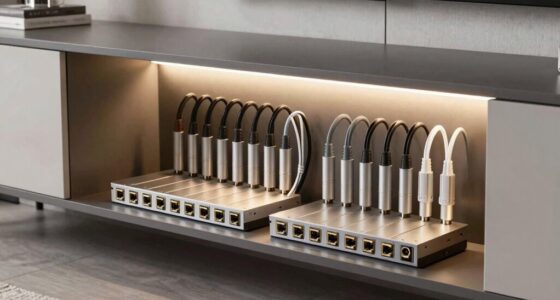
If you’re looking to expand or upgrade your network with Power over Ethernet, choosing the right rackmount PoE midspan is essential. The PoE Texas 24-Port Gigabit PoE Injector stands out for its cost-effective scalability, perfect for large deployments needing reliable gigabit speeds. Meanwhile, the PoE Texas 8 Port PoE Injector offers a compact, wall-mountable design ideal for smaller setups or edge applications. For high-demand environments, the 24 Port 802.3bt POE++ Extreme Power Injector delivers unmatched power and speed, suited for power-hungry devices. Each has tradeoffs—more ports vs. power, size vs. capacity—so I’ll help you navigate these differences to find your best fit.

Get business pricing on networking and server gear
- Business-only prices and quantity discounts
- Tax-exempt purchasing
- Multiple users, one account, clear invoices
Key Takeaways
- The PoE Texas 24-Port Injector offers the best combination of speed and capacity for large-scale deployments.
- The 8-port PoE injector is ideal for space-constrained environments needing reliable PoE for fewer devices.
- The 24 Port 802.3bt POE++ delivers the highest power output, suitable for demanding devices like PTZ cameras and lighting.
- Size, power capacity, and port count are primary factors influencing the best choice for different use cases.
- All options include warranty and support, but tradeoffs include size, power, and complexity.
| PoE Texas 24-Port Gigabit PoE Injector with 56V 240W Supply |  | Best Overall for Large Deployments | Number of Ports: 24 | Voltage: 56V | Power Supply: 240W total | VIEW ON AMAZON | See Our Full Breakdown |
| 24-Port Gig PoE 1000W Midspan |  | Best for High Power and Speed | Number of Ports: 24 | Voltage: 55V DC | Power Output: 1000W | VIEW ON AMAZON | See Our Full Breakdown |
| PoE Texas 12-Port Gigabit Passive PoE Injector, 48V 120W, Mode A/B |  | Best for Compact, Moderate Power Needs | Number of Ports: 12 | Voltage: 48V | Power Budget: 120W | VIEW ON AMAZON | See Our Full Breakdown |
| PoE Texas 8 Port PoE Injector – Gigabit Passive Power Over Ethernet Midspan |  | Best for Compact, Edge Applications | Number of Ports: 8 | Voltage: 48V | Power Budget: 60W | VIEW ON AMAZON | See Our Full Breakdown |
| 24 Port 802.3bt POE++ Extreme Power Injector Hub |  | Best for High-Power, Professional Use | Number of Ports: 24 | Voltage: 802.3bt PoE++ | Power per Port: 90W | VIEW ON AMAZON | See Our Full Breakdown |
| rackmount poe midspan | Number of Ports | Voltage | Data Rate | Standards |
|---|---|---|---|---|
| PoE Texas 24-Port Gigabit PoE | 24 | 56V | Gigabit | Passive PoE, IEEE 802.3at |
| 24-Port Gig PoE 1000W Midspan | 24 | 55V DC | Gigabit | IEEE 802.3af/at |
| PoE Texas 12-Port Gigabit Pass | 12 | 48V | Gigabit | Passive PoE |
| PoE Texas 8 Port PoE Injector | 8 | 48V | Gigabit | Passive PoE |
| 24 Port 802.3bt POE++ Extreme | 24 | 802.3bt PoE++ | — | — |
More Details on Our Top Picks
PoE Texas 24-Port Gigabit PoE Injector with 56V 240W Supply
This model excels in scalability, offering 24 gigabit ports with a total power output of 240W, making it well-suited for extensive network setups. Its passive PoE design simplifies integration, and the dual power supplies ensure reliability. Compared to smaller options, this injector is more cost-effective for large-scale deployments but comes with a larger physical footprint and potentially more complex setup. It’s ideal for environments that need to power multiple IP cameras, WiFi access points, or VoIP systems simultaneously.
Pros:- High port count suitable for extensive deployments
- Gigabit speeds across all ports
- Redundant power supplies increase reliability
- Cost-efficient for large-scale installations
Cons:- Bulkier physical size, less suited for tight spaces
- Passive PoE may not be ideal for all device compatibilities
- Power delivery is always on, which could be a concern for energy management
Best for: Large enterprise networks, institutional installations, or data centers
Not ideal for: Small offices or setups with only a few PoE devices due to its size and capacity
- Number of Ports:24
- Voltage:56V
- Power Supply:240W total
- Data Rate:Gigabit
- Standards:Passive PoE, IEEE 802.3at
- Mounting:Rack mount
Our verdict“Best overall choice for large, demanding PoE deployments requiring high capacity and reliability.”
24-Port Gig PoE 1000W Midspan
This midspan offers a whopping 1000W power budget across 24 ports, making it suitable for high-demand PoE devices like PTZ cameras, lighting, and advanced IP systems. Its backward compatibility with IEEE standards ensures broad device support, and its robust build supports continuous operation. Compared to smaller or less powerful injectors, this model’s high wattage capacity means you can power heavier devices, but it also results in a larger size and potentially higher energy costs. Its advanced management options make it suitable for professional environments needing high reliability.
Pros:- Exceptional power capacity for demanding devices
- Gigabit data transfer speeds
- Backward compatibility with IEEE 802.3af/at
- Durable, professional-grade build
Cons:- Large physical footprint
- Higher power consumption
- More complex installation and management
Best for: Power-intensive networks, professional AV, or high-demand camera systems
Not ideal for: Small-scale or low-power IoT applications
- Number of Ports:24
- Voltage:55V DC
- Power Output:1000W
- Data Rate:Gigabit
- Standards:IEEE 802.3af/at
- Dimensions:17.2 x 10.7 x 1.7 inches
- Weight:14.33 lbs
Our verdict“Ideal for environments needing maximum power and speed for multiple high-demand PoE devices.”
PoE Texas 12-Port Gigabit Passive PoE Injector, 48V 120W, Mode A/B
This 12-port passive injector is a solid choice for smaller networks, offering gigabit speeds and a total power of 120W. Its compact, unmanaged design makes it easy to deploy in edge or small office environments. Compared to larger models, it has fewer ports and lower total wattage, limiting its use to less demanding setups. Nevertheless, it’s a good balance for users who need reliable PoE without the complexity or size of larger systems.
Pros:- Compact, space-saving design
- Gigabit performance on all ports
- Simple plug-and-play setup
- Affordable for small networks
Cons:- Limited to 12 ports and 120W total
- Passive PoE may not support all device standards
- Less suitable for high-power devices
Best for: Small offices, surveillance setups, or edge deployments
Not ideal for: Large-scale or high-power requirements
- Number of Ports:12
- Voltage:48V
- Power Budget:120W
- Data Rate:Gigabit
- Standards:Passive PoE
- Size:Small, wall-mountable
- Mounting:Wall or rack
Our verdict“Great for small-scale networks needing reliable gigabit PoE in a compact form factor.”
PoE Texas 8 Port PoE Injector – Gigabit Passive Power Over Ethernet Midspan
This 8-port injector is designed for straightforward, small-scale PoE upgrades, offering gigabit speeds and 60W total power. Its front wall-mountable design makes it perfect for edge installations where rack space is limited. Compared with larger models, it provides fewer ports but maintains gigabit performance and reliable power output. It’s an excellent choice for security cameras, VoIP phones, or small WiFi deployments where space and simplicity matter most.
Pros:- Wall-mountable for flexible installation
- Gigabit data speeds
- Easy to access and manage ports
- Supports IEEE standards for device compatibility
Cons:- Limited to 8 ports and 60W total
- Passive PoE may limit some device compatibility
- Not suitable for high-power or large-scale needs
Best for: Edge applications, security systems, small VoIP deployments
Not ideal for: Large enterprise networks or high-power setups
- Number of Ports:8
- Voltage:48V
- Power Budget:60W
- Data Rate:Gigabit
- Standards:Passive PoE
- Size:Wall-mountable
- Mounting:Wall
Our verdict“Perfect for smaller, space-constrained edge deployments needing reliable gigabit PoE.”
24 Port 802.3bt POE++ Extreme Power Injector Hub
This injector hub offers unparalleled power, delivering up to 90W per port with a total capacity of 900W, making it suitable for the most demanding applications. Its dual-row, rack-mountable design supports ultra-fast 10G data speeds, ideal for high-end AV, lighting, and industrial systems. Compared with lower-power models, it provides the flexibility to power a wide range of devices simultaneously with precise power management. However, its size and cost are significant considerations for smaller setups.
Pros:- Extreme power output per port
- Supports 10G data speeds
- Dual-row, rack-mountable design
- Advanced power management features
Cons:- High cost and larger size
- Requires professional installation
- Overkill for small or low-power networks
Best for: High-demand professional environments, AV systems, industrial automation
Not ideal for: Small offices or low-power IoT applications
- Number of Ports:24
- Voltage:802.3bt PoE++
- Power per Port:90W
- Total Power:900W
- Data Speed:Up to 10G
- Dimensions:17.3 x 8.88 x 1.69 inches
- Warranty:3 years
Our verdict“Best for power-hungry, professional-grade networks needing maximum performance and high power capacity.”

How We Picked
Our selection process focused on key factors relevant to rackmount PoE midspan units: port count, power delivery capacity, compatibility with standards like IEEE 802.3af/at/bt, build quality, and ease of installation. We compared the features and tradeoffs of each option to match different user needs—from large enterprise setups to small office or edge deployments. Reliability, power management, and expandability played critical roles, alongside practical considerations like size and rack compatibility. Based on these criteria, I curated a lineup that balances performance, value, and specialized use cases.
| rackmount poe midspan | Standards | Mounting |
|---|---|---|
| PoE Texas 24-Port Gigabit PoE | Passive PoE, IEEE 802.3at | Rack mount |
| 24-Port Gig PoE 1000W Midspan | IEEE 802.3af/at | — |
| PoE Texas 12-Port Gigabit Pass | Passive PoE | Wall or rack |
| PoE Texas 8 Port PoE Injector | Passive PoE | Wall |
| 24 Port 802.3bt POE++ Extreme | — | — |
Factors to Consider When Choosing Rackmount Poe Midspan
Choosing the right rackmount PoE midspan depends on your specific network requirements, including device power needs, number of ports, and installation environment. A larger network with multiple high-power devices demands a unit with higher wattage capacity and more ports, like the 24-port 802.3bt model. Smaller setups or edge applications benefit from compact, lower-power injectors that can be wall-mounted or easily integrated into existing infrastructure. Understanding your power, speed, and space constraints is key to making the best choice.
Port Count and Power Capacity
Assess how many devices you’ll need to power simultaneously. Larger networks require more ports and higher wattage, such as the 24-port models, while smaller or single-device setups can use 8- or 12-port units. Pay attention to the total power budget, especially if deploying high-demand devices like PTZ cameras or lighting systems, which require IEEE 802.3bt support for maximum wattage.
Form Factor and Installation Environment
Decide whether your setup is best suited for rack mounting or wall mounting. Rackmount units are ideal for data centers or server rooms, providing stable, organized installations. Wall-mounted injectors are better for edge or space-constrained locations, offering flexibility and easy access. Also, consider the physical size and whether the unit’s design matches your infrastructure’s space constraints.
Standards and Compatibility
Ensure the injector supports the necessary PoE standards—802.3af, at, or bt—to match your devices. Passive injectors are generally simpler but may lack compatibility with some devices that require standardized PoE. For high-power applications, look for units supporting 802.3bt to safely deliver higher wattages without risking damage to your equipment.
Frequently Asked Questions
What is the main difference between passive and active PoE injectors?
Passive PoE injectors deliver power without negotiation, providing a fixed voltage, which can be simpler and cheaper but may not be compatible with all devices and can risk overpowering sensitive equipment. Active injectors, supporting standards like 802.3af/at/bt, negotiate with devices to deliver the appropriate power, offering safer and more reliable operation across a wider range of devices.
How do I determine the right power budget for my network?
Calculate the total power consumption of all devices you plan to connect. For high-demand devices like PTZ cameras or lighting, ensure the injector provides enough wattage per port and an adequate total capacity. Always add some margin for future expansion and consider the standards supported to match device requirements safely.
Can I upgrade my existing network with rackmount PoE midspan units?
Yes, rackmount PoE midspan units are designed to add PoE capabilities to existing non-PoE switches or routers. They are plug-and-play, typically requiring only connection to your network switch and power source. This makes upgrades straightforward without replacing your entire network infrastructure.
Are high-power PoE injectors suitable for outdoor or harsh environments?
Many high-power injectors are built with industrial-grade materials and weatherproof enclosures, making them suitable for outdoor use. However, always check the specifications for environmental ratings such as IP or NEMA ratings to ensure they meet your outdoor or harsh environment needs.
What are the benefits of choosing a rackmount over a desktop or wall-mount PoE injector?
Rackmount units provide a centralized, organized solution ideal for large or professional setups, offering higher port counts, better cooling, and easier management. Desktop or wall-mount injectors are more suitable for small or edge deployments where space and portability are priorities, but they often have fewer ports and lower capacity.
Conclusion
For large-scale, high-power networks, the PoE Texas 24-Port Gigabit PoE Injector makes sense due to its capacity and scalability. Small businesses or edge applications will benefit from the PoE Texas 8 Port or 12 Port injectors for their compact size and ease of installation. High-demand environments like AV or industrial systems should consider the 24 Port 802.3bt POE++ Injector for maximum power and speed. Your choice should reflect your specific device needs, space constraints, and future expansion plans.