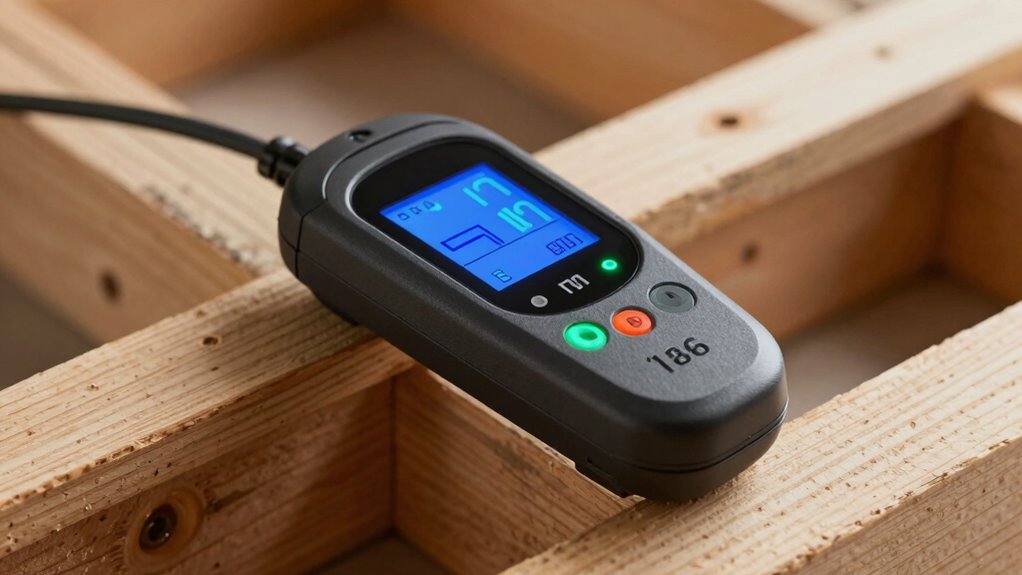

For planning a cable route through a wall, I rank the Franklin Sensors ProSensor M210 as my best overall pick because its 13 sensors can help show a stud’s width, while its live-wire warning adds a useful caution. The Franklin Sensors ProSensor M150/X990 is a simpler multi-sensor alternative, and the Zircon MultiScanner A250c suits buyers who want to locate wood, metal, and possible AC wiring with an enhanced display. The main tradeoff is between broad scanning and simple operation: more detection modes can add useful context, but no electronic warning proves a wall is safe to cut or drill. I compare all 15 options by their stud-finding approach, wire-warning features, usability, and likely limitations. Read on for the full breakdown and guidance on choosing a scanner for your wall and cable-routing plans.

Get business pricing on networking and server gear
- Business-only prices and quantity discounts
- Tax-exempt purchasing
- Multiple users, one account, clear invoices
Key Takeaways
- The M210 leads the lineup for broad stud visibility: its 13-sensor design offers more sensing points than the M150/X990, while both include live-wire warnings.
- Zircon’s MultiScanner models suit buyers who want material versatility: the A250c and A200 detect metal as well as studs and include live-wire detection, unlike a basic stud-only tool.
- Simple alarms and displays vary across the five-in-one scanners: models from Mecurate and other brands combine multiple detection modes, but buyers should check the exact manual for what each mode detects and its limits.
- The magnetic two-pack is the simplest, battery-free choice: it can locate metal fasteners in drywall, but it cannot provide an electronic live-wire warning or identify wood on its own.
- Rechargeable and adjustable models favor specialized workflows: the FNIRSI WD-01 adds rechargeable operation and six modes, while the NOYAFA emphasizes adjustable sensitivity; extra modes are useful only when the user can interpret them correctly.
| Zircon MultiScanner A250c Stud Finder for Wood & Metal, Enhanced Display |  | Best Overall for Clear Wire Warnings | Detection: Wood studs, metal objects, and live AC wiring | Maximum stated detection depth: Up to 1.5 inches | Display: ColorTrip backlit LCD | VIEW ON AMAZON | See Our Full Breakdown |
| Franklin Sensors ProSensor M150/X990 9-Sensor Stud Finder with AC Wire Warning |  | Best for Full-Width Stud Mapping | Sensors: 9 | Detection: Studs, including wood and metal, and live wires | Sensing distance: Up to 1.5 inches | VIEW ON AMAZON | See Our Full Breakdown |
| Stud Finder Wall Scanner 5-in-1 with Live Wire Detection |  | Best for Multi-Mode Scanning | Detection modes: 5: wood, metal, AC wire, deep stud scan, and metal scan | Deep stud scan: Up to 38 mm | Metal detection: Up to 60 mm | VIEW ON AMAZON | See Our Full Breakdown |
| Stud Finder Wall Scanner, 5 in 1 Multifunction Stud Locator with Smart Sensor, HD LCD Display and Audio Alarm |  | Best for Checking More Than Wall Studs | Detection modes: Stud, metal, AC wire, pipe, and joist | Stud detection depth: 13–38 mm | Metal detection depth: Up to 60 mm | VIEW ON AMAZON | See Our Full Breakdown |
| Mecurate 5-in-1 Stud Finder Wall Scanner for Studs, Metal & Live AC Wires |  | Best for Drywall Cable-Run Checks | Detection modes: Standard stud, deep, metal, and AC | Standard stud detection: 3/4 inch | Deep detection: 1-1/2 inches | VIEW ON AMAZON | See Our Full Breakdown |
| Stud Finder, Upgraded Wood and Metal Stud Detector with Live Wire Detection |  | Best for Multi-Material Scanning | Detection targets: Wood, metal, pipes, and live wires | Display: Bright backlit LCD | Alerts: Visual and audio alerts | VIEW ON AMAZON | See Our Full Breakdown |
| Stud Finder Wall Scanner 5 in 1 Multifunctional Smart Wall Scanner with LCD Display and Audio Alarm |  | Best for Depth-Specific Checks | Detection modes: Stud, Deep, Metal, AC, WireWarning | Stud detection depth: Up to 1.5 inches (38 mm) | Metal detection depth: Up to 2.36 inches | VIEW ON AMAZON | See Our Full Breakdown |
| Premium Wall Scanner Stud Finder, Electronic Wall Detector for Wood, Metal, Wires, Pipes, and Joists |  | Best for Deeper Metal Detection | Wood detection depth: 1.5 inches | Metal detection depth: Up to 4.7 inches | Live-wire detection depth: Up to 2 inches | VIEW ON AMAZON | See Our Full Breakdown |
| 2 Pack Magnetic Stud Finders – Easy to Use, No Batteries Needed, Detects Screws, Nails, Metal Studs Through Drywall and Wood |  | Best Battery-Free Supplement | Package quantity: 2 pieces | Detection method: Magnetic force | Magnet material: Neodymium | VIEW ON AMAZON | See Our Full Breakdown |
| Zircon StudSensor A100 Stud Finder with Live Wire Detection |  | Best for Clear Stud-Edge Marking | Edge finding depth: 1-1/2 inches | Stud Scan mode depth: 3/4 inch | Live-wire detection: Up to 2 inches | VIEW ON AMAZON | See Our Full Breakdown |
| Zircon MultiScanner A200 Stud Finder with Metal & Live Wire Detection |  | Best Overall for Cable-Run Checks | Detection: Wood and metal studs, live wires, and metal objects | Detection modes: 3 modes | Display: Digital LCD | VIEW ON AMAZON | See Our Full Breakdown |
| NOYAFA Stud Finder, Electronic Wall Detector with Adjustable Sensitivity |  | Best for Adjustable Scanning | Detection modes: Wood stud, metal, and AC wire | Maximum wood depth: 1.18 inches / 3 cm | Maximum ferrous metal depth: 3.94 inches / 10 cm | VIEW ON AMAZON | See Our Full Breakdown |
| Franklin Sensors ProSensor M210 13-Sensor Stud Finder, Live Wire Detection |  | Best for Showing Stud Width | Sensor count: 13 | Detection: Studs, live wires, and metal | Detection depth: Up to 1.7 inches | VIEW ON AMAZON | See Our Full Breakdown |
| FNIRSI WD-01 6-in-1 Rechargeable Stud Finder Wall Scanner |  | Best for Multiple Material Checks | Detection functions: 6-in-1: wood, metal, AC wires, copper, ferrous metal, and non-ferrous metal | Wood and metal stud depth: Up to 1.5 inches | Copper detection depth: Up to 3.9 inches | VIEW ON AMAZON | See Our Full Breakdown |
| Zircon StudSensor A100 Stud Finder with Live Wire Detection & Hanging Kit |  | Best for Basic DIY Wall Projects | Detection: Wood and metal studs, with live-wire detection | Detection depth: Up to 1.5 inches / 38 mm | Battery: 9V battery, not included | VIEW ON AMAZON | See Our Full Breakdown |
| stud finders for safe cable run | Weight | Display | Power |
|---|---|---|---|
| Zircon MultiScanner A250c Stud | 12.3 ounces | ColorTrip backlit LCD | 9V alkaline battery; not included |
| Franklin Sensors ProSensor M15 | — | — | Two AAA batteries; not included; rechargeable cells not supported |
| Stud Finder Wall Scanner 5-in- | 8.4 ounces | HD LCD | Battery powered |
| Stud Finder Wall Scanner | 9.6 ounces | Backlit HD LCD | 9V battery included |
| Mecurate 5-in-1 Stud Finder Wa | 8.3 ounces | High-definition LCD | 9V battery included |
| Stud Finder | 8.1 ounces | Bright backlit LCD | — |
| Stud Finder Wall Scanner 5 in | 9.6 ounces | HD LCD | 1 included AA battery |
| Premium Wall Scanner Stud Find | 8.1 ounces | TFT LCD | Rechargeable lithium polymer battery |
| 2 Pack Magnetic Stud Finders | 2.08 ounces | — | — |
| Zircon StudSensor A100 Stud Fi | 8.4 ounces | LCD screen | — |
| Zircon MultiScanner A200 Stud | 0.37 kg | Digital LCD | — |
| NOYAFA Stud Finder | 7.04 ounces | LCD | — |
| Franklin Sensors ProSensor M21 | 11.36 ounces | LED display showing detected stud width | Two AA batteries, not included |
| FNIRSI WD-01 6-in-1 Rechargeab | 9.3 ounces | Digital LCD | — |
| Zircon StudSensor A100 Stud Fi | 1 pound | — | — |
More Details on Our Top Picks
Zircon MultiScanner A250c Stud Finder for Wood & Metal, Enhanced Display
For cable-run planning, I rank the Zircon MultiScanner A250c first because it combines stud and metal locating with live AC wire detection up to 1.5 inches, then makes scan results easy to interpret with a color-changing LCD, audio alerts, and a SpotLite pointer. Its auto-correcting feature can reduce errors from imperfect calibration, a useful advantage when marking several possible drilling points. Compared with the Franklin Sensors ProSensor M150, which displays a stud’s full width with multiple sensors, the A250c gives more explicit visual and audio guidance about its scanning modes. The tradeoff is that the supplied information does not describe full-width stud sensing, and it needs a separate 9V alkaline battery. A wire alert is a warning, not permission to drill: shut off power and verify the route before making an opening.
Pros:- Detects wood studs, metal objects, and live AC wiring to a stated depth of 1.5 inches.
- Color-changing backlit LCD, audio alerts, and SpotLite pointer make scan indications easier to follow.
- Auto-correcting technology helps reduce errors from imperfect calibration.
- Low-battery indicator warns when the 9V battery needs replacement.
Cons:- A 9V alkaline battery is required but not included.
- Live-wire detection does not replace switching off power and checking the planned drilling area.
Best for: DIYers planning TV, shelf, or cabinet cable routes who want clear mode-specific visual and audio alerts alongside stud and live-wire detection.
Not ideal for: Buyers who want a ready-to-use package without purchasing a battery, or who prioritize full-width stud indication over a color-coded display.
- Detection:Wood studs, metal objects, and live AC wiring
- Maximum stated detection depth:Up to 1.5 inches
- Display:ColorTrip backlit LCD
- Alerts and guidance:Audio alerts and SpotLite pointer
- Calibration:Auto Correcting Technology
- Power:9V alkaline battery; not included
- Weight:12.3 ounces
- Warranty:Limited lifetime warranty
Our verdict“Choose the A250c for a clear, feature-rich way to check for studs, metal, and live AC wiring before planning a cable run.”
Franklin Sensors ProSensor M150/X990 9-Sensor Stud Finder with AC Wire Warning
The Franklin Sensors ProSensor M150 stands out for mapping where a stud begins and ends: its nine sensors display the full stud width, which can help when choosing a fastening point while routing cable nearby. It detects wood, metal, and live wires to a stated 1.5 inches and needs no calibration, making it a simpler alternative to the manual setup described for the Mecurate 5-in-1. That distinction matters if repeated calibration could slow a sequence of checks. The supplied details do not specify a display type or describe how live-wire warnings are shown, so buyers who want the A250c’s color-coded screen and SpotLite guidance may prefer that model. The M150 also needs two AAA batteries, and rechargeable cells are not supported.
Pros:- Nine sensors indicate the full width of a stud rather than only a single center point.
- Detects studs and live wires to a stated depth of 1.5 inches.
- No calibration required, simplifying repeated scans.
- Compact dimensions make it easier to handle than larger scanners.
Cons:- Requires two AAA batteries, which are not included.
- Rechargeable batteries are not supported.
- The supplied product details do not specify a display type or explain the live-wire warning interface.
Best for: Homeowners and installers who want to identify a stud’s full width without a calibration step before selecting a cable route or mounting point.
Not ideal for: Buyers who want a color LCD, a pointer, or a clearly specified live-wire alert interface, or who rely on rechargeable AAA batteries.
- Sensors:9
- Detection:Studs, including wood and metal, and live wires
- Sensing distance:Up to 1.5 inches
- Stud indication:Displays full stud width
- Calibration:No calibration required
- Output type:Digital
- Power:Two AAA batteries; not included; rechargeable cells not supported
- Dimensions:5.51 x 2.99 x 2.01 inches
Our verdict“Pick the M150 if full-width stud mapping and calibration-free scanning matter more to you than a feature-rich visual display.”
Stud Finder Wall Scanner 5-in-1 with Live Wire Detection
The MOCITA SH402 is the broad-mode option in this group: its five settings separate wood scanning, metal scanning, AC-wire detection, deep stud scanning, and metal scanning. That range is useful when a cable route crosses different wall zones and you need to check for more than framing alone. The stated reach varies by target, with AC detection up to 51 mm and metal up to 60 mm; those figures should not be treated as guaranteed through every wall material. Compared with the Zircon MultiScanner A250c, the SH402 lists dedicated deep and metal scan modes, while the Zircon specifies auto-correction and a SpotLite pointer. The MOCITA’s manual calibration may take extra care, and its battery life may be limiting during frequent scanning.
Pros:- Five modes cover wood, metal, AC wiring, deep stud scans, and metal scans.
- AC-wire detection is specified up to 51 mm, while metal detection is specified up to 60 mm.
- HD LCD and audio alerts provide both visual and audible scan feedback.
- Ergonomic design and 8.4-ounce weight support handheld scanning.
Cons:- Battery life may be limited with frequent use.
- Detection depth can vary with wall material.
- Calibration is partly manual, unlike the no-calibration Franklin Sensors ProSensor M150.
Best for: DIYers who need separate scan modes for wood, metal, and live AC wiring and are comfortable following a calibration process.
Not ideal for: People who want the simplest possible setup, need a stated auto-correcting function, or plan long scanning sessions without spare batteries.
- Detection modes:5: wood, metal, AC wire, deep stud scan, and metal scan
- Deep stud scan:Up to 38 mm
- Metal detection:Up to 60 mm
- AC-wire detection:Up to 51 mm
- Display:HD LCD
- Alerts:Audio alerts
- Power:Battery powered
- Weight:8.4 ounces
Our verdict“Choose the SH402 if you value multiple target-specific scan modes and can take time to calibrate and verify each reading.”
Stud Finder Wall Scanner, 5 in 1 Multifunction Stud Locator with Smart Sensor, HD LCD Display and Audio Alarm
This five-mode scanner earns its place for buyers who want to check for studs, metal, AC wires, pipes, and joists with one tool. Pipe detection gives it a broader stated target list than the MOCITA SH402, which lists wood, metal, and AC-wire modes; that can be helpful when an intended cable route passes near plumbing. Its backlit HD LCD, audio alarms, and auto-calibration aim to make scanning more approachable, and the included 9V battery means it is ready to power without a separate battery purchase. The tradeoff is that the product gives depth ranges rather than a guarantee across wall types, and the calibration process may still feel slow to some users. Like the A250c, its wire warning should prompt further checks, not be treated as proof that drilling is safe.
Pros:- Five listed modes include pipes and joists as well as studs, metal, and AC wires.
- Backlit HD LCD and audio alarms provide visual and audible feedback.
- Auto-calibration is designed to simplify setup.
- A 9V battery is included.
Cons:- Detection depth may vary depending on the wall material.
- Some users may find the calibration process time-consuming.
- The product details do not specify the exact behavior of its AC-wire warning.
Best for: Home renovators who want a single scanner that lists pipe, joist, stud, metal, and AC-wire detection and appreciate an included battery.
Not ideal for: Buyers who need highly detailed documentation of wire-warning behavior or who want to avoid recalibration and variable depth readings.
- Detection modes:Stud, metal, AC wire, pipe, and joist
- Stud detection depth:13–38 mm
- Metal detection depth:Up to 60 mm
- AC detection depth:Up to 51 mm
- Display:Backlit HD LCD
- Sensor technology:Multi-sensing
- Power:9V battery included
- Weight:9.6 ounces
Our verdict“Choose this scanner if pipe and joist detection broaden the checks you need and you want an included battery, while accepting variable scan results.”
Mecurate 5-in-1 Stud Finder Wall Scanner for Studs, Metal & Live AC Wires
The Mecurate 5-in-1 is the most clearly specified option here for comparing different scan depths: it lists standard stud detection at 3/4 inch, deep scanning at 1-1/2 inches, metal detection at 2-3/8 inches, and AC detection at 2 inches. That detail can help a drywall DIYer judge which mode to use while checking a proposed cable path. It also includes a 9V battery and carrying pouch, unlike the A250c, which requires a separate battery purchase. Its limit is surface suitability: the product is described as performing best on drywall and not as suitable for concrete or brick. Calibration is required before each use, so the Franklin Sensors ProSensor M150 is a better fit for anyone who wants to skip that step.
Pros:- Lists separate detection depths for standard studs, deep scans, metal, and AC wiring.
- Safety alerts indicate live AC wiring.
- Includes a 9V battery and carrying pouch.
- High-definition LCD provides scan information.
Cons:- Performs best on drywall and is not suitable for concrete or brick.
- Requires calibration before each use.
- The supplied product details do not state auto-correction or a full-width stud display.
Best for: Drywall DIYers who want specified depths for stud, metal, and AC scans plus an included battery and storage pouch.
Not ideal for: People scanning concrete or brick, or anyone who wants calibration-free operation or a tool specified for a broad range of wall surfaces.
- Detection modes:Standard stud, deep, metal, and AC
- Standard stud detection:3/4 inch
- Deep detection:1-1/2 inches
- Metal detection:2-3/8 inches
- AC detection:2 inches
- Display:High-definition LCD
- Power:9V battery included
- Weight:8.3 ounces
Our verdict“Pick the Mecurate for detailed mode-specific depth information and included accessories when scanning drywall rather than masonry.”
Stud Finder, Upgraded Wood and Metal Stud Detector with Live Wire Detection
For cable-run planning, I favor a scanner that checks for both framing and potential hazards, and this model covers wood, metal, pipes, and live wires with several scan modes. Its backlit LCD and audio alerts give two ways to follow a reading, which can help when marking a route across a dim or awkward work area. Compared with the Zircon StudSensor A100, it offers broader stated material coverage, while the A100 specifies its stud-edge and live-wire detection depths more clearly. That makes this a flexible DIY choice, but the description gives no numeric depth limits, so I would not rely on it alone for a high-stakes cable route. It is also battery powered, and the interface may take a little practice. A detected wire warning is not proof that a wall is safe to drill.
Pros:- Checks for wood, metal, pipes, and live wires.
- Multiple scan modes support different materials and depths.
- Backlit LCD and audio alerts provide visual and sound cues.
- Compact 8.1-ounce body is suited to handheld scanning.
Cons:- No numeric detection-depth specifications are provided.
- Alkaline battery operation means ongoing battery replacement.
- Several modes and display readings may require practice to interpret.
Best for: DIY renovators who want one scanner for checking framing, pipes, metal, and possible live wiring before planning a cable route.
Not ideal for: Buyers who need published detection-depth limits or a stand-alone guarantee that a proposed drilling spot is free of energized wiring.
- Detection targets:Wood, metal, pipes, and live wires
- Display:Bright backlit LCD
- Alerts:Visual and audio alerts
- Scan modes:Multiple modes
- Power source:Battery powered
- Battery cell type:Alkaline
- Weight:8.1 ounces
- Dimensions:2.8 x 1.8 x 6.8 inches
Our verdict“Choose this for broad material checks in routine DIY cable planning, but verify uncertain readings with a safer follow-up method before drilling.”
Stud Finder Wall Scanner 5 in 1 Multifunctional Smart Wall Scanner with LCD Display and Audio Alarm
This scanner’s advantage for cable-run planning is that its listed detection limits let me judge whether its stated range suits the wall at hand: studs up to 1.5 inches, metal up to 2.36 inches, and AC detection up to 2 inches. Five modes separate stud, deep, metal, AC, and wire-warning checks, rather than bundling everything into a single vague scan. Compared with the Upgraded Wood and Metal Stud Detector, this model publishes more usable depth figures; compared with the Zircon StudSensor A100, it adds a dedicated deep mode and metal-depth figure. The tradeoff is that its limits still may not cover thick or unusual wall assemblies, and a small LCD can be harder to read in low light. Its one included AA cell is convenient to start with, but it will need replacement.
Pros:- Publishes separate detection depths for studs, metal, and AC.
- Five modes include dedicated AC and wire-warning settings.
- LCD and audible alarm provide paired feedback.
- One AA battery is included.
Cons:- Stated depth limits may not suit thick or layered walls.
- LCD may be difficult to read in low-light conditions.
- Requires AA battery replacement over time.
Best for: Homeowners who want stated detection ranges and separate modes for checking framing, metal, and possible AC wiring before laying out a cable path.
Not ideal for: People working through thick masonry or layered walls, or anyone who needs a large display that is easy to read in dim spaces.
- Detection modes:Stud, Deep, Metal, AC, WireWarning
- Stud detection depth:Up to 1.5 inches (38 mm)
- Metal detection depth:Up to 2.36 inches
- AC detection depth:Up to 2 inches
- Display:HD LCD
- Power:1 included AA battery
- Weight:9.6 ounces
- Model:510
Our verdict“Pick this when published scan depths matter to your planning, provided the wall is within its stated range and you confirm any uncertain wire warning.”
Premium Wall Scanner Stud Finder, Electronic Wall Detector for Wood, Metal, Wires, Pipes, and Joists
Among these picks, this scanner has the largest stated metal range: up to 4.7 inches, well beyond the 2.36-inch metal limit listed for the 5-in-1 Wall Scanner 510. That extra reach can help flag metal objects that might affect a proposed cable route, while its automatic calibration and adjustable sensitivity offer ways to adapt readings to different wall surfaces. It also lists live-wire detection up to 2 inches, a useful warning range rather than a safety clearance. Its wood range is a more modest 1.5 inches, and the rechargeable battery cannot be swapped for a fresh cell mid-job. Compared with the battery-powered Upgraded Wood and Metal Stud Detector, it offers clearer depth figures but adds charging management and may take practice to interpret accurately.
Pros:- Listed metal detection reaches up to 4.7 inches.
- Live-wire detection depth is specified at up to 2 inches.
- Automatic calibration and adjustable sensitivity support varied surfaces.
- TFT LCD and audible alerts provide visual and sound feedback.
Cons:- Wood detection is limited to a stated 1.5 inches.
- Rechargeable battery is not replaceable with a fresh cell.
- Readings may take experience to interpret correctly.
Best for: Renovators checking for metal pipes or other metal obstacles behind walls who value a rechargeable scanner and published detection ranges.
Not ideal for: Users who need replaceable batteries for long work sessions, or those seeking a simple tool with minimal interpretation of readings.
- Wood detection depth:1.5 inches
- Metal detection depth:Up to 4.7 inches
- Live-wire detection depth:Up to 2 inches
- Detection targets:Wood, metal, wires, pipes, and joists
- Display:TFT LCD
- Power:Rechargeable lithium polymer battery
- Weight:8.1 ounces
- Dimensions:8.07 x 3.86 x 1.85 inches
Our verdict“Choose this for its unusually deep stated metal detection, but do not treat its live-wire alert or any single scan as permission to drill.”
2 Pack Magnetic Stud Finders – Easy to Use, No Batteries Needed, Detects Screws, Nails, Metal Studs Through Drywall and Wood
These magnetic finders take a simpler approach than the electronic Zircon StudSensor A100: they locate ferrous fasteners or metal studs, with no battery, screen, or scan mode to manage. That makes them handy for tracing likely framing positions across suitable drywall or wood when planning a route between attachment points. The two-piece set also gives a spare or lets two people mark separate areas. But this is not a live-wire detector, and it cannot tell you whether a cable is energized or identify nonmetallic pipes. Its usefulness depends on a detectable metal target being present; thick walls and lath-and-plaster surfaces are listed limitations. For safe cable runs, I see it as a preliminary framing aid only, not a substitute for the electronic wire-warning scanners in this roundup.
Pros:- Magnetic operation needs no batteries.
- Neodymium magnets locate screws, nails, and metal studs.
- Two finders allow a spare or parallel marking work.
- Lightweight 2.08-ounce set is easy to carry.
Cons:- Does not detect or warn about live wires.
- Only works when a suitable metal target is present.
- Not suited to lath-and-plaster or very thick walls.
Best for: DIYers working on standard drywall who want a no-battery tool to locate metal fasteners or studs as a basic framing reference.
Not ideal for: Anyone whose main concern is avoiding live cables, pipes, hidden nonmetallic objects, or hazards behind thick or lath-and-plaster walls.
- Package quantity:2 pieces
- Detection method:Magnetic force
- Magnet material:Neodymium
- Construction material:ABS plastic
- Detection targets:Screws, nails, and metal studs
- Power source:Magnetic force; no batteries
- Weight:2.08 ounces
- Package dimensions:5.71 x 3.27 x 0.87 inches
Our verdict“Use this as a battery-free way to locate metal fasteners, not as a safety check before drilling a cable route.”
Zircon StudSensor A100 Stud Finder with Live Wire Detection
The A100 is a focused choice for finding stud edges and checking for possible live wiring, with two scan modes and a SpotLite Pointer that marks where an edge is located. For cable planning, the specified live-wire range of up to 2 inches is useful as a warning, while the LCD and audio alerts make the scan easier to follow. Unlike the 2 Pack Magnetic Stud Finders, it can flag live-wire signals; unlike the Premium Wall Scanner, it does not claim deep metal detection or a rechargeable power source. Its defined stud ranges—3/4 inch in Stud Scan mode and 1-1/2 inches for edge finding—make its scope easier to understand, but the limited depth can be a problem in thicker walls. False positives are also reported, so I would rescan from more than one direction.
Pros:- Live-wire detection is specified up to 2 inches.
- SpotLite Pointer helps mark detected stud edges.
- LCD and audio alerts provide clear scan feedback.
- Two modes cover different stud-scanning depths.
Cons:- Stud Scan mode is limited to 3/4 inch depth.
- Requires a 9V alkaline battery.
- False positives may require repeat scans and independent verification.
Best for: DIY installers who want a branded electronic scanner with clear stud-edge marking and a stated live-wire warning range for routine drywall work.
Not ideal for: People scanning thick walls, looking for deep metal objects, or expecting a wire warning to certify a spot as safe to drill.
- Edge finding depth:1-1/2 inches
- Stud Scan mode depth:3/4 inch
- Live-wire detection:Up to 2 inches
- Scanning modes:Two
- Display:LCD screen
- Alerts:Audio alerts and SpotLite Pointer
- Battery:9V alkaline
- Weight:8.4 ounces
Our verdict“Choose the A100 for straightforward stud-edge marking and a live-wire warning, but rescan ambiguous areas and use separate electrical precautions before drilling.”
Zircon MultiScanner A200 Stud Finder with Metal & Live Wire Detection
For planning a cable route, I’d put the Zircon MultiScanner A200 first because it checks for studs, metal objects, and live wires rather than treating stud location as the whole job. Its three detection modes, LCD, audio alerts, and SpotLite marking aid make it easier to flag potential obstacles before drilling. Compared with the simpler Zircon StudSensor A100, the A200 gives more ways to scan for metal and interpret a wall; the A100 is the more straightforward choice when you mainly need a stud location and a wire warning. The tradeoff is that the A200 runs on a replaceable 9V battery, and occasional false readings mean a scan should be repeated from another direction. It detects live wires as a warning, not as a complete map of a cable’s path.
Pros:- Detects wood and metal studs, metal objects, and live wires.
- Multiple detection modes help with different wall-scanning tasks.
- LCD, audio alerts, and SpotLite guidance support marking a location.
- Compact, lightweight body is easy to handle during repeated scans.
Cons:- Requires a 9V battery that is not rechargeable.
- Occasional false readings call for repeat scans and cautious interpretation.
- Designed for wall scanning rather than locating objects in other materials.
Best for: DIYers planning a cable route who want one handheld scanner to check studs, metal, and live-wire warnings before drilling.
Not ideal for: Buyers who want rechargeable power or a tool that maps the exact path of wiring; this model uses a 9V battery and wire detection is only a warning.
- Detection:Wood and metal studs, live wires, and metal objects
- Detection modes:3 modes
- Display:Digital LCD
- Alerts and guidance:Audio alerts and SpotLite guidance
- Power source:Battery powered; 9V battery required
- Weight:0.37 kg
- Dimensions:1.8 x 3.23 x 7.72 inches
- Warranty:Limited lifetime warranty
Our verdict“Choose the A200 if you want a versatile first check for studs, metal, and live-wire warnings before routing cable through a wall.”
NOYAFA Stud Finder, Electronic Wall Detector with Adjustable Sensitivity
The NOYAFA Stud Finder suits buyers who want to adjust how the tool responds rather than rely on one fixed setting. It detects wood studs, metal, and AC wires, while its sensitivity adjustment and listed material-specific depth limits give users more control as wall conditions change. Its rechargeable battery and backlit LCD also avoid the A200’s replaceable 9V battery routine. That flexibility comes with a learning cost: the user has to set sensitivity appropriately, and the listed wood depth is only 1.18 inches, less than the Franklin Sensors ProSensor M210’s stated 1.7-inch detection depth. For cable work, the live-wire mode is a useful warning, but it cannot confirm a wire’s exact route. I’d choose this for deliberate scanning, not for someone who wants the simplest scan-and-mark workflow.
Pros:- Detects wood studs, metal, and AC wires.
- Adjustable sensitivity gives users control over scanning response.
- Rechargeable lithium-ion battery uses USB Type-C charging.
- Backlit LCD displays scanning information.
Cons:- Manual sensitivity changes can add setup and interpretation work.
- Listed maximum wood detection depth is 1.18 inches.
- Lightweight construction may call for careful calibration and scanning.
Best for: DIYers who scan walls with varying materials and want adjustable sensitivity, rechargeable power, and a clear display.
Not ideal for: Beginners seeking a simple, fixed-setting scanner or buyers who need the deeper stated wood detection of the Franklin Sensors ProSensor M210.
- Detection modes:Wood stud, metal, and AC wire
- Maximum wood depth:1.18 inches / 3 cm
- Maximum ferrous metal depth:3.94 inches / 10 cm
- Maximum non-ferrous metal depth:3.15 inches / 8 cm
- Sensitivity:Adjustable
- Display:LCD
- Power source:Rechargeable lithium-ion battery
- Weight:7.04 ounces
Our verdict“Pick the NOYAFA if you want rechargeable power and hands-on sensitivity control, and are comfortable adjusting settings for each scan.”
Franklin Sensors ProSensor M210 13-Sensor Stud Finder, Live Wire Detection
When a cable route depends on finding a clear space between framing, the ProSensor M210 makes stud boundaries its main advantage. Its 13 sensors show the detected stud’s width across an LED display, which can give a more useful picture than a basic single-location indication. It also detects live wires, reaches a stated depth of 1.7 inches, and requires no calibration. Compared with the Zircon MultiScanner A200, the M210 emphasizes stud-width coverage and ease of starting a scan; the A200 adds broader metal-detection functionality and an LCD. The M210’s limitation is its focus on drywall and similar surfaces, so it is less versatile when a cable route needs broader material checks. Its LED display may also take a little time to interpret, and its two AA batteries are not included.
Pros:- Thirteen sensors display the detected width of a stud.
- Detects live wires as part of the scan.
- No calibration is required before use.
- Stated detection depth reaches 1.7 inches.
Cons:- Designed for drywall and similar surfaces rather than a wide range of materials.
- Requires two AA batteries, which are not included.
- The multi-indicator LED display may take time to interpret.
Best for: Homeowners routing cable through drywall who want to see a stud’s full detected width and avoid a separate calibration step.
Not ideal for: Buyers scanning varied wall materials or seeking broad metal identification; the A200 offers more varied detection, while the M210 is focused on drywall-like surfaces.
- Sensor count:13
- Detection:Studs, live wires, and metal
- Detection depth:Up to 1.7 inches
- Calibration:No calibration required
- Display:LED display showing detected stud width
- Power:Two AA batteries, not included
- Weight:11.36 ounces
- Dimensions:7.5 x 3.35 x 3.33 inches
Our verdict“Choose the M210 if seeing stud width matters more to your cable plan than having the A200’s wider metal-detection options.”
FNIRSI WD-01 6-in-1 Rechargeable Stud Finder Wall Scanner
The FNIRSI WD-01 stands out when a cable route might cross more than wood framing. Its six detection functions cover wood, metal, AC wires, copper, and ferrous and non-ferrous metals, with stated depths varying by target. That extra material detail makes it a broader scanner than the Zircon StudSensor A100, which is a simpler stud finder with live-wire detection. The WD-01 also offers auto calibration, an LCD, and rechargeable power, reducing setup and battery replacement. Those capabilities do not make it a wire mapper: AC-wire detection is listed up to two inches, and a warning still cannot show the cable’s full path. Its LCD may be hard to read in bright conditions, and reports of occasional false alarms make careful, repeated scans sensible. I’d favor it for varied material checks over the A100’s simpler operation.
Pros:- Six detection functions cover wood, metals, and AC wires.
- Lists separate detection depths for several target materials.
- Auto calibration simplifies getting a scan started.
- Rechargeable lithium-polymer battery avoids routine disposable-battery replacement.
Cons:- AC-wire detection is listed to a maximum of 2 inches and does not trace a wire’s route.
- Occasional false alarms can require repeat checks.
- The LCD may be difficult to read in bright conditions.
Best for: DIYers checking walls, floors, or ceilings where pipes, different metals, framing, and live-wire warnings may all affect a cable route.
Not ideal for: Anyone who needs a simple stud-and-wire-warning tool or a confirmed cable path; its broad detection set adds complexity and does not trace wiring.
- Detection functions:6-in-1: wood, metal, AC wires, copper, ferrous metal, and non-ferrous metal
- Wood and metal stud depth:Up to 1.5 inches
- Copper detection depth:Up to 3.9 inches
- Iron detection depth:Up to 4.7 inches
- AC-wire detection depth:Up to 2 inches
- Calibration:Auto calibration
- Display:Digital LCD
- Power source:Rechargeable lithium-polymer battery
- Weight:9.3 ounces
Our verdict“Choose the WD-01 if your route planning calls for checks across several materials and you accept that its wire mode is a warning, not a cable tracer.”
Zircon StudSensor A100 Stud Finder with Live Wire Detection & Hanging Kit
The Zircon StudSensor A100 is the straightforward pick for someone who mainly needs to locate framing and get a live-wire warning before making a hole. It detects wood and metal studs to a stated 1.5 inches and includes a picture-hanging kit, though that add-on matters less for cable runs than the core scanning function. Compared with the MultiScanner A200, the A100 gives up the broader metal-object scanning and multiple detection modes in exchange for a simpler role. Its live-wire feature also does not identify the wire’s exact position, so it should not be treated as a route map or a guarantee that a drilling spot is clear. The 9V battery is not included, and the limited depth can rule it out for more demanding wall checks. I’d pick it for basic indoor DIY, not complex cable planning.
Pros:- Locates wood and metal studs to a stated depth of 1.5 inches.
- Includes live-wire detection as a warning before drilling.
- Picture-hanging kit adds utility for non-cable wall projects.
- Compact design supports simple handheld scanning.
Cons:- Live-wire detection warns of nearby wiring but does not locate its exact position.
- The required 9V battery is not included.
- Its 1.5-inch stated depth may not suit deeper or specialized scanning.
Best for: DIYers who need a basic stud location and live-wire warning for light wall work, with a hanging kit useful for separate picture projects.
Not ideal for: Buyers planning complicated cable routes or needing broader metal detection, deeper scanning, or exact wire location; the MultiScanner A200 offers more scanning functions.
- Detection:Wood and metal studs, with live-wire detection
- Detection depth:Up to 1.5 inches / 38 mm
- Battery:9V battery, not included
- Included accessories:Picture-hanging kit with brass hooks, nails, and hangers
- Weight:1 pound
- Package dimensions:9 x 6 x 3 inches
Our verdict“Choose the A100 for basic stud finding and a live-wire warning, but choose the A200 if your cable route needs broader metal checks.”

How We Picked
I ranked these 15 tools around the actual cable-run problem: locating framing, noticing possible energized wiring, and understanding what a scanner cannot confirm. I gave greater weight to clearly specified wire-warning capability, useful stud-location methods, and controls or displays that help distinguish a target from an uncertain reading. Multi-sensor tools rank above basic magnetic locators for this task because they can offer more information about stud position, though they still cannot certify a wall as safe.
I also weighed material detection, sensitivity options, power style, and ease of use. The M210 takes the top spot for its 13-sensor layout paired with live-wire detection; the M150/X990 and Zircon MultiScanner models follow for different combinations of sensing and material coverage. Multifunction scanners offer broader modes but may demand more interpretation, while the magnetic two-pack ranks lower for cable planning because it detects metal fasteners rather than live wiring. Product names and feature claims alone do not establish detection depth or accuracy, so I favor checking each model’s manual and treating every warning as a prompt for caution—not clearance to drill.
Factors to Consider When Choosing Stud Finders For Safe Cable Runs
Choosing a scanner for a cable route is less about collecting the most modes and more about knowing what each reading can tell you. I’d match the tool to the wall construction, the route’s risk, and the user’s comfort with interpreting warnings. These broader checks can help prevent a common mistake: treating a stud reading or a no-warning result as proof that the space behind the wall is clear.
Separate Stud Location From Wire Warning
A stud finder and a live-wire detector answer different questions: one helps locate framing, while the other may warn of energized wiring under certain conditions. A wire-warning icon or alarm does not map every cable, and a quiet result does not prove that no cable is present. For a planned route, use stud readings to understand framing and wire warnings as an additional hazard signal, not as a complete wiring survey. Check the manual for the kind of wiring the model can detect and any stated limitations. If the path remains uncertain, pause and consult a qualified electrician rather than relying on a second pass as proof of safety.
Match Detection Modes to Your Wall
Drywall over wood framing is a different scanning task from plaster, tile, or a wall with metal framing. Multi-mode tools can help identify wood, metal, or possible AC wiring, but extra modes do not automatically make a scanner more reliable on every surface. Wall thickness, texture, moisture, and nearby metal can affect readings, so check the device’s supported materials and depth claims before buying. If you are unsure what the wall contains, a model with more than one sensing mode may offer useful clues, though it still needs careful interpretation. Avoid choosing by the largest mode count alone; favor the modes that match the construction you actually have.
Choose a Sensing Layout You Can Interpret
Multi-sensor layouts can show more of a stud’s width than a tool that reports only a single edge or center point. That extra information may help you distinguish a narrow target from a broader framing member, but it does not locate concealed cables. Simpler edge-finding scanners can work well when the user follows the manual and marks both sides of a stud rather than guessing from one beep. Magnetic finders take another route: they locate metal fasteners, which can indicate a framing line, but they do not directly detect wood or energized wires. Pick the approach whose readings you can repeat and understand, not simply the one with the most elaborate display.
Treat Sensitivity as a Control, Not a Fix
Adjustable sensitivity can help when a wall gives inconsistent readings or when a scanner needs a different setting for a particular surface. It can also make results harder to interpret if a user changes settings repeatedly without following the instructions. Begin with the recommended mode and calibration procedure, then scan slowly in more than one direction and compare marks. If repeated passes disagree, do not average them into a confident drilling point; treat the inconsistency as a warning to investigate further. A sensitivity dial or menu cannot overcome every wall condition or detect every hidden object.
Weigh Power and Display Against Your Work
A clear screen and audio signal can make it easier to follow a scan, especially when working alone or marking a route at shoulder height. At the same time, screens, alarms, and several modes may add steps for someone who only needs to locate framing. Battery-powered models require charged or replaceable cells; a rechargeable scanner reduces disposable-battery handling but needs charging before the job. A magnetic finder avoids batteries but gives much narrower information for cable planning. Consider whether you need a tool for occasional home projects or repeated wall scans, and choose the controls you can use consistently.
Use a Safe Scanning Routine Before Drilling
Even a capable scanner is only one part of a safe cable plan. Read the model’s instructions, check the wall from multiple directions, and mark likely framing and any wire-warning areas before deciding where a route might go. Do not scan over an assumed clear patch and immediately drill: wiring can run in unexpected directions, and detection depends on the tool and wall conditions. If the building layout, electrical route, or scanner result is unclear, stop and seek qualified advice. The right tool can reduce uncertainty, but no product in this roundup can guarantee a hidden wall is safe to penetrate.
Frequently Asked Questions
Can a stud finder with live-wire detection prove a cable route is safe?
No. Live-wire detection is a warning feature, not a guarantee that every cable will be found or that a no-warning area is clear. Detection can depend on the wiring, wall material, tool settings, and scanning method. Use the device as one source of information, follow its manual, and avoid treating a silent reading as permission to drill. If the route is uncertain, ask a qualified electrician to assess it.
Should I choose the Franklin M210 or the M150/X990 for cable planning?
Both are multi-sensor options with live-wire warnings, so either offers more stud-location context than a magnetic fastener finder. The M210 has 13 sensors, while the M150/X990 is a less sensor-heavy alternative; that difference may matter if you want a broader view of a stud’s position. Neither model can map all hidden wiring or certify a drilling point. Compare their controls, display, and manual instructions against your wall type and comfort level before choosing.
Is a magnetic stud finder enough for routing a cable through drywall?
A magnetic finder can locate metal screws or nails that often follow a framing line, and it works without batteries. That makes it a handy basic locator, but it does not directly identify wood framing or warn of live AC wires. For cable planning, it provides less safety information than an electronic scanner with a wire-warning feature. Use it only as a limited clue, and do not treat a missing fastener reading as a clear route.
Do five-in-one or six-in-one scanners make a safer choice?
More modes can help identify different materials, but the mode count alone does not show how well a tool detects a particular hazard. The Mecurate and other five-in-one scanners, along with the FNIRSI WD-01, offer broader functions than a basic stud locator, yet each mode has its own limits and instructions. A model is useful only if its detection claims match your wall and you can interpret its display correctly. Check the manual for supported materials, detection limits, and calibration steps before relying on any reading.
What should I do if the scanner gives inconsistent readings near my planned route?
Stop before drilling and repeat the scan according to the tool’s calibration and movement instructions. Try a second direction and confirm whether the same target appears, but do not assume that repeated or changing readings average out to a safe spot. Wall texture, nearby metal, moisture, and hidden objects can complicate results. If the readings remain unclear or the consequences of a mistake are serious, get help from a qualified electrician.
Conclusion
For most buyers planning a cable route, I’d choose the Franklin Sensors ProSensor M210 as the best overall option for its 13-sensor layout and live-wire warning. The Franklin Sensors ProSensor M150/X990 is my best value-style alternative for buyers who want multi-sensor stud finding without stepping up to the M210’s sensor count. For a best premium-style pick, I’d look at the Zircon MultiScanner A250c if its wood, metal, and wire-detection combination suits the wall and the buyer values a more informative display. Beginners may prefer the Zircon StudSensor A100 for a more focused stud-finding approach with live-wire detection, while recognizing its narrower feature set. For battery-free locating of metal fasteners, choose the two-pack magnetic finder; for rechargeable, multi-mode use, consider the FNIRSI WD-01. Whichever tool you choose, treat wire warnings as caution signals—not proof that an unmarked area is safe to drill.
Halloween Picks
halloween
As an affiliate, we earn on qualifying purchases.