
TL;DR
A Chinese research and industry collaboration claims it reached a real-time transfer speed of 3.2 petabits per second over a 24-core optical fiber cable. Hubei Province’s government website reported the result, but the available account does not provide test methods or independent verification details.
A Chinese research and industry collaboration claims a real-time optical-fiber transfer speed of 3.2 petabits per second using a 24-core cable, a result it describes as a world record. The claim, reported by the Hubei provincial government website, points to the potential capacity of multi-core fiber, but the publicly provided account does not detail how the speed was measured or independently verified.

Get business pricing on networking and server gear
- Business-only prices and quantity discounts
- Tax-exempt purchasing
- Multiple users, one account, clear invoices
The collaboration included the National Key Laboratory of Optical Communication Technology, the Network of China Information and Communication Technologies Group, Pengcheng Laboratory, and Fiberhome Fujikura Fiber Optic Technology Co., Ltd. The reported figure is 3.2 Pb/s, or 3.2 petabits per second, across a 24-core optical-fiber cable. The report characterizes the transfer as real time; the available details do not specify the transmission distance, duration, or test setup.
The Hubei government website illustrated the claimed capacity by saying the speed would be sufficient to download more than 20,000 4K movies in one second. That is a comparison offered in the report, not a measured movie-download test. Actual download time for a film would also depend on file size, network conditions, and the receiving system, none of which are described in the account.
The reported announcement identifies the organizations involved but does not name individual researchers. It also does not provide a paper, benchmark protocol, or independent review in the information available here. The 3.2-Pb/s figure should accordingly be treated as a claim by the collaborating team, rather than as a result whose methods and record status have been established here through outside verification.
Why Multi-Core Fiber Capacity Matters
A result at this scale, if independently supported and reproducible, would indicate that multiple cores within one fiber cable can carry exceptionally large volumes of data. That matters as demand grows for communication capacity between data centers and across national and international networks. Increasing the amount carried by a cable could offer an alternative to installing more separate fiber links, although the report does not establish that the demonstrated system is ready for commercial deployment.
The distinction between a laboratory or experimental transfer and a usable network service is important. A headline speed alone does not show how well a system performs over long distances, how reliably it operates, what equipment it needs, or whether it can be integrated with existing infrastructure. The reported claim is a potentially important research milestone, but it does not by itself establish practical network capacity or consumer download speeds.
Products Worth Considering

Bose Smart Dolby Atmos Soundbar with Alexa, A.I. Dialogue Mode, and Bluetooth, Black

Kindle Paperwhite Signature Edition 32GB (2024 Model) – Metallic Black

Jackery Explorer 300 Portable Power Station, 292Wh
As an affiliate, we earn on qualifying purchases.
The 24-Core Fiber Demonstration
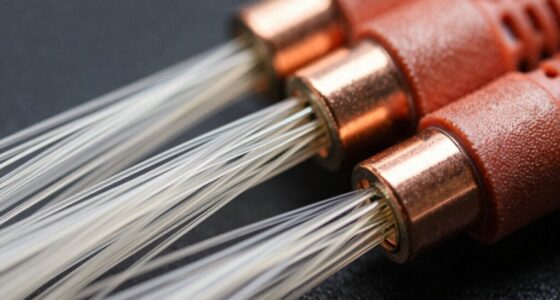
Conventional optical communication sends information as light through fiber. The reported experiment used a 24-core optical cable, which provides multiple cores for carrying signals within a single cable. The account attributes the work to a collaboration spanning an optical communications laboratory, research and network organizations, and an industry partner.
The Hubei government website compared the claimed 3.2-Pb/s rate with the amount of data represented by more than 20,000 4K movies. Tom’s Hardware reported the claim and the participating organizations. The account does not state the experiment’s date, transmission distance, duration, equipment configuration, or whether the figure describes aggregate capacity across all 24 cores. Those missing details limit comparisons with other optical-fiber demonstrations.
“The reported speed is enough to download “more than 20,000 4K movies” in one second.”
— Hubei provincial government website
Verification and Test Details
The available account does not include independent confirmation of the claimed record or enough methodological detail to evaluate it. It does not specify the link distance, how long the rate was sustained, the error rate, the measurement method, or whether the 3.2-Pb/s figure represents aggregate throughput across all 24 cores. It also does not identify a published technical paper or independent testing body.
Those details matter because transfer rates can depend on test conditions and on how throughput is calculated. The team’s use of the phrase “world record” is therefore a claim attributed in reporting, not a status that can be assessed from the information provided. The exact experiment date and the prospect of a commercial system are also unclear.
Evidence Needed to Assess the Claim
A technical publication or fuller project statement could clarify the transmission distance, test duration, equipment, measurement procedure, and how the 24 cores contributed to the reported rate. Independent evaluation would help determine whether the result is comparable with other demonstrations and whether the record claim holds under a defined benchmark.
Until those details are available, the development is best understood as a reported research and engineering claim, not proof that everyday internet connections can operate at petabit speeds. No deployment schedule or commercial availability information is included in the account.
Source: Tom’s Hardware
Key Questions
What speed did the Chinese team claim?
The collaboration claimed a real-time transfer rate of 3.2 petabits per second over a 24-core optical-fiber cable.
Who took part in the reported work?
The organizations named are the National Key Laboratory of Optical Communication Technology, the Network of China Information and Communication Technologies Group, Pengcheng Laboratory, and Fiberhome Fujikura Fiber Optic Technology Co., Ltd.
Has the world-record claim been independently verified?
The available report does not provide independent verification, a detailed benchmark, or a technical paper. The record remains a claim attributed to the team in the reported account.
Does this mean home internet can reach 3.2 petabits per second?
No. The reported figure concerns a 24-core fiber demonstration. The account does not show that the rate is available to consumers or describe a commercial network deployment.
Source: Tom’s Hardware