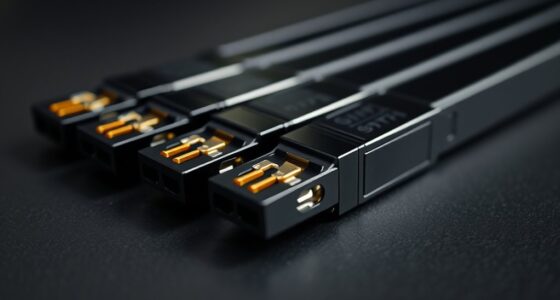
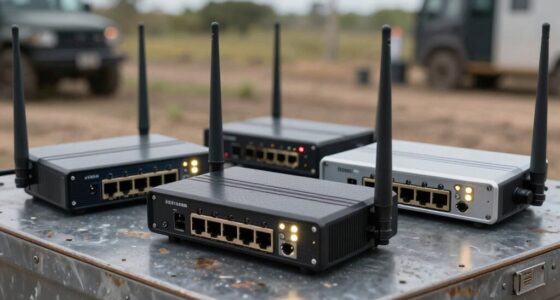
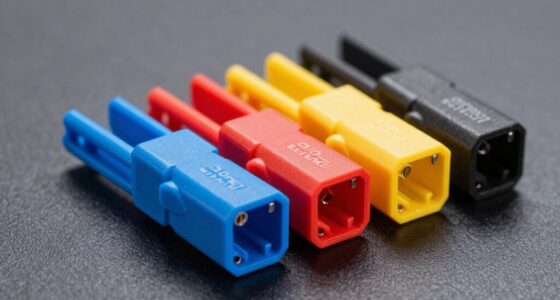
A power distribution unit with a meter can show voltage, current, or energy use while distributing power, but the right choice depends on where it will be installed and what it must supply. My best overall pick is the Tripp Lite 20A metered PDU for its straightforward rack format, 12 outlets, and long cord. For dense infrastructure, the Apislogik 44-outlet PDU adds remote monitoring, while the Tecmojo 20-outlet model offers Modbus RTU for systems that need monitoring integration. The main tradeoffs are outlet type and count, electrical compatibility, monitoring depth, and whether the unit is built for a rack, outdoor panel, or event power. Read on for the full breakdown and buying guidance matched to those different jobs.

Get business pricing on networking and server gear
- Business-only prices and quantity discounts
- Tax-exempt purchasing
- Multiple users, one account, clear invoices
Key Takeaways
The Tripp Lite is the most approachable rack pick: its 12 outlets, 20A rating, and 15-foot cord suit buyers who want metering without a high-density or networked setup.
The Apislogik and Tecmojo serve different high-density needs: Apislogik lists 44 outlets and remote monitoring, while Tecmojo has 20 outlets and RS485 Modbus RTU for integration-focused installations.
Outlet format can matter more than outlet count: C13/C19 rack models do not directly replace NEMA receptacle units for ordinary workshop or household equipment.
Outdoor and event boxes are separate use cases: the YouTeMei and RV box provide NEMA outlets in enclosure-style formats, while the Prox PowerCON-compatible splitter is aimed at event connections.
Check electrical ratings before comparing features: products span 120V, 120/208V, and 240V configurations, and the listed current ratings and receptacle types are not interchangeable.


| power distribution unit with meter | Outlets | Dimensions | Maximum current | Voltage |
|---|---|---|---|---|
| RV Power Outlet Box with Elect | NEMA 14-50R, TT-30R, 5-20 | — | — | — |
| Tecmojo 20-Outlet 0U Metered V | 20 total | 48.4 inches long | — | — |
| Prox X-PWCONX6RITA Power Distr | 6 PowerCON-compatible outputs | 13 × 2.75 inches | 20 A | — |
| YouTeMei Power Distribution Br | 4 NEMA 5-20 | 9.8 × 6.7 × 5.1 inches | 60A | — |
| Metered Surge Protection Power | 6 C13 and 2 C19 | 22.95 × 1.78 inches | — | 240V |
| Tripp Lite Metered PDU | 12 | 21 in. L x 10 in. W | 20A rated; 16A continuous load | 120V |
| Rack Mount Power Strip | 12: 10 C13 and 2 C19 | — | 30A | 200–240V single-phase |
| Apislogik Metered Rack PDU wit | 44: 36 C13, 6 C19, and 2 5-20R | — | 30A | 120/208V |
| 19 inch 1U 6-Outlet NEMA 5-15R | 6 NEMA 5-15R | — | 15A | 120V listed; 110–250V range stated |
| Power Distribution Box with 4 | — | 9.8 x 6.7 x 5.1 in. | — | — |
More Details on Our Top Picks
RV Power Outlet Box with Electric Energy Meter, Breaker Panel with NEMA 14-50R, TT-30R, 5-20 Outlets
This is the lineup’s clearest fit for an RV hookup or outdoor charging point where one box must serve different plug types. Its NEMA 14-50R, TT-30R, and 5-20 outlets cover a wider mix of RV and general-purpose connections than the YouTeMei panel, which has four 5-20 outlets but no listed higher-amperage receptacle. Circuit breakers add overload protection, while the IP44 enclosure offers some protection from outdoor splashes. The pre-wired interior can simplify setup, though wall mounting and basic wiring knowledge are still part of the job. Unlike the rack-focused Tecmojo, this is not a centralized data-center monitoring unit; buyers should also note that the supplied details do not specify the meter’s display or monitoring functions.
Pros:- Three outlet formats support a broader mix of RV and general-purpose connections.
- Circuit breakers provide overload protection.
- IP44 enclosure is suited to locations exposed to splashes.
- Pre-wired interior can reduce assembly work.
Cons:- Wall mounting and basic wiring knowledge are still required.
- Meter display and monitoring functions are not detailed in the supplied specifications.
- IP44 offers less stated weather protection than the YouTeMei panel’s IP54/65 description.
Best for: RV owners and outdoor charging-station planners who need 14-50, TT-30, and 5-20 receptacles in one wall-mounted enclosure.
Not ideal for: Rack operators seeking remote monitoring, or buyers who need a clearly specified metering display and detailed monitoring capabilities.
- Outlets:NEMA 14-50R, TT-30R, 5-20
- Enclosure material:ABS
- Protection:Circuit breakers with overload protection
- Installation:Wall-mounted, pre-wired
Our verdict“Choose this box for mixed RV and outdoor outlet needs, but not when detailed meter functionality or rack-based monitoring is the priority.”
Tecmojo 20-Outlet 0U Metered Vertical PDU, 16 IEC C13 + 4 IEC C19, RS485 Modbus RTU
The Tecmojo is the strongest match here for a rack team that needs live electrical readings and a path to centralized monitoring. Its digital voltage and current display gives operators a local check, while RS485 Modbus RTU can feed readings to a compatible external system. That makes it more management-oriented than the ProX X-PWCONX6RITA, whose LED meter is aimed at checking a compact AV power split rather than rack-wide oversight. The 0U vertical mount also preserves rack units, and the 16 C13 plus four C19 outlets accommodate mixed equipment loads. The tradeoff is fit: it is a 48.4-inch rack device, not a portable or general-purpose PDU, and Modbus functionality depends on compatible monitoring hardware. Its listed NEMA 5-15P and L6-20P input options also warrant checking against the installation’s power source before purchase.
Pros:- RS485 Modbus RTU supports integration with compatible centralized monitoring.
- Digital voltage and current display provides local electrical readings.
- Vertical 0U installation preserves rack-unit space.
- Mix of 16 C13 and four C19 outlets serves varied rack equipment.
Cons:- Full centralized monitoring requires compatible external equipment.
- Long, vertical rack form factor is unsuitable for portable setups.
- Input plug options should be checked against the site’s power supply.
Best for: Data-center and enterprise rack operators who want 20 IEC outlets, local voltage/current readings, and Modbus integration.
Not ideal for: Home users, mobile AV crews, or buyers without a compatible rack and external Modbus monitoring system.
- Outlets:20 total
- Outlet types:16 IEC C13, 4 IEC C19
- Communication:RS485 Modbus RTU
- Display:Digital voltage and current monitor
- Mounting:Vertical 0U rack mount
- Input plugs:NEMA 5-15P, NEMA L6-20P
- Power cord:3×10 AWG, 6 ft
- Dimensions:48.4 inches long
Our verdict“Pick the Tecmojo for a compatible enterprise rack where Modbus monitoring and preserved rack space matter more than portability.”
Prox X-PWCONX6RITA Power Distribution Box, 6 PowerCON Compatible Outputs, 20A Locking Power Splitter, LED Voltage & Current Meter
For a lighting or audio setup where a loose plug can interrupt a show, the ProX prioritizes six locking PowerCON-compatible outputs and a simple local readout. Its LED voltage and current meter helps crews check the incoming electrical conditions without adding a separate meter, while the 20A rating suits the stated professional AV applications. Compared with the Tecmojo’s 20-outlet rack PDU, this is much smaller and more focused: it trades outlet count and centralized monitoring for a lightweight splitter that fits tighter production spaces. That focus also limits its usefulness. Six outlets may not cover a larger stage rig, and the listing gives no mounting hardware details. Buyers need an external source with compatible connectors, so it is not a direct substitute for the wall-mounted RV boxes or a conventional rack PDU.
Pros:- Locking PowerCON-compatible outputs help resist accidental disconnection.
- LED voltage and current readings support quick local checks.
- Compact 2-pound design suits tight production spaces.
- Rated for a sustained 20A load.
Cons:- Six outlets may be insufficient for larger AV or stage rigs.
- No mounting hardware is specified.
- Requires an external source with compatible connectors.
Best for: Live-event audio, lighting, and AV crews that need a compact 20A distribution point with locking connections and a local meter.
Not ideal for: Data-center teams needing high outlet counts or remote monitoring, and buyers whose equipment uses ordinary household receptacles.
- Outlets:6 PowerCON-compatible outputs
- Maximum current:20 A
- Meter:LED voltage and current
- Dimensions:13 × 2.75 inches
- Weight:2.00 lb
- Listed compatible equipment:Lighting, amplifiers, processors, video equipment, AV systems
Our verdict“Choose the ProX for compact live AV distribution where locking outputs and a local meter matter more than outlet count or remote control.”
YouTeMei Power Distribution Breaker Box with 110V Meter, 4 NEMA 5-20 Outlets, IP54 Waterproof Outdoor Panel
The YouTeMei makes the most sense when the job is distributing 110V power to four separate 5-20 outlets outdoors, not serving mixed RV plugs or rack equipment. Its built-in meter, GFCI protection, and an independent breaker for each outlet combine monitoring with fault isolation: a problem on one branch is less likely to take every outlet out of service. Against the RV Power Outlet Box, it gives up the 14-50R and TT-30R options but lists a tougher IP54/65 enclosure rating. Its compact 9.8 × 6.7 × 5.1-inch case is also easier to place than the Tecmojo’s 48.4-inch rack PDU. The key limitation is installation: the unit is described as pre-wired for wall mounting but calls for a licensed electrician, and its 110V-only, 5-20 layout is not a fit for higher-voltage equipment.
Pros:- Built-in electricity meter pairs monitoring with a four-outlet panel.
- GFCI protection and individual breakers add layered circuit protection.
- IP54/65 enclosure rating is suited to outdoor installation.
- Compact enclosure supports wall mounting where space is limited.
Cons:- Installation is not DIY-friendly and calls for a licensed electrician.
- 110V input and NEMA 5-20 outlets do not serve higher-voltage equipment.
- Four outlets offer less connection capacity than the Tecmojo’s 20-outlet rack PDU.
Best for: Property managers and workshop owners who need a wall-mounted outdoor 110V panel with separately protected 5-20 outlets.
Not ideal for: DIY installers, RV owners needing 14-50 or TT-30 connections, or operators distributing 240V rack loads.
- Input voltage:110V
- Maximum current:60A
- Outlets:4 NEMA 5-20
- Phase:Single phase
- Circuits:4
- Enclosure material:ABS plastic
- Dimensions:9.8 × 6.7 × 5.1 inches
Our verdict“Choose the YouTeMei for electrician-installed outdoor 110V distribution with individual outlet protection, not for RV or 240V rack use.”
Metered Surge Protection Power Distribution Unit, 240V, L6-30P Plug, 30A, 7200W, (6) C13 & (2) C19 Outlets, Rack Mount, Heavy Industry, Crypto Mining PDU
This PDU is aimed at buyers whose priority is 240V, 30A rack distribution with surge protection, particularly heavy-industry or crypto-mining equipment. Its six C13 and two C19 outlets cover different IEC equipment connections, while the metered display provides a local way to check power conditions. Compared with the Tecmojo, it lists a higher stated capacity—7,200W—and surge protection, but offers only eight outlets and no RS485 communication details for centralized monitoring. The L6-30P input and 10 AWG, six-foot cable suit a compatible high-current supply, not an ordinary wall outlet. Its rack-mountable, 22.95-inch-long form is also more demanding in small setups. The available data does not detail meter readouts or surge specifications, so buyers needing particular monitoring functions or protection levels should verify those before choosing it.
Pros:- 240V, 30A rating supports high-load rack applications.
- Surge protection and a metered display are included.
- Six C13 and two C19 outlets accommodate different IEC equipment plugs.
- Rack-mountable design and 10 AWG cable suit fixed installations.
Cons:- L6-30P input requires a compatible 240V supply.
- Eight outlets are fewer than the Tecmojo’s 20.
- Meter functions and surge-protection details are not specified in depth.
Best for: Crypto-mining and industrial rack operators with a compatible 240V L6-30 supply who need C13/C19 outlets and local metering.
Not ideal for: Buyers with standard 120V outlets, teams needing many connections or remote Modbus monitoring, and compact or portable setups.
- Voltage:240V
- Current:30A
- Power:7200W
- Outlets:6 C13 and 2 C19
- Input plug:L6-30P
- Cable:6 ft, 10 AWG
- Mounting:Rack mountable
- Dimensions:22.95 × 1.78 inches
Our verdict“Pick this PDU for a compatible high-load 240V rack where surge protection and local metering matter more than remote monitoring or a high outlet count.”
Tripp Lite Metered PDU, 20A, 12 Outlets, 120V, 15 ft. Cord, Rack-Mount, Black
The Tripp Lite suits buyers who want a built-in meter without network-management complexity. Its 12 outlets and 15-foot cord give a small server rack useful connection and placement flexibility, while the digital meter lets operators check load at the unit. Compared with the six-outlet 1U PDU in this lineup, it offers twice as many outlets and a longer cord, but that smaller model adds displayed energy readings and surge protection. The Apislogik goes much further with remote monitoring and outlet-level protection, yet its scale and network features may be unnecessary in a modest rack. A key limit is the 16A continuous-load ceiling despite the 20A rating; buyers should size their load accordingly. It also lacks remote alerts, so readings require someone to check the front panel.
Pros:- Built-in digital meter provides a local view of electrical load.
- Twelve outlets suit compact to mid-sized rack setups.
- 15-foot cord allows more freedom when placing the rack.
- Rack-mount design supports installation in standard rack environments.
Cons:- Continuous load is limited to 16A despite the 20A rating.
- No wireless or remote monitoring features.
- Twelve outlets may not cover larger equipment racks.
Best for: Small server-room or networking-rack operators who need 120V distribution, a local load readout, and a longer cord without remote management.
Not ideal for: Buyers with high continuous loads, more than 12 devices, or a need for remote alerts and monitoring.
- Outlets:12
- Voltage:120V
- Maximum current:20A rated; 16A continuous load
- Plug type:L5-20P / 5-20P
- Cord length:15 ft.
- Mounting:Rack-mount
- Dimensions:21 in. L x 10 in. W
- Warranty:2 years
Our verdict“Choose the Tripp Lite for a 120V rack needing a local meter and flexible cord reach, but skip it if you need remote oversight or more continuous capacity.”
Rack Mount Power Strip – 240V 30A, 2 C19 & 10 C13 Outlets with 20kA Surge Protector and Volt/Amp Meter, 19″ Metal Housing
This 1U unit is a better fit for 240V equipment racks than the Tripp Lite, which is built around 120V distribution. Its ten C13 and two C19 outlets accommodate a mix of standard rack servers and higher-draw devices, while the meter reports voltage, amperage, and wattage at the unit. The 20kA surge protection adds a layer absent from the Tripp Lite’s listed features, though neither option offers the Apislogik’s remote monitoring. The locking L6-30P input helps keep the connection secure, but it also narrows compatibility: a buyer needs the matching 240V supply. The 10-foot cord is less forgiving for distant outlets than Tripp Lite’s 15-foot lead. This is a focused rack PDU, not a general-purpose strip for mixed household plugs.
Pros:- Ten C13 and two C19 outlets serve a useful mix of rack equipment.
- Meter displays voltage, amperage, and wattage in real time.
- 20kA surge protection is specified for connected equipment.
- Metal 1U housing and mounting ears support rack installation.
Cons:- L6-30P input requires a compatible 240V power connection.
- 10-foot cord offers less placement reach than the Tripp Lite’s 15-foot cord.
- No remote monitoring is specified.
Best for: Data-center and server-room operators with a compatible 200–240V L6-30P supply and rack equipment using C13 or C19 inlets.
Not ideal for: Users with 120V-only infrastructure, non-IEC devices, or racks positioned far from the power source.
- Outlets:12: 10 C13 and 2 C19
- Voltage:200–240V single-phase
- Maximum current:30A
- Input plug:NEMA L6-30P locking
- Cord length:10 ft.
- Form factor:1U rack-mount
- Surge protection:20kA
- Warranty:3 years
Our verdict“Pick this PDU for a compatible 240V rack that needs C13/C19 distribution and local electrical readings, not for 120V setups or remote management.”
Apislogik Metered Rack PDU with 44 Outlets (36 C13, 6 C19, 2 5-20R) – 120/208V 30A, Real-Time Remote Monitoring, 0U Rackmount, 9.8 ft Cord
The Apislogik is the lineup’s management-heavy, high-density choice: 44 outlets, remote monitoring, configurable alerts, and event logging make it suited to operators overseeing a packed rack or multiple units. Its mix of C13, C19, and 5-20R outlets is broader than the 12-outlet, 240V rack strip, while hot-swap network management can simplify controller replacement without interrupting power. Per-outlet hydraulic magnetic breakers provide more granular protection than the Tripp Lite’s basic metering approach. That capability comes with setup demands: network interfaces and daisy-chaining make more sense for experienced infrastructure teams than for a small office rack. The 9.8-foot cord is also shorter than Tripp Lite’s, and the 0U layout needs vertical rack space. Its 30A rating and 24A amperage figure should be checked against the intended supply and load.
Pros:- 44 outlets cover dense racks with C13, C19, and 5-20R connections.
- Remote monitoring, configurable alerts, and event logging support off-site oversight.
- Individual hydraulic magnetic breakers provide outlet-level protection.
- Hot-swap network management controller can be replaced without power loss.
Cons:- Advanced network features may require specialist configuration.
- The 9.8-foot cord may restrict placement compared with the Tripp Lite.
- Its outlet count and management features are excessive for small installations.
Best for: Data-center and IT infrastructure teams managing dense racks that need remote load visibility, configurable alerts, and mixed outlet types.
Not ideal for: Home labs and small offices that need only a local meter, few outlets, or a simple plug-in installation.
- Outlets:44: 36 C13, 6 C19, and 2 5-20R
- Voltage:120/208V
- Maximum current:30A
- Amperage:24A
- Form factor:0U rack-mount
- Connectivity:2 RJ45, 2 RJ11, RS485/net, 10/100 Ethernet
- Cord length:9.8 ft.
- Monitoring:Remote monitoring with configurable alerts and event logging
Our verdict“Choose the Apislogik when remote oversight and outlet density matter more than simple installation or a long cord.”
19 inch 1U 6-Outlet NEMA 5-15R Rack Mount PDU with Power Meter 110-250V 15A
For a lightly equipped rack, this six-outlet 1U PDU keeps the essentials close: local readings for amps, voltage, power, and energy, plus listed surge protection. Its OLED gives more kinds of information than the Tripp Lite’s described digital load meter, but the Tripp Lite has twice as many outlets and a 15-foot cord. Against the 240V rack strip, this model is less suited to server-heavy installations because its six NEMA 5-15R receptacles and 15A limit are aimed at lower-capacity gear. The stated 110–250V range may appeal to buyers dealing with varied supply voltages, though the listed voltage spec is 120V and the input plug is Type A; confirm electrical compatibility before purchase. With no remote monitoring specified, readings are available at the rack, not over the network.
Pros:- OLED shows real-time amps, voltage, power, and energy.
- Six NEMA 5-15R outlets suit a compact rack setup.
- Rack-mount 1U format uses little horizontal rack space.
- Surge protection is listed.
Cons:- 15A maximum current limits capacity compared with the 20A Tripp Lite and 30A rack options.
- Six outlets may be too few as a rack grows.
- No remote monitoring capability is specified.
Best for: Small network-rack owners who want a compact 1U unit with an on-device display for energy and electrical readings.
Not ideal for: High-load server racks, users with more than six devices, or teams that need remote monitoring and alerts.
- Outlets:6 NEMA 5-15R
- Voltage:120V listed; 110–250V range stated
- Maximum current:15A
- Input plug:Type A
- Form factor:19-inch, 1U rack-mount
- Meter display:OLED: amps, voltage, power, and energy
- Surge protection:Yes
- Weight:2 lb.
Our verdict“Choose this compact PDU for a small rack where detailed local readings matter more than outlet count or remote access.”
Power Distribution Box with 4 Waterproof NEMA 5-20 Sockets, 110V, 60A
This box is the lineup’s job-site and workshop alternative, not a rack PDU in the same sense as the Tripp Lite or Apislogik. Four waterproof NEMA 5-20 sockets and an IP54 rating point toward professional use where dust and water exposure matter more than outlet density or remote monitoring. Its listed 60A maximum load is far above the rack units’ ratings, but that figure does not make the four sockets suitable for arbitrary high-current loads; installation and circuit protection need to match the equipment and supply. Unlike the metered rack models, the product description does not specify a built-in meter, so it does not directly meet a buyer’s need for measured load visibility. It also requires professional wiring, making it a poor choice for plug-and-play use.
Pros:- Four NEMA 5-20 sockets provide separated outlets for work equipment.
- IP54 rating is suited to environments with dust and water exposure.
- ABS enclosure keeps the unit compact at 9.8 x 6.7 x 5.1 inches.
- Circuit breakers are specified for the sockets.
Cons:- No built-in meter or monitoring features are specified.
- Professional wiring and installation are required.
- Limited to 110V applications and only four sockets.
Best for: Licensed electricians and professional workshop or construction-site operators needing a wired 110V distribution box with protected outlets.
Not ideal for: Rack operators seeking a power distribution unit with an integrated meter, or anyone without the skills and authorization for electrical installation.
- Input voltage:110V
- Maximum load current:60A
- Sockets:4
- Socket type:NEMA 5-20
- Waterproof grade:IP54
- Enclosure material:ABS plastic
- Dimensions:9.8 x 6.7 x 5.1 in.
Our verdict“Consider this box for professionally wired 110V workshop distribution, but skip it if a built-in meter or rack-mount format is required.”

How We Picked
I compared each unit against the needs implied by a metered power distribution unit: useful, readable measurement; outlet format and count; voltage and current compatibility; installation style; and any added monitoring or protection features. I also separated rack PDUs from outdoor breaker boxes, RV outlets, and event power splitters, since their enclosures and receptacles serve different jobs rather than competing as direct substitutes.
The ranking favors products with a clear, practical fit and enough listed detail to judge that fit. The Tripp Lite leads as a straightforward rack option; the Apislogik and Tecmojo rank highly for buyers who need more outlets or monitoring integration. Specialized units place lower for general use, not because their formats are inherently weaker, but because they suit narrower applications. Before purchase, confirm the circuit, plug, receptacle, installation environment, and meter functions against the manufacturer’s specifications.
Factors to Consider When Choosing Power Distribution Unit With Meter
Metered units can look similar while supporting very different circuits and equipment. I would start with the electrical installation and connected loads, then choose the meter and enclosure features that solve a real monitoring or mounting need.
Match the Circuit, Plug, and Voltage
Start with the power source available at the installation, not with the outlet count. A 120V, 120/208V, and 240V unit may have very different plugs and load arrangements, even when all are described as rack PDUs. Check the upstream breaker rating, connector type, and the voltage required by every connected device. Do not treat a unit’s maximum current as permission to draw that amount continuously without checking applicable electrical rules and the manufacturer’s guidance. When a listing combines figures that seem inconsistent, ask the seller or manufacturer to confirm the exact configuration before buying.
Choose Outlets for the Equipment You Own
Count the receptacles you can actually use, rather than relying on the headline outlet total. C13 and C19 outlets are common in rack environments, while NEMA 5-15R, 5-20R, 14-50R, and TT-30R serve different plug and circuit needs. A rack PDU with many IEC outlets will not solve a shortage of NEMA receptacles unless compatible cords or adapters are appropriate for the equipment and electrical setup. Leave room for bulky plugs and power supplies that block neighboring sockets. A smaller unit with the right receptacles can be more useful than a high-density model with the wrong outlet mix.
Decide What the Meter Must Tell You
A local voltage or amp display helps with quick checks, but it may not provide the history or remote access needed for ongoing energy management. If you need data to feed a facility system, look for a specified protocol such as Modbus and confirm how the unit connects to that system. Remote monitoring can help with equipment distributed across a rack or site, though it adds setup and compatibility work. Check whether the meter reports voltage, current, power, or energy; those measurements answer different questions. Avoid paying for monitoring functions unless someone will use the information.
Fit the Enclosure to the Installation
Rack units, wall-mounted breaker boxes, RV power boxes, and event distribution gear are not interchangeable just because each distributes power. Measure rack space and check whether a horizontal 1U or vertical 0U form leaves room for cables, airflow, and service access. Outdoor or damp locations call for an enclosure with a suitable ingress rating, but that rating alone does not confirm that the complete installation is safe in every weather condition. Confirm mounting, cable entry, grounding, and environmental limits in the product documentation. For permanent wiring or high-current equipment, use a qualified electrician where required.
Separate Surge Protection From Metering
A meter tells you about electrical conditions or consumption; it does not automatically protect connected equipment from surges. If surge protection matters, check that it is explicitly listed and review its specifications rather than assuming every metered PDU includes it. Consider whether the installation also needs branch-circuit breakers, overload protection, or other protective devices. These functions address different risks, so one feature should not be treated as a substitute for another. Match protection to the equipment, supply, and local electrical requirements.
Buy for Headroom and Future Changes
Planning only around today’s device count can leave a rack or workshop short of outlets as equipment changes. At the same time, a larger PDU does not increase the capacity of the branch circuit feeding it. Estimate the combined load, account for startup behavior where relevant, and leave practical room for growth without exceeding circuit limits. Think about cable length, cord routing, and whether the display remains visible after installation. Paying more makes sense when extra outlets, remote monitoring, or a specialized enclosure addresses a real future need—not simply because the model has a larger number on its label.
Frequently Asked Questions
Can I use a rack PDU with C13 and C19 outlets for ordinary NEMA equipment?
Only if the device’s power cord and the PDU’s electrical configuration are compatible. C13 and C19 are IEC outlet types, while NEMA receptacles such as 5-15R and 5-20R are different formats. Do not choose adapters by shape alone; verify voltage, current rating, grounding, and the equipment manufacturer’s requirements. For equipment with standard NEMA plugs, a PDU with matching NEMA outlets may be the simpler and safer fit. The Apislogik includes two 5-20R outlets alongside IEC outlets, but its overall configuration still needs checking against the intended circuit and loads.
Is a local meter enough, or should I choose remote monitoring?
A local display is usually enough when someone can inspect the rack and only needs to check present electrical readings. Remote monitoring is more useful when equipment is spread across locations, when staff need data without visiting the rack, or when readings must connect to a management system. Confirm which values the meter reports and how data is accessed; a display, an RS485 interface, and remote network monitoring are not the same capability. The Tecmojo’s Modbus RTU is relevant to integration plans, while the Apislogik lists real-time remote monitoring. If nobody will review the data, simpler metering may be easier to maintain.
How do I know whether a 20A or 30A PDU fits my setup?
Check the circuit feeding the PDU, the PDU’s plug and rating, and the combined requirements of the connected equipment. A 30A model cannot be connected safely to a lower-rated supply simply because its outlets fit the rack. Likewise, the 20A or 30A label does not mean every receptacle can carry that current independently. Verify the product’s wiring, outlet ratings, and installation instructions, and follow the applicable electrical code. If the circuit or load calculation is unclear, ask a qualified electrician rather than guessing from the product title.
Does a metered PDU measure how much electricity my equipment uses?
Not every meter measures accumulated energy. Some displays show voltage or current, which can help diagnose a condition but do not necessarily provide kilowatt-hours over time. Check the specific measurement list and whether readings can be recorded or exported if you need usage tracking for billing or energy analysis. A real-time amp reading can indicate present load without revealing how consumption changes across a day or month. Choose based on the question you need the meter to answer, not the word “metered” alone.
Can I install an outdoor-rated power distribution box myself?
An IP54 listing describes a degree of enclosure protection, not approval for every outdoor installation or exposure. The correct installation also depends on the supply, grounding, breakers, cable entries, mounting location, and local electrical requirements. A box with NEMA outlets may still require fixed wiring or a circuit beyond a typical plug-in setup. Read the manufacturer’s installation documentation and check whether the unit is intended for the exact environment and connection method. Use a qualified electrician when the work involves fixed wiring, high-current circuits, or requirements you cannot verify.
Conclusion
For most rack users who want straightforward local metering, I’d choose the Tripp Lite 20A PDU as the best overall fit. The best value in practical simplicity is also the Tripp Lite if its 12 outlets and 120V format match the setup; buyers needing denser distribution should compare the outlet layouts rather than assume a bigger model is a better value. For a premium, high-density installation, the Apislogik 44-outlet PDU stands out for its listed remote monitoring, while the Tecmojo is the better match for Modbus RTU integration. Beginners are likely to find the Tripp Lite’s conventional rack format easier to evaluate than specialized outdoor or event units. For specific needs, choose the YouTeMei or RV box for the corresponding NEMA outlet and enclosure setup, or the Prox PowerCON-compatible splitter for event power—after confirming circuit and connection requirements. The right choice is the one whose meter, outlets, and electrical rating match the installation, not the one with the longest feature list.
Columbus Day / Indigenous Peoples' Day Picks
long weekend sales
As an affiliate, we earn on qualifying purchases.