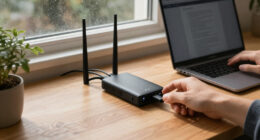
Choosing the right media converter fiber to copper device depends heavily on your required speed, distance, and fiber type. The StarTech Gigabit Fiber Media Converter stands out as the best overall choice for enterprise environments due to its TAA compliance and flexible SFP support. For those needing higher bandwidth, the 10Gtek 10GbE SFP+ Media Converter offers robust 10G performance, while the Omada Gigabit SFP to RJ45 Media Converter MC220L remains a strong contender for managed network setups. The primary tradeoff involves balancing cost against feature sets, particularly whether you need unmanaged simplicity or managed control. Continue reading for a detailed breakdown of how these units compare in performance, build quality, and specific use cases.

Get business pricing on networking and server gear
- Business-only prices and quantity discounts
- Tax-exempt purchasing
- Multiple users, one account, clear invoices
Key Takeaways
- 10G units like the 10Gtek SFP+ converter are becoming standard for backbone links, whereas 1G units remain sufficient for edge connections.
- Single-mode converters support distances up to 20km, making them superior for campus-wide or building-to-building links compared to multi-mode options.
- Managed vs. unmanaged is a critical distinction; unmanaged units are cheaper but lack remote monitoring, which is a risk for large deployments.
- BiDi (Bidirectional) single-fiber converters reduce cabling costs by using different wavelengths on one strand, ideal for fiber-scarce environments.
- TAA compliance and industrial ratings are non-negotiable for government or harsh-environment installations, limiting compatible options significantly.


| media converter fiber to copper | Dimensions | Fiber type |
|---|---|---|
| Gigabit Single Mode LC Fiber M | — | Single-mode |
| 10G Media Converter | 3.54 x 2.36 x 0.79 in | — |
| bitEngine 10G Media Converter | 3.74 x 2.76 x 0.98 in | — |
| Omada Gigabit SFP to RJ45 Medi | — | — |
| 10Gtek Gigabit Ethernet Media | — | Multimode SFP |
| 10Gtek 10GbE SFP+ Media Conver | — | Multimode |
| 10Gtek Gigabit Single-Mode Fib | 3.66 × 2.8 inches | Single-mode fiber |
| Industrial 10G Base-X Fiber Op | 3.74 × 3 × 1.18 inches | — |
| Single Mode LC Gigabit Fiber t | 3.7 × 2.76 × 1.04 inches | Single-mode |
| BiDi Gigabit Single Mode SC Me | — | Single-mode |
| StarTech Gigabit Fiber Media C | 11.14 x 5.39 x 2.64 inches | — |
| Gigabit Multi-Mode LC Fiber Me | 93 x 71 x 27 mm | — |
More Details on Our Top Picks
Gigabit Single Mode LC Fiber Media Converter with 2 SFP LX Modules, 1.25G/s, 20km
I’d choose this pair-included converter when a gigabit copper connection needs to reach across a long single-mode fiber run. Its two LX SFP modules are included, so there’s less module matching to handle than with the TP-Link MC220L, which requires a separately selected SFP. The stated 20 km reach suits remote buildings or network closets, while plug-and-play setup and status LEDs keep basic installation and link checks straightforward. The tradeoff is a firm ceiling at gigabit speed; for a 10G link, the QSFPTEK or bitEngine converters are better fits. Buyers also need LC-terminated single-mode fiber, so this isn’t the flexible choice for existing multimode cabling.
Pros:- Includes two LX SFP modules for a ready-to-match fiber link
- Supports single-mode fiber distances up to 20 km
- Plug-and-play setup avoids configuration work
- LED indicators help identify basic link and activity status
Cons:- Limited to gigabit-class throughput rather than 10GbE
- Requires compatible single-mode LC fiber cabling
- Less adaptable to different fiber types than an open-SFP converter
Best for: Small-business network installers connecting gigabit copper equipment across a long, single-mode LC fiber run who want the LX modules included.
Not ideal for: Buyers upgrading to 10GbE or working with multimode fiber, since this model is limited to gigabit single-mode links.
- Fiber type:Single-mode
- Wavelength:1310 nm
- Maximum distance:20 km
- Speed:1.25 G/s
- Ports:2 x SFP, 1 x RJ45
- Power input:100–240 V AC; 5 V DC, 1.0 A
- Standards:IEEE 802.3, 802.3u, 802.3z, 802.3ab, 802.3x
Our verdict“Choose this when you need a straightforward gigabit bridge over long single-mode fiber and value the included LX modules over higher speed or broader fiber flexibility.”
10G Media Converter, 10 Gigabit Fiber to 10G Copper UTP Ethernet Media Converter, Unmanaged, 1x RJ45 to 1x SFP+ Slot
For a copper-to-fiber jump at 10 Gbps, this QSFPTEK converter offers the speed the gigabit models in this group cannot. Its small footprint suits crowded racks or compact network spaces, and the RJ45-to-SFP+ layout keeps the conversion simple: one copper connection and one fiber module slot. Compared with the bitEngine MC-10G, it lists optional 5–12 V DC backup input as well as AC power, which may help where a compatible DC supply is already available. That flexibility comes with module-selection work: the SFP+ transceiver is not included, and compatibility may vary by module brand. It is unmanaged, so I’d skip it where remote configuration, monitoring, or advanced fault reporting is required.
Pros:- Supports 10 Gbps copper-to-fiber conversion
- Compact body fits dense equipment spaces
- Plug-and-play setup with LED diagnostics
- Offers AC power and optional 5–12 V DC backup input
Cons:- SFP+ module must be selected and supplied separately
- Module compatibility may vary by brand
- Unmanaged design provides no configuration or remote monitoring
Best for: IT teams adding a single 10GbE fiber uplink to a compact rack or data-center setup that already has a compatible SFP+ module.
Not ideal for: Network operators who need managed monitoring or a bundled fiber transceiver, or buyers who only need a basic gigabit link.
- Brand:QSFPTEK
- Model:QT-10G-MC-RJ45
- Interfaces:1 x RJ45, 1 x SFP+ slot
- Data rate:10 Gbps
- Dimensions:3.54 x 2.36 x 0.79 in
- Weight:0.28 kg
- Power:AC 100–240 V; optional DC 5–12 V backup
- Operating temperature:0–70 °C
Our verdict“Pick this compact option for a straightforward 10G link when you can source a compatible SFP+ module and do not need management features.”
bitEngine 10G Media Converter – Unmanaged Copper to Fiber Ethernet (RJ45 to SFP+)
The bitEngine stands out among the 10G options for its listed support of 1G, 2.5G, 5G, and 10G copper rates before sending traffic to a 10G SFP+ fiber connection. That makes it a better match than the QSFPTEK QT-10G-MC-RJ45 when the copper-side device negotiates at an intermediate multigig rate. The unit is compact, runs at a stated 4 W, and keeps operation plug-and-play. The tradeoff is a single RJ45 and SFP+ connection with no management features; it won’t provide the oversight of a managed switch or converter. It also requires a separate SFP+ module and a 12 V supply, so I’d check both module requirements and local power compatibility before choosing it.
Pros:- Lists support for 1G, 2.5G, 5G, and 10G copper speeds
- Compact dimensions suit tight installation spaces
- Low stated nominal power consumption of 4 W
- Unmanaged plug-and-play operation keeps setup simple
Cons:- SFP+ fiber module is not included
- Single RJ45 port limits connection capacity
- No management or monitoring functions
Best for: Small network teams connecting a multigig RJ45 device to a 10G fiber backbone, especially where 2.5G or 5G copper speeds are in use.
Not ideal for: Buyers who need several copper ports, built-in fiber optics, network management, or a power adapter outside the stated 12 V requirement.
- Brand:bitEngine
- Model:MC-10G
- Interfaces:1 x RJ45, 1 x SFP+
- Listed copper speeds:1, 2.5, 5, and 10 Gbps
- Input voltage:12 V
- Nominal power:4 W
- Dimensions:3.74 x 2.76 x 0.98 in
- Fiber module support:SFP+ SR/LR modules
Our verdict“Choose the bitEngine when multigig copper compatibility matters more than management, bundled optics, or multiple ports.”
Omada Gigabit SFP to RJ45 Media Converter MC220L
I’d favor the TP-Link MC220L when the fiber type is not fixed yet or an existing network may use either single-mode or multimode cabling. Its open SFP slot supports 1000BASE-SX/LX/LH modules, unlike the Gigabit Single Mode LC converter with two LX modules, which arrives set up around single-mode LX optics. The MC220L can reach up to 20 km on single-mode or 0.55 km on multimode, but that range depends on choosing a suitable SFP; one is not listed as included. Auto-negotiation and a metal case make it a practical, uncomplicated gigabit bridge. The main limit is speed: this is a 1000 Mbps converter, not an alternative to the QSFPTEK or bitEngine 10G models.
Pros:- Open SFP slot supports compatible single-mode or multimode modules
- Up to 20 km listed reach with single-mode fiber
- Plug-and-play operation with auto-negotiation
- Durable metal casing
Cons:- SFP module must be purchased or supplied separately
- Limited to 1000 Mbps Ethernet
- Actual reach and fiber compatibility depend on the selected module
Best for: IT generalists and small offices needing a gigabit RJ45-to-fiber bridge that can be matched to either single-mode or multimode SFP optics.
Not ideal for: Buyers who want fiber modules included, need a fixed ready-to-connect package, or require throughput above 1 Gbps.
- Brand and model:TP-Link MC220L
- Fiber standards:1000BASE-SX/LX/LH
- Copper standard:IEEE 802.3ab 1000BASE-T
- Ethernet speed:1000 Mbps
- Single-mode distance:Up to 20 km
- Multimode distance:Up to 0.55 km
- Fiber interface:SFP slot; module not specified as included
- Warranty:2 years
Our verdict“Pick the MC220L when flexible SFP selection matters more than included optics or 10G performance.”
10Gtek Gigabit Ethernet Media Converter, MultiMode Dual LC Fiber to Ethernet RJ45 Converter, Pack of 2
This two-converter kit makes the most sense when both ends of a multimode fiber link need copper Ethernet, rather than when you are buying a single unit for a one-sided installation. It includes 850 nm, 1.25G multimode SFP transceivers and supports runs up to 550 m, giving it a more ready-to-pair setup than the TP-Link MC220L, which leaves SFP selection to the buyer. The RJ45 side supports 10/100/1000 Mbps with auto-negotiation, while the included pair covers both ends of a typical link. The compromise is reach and fiber choice: it is limited to multimode, far shorter than the 20 km single-mode options in this roundup, and it cannot serve a 10G copper network.
Pros:- Pack includes two converters for a link endpoint at each side
- Includes 850 nm multimode SFP transceivers
- Supports gigabit Ethernet with 10/100/1000 Mbps copper auto-negotiation
- Listed fiber reach extends to 550 m
Cons:- Limited to multimode fiber and 850 nm optics
- 550 m maximum reach is shorter than single-mode alternatives
- Gigabit-only performance does not suit 10GbE links
Best for: Installers linking two gigabit copper devices over an existing multimode LC fiber run of up to 550 m who need converters at both ends.
Not ideal for: Buyers with single-mode fiber, links longer than 550 m, or 10GbE requirements.
- Package quantity:2 converters
- Fiber type:Multimode SFP
- Fiber connector:Dual LC
- Included transceiver:1.25G, 850 nm multimode SFP
- Maximum fiber distance:550 m
- Ethernet port:1 x RJ45, 10/100/1000 Mbps
- Copper cable:UTP/STP Cat.5e, up to 100 m
- Power supply:5 V, 1 A, UL certified
Our verdict“Choose this pair when both ends of a short-to-medium multimode fiber run need gigabit RJ45 connectivity.”
10Gtek 10GbE SFP+ Media Converter, Dual LC Fiber to RJ45 Copper Converter
For a fiber-to-copper link where 10Gbps throughput matters more than distance, this 10Gtek converter is the strongest fit in this group. It supports multimode fiber at 850nm up to 300 meters, making it better suited to a fast connection within a building than the 20km single-mode options from 10Gtek or AD-net. Plug-and-play setup and status LEDs can simplify initial checks, but the product data says separate modules are needed for fiber or copper connections, so confirm what your installation requires before buying. Its under-5W consumption is modest, yet this is not the pick for long campus links, and there is no stated rugged or outdoor rating. Choose it for short, high-bandwidth runs, not reach or harsh environments.
Pros:- Supports data rates up to 10Gbps for high-throughput fiber-to-copper links.
- Multimode reach extends up to 300 meters.
- Plug-and-play setup and LED indicators aid installation and link checks.
- Power consumption is specified at less than 5W.
Cons:- The 300-meter maximum is much shorter than the 20km single-mode converters in this roundup.
- Additional modules are required for fiber or copper connections.
- No outdoor or rugged-use rating is provided.
Best for: Network administrators linking 10GbE equipment across a short multimode fiber run inside a building.
Not ideal for: Buyers connecting distant buildings or using single-mode fiber; its stated reach is limited to 300 meters and the fiber type is multimode.
- Data rate:10Gbps
- Fiber type:Multimode
- Wavelength:850nm
- Maximum distance:300m
- Ports:1x dual LC fiber, 1x RJ45
- Operating temperature:0°C to 60°C
- Power consumption:Less than 5W
Our verdict“Choose this model for a short multimode run that needs 10Gbps, but pick a 20km single-mode converter for longer links.”
10Gtek Gigabit Single-Mode Fiber to Ethernet Media Converter, Dual SC Fiber, 1000Base-LX to 10/100/1000Base-Tx, UL Certified, 20km, Pack of 2
This pack of two is aimed at buyers building a gigabit single-mode link up to 20km and needing a converter at each end. Its 1000Base-LX fiber connection and 10/100/1000Mbps copper port make it a more straightforward fit for gigabit networks than the 10Gtek 10GbE model, which targets short multimode runs and much higher throughput. The SC connector and single-mode requirement narrow compatibility, so check the fiber already installed rather than assuming an LC-based setup will fit. Auto-negotiation helps the copper side adapt to connected Ethernet equipment, while the two-unit pack suits a complete point-to-point link. There is no stated management or VLAN support, so I would favor it for simple connectivity over networks needing advanced controls.
Pros:- Two converters support installations that need a unit at each end of a link.
- Single-mode fiber reach is specified up to 20km.
- Auto-negotiation supports copper Ethernet speeds from 10 to 1000Mbps.
- UL certification is specified in the product title.
Cons:- Works with single-mode fiber, not multimode installations.
- SC connector requirements may not match LC fiber infrastructure.
- No management or VLAN features are stated.
Best for: Installers connecting two gigabit Ethernet locations over existing single-mode fiber with SC connectors.
Not ideal for: 10GbE users, multimode-fiber installations, or network teams that need managed features such as VLAN controls.
- Pack quantity:2 converters
- Fiber standard:1000Base-LX
- Fiber type:Single-mode fiber
- Fiber connector:SC
- Copper port speed:10/100/1000Mbps
- Maximum distance:20km
- Power supply:5V-1A
- Dimensions:3.66 × 2.8 inches
Our verdict“Pick this pair for a simple gigabit connection over compatible SC single-mode fiber, not for 10GbE or managed networking.”
Industrial 10G Base-X Fiber Optic SFP+ Media Converter
This is the most adaptable choice here for installations facing both wide temperature swings and mixed Ethernet speeds. Its SFP+ slot supports fiber links, while the listed speed range runs from 100Mbps through 10Gbps; that flexibility can help when connecting equipment generations that differ. Compared with the 10Gtek 10GbE converter, it adds DIN-rail mounting and a stated operating range of -40°F to 167°F, making it a stronger candidate for industrial cabinets. The tradeoff is that the product data specifies a slot, not an included optical module, so buyers must match and source the SFP+ transceiver for their fiber type and reach. Its 3.74 × 3 × 1.18-inch body also takes more room than the compact AD-net gigabit unit.
Pros:- Supports listed Ethernet speeds from 100Mbps up to 10Gbps.
- DIN-rail, desk, corner, and equipment-case mounting options support varied installations.
- Operating range is specified from -40°F to 167°F.
- LED diagnostics and plug-and-play operation can simplify setup and troubleshooting.
Cons:- The SFP+ slot means a compatible optical module must be selected separately unless supplied elsewhere.
- Its stated dimensions may make placement difficult in tight spaces.
- No maximum fiber distance is specified in the provided product data.
Best for: Industrial network installers who need flexible link speeds, DIN-rail mounting, and operation across extreme temperatures.
Not ideal for: Buyers seeking a ready-to-connect converter with an included fiber module, or those with very limited mounting space.
- Fiber interface:10GBASE-X SFP+ slot
- Supported speeds:100Mbps, 1Gbps half/full duplex, 2.5Gbps, 5Gbps, 10Gbps full duplex
- Standards:IEEE 802.3u, 802.3ab, 802.3bz, 802.3ae, 802.3az
- Auto MDI/MDI-X:Supported
- Mounting options:DIN-rail, desk, corner, equipment case
- Operating temperature:-40°F to 167°F
- Dimensions:3.74 × 3 × 1.18 inches
Our verdict“Choose this for a temperature-demanding installation with mixed speeds, provided you can select the right SFP+ module and accommodate its footprint.”
Single Mode LC Gigabit Fiber to Ethernet Media Converter with SFP Module
Unlike the industrial SFP+ converter, this AD-net model includes a pre-installed 1310nm LC SFP rated for 20km, along with a Cat6 patch cable and mounting hardware. That bundle reduces parts matching for a typical single-mode gigabit installation, while its fanless, compact design suits a desktop or wall-mounted endpoint. The RJ45 port auto-senses 10/100/1000Mbps, and a DIP switch selects between 1000Base-LX and 100Base-LX; that choice is useful for specific legacy links but requires manual configuration. It offers less peak capacity than 10Gtek’s 10GbE multimode model, and its single-mode LC module rules out multimode fiber. For a standard long-reach gigabit connection, though, it asks less of the buyer than a converter sold with an open slot.
Pros:- Includes a 1310nm LC SFP module rated for 20km.
- Cat6 patch cable and mounting hardware are included.
- Fanless compact design supports desktop or wall installation.
- Auto-sensing copper speeds and MDI/MDI-X simplify device connections.
Cons:- Limited to single-mode fiber and is not suitable for multimode networks.
- Changing between fiber speed modes requires manual DIP-switch selection.
- Supports gigabit-class fiber modes rather than the 10Gbps throughput of the 10Gtek 10GbE model.
Best for: Small-office installers who need a compact, bundled converter for a 20km single-mode LC gigabit link.
Not ideal for: Users with multimode fiber, 10GbE requirements, or installations where DIP-switch configuration is undesirable.
- Fiber type:Single-mode
- Wavelength:1310nm
- Maximum distance:20km
- Copper speeds:10/100/1000Mbps, auto-sensing
- Fiber modes:1000Base-LX / 100Base-LX, DIP-switch selectable
- Dimensions:3.7 × 2.76 × 1.04 inches
- Operating temperature:0 to 70°C
- Power input:100–240VAC adapter, 5V DC output
Our verdict“Choose this bundled unit for a compact, long-reach single-mode gigabit setup; skip it if you need multimode or 10GbE.”
BiDi Gigabit Single Mode SC Media Converter, 10/100/1000M Fiber to Ethernet Converter, 1000Base-FX Single SC to 10/100/1000Base-T/TX RJ45, Built-in Fiber Module, SMF, 1310/1550nm, 20km, 1 Pair
This paired BiDi set is the specialist option for a 20km single-mode connection using a single SC fiber connector per converter. Its built-in fiber modules and 1310/1550nm wavelength pairing distinguish it from the AD-net unit, which comes with an LC SFP but uses a different fiber arrangement. The BiDi design can suit a link where a single strand is available, provided both ends use the compatible wavelength pair; check the remote-side requirements before ordering. Gigabit-class fiber and 10/100/1000Mbps copper make it suitable for ordinary Ethernet access links, not the 10GbE workloads handled by the 10Gtek SFP+ option. The metal case and LED indicators support practical deployment, but a separate 5V power supply is required, and the single-mode SC format limits reuse in other fiber setups.
Pros:- BiDi design supports fiber links over a single SC connector at each converter.
- Specified reach is up to 20km over single-mode fiber.
- Built-in fiber modules avoid selecting separate optical modules.
- Metal enclosure and LED indicators aid deployment and link monitoring.
Cons:- Requires an external 5V power supply.
- Single-mode SC format limits compatibility with other fiber installations.
- The 1310/1550nm pair requires compatible equipment at the opposite end.
Best for: Installers with single-mode SC cabling who need a matched BiDi pair for a long-reach gigabit Ethernet link.
Not ideal for: Buyers using multimode or LC fiber, seeking a single converter rather than a pair, or needing 10GbE throughput.
- Fiber standard:1000Base-FX
- Fiber type:Single-mode
- Fiber connector:Single SC
- Wavelengths:1310/1550nm
- Fiber distance:20km
- Copper speeds:10/100/1000Mbps
- Supply voltage:5V DC
- Material:Metal
Our verdict“Choose this matched BiDi pair for a compatible single-mode SC link where fiber strands are limited, but not for LC, multimode, or 10GbE networks.”
StarTech Gigabit Fiber Media Converter, Open SFP, MM/SM, TAA
I’d choose the StarTech when the fiber link is still being specified or may change later. Its open SFP slot lets a network team select a compatible module for multi-mode or single-mode fiber, rather than committing to the fixed multi-mode LC connection of the Gigabit Multi-Mode LC Fiber Media Converter with 2 SFP SX Modules. That flexibility is useful across varied professional deployments, and 10/100/1000 Mbps support covers standard Gigabit copper Ethernet. Auto negotiation and wall- or chassis-mount options suit straightforward installations, while TAA compliance may fit procurement requirements. The tradeoff is that the SFP module must be sourced separately, adding a compatibility check before deployment. It also lacks built-in management, so I’d skip it if remote monitoring or a ready-to-connect fiber interface matters more than module choice.
Pros:- Open SFP slot supports a choice of compatible fiber modules
- Supports multi-mode and single-mode fiber deployments
- Gigabit Ethernet with auto negotiation
- TAA compliance and wall- or chassis-mount options
Cons:- Requires a separately sourced compatible SFP module
- No built-in management features
- Limited to Ethernet-to-fiber conversion
Best for: Network integrators and TAA-conscious organizations that need to choose between compatible multi-mode and single-mode SFP modules for a Gigabit fiber-to-copper link.
Not ideal for: Buyers who want a complete, fixed multi-mode LC connection out of the box, or administrators who need managed monitoring features.
- Type:Gigabit fiber media converter
- SFP slot:Open SFP slot
- Supported fiber modes:Multi-mode and single-mode
- Network speed:10/100/1000 Mbps
- Compliance:TAA
- Mounting options:Wall mount and chassis mount
- Dimensions:11.14 x 5.39 x 2.64 inches
- Weight:6.5 ounces
Our verdict“Choose the StarTech if SFP flexibility and TAA compliance matter more than having the fiber module included.”
Gigabit Multi-Mode LC Fiber Media Converter with 2 SFP SX Modules, 1000Base-SX to Ethernet, MMF, 850nm, Up to 550m
For a fixed multi-mode link, I’d favor this converter over the StarTech because two SX modules are included, reducing the separate module-selection step. Its LC interface uses 850nm 1000Base-SX signaling and supports links up to 550 meters, making it a fit for many building or campus connections using compatible multi-mode fiber. Plug-and-play operation, auto-negotiation, and LED indicators give installers a simple way to check link status; the StarTech offers more fiber-type flexibility, but requires a compatible SFP bought separately. Here, the tradeoff is the reverse: the included interface is convenient, but it is multi-mode only, so it won’t suit a single-mode run. It also needs an external power supply, a practical constraint when planning placement.
Pros:- Includes two 1000Base-SX modules
- Supports multi-mode LC fiber links up to 550 meters
- LED indicators provide at-a-glance link status
- Auto-negotiation and auto MDI/MDI-X simplify copper-side setup
Cons:- Supports multi-mode fiber only
- Requires an external power supply
- Fixed 1000Base-SX interface offers less module choice than the StarTech open-SFP converter
Best for: Installers connecting Gigabit copper Ethernet to an existing multi-mode LC fiber run of up to 550 meters who want SX modules included.
Not ideal for: Teams deploying single-mode fiber, links beyond the stated 550-meter range, or installations without a suitable external power connection.
- Fiber port:1000Base-SX multi-mode, LC connectors
- Wavelength:850nm
- Maximum distance:Up to 550 meters
- Ethernet port:RJ45, 10/100/1000 Mbps
- Copper-side features:Auto-negotiation and auto MDI/MDI-X
- Power supply:100V-240V input, 5VDC / 1.0A
- Dimensions:93 x 71 x 27 mm
- Operating temperature:0°C to 60°C
- Warranty:2 years
Our verdict“Choose this model for a ready-to-connect Gigabit multi-mode LC link, but pick the StarTech if you need single-mode flexibility.”

How We Picked
I evaluated these media converters based on three core pillars: performance consistency, compatibility flexibility, and deployment suitability. Performance was judged by supported speeds (1G vs. 10G), distance capabilities, and latency handling. Compatibility flexibility focused on whether the unit supports open SFP slots versus proprietary modules, as this affects long-term maintenance and upgrade paths. Deployment suitability considered factors like TAA compliance, industrial temperature ratings, and managed vs. unmanaged features. This approach ensures the ranking reflects real-world utility rather than just spec sheets.
| media converter fiber to copper | Fiber type |
|---|---|
| Gigabit Single Mode LC Fiber M | Single-mode |
| 10G Media Converter | — |
| bitEngine 10G Media Converter | — |
| Omada Gigabit SFP to RJ45 Medi | — |
| 10Gtek Gigabit Ethernet Media | Multimode SFP |
| 10Gtek 10GbE SFP+ Media Conver | Multimode |
| 10Gtek Gigabit Single-Mode Fib | Single-mode fiber |
| Industrial 10G Base-X Fiber Op | — |
| Single Mode LC Gigabit Fiber t | Single-mode |
| BiDi Gigabit Single Mode SC Me | Single-mode |
| StarTech Gigabit Fiber Media C | — |
| Gigabit Multi-Mode LC Fiber Me | — |
Factors to Consider When Choosing Media Converter Fiber To Copper
Selecting a media converter requires matching technical specifications to your physical network constraints. Here are the key factors to weigh before purchasing.Single-Mode vs. Multi-Mode Fiber
The type of fiber cable you use dictates which converter you need. Single-mode fiber uses a smaller core and supports longer distances, typically up to 20km or more, making it ideal for connecting buildings or long campus runs. Multi-mode fiber has a larger core and is cost-effective for shorter distances, usually under 550 meters, such as within a single data center or server room. Using the wrong type will result in signal loss or no connection at all, so verify your existing cabling infrastructure before buying.
Managed vs. Unmanaged Converters
Unmanaged converters are plug-and-play devices that require no configuration, making them perfect for simple point-to-point links. However, they offer no visibility into link status or error rates. Managed converters allow remote monitoring, firmware updates, and troubleshooting via SNMP, which is critical for large networks where physical access is difficult. If your network has more than a few nodes, the added cost of managed units pays off in reduced downtime and easier maintenance.
Open SFP Slots vs. Fixed Modules
Some converters come with fixed, built-in fiber ports, while others feature open SFP (Small Form-factor Pluggable) slots. Open slots offer greater flexibility, allowing you to swap modules to change fiber type, wavelength, or speed without replacing the entire unit. Fixed modules are cheaper upfront but can become obsolete if your network requirements change. For future-proofing, prioritize units with open SFP slots, even if they cost slightly more initially.
Bidirectional (BiDi) Technology
Traditional fiber links use two strands: one for transmit and one for receive. BiDi converters use two different wavelengths of light on a single fiber strand, effectively doubling the capacity of your existing fiber infrastructure. This is particularly useful when fiber strands are limited or expensive to install. Ensure that you pair compatible BiDi units (one 1310nm/1550nm and the other 1550nm/1310nm) to establish a link, as mismatched pairs will not connect.
Power and Environmental Ratings
Standard office-grade converters operate within a narrow temperature range and assume stable power. Industrial-rated converters feature wide temperature tolerances, DIN-rail mounting, and redundant power inputs. These are necessary for outdoor cabinets, factory floors, or areas with extreme heat or cold. Ignoring environmental ratings can lead to frequent hardware failures and unreliable connections in non-controlled environments.
Frequently Asked Questions
Can I mix different brands of media converters in a link?
Yes, you can generally mix brands as long as they support the same standards. For example, a Cisco SFP module can work in a non-Cisco converter if the slot is open and compatible. However, proprietary protocols or vendor-specific management features will not work across brands. For unmanaged links, brand mixing is usually safe and cost-effective. Always verify the wavelength and distance compatibility of the SFP modules on both ends.Do I need a media converter if my switch already has SFP ports?
If your switch has native SFP or SFP+ ports, you typically do not need a separate media converter. You can simply plug an SFP module into the switch port and connect the fiber cable directly. Media converters are most useful when you have a switch with only RJ45 copper ports but need to run fiber for distance or interference reasons. Using a converter adds another potential point of failure, so native support is always preferred.What is the difference between 1000Base-LX and 1000Base-SX?
The difference lies in the fiber type and distance. 1000Base-LX is designed for single-mode fiber and supports distances up to 10km or more, using a longer wavelength laser. 1000Base-SX is for multi-mode fiber, typically supporting up to 550 meters, and uses a shorter wavelength. You must match the standard to the fiber type installed; using an LX module on multi-mode fiber or vice versa will result in a failed connection.Are 10G media converters backward compatible with 1G devices?
Most 10G media converters are not automatically backward compatible with 1G devices unless they explicitly support auto-negotiation down to 1000Mbps. Many 10G SFP+ ports require a 10G signal to establish a link. If you need to connect a 10G network to a 1G device, you must use a converter that specifically lists 1G/10G auto-sensing capabilities. Otherwise, you may need a 1G converter on the device end and a 10G converter on the network end, if the link allows it.Why is TAA compliance mentioned for some media converters?
TAA (Trade Agreements Act) compliance indicates that the product was manufactured or substantially transformed in the United States or a designated ally country. This is mandatory for U.S. government contracts and many public sector projects. Commercial buyers do not strictly need TAA-compliant units unless their organization has specific procurement policies requiring it. For private businesses, focusing on performance and warranty is usually more relevant than TAA status.Conclusion
Selecting the right media converter fiber to copper unit requires aligning technical specs with your network’s physical and logical needs. For most enterprise applications, the StarTech Gigabit Fiber Media Converter is the best overall choice due to its reliability and TAA compliance. If you are connecting high-speed backbones, the 10Gtek 10GbE SFP+ Media Converter provides the necessary bandwidth without breaking the bank. For simple, low-cost edge connections, the Omada Gigabit SFP to RJ45 Media Converter MC220L offers excellent value. Beginners should stick to unmanaged, fixed-module units to avoid configuration complexity, while network administrators managing large deployments should prioritize managed units with open SFP slots for long-term flexibility.