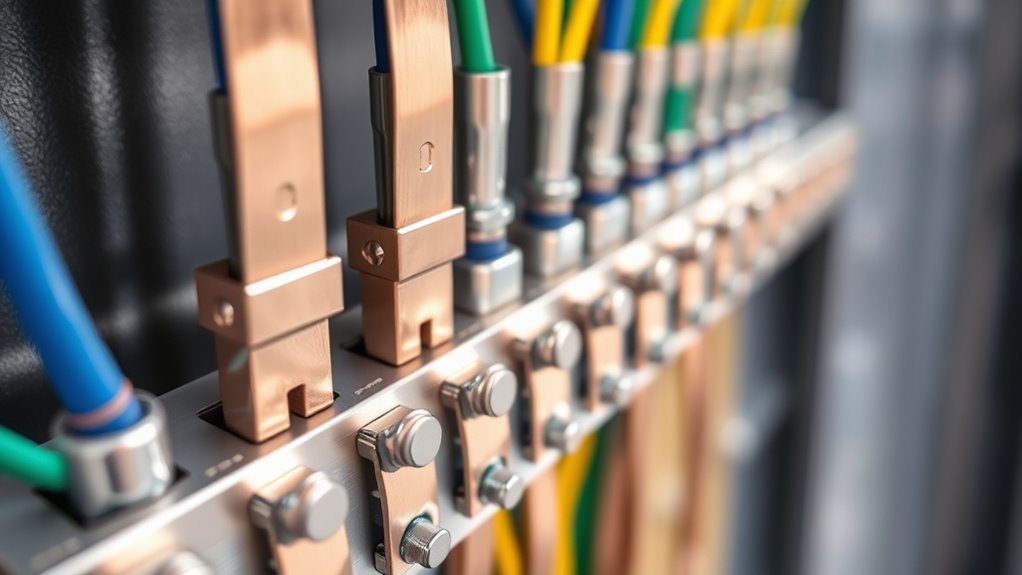

Understanding telecommunications bonding and grounding according to TIA-607 is essential for ensuring your systems are both safe and reliable. Proper installation helps protect equipment from electrical surges and reduces interference, but it requires careful attention to detail. If you want to know how following these standards can improve your network’s performance and safety, there’s more to contemplate about the specific guidelines and best practices involved.
Key Takeaways
- TIA-607 provides industry standards for proper bonding and grounding of telecommunications systems.
- Proper grounding ensures safety, equipment protection, and system reliability by dissipating electrical surges effectively.
- Bonding involves connecting all system components to a common ground to prevent voltage differences and interference.
- Correct installation includes sizing conductors per TIA-607 guidelines and maintaining continuous, low-resistance connections.
- Environmental factors like lightning require additional grounding measures to enhance system safety and surge protection.

Proper bonding and grounding are essential for ensuring the safety and reliability of telecommunications systems. When you set up a network, one of your top priorities should be protecting your equipment from electrical surges and ensuring a stable connection. Surge protection plays a critical role here, as it shields your devices from sudden voltage spikes caused by lightning strikes, power outages, or switching transients. To effectively implement surge protection, you need to incorporate proper grounding conductors into your system. These conductors connect your telecommunications equipment to the grounding system, providing a low-resistance path for unwanted electrical energy to safely dissipate into the earth. Without adequate grounding conductors, surge protectors can’t do their job effectively, leaving your system vulnerable to damage.
You want to make sure that your grounding conductors are properly sized and installed according to industry standards, such as those outlined in TIA-607. Proper sizing ensures that the conductors can handle the maximum expected surge current without overheating or failing. It’s equally important to run these conductors directly from your equipment or surge protection devices to your building’s grounding point, avoiding unnecessary loops or long runs that could introduce inductance and reduce effectiveness. When grounding conductors are properly installed, they provide a clear, direct path to ground, minimizing the risk of electromagnetic interference (EMI) and maintaining signal integrity.
Additionally, following industry standards like TIA-607 ensures your system’s grounding is compliant and optimized for safety and performance. In addition, you should verify that your grounding system is continuous and well-connected. Any breaks or loose connections can compromise the entire grounding network, decreasing surge protection efficiency and risking equipment damage. Use grounding blocks, clamps, and connectors that meet industry standards to ensure a solid connection. Also, be mindful of the environment—if your facility is in an area prone to lightning or electrical disturbances, you may need additional grounding enhancements like grounding rods or mats to bolster your system’s effectiveness.
Top picks for "telecommunication bond ground"
As an affiliate, we earn on qualifying purchases.
Frequently Asked Questions
How Does TIA-607 Differ From Other Grounding Standards?
You’ll find that TIA-607 differs from other grounding standards by emphasizing specific material requirements and safety procedures tailored for telecommunications environments. It mandates precise bonding methods and grounding techniques to guarantee system safety and performance. Unlike general standards, TIA-607 focuses on minimizing electrical noise and interference, providing clear guidelines for materials and procedures to protect personnel and equipment, making it critical for reliable telecommunications infrastructure.
What Are Common Mistakes in Telecommunications Bonding Practices?
You often make bonding misconceptions by assuming all connections are automatically safe, leading to poor grounding. Common grounding errors include neglecting to bond all metallic parts properly, skipping test procedures, or using inferior materials. These mistakes can cause electrical noise, equipment damage, and safety hazards. To avoid them, always verify your bonding continuity, follow proper grounding protocols, and use approved materials, ensuring a reliable and compliant setup.
How Often Should Bonding and Grounding Systems Be Inspected?
Inspect your bonding and grounding systems like a vigilant gardener tending to delicate plants. You should perform inspections at least once a year and after any major events like storms or electrical surges. Regular inspection frequency helps catch issues early, ensuring proper operation. Incorporate maintenance scheduling into your routine to prevent problems before they affect your network. Staying proactive keeps your telecommunications system safe, reliable, and compliant with best practices.
Are There Specific Tools Required for Proper Bonding?
You need specific grounding tools and bonding equipment to guarantee proper bonding. Use a grounding tester to verify connections and a bonding strap or clamp to secure conductors effectively. A torque wrench helps tighten connections to the correct specifications, while a multimeter can measure continuity and resistance. Always choose quality tools designed for electrical work, ensuring safe, reliable bonding and grounding that meet industry standards.
How Does Grounding Impact Network Performance and Reliability?
Grounding substantially impacts your network performance and reliability by enhancing grounding effectiveness, which reduces electrical noise and prevents interference. When properly grounded, your network experiences improved stability, minimizing outages and data errors. Ensuring effective grounding helps protect equipment from surges, maintains consistent signal quality, and supports ideal operation. Overall, good grounding practices are essential for a reliable, high-performing network that stays connected and minimizes downtime.
Conclusion
By following TIA-607, you build a strong shield against electrical chaos, much like a sturdy fortress guarding precious treasures. Proper bonding and grounding not only keep your equipment safe but also guarantee your system runs smoothly like a well-oiled machine. Think of it as giving your telecom setup a safety net—preventing surprises and keeping everything connected seamlessly. When you stick to these standards, you’re laying the foundation for reliable, resilient communication that stands the test of time.