Did you know that the quality of your audio cables can substantially impact sound clarity, even more than you might expect? Many overlook how shielding, gauge, and connector type influence performance across AV networks. Choosing the right cables isn’t just about compatibility; it’s about ensuring your sound system delivers consistent, high-quality audio without interference. Want to know what factors truly matter when selecting cables for your setup?
Key Takeaways
- Audio cables transmit sound signals between devices, ensuring clarity and minimal interference in AV networks.
- Proper cable shielding (foil, braid, or both) protects against electromagnetic and radio frequency interference.
- The choice of cable type (e.g., HDMI, XLR, RCA) depends on application needs, such as high fidelity or wireless integration.
- High-quality connectors, like gold-plated ones, improve durability and maintain reliable signal transmission.
- Cable construction factors like low capacitance and robust shielding are essential for professional, long-distance audio setups.
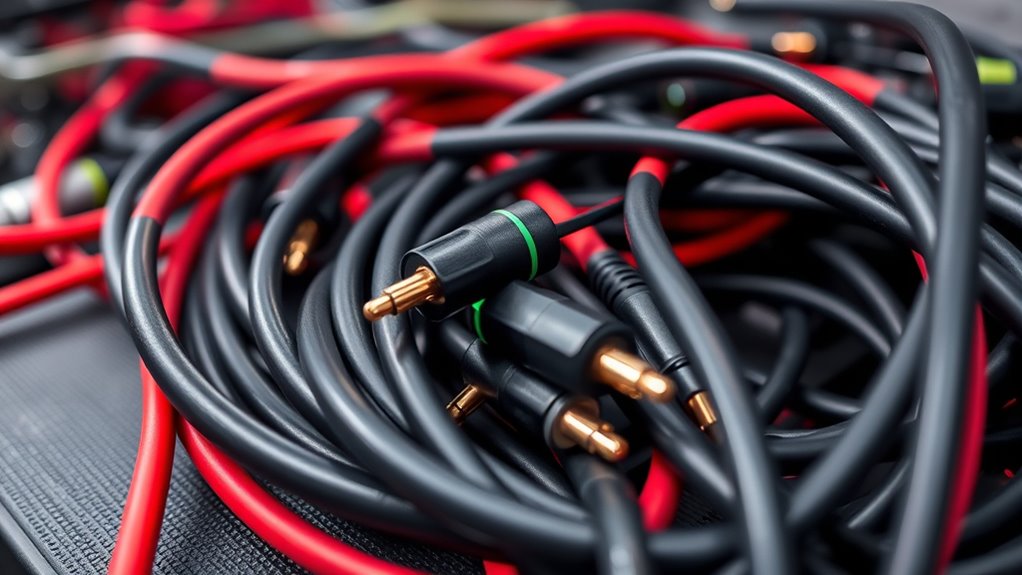
Audio cables are the backbone of AV networks, transmitting sound signals between devices with clarity and reliability. Whether you’re setting up a home theater, professional sound system, or a conference room, high-quality audio cables ensure your sound reaches its destination without distortion or interference. As you choose your cables, you’ll notice two critical factors that can substantially impact performance: wireless audio compatibility and cable shielding.
Wireless audio has become increasingly popular, offering convenience by eliminating the clutter of cables. However, even with wireless options, wired audio cables remain essential for certain applications, especially when you need consistent, high-fidelity sound. When integrating wireless audio with traditional wired setups, it’s essential to select cables that support high data transfer rates and minimal interference. This is where cable shielding comes into play. Proper shielding protects your audio signals from external electromagnetic interference (EMI) and radio frequency interference (RFI), which can cause static, dropouts, or degraded sound quality.
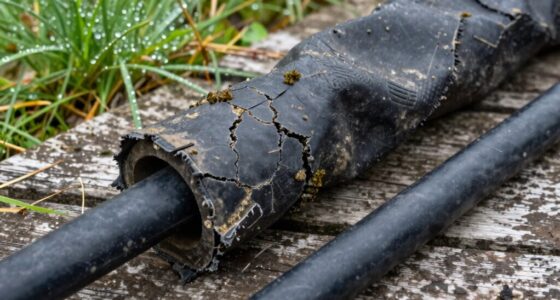
Good cable shielding involves layered materials—such as foil, braided copper, or a combination—that surround the core conductor. This barrier prevents electrical noise from infiltrating the signal, ensuring your audio remains clean and accurate. If you’re working in environments with lots of electronic devices or dense wiring, investing in well-shielded cables becomes even more important. Shielded cables also help preserve the integrity of wireless audio signals, reducing the chance of interference when connecting wireless speakers or microphones to wired components.
You should also consider the type of shielding based on your environment. For example, foil shielding offers excellent protection against high-frequency interference but can be less durable. Braided shielding provides better durability and continuous coverage, making it suitable for more rugged setups. Combining both types—known as double shielding—delivers maximum protection in challenging environments, ensuring your audio remains crisp and clear. Additionally, selecting cables with proper construction can further enhance signal integrity, especially over longer distances.
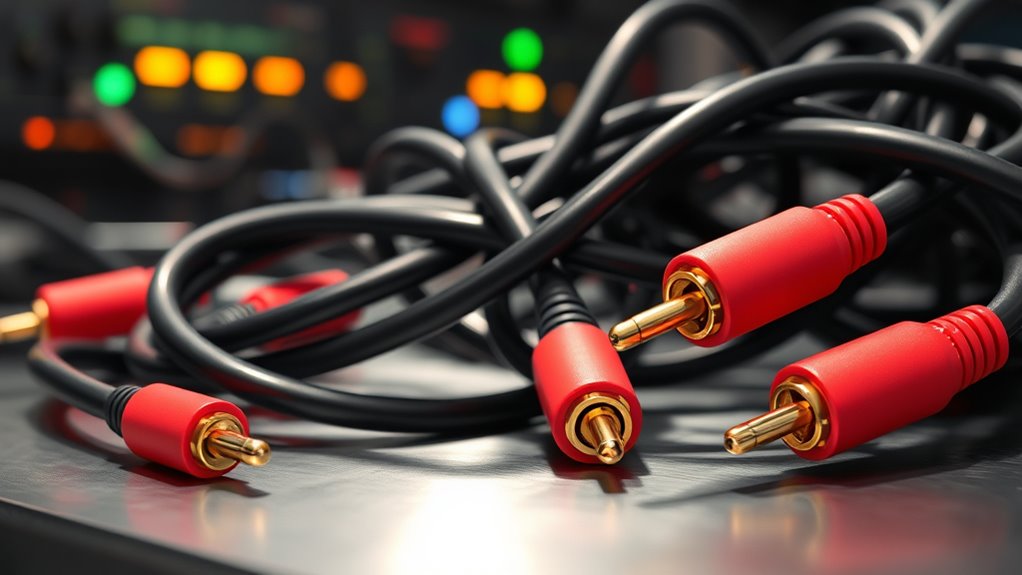
Furthermore, pay attention to cable construction and materials. Low-capacitance cables help preserve sound quality over longer distances, preventing signal loss. Gold-plated connectors resist corrosion and maintain good contact over time, which is essential for reliable connections, especially in professional settings. When you opt for cables with superior shielding and quality construction, you’re investing in a more robust and dependable AV network.

Cable Matters 2-Pack Premium XLR to XLR Cable, Microphone Cable, M-F, 6ft
- Professional Audio Quality: High-quality 3-pin XLR connectors for clear sound
- 2-Pack Convenience: Includes two 6ft XLR cables for versatility
- Enhanced Sound Clarity: Oxygen-free copper conductors for minimal interference
As an affiliate, we earn on qualifying purchases.
As an affiliate, we earn on qualifying purchases.
Frequently Asked Questions
What Are the Differences Between Balanced and Unbalanced Audio Cables?
Balanced audio cables have two conductors with cable shielding, which helps reduce noise and interference over long distances, making impedance matching easier. Unbalanced cables use a single conductor and lack shielding, so they’re more susceptible to interference but are simpler and cheaper. You’ll find balanced cables ideal for professional setups, while unbalanced ones work well for shorter runs or casual use. Choose based on your environment and the importance of signal integrity.
How Do I Troubleshoot Audio Signal Loss in AV Network Cables?
Imagine your AV system suddenly loses sound during a presentation. First, check the cable shielding—loose or damaged shielding can cause signal loss. Confirm connections are secure and free from interference sources like fluorescent lights or wireless devices. Use interference mitigation techniques, such as rerouting cables away from power lines. Testing with a different cable can also help identify if the problem’s with the cable itself.
Which Connectors Are Best Suited for High-Resolution Audio Transmission?
You should choose connector types like XLR, RCA, or digital options such as AES/EBU for high-fidelity transmission. These connectors are designed to minimize signal loss and interference, ensuring clear, precise audio. XLR connectors are ideal for professional setups, offering balanced connections that preserve quality over long distances. RCA connectors work well for consumer equipment, while AES/EBU provides digital audio clarity. Select the right connector based on your equipment for ideal high-resolution audio.
How Long Can Audio Cables Be Before Signal Degradation Occurs?
You can typically run audio cables up to 50-100 feet before signal attenuation and cable shielding issues start affecting quality. To maintain high-resolution audio, use well-shielded cables to prevent interference and reduce signal loss over longer distances. If you need longer runs, consider using active signal boosters or balanced cables, which help minimize degradation caused by cable length, ensuring your audio stays clear and accurate throughout your setup.
Are There Specific Audio Cables Recommended for Outdoor AV Installations?
If you’re tackling outdoor AV setups, you’ll want the absolute best, like weatherproofing options and rugged outdoor cable types. These cables are specially designed to withstand rain, sun, and extreme temperatures, ensuring your sound stays crystal clear no matter the weather. Look for cables labeled “outdoor” or “weatherproof,” with durable jackets and enhanced shielding. Trust me, using the right outdoor cables saves headaches and guarantees premium audio performance in any environment.

Monoprice 1.5ft Premium 2 RCA Plug/2 RCA Plug M/M 22AWG Cable – Black
- Warranty: Lifetime warranty on all cables
- Cable Type: Premium two-channel audio cable
- Cable Material: RG-59 75 ohm coaxial cable
As an affiliate, we earn on qualifying purchases.
As an affiliate, we earn on qualifying purchases.
Conclusion
So, next time you think about your audio setup, remember those humble cables working behind the scenes. Without them, your high-end system might just be a fancy paperweight. Ironically, it’s often the simplest components—like shielded, gold-plated cables—that make all the difference in delivering crystal-clear sound. So, while they may seem insignificant, neglecting quality cables could turn your perfect AV experience into a frustrating echo chamber.
![Silkland Certified HDMI 2.1 Cable, [4K@240Hz 144Hz 120Hz, 8K@60Hz] 1440P Ultra High Speed HDMI Cable 48Gbps (Upgrade Braided), HDR10+, eARC, HDCP 2.3, Compatible for Xbox/PS5/PS4/Roku TV-6.6ft](https://m.media-amazon.com/images/I/41Ns4mhmH+L._SL500_.jpg)
Silkland Certified HDMI 2.1 Cable, [4K@240Hz 144Hz 120Hz, 8K@60Hz] 1440P Ultra High Speed HDMI Cable 48Gbps (Upgrade Braided), HDR10+, eARC, HDCP 2.3, Compatible for Xbox/PS5/PS4/Roku TV-6.6ft
- HDMI Certification: HDMI 2.1 certified cable
- High Refresh Rates: Supports 120Hz and 144Hz gaming
- Enhanced Durability: E-Braid double-layer nylon braiding
As an affiliate, we earn on qualifying purchases.
As an affiliate, we earn on qualifying purchases.

Syncwire 3.5mm Nylon Braided Aux Cable (3.3ft/1m,Hi-Fi Sound), Audio Auxiliary Input Adapter Male to Male Cord for Headphones, Car, Home Stereos, Speaker, iPhone, iPad, iPod, Echo & More – Black
- Universal Compatibility: Works with all 3.5mm audio devices
- High-Quality Sound: Gold-plated connectors for clear stereo sound
- Durable & Tangle-Free: Over 15,000 bends lifespan, knot-resistant
As an affiliate, we earn on qualifying purchases.
As an affiliate, we earn on qualifying purchases.