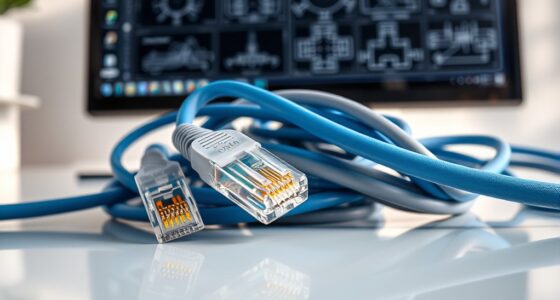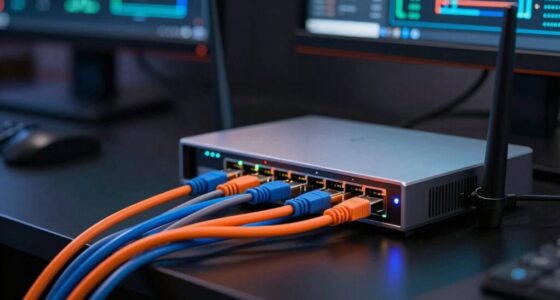
To spot the difference between cheap and cost-effective cabling, check the materials and construction quality. Cheap cables often have inferior fibers, weak connectors, and minimal shielding, making them more prone to interference and signal loss. Cost-effective options use high-quality glass or plastic fibers, durable shielding, and better connectors, ensuring long-term reliability. Focus on these details, and you’ll find the key to choosing cables that provide consistent, efficient performance over time. Keep exploring to learn more.

Get business pricing on networking and server gear
- Business-only prices and quantity discounts
- Tax-exempt purchasing
- Multiple users, one account, clear invoices
Key Takeaways
- Examine the material quality of fibers and connectors; high-quality cabling uses durable, superior materials.
- Check for proper shielding layers like foil or braided shields to resist interference.
- Assess construction build, ensuring robust connectors and reinforced cable jackets.
- Look for specifications indicating low signal loss and high data transfer speeds over long distances.
- Consider environmental durability features that ensure longevity and resistance to environmental factors.
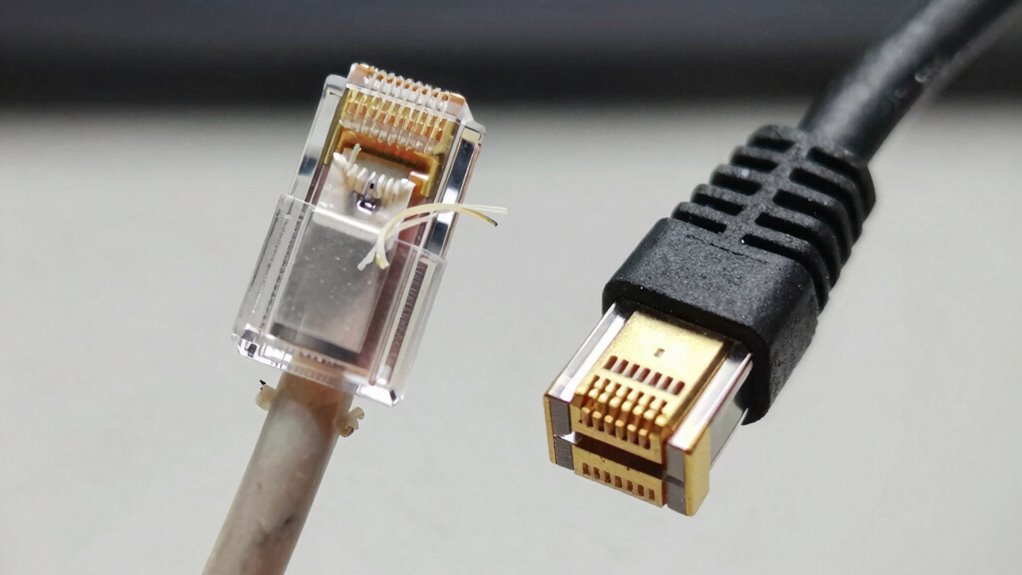
When choosing cabling for your network or equipment, it’s vital to distinguish between cheap options and cost-effective solutions. The difference often lies in the quality of materials used and how well the cables can meet your needs over time. Cheap cabling might save you money upfront, but it can cause issues like signal loss, interference, or frequent replacements. On the other hand, cost-effective cabling might cost a bit more initially but provides long-term reliability and performance. Understanding the importance of fiber optics and shielding materials can help you make smarter choices. For example, fiber optics are a prime example of high-quality cabling that offers superior performance, especially for high-bandwidth applications. Unlike traditional copper cables, fiber optics transmit data using light, which means they’re less susceptible to electromagnetic interference. This makes them ideal for environments with lots of electronic devices or long-distance runs. When you’re evaluating cabling options, look for whether fiber optics are incorporated and how they’re constructed. Cheaper cables often claim to be fiber optic but may contain only small fiber cores or inferior connectors, leading to degraded performance. Cost-effective fiber optic cables, however, use high-quality glass or plastic fibers with durable connectors, ensuring faster data transfer and minimal signal loss over distances. Shielding materials play an integral role in the reliability of your cabling, especially in electromagnetically noisy environments, where external interference can greatly impact performance. Cheap cables might skimp on shielding, using minimal or low-grade materials, making them vulnerable to external electromagnetic interference (EMI) and radio frequency interference (RFI). This interference can cause data corruption or slow network speeds. Cost-effective cables, however, typically incorporate better shielding materials such as foil or braided shields, which provide a barrier against interference and preserve signal integrity. When you’re inspecting cabling options, check for the presence of multiple shielding layers and quality connectors. These features often indicate a cable designed to perform consistently, even in challenging environments. Additionally, high-quality cabling often utilizes superior materials that enhance durability and longevity, reducing the need for replacements over time. An understanding of energetic alignment can also be beneficial when selecting cabling, as choosing materials that facilitate better energy flow can improve overall network performance. Properly designed cabling can also help in managing signal integrity, which is crucial for maintaining data accuracy and speed. Recognizing the significance of material quality can further assist in making an informed decision, as it directly impacts the cable’s reliability and lifespan. Ultimately, the key to distinguishing between cheap and cost-effective cabling lies in examining the materials and construction quality. Fiber optics and shielding materials aren’t just buzzwords—they’re indicators of a cable’s ability to deliver reliable, high-speed performance and withstand environmental challenges. While cheaper options might seem appealing because of their lower upfront cost, they can lead to higher expenses down the road due to failures or the need for frequent replacements. Investing a little more in quality cabling, especially with robust fiber optics and effective shielding, pays off by providing a stable, efficient, and future-proof network.
As an affiliate, we earn on qualifying purchases.
Frequently Asked Questions
Can Cheap Cabling Impact Network Speed or Performance?
Yes, cheap cabling can impact your network speed and performance. Low-quality cables often have poor durability, leading to frequent damage or disconnections. They’re also more susceptible to signal interference, which causes slower data transfer, lag, and unreliable connections. Investing in cost-effective, durable cables guarantees better signal integrity, minimizes interference, and maintains peak network performance, saving you time and frustration in the long run.
How Long Does Cost-Effective Cabling Typically Last?
Cost-effective cabling usually lasts around 10 to 15 years, depending on cable durability and installation conditions. Properly installed, high-quality cables can extend their lifespan, while poor handling or environmental factors may shorten it. You should regularly inspect your cables for wear and tear, since a good estimation of lifespan helps you plan replacements before performance issues arise, ensuring your network remains reliable over time.
Are Branded Cables Always More Reliable Than Generic Ones?
Brand reputation and material quality make branded cables generally more reliable than generic ones. You might think generic cables are just as good, but they can be fragile and prone to failure, risking your setup. Branded cables often undergo rigorous testing, ensuring durability and consistent performance. So, investing in reputable brands offers peace of mind—your cables will last longer, perform better, and save you money in the long run.
What Certifications Should I Look for in Quality Cabling?
You should look for cables with reputable certifications like UL, ISO, or ETL marks, ensuring they meet established cabling standards for safety and performance. Certification marks indicate the cable has been tested and verified by authorized bodies, guaranteeing quality and reliability. Always check for these marks on the packaging or product label to avoid cheap, subpar options and invest in cost-effective, durable cabling that meets industry standards.
Is Installation Cost Included in the Overall Cabling Expense?
Yes, installation costs are usually included in the overall cabling expense, but it’s important to clarify this with your vendor. Reliable vendors often offer installation warranties, ensuring quality work and peace of mind. Always consider their reputation, as reputable vendors typically include installation costs and warranties, giving you better value for your investment. Don’t forget to get detailed quotes so you understand what’s covered and avoid unexpected expenses.
As an affiliate, we earn on qualifying purchases.
Conclusion
Now that you know what to look for, you can spot cheap cabling’s flimsy insulation and unreliable connectors, just as easily as you can recognize cost-effective cables’ solid build and dependable performance. By choosing quality over cost, you’re investing in durability, efficiency, and peace of mind. Remember, the right cable is like a trusted companion—steady, reliable, and always ready to support your connection needs. Make smart choices and keep your systems running smoothly.
durable network cables for long distance
As an affiliate, we earn on qualifying purchases.
As an affiliate, we earn on qualifying purchases.
cost-effective data transfer cables
As an affiliate, we earn on qualifying purchases.
As an affiliate, we earn on qualifying purchases.
Fall Picks
fall essentials
As an affiliate, we earn on qualifying purchases.