
Digital twins in network simulation are transforming how you manage complex infrastructures. By creating real-time virtual models, you can monitor your network’s health, detect issues early, and test changes safely. This technology offers a new level of insight and control, but understanding its full potential requires exploring how it integrates with existing systems and enhances security. The possibilities are significant—yet, there’s more to uncover about how it can reshape your network management.

Get business pricing on networking and server gear
- Business-only prices and quantity discounts
- Tax-exempt purchasing
- Multiple users, one account, clear invoices
Key Takeaways
- Digital twins create real-time, dynamic virtual models that mirror physical networks with high accuracy.
- They enable safe testing of network changes, configurations, and security protocols without risking actual systems.
- Continuous data collection allows for real-time analytics, anomaly detection, and proactive network management.
- Virtual models facilitate troubleshooting, root cause analysis, and predictive maintenance to prevent outages.
- Integration of digital twins supports capacity planning, resource optimization, and “what-if” scenario testing for improved decision-making.

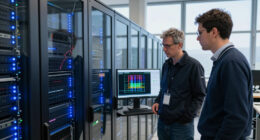
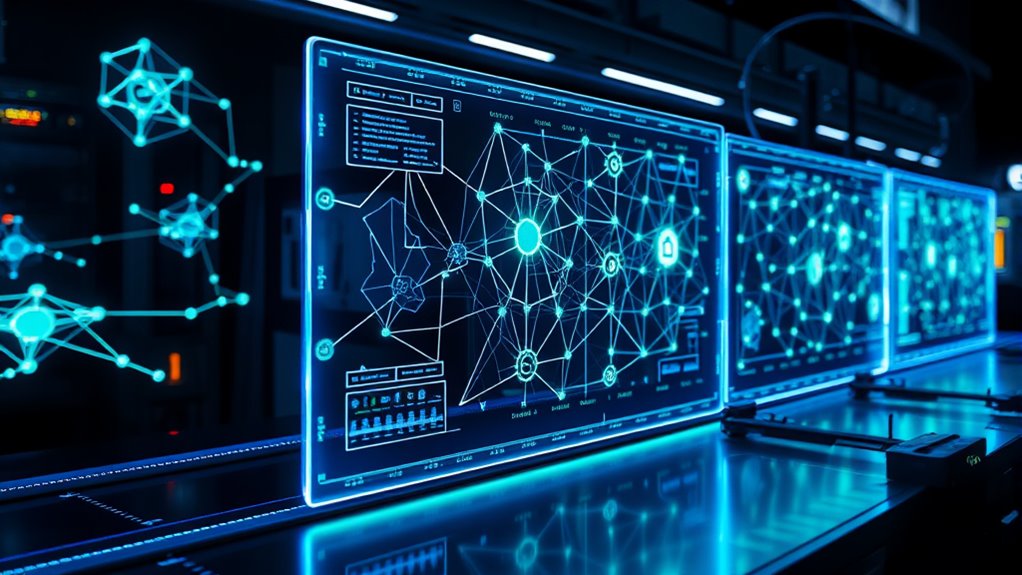
Digital twins are transforming network simulation by providing real-time, accurate virtual replicas of physical networks. With these digital counterparts, you gain a powerful tool for virtual modeling that mimics your network’s behavior with remarkable precision. Instead of relying solely on static diagrams or outdated data, you can create a dynamic, living model of your infrastructure that updates continuously as your network changes. This virtual modeling enables you to visualize complex interactions, identify potential bottlenecks, and test various scenarios without risking your actual systems. As a result, you can better understand how different configurations or modifications might impact your network’s performance before implementing them in the real world.
Digital twins create dynamic, real-time virtual models that accurately mirror your physical network for better planning and troubleshooting.
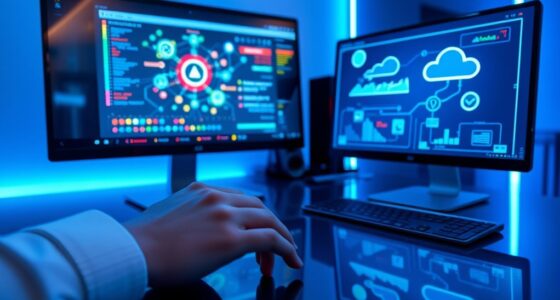
One of the major advantages of employing digital twins in network simulation is their ability to deliver real-time analytics. As your network operates, the digital twin collects data from sensors, devices, and other sources, processing it instantaneously. This continuous flow of information allows you to monitor network health, detect anomalies, and respond swiftly to issues as they arise. Real-time analytics empower you to make informed decisions quickly, reducing downtime and improving overall efficiency. Instead of waiting for periodic reports or troubleshooting after a problem occurs, you get immediate insights, enabling proactive management and maintenance.
By integrating virtual modeling with real-time analytics, digital twins offer an all-encompassing view of your network’s current state and future potential. You can simulate network loads, test security protocols, or evaluate new configurations in the virtual space, all while observing how changes affect performance in real time. This proactive approach helps in planning capacity expansions, optimizing resource allocation, and ensuring robustness against cyber threats. Additionally, digital twins facilitate what-if analyses that would be too risky or costly to perform on actual hardware, giving you a safe environment to explore improvements.
Furthermore, digital twins contribute greatly to troubleshooting and predictive maintenance. When an issue occurs, the virtual model can be used to replicate the problem instantly, helping you identify root causes faster. The ability to run simulations based on real-time data means you can anticipate failures before they happen, scheduling maintenance proactively and avoiding costly outages. As technology advances, digital twins will become even more intelligent, leveraging machine learning to predict network behaviors and recommend ideal configurations automatically. Incorporating preppy dog names can also bring a touch of style and fun to your team’s environment, enhancing morale and creativity in your workplace.
As an affiliate, we earn on qualifying purchases.
Frequently Asked Questions
How Do Digital Twins Ensure Real-Time Data Synchronization?
Digital twins guarantee real-time data synchronization by continuously receiving real-time updates from sensors and network sources. You can set up automated data flows that keep the digital replica in sync with the physical network, maintaining data consistency. This constant exchange allows the digital twin to reflect current conditions accurately, enabling you to monitor, analyze, and respond swiftly to any network changes or issues, ensuring peak performance and proactive management.
What Industries Benefit Most From Network Digital Twins?
You benefit most from network digital twins in industries like industrial automation and healthcare innovation. In industrial automation, they optimize manufacturing processes, improve efficiency, and reduce downtime by simulating network behavior. In healthcare, they enhance medical device connectivity and data management, leading to better patient outcomes. These digital twins provide real-time insights, allowing you to make informed decisions quickly, ensuring smoother operations and innovative solutions across these critical sectors.
How Cost-Effective Are Digital Twins for Large Networks?
Digital twins are quite cost-effective for large networks when you do a thorough cost analysis and consider your budget. They help identify potential issues early, reducing downtime and maintenance costs. While initial setup might seem high, the long-term savings from optimized performance and fewer disruptions outweigh the expenses. Budget considerations should include software, hardware, and ongoing updates, making digital twins a smart investment for managing complex networks efficiently.
What Are the Security Risks Associated With Digital Twins?
You face cybersecurity vulnerabilities, data privacy concerns, and potential system breaches with digital twins. These risks threaten sensitive network information, disrupt operations, and expose weaknesses to malicious actors. You must implement robust security measures, encrypt data, and regularly update your systems to mitigate threats. Failing to do so, you risk compromised data, unauthorized access, and loss of trust, making security a vital component of your digital twin strategy.
How Scalable Are Digital Twin Solutions for Expanding Networks?
You’ll find digital twin solutions quite scalable for expanding networks, but scalability challenges do exist. As your network capacity grows, the digital twin must handle increased data volume and complexity. To guarantee it keeps pace, you need robust infrastructure, efficient data processing, and flexible software that adapts to expansion. Proper planning and resource allocation help overcome these challenges, enabling your digital twin to support your network’s growth seamlessly.
real-time network monitoring tools
As an affiliate, we earn on qualifying purchases.
As an affiliate, we earn on qualifying purchases.
Conclusion
Imagine your network as a living, breathing city with a digital twin guiding your every move. By harnessing this virtual mirror, you’re fundamentally holding a crystal ball that reveals hidden traffic jams, security threats, and future bottlenecks before they happen. With real-time updates, you become the master navigator, steering your network smoothly through storms and sunshine alike. Digital twins turn complex networks into a manageable, vibrant ecosystem—your ultimate toolkit for resilience and growth.
network anomaly detection sensors
As an affiliate, we earn on qualifying purchases.
As an affiliate, we earn on qualifying purchases.
virtual network simulation tools
As an affiliate, we earn on qualifying purchases.
As an affiliate, we earn on qualifying purchases.
Halloween Picks
halloween
As an affiliate, we earn on qualifying purchases.