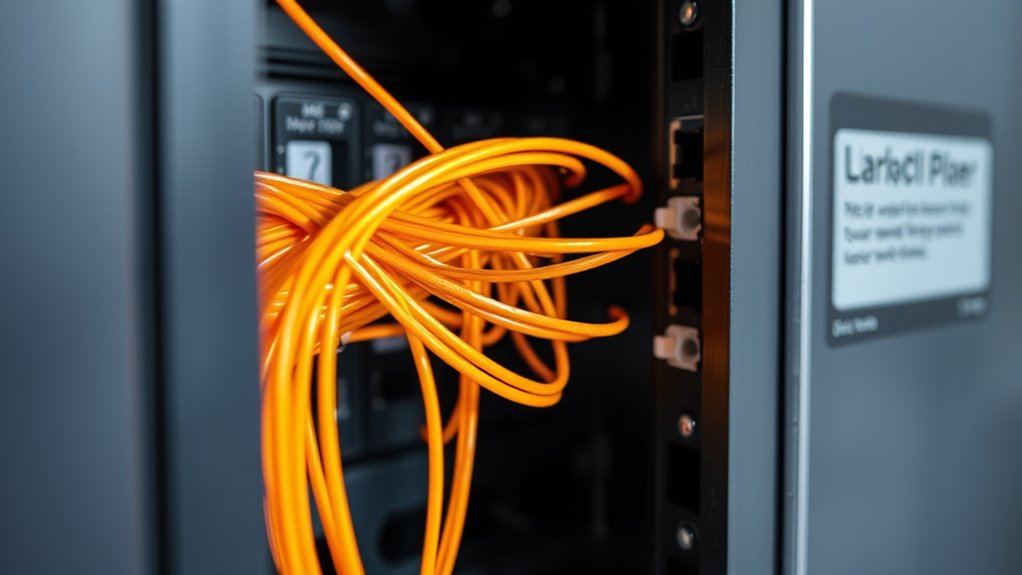

Like a skilled architect designing a resilient structure, choosing the right hybrid fiber-copper solutions for PoE requires careful consideration of your network’s needs. These integrated systems blend the long reach and high capacity of fiber with the versatility and power delivery of copper cables. As technology advances and demands grow, understanding how to effectively implement these solutions can make all the difference in maintaining a reliable, scalable network—if you know where to start.

Get business pricing on networking and server gear
- Business-only prices and quantity discounts
- Tax-exempt purchasing
- Multiple users, one account, clear invoices
Key Takeaways
- Hybrid solutions combine fiber optics for backbone connectivity with copper cables for local device access and PoE delivery.
- Fiber supports high-bandwidth, long-distance data transmission, ensuring network scalability and future-proofing.
- Copper cables enable PoE-powered devices like IP cameras and Wi-Fi access points, simplifying installation and reducing costs.
- The combination offers reduced latency, enhanced network reliability, and ease of maintenance.
- This hybrid approach adapts to various building layouts, supporting seamless upgrades and network expansion.

As businesses increasingly demand reliable and flexible network infrastructure, hybrid fiber-copper solutions for Power over Ethernet (PoE) have emerged as a practical choice. These systems combine the high bandwidth and long-distance capabilities of fiber optic cables with the affordability and ease of installation of traditional copper wiring. When you choose a hybrid approach, you’re able to harness the strengths of both mediums, ensuring your network remains scalable, efficient, and future-proof. Fiber optic cables are essential for backbone connections, especially when transmitting large volumes of data over long distances. They’re immune to electromagnetic interference, which means your network stays stable and secure, even in electrically noisy environments. Meanwhile, copper cables are ideal for connecting devices within a shorter range, providing power and data simultaneously through PoE technology. This combination allows you to deliver power over Ethernet to devices like IP cameras, wireless access points, and VoIP phones without additional power supplies or outlets, simplifying installation and reducing costs.
In a hybrid fiber-copper setup, fiber optic runs typically carry data between network core points, such as data centers or main distribution frames. From there, copper cables extend to individual endpoints, providing both data connectivity and power over the same cable. This setup is particularly advantageous in environments where high data throughput and reliable power delivery are critical. By integrating fiber optic backbone links with PoE-enabled copper connections, you can support high-bandwidth applications and power devices over Ethernet efficiently. You’ll find that this hybrid system minimizes latency, enhances network speed, and ensures consistent power delivery, which is essential for maintaining uptime and operational effectiveness.
Furthermore, hybrid fiber-copper solutions are highly adaptable to different building layouts and infrastructure constraints. You don’t need to replace your entire network to upgrade capacity; instead, you can upgrade the backbone with fiber optics while maintaining copper for local connections. This flexibility makes it easier to scale your network as your organization grows. It also simplifies maintenance because fiber optic cables require less frequent repair and are less susceptible to environmental damage, ensuring your network stays resilient. When deploying PoE-powered devices, this hybrid approach provides a reliable power source without the need for local power outlets, streamlining installations and reducing clutter. Incorporating reliable cabling is crucial for maintaining overall network performance and longevity.
Ultimately, by leveraging fiber optic technology for data transmission and power over Ethernet for device connectivity, you gain a robust, scalable, and cost-effective network architecture. Hybrid fiber-copper solutions deliver the performance and flexibility needed to meet modern business demands, ensuring your network remains competitive today and well into the future.
As an affiliate, we earn on qualifying purchases.
Frequently Asked Questions
How Does Hybrid Fiber-Copper Compare in Cost to Traditional Solutions?
You’ll find hybrid fiber-copper solutions generally cost more upfront than traditional copper-only systems, but the cost comparison shifts when considering long-term benefits. You gain scalability benefits with hybrid systems, allowing easier upgrades and better performance, which can reduce future expenses. While initial investments are higher, the enhanced flexibility and increased capacity often make hybrid solutions more cost-effective over time, especially for growing networks.
What Are the Long-Term Maintenance Requirements for Hybrid Systems?
You’ll find that hybrid systems are pretty low-maintenance if you keep up with routine checks. Regular maintenance scheduling helps spot issues early, ensuring system durability over time. While fiber parts are more resilient, copper segments may need occasional testing or replacement. Think of it as tending a garden—consistent care keeps the system running smoothly, reducing unexpected costs and extending its lifespan for the long haul.
Can Hybrid Solutions Be Easily Upgraded or Scaled?
Yes, hybrid solutions offer good upgrade flexibility, allowing you to adapt as your needs grow. While scalability challenges can arise, especially with older infrastructure, modern hybrid systems are designed to be easily upgraded and expanded. You can add fiber or copper components as needed, making it simpler to scale your network without complete overhauls. Just guarantee your current setup supports future upgrades to minimize potential scalability challenges.
How Do Hybrid Systems Impact Overall Network Security?
Think of hybrid systems as a fortress with layered defenses—you’re strengthening your network security. They can reduce network vulnerability by combining fiber’s speed with copper’s flexibility, but they also introduce more points that need safeguarding. You must implement robust data encryption across both mediums to prevent breaches. Properly managed, hybrid solutions enhance your security, but neglecting this balance leaves your network exposed to potential threats.
Are There Specific Industry Standards for Hybrid Fiber-Copper Implementations?
Yes, there are specific industry standards for hybrid fiber-copper implementations. You should follow fiber standards like IEEE 802.3 and ITU-T G.657, which specify performance and compatibility. For copper, adhere to regulations such as ANSI/TIA-568 and ISO/IEC 11801 to guarantee proper wiring, shielding, and safety. These standards help you guarantee reliable, compliant, and efficient hybrid network deployments.
As an affiliate, we earn on qualifying purchases.
Conclusion
By combining fiber’s long-distance, high-capacity strengths with copper’s cost-effective power delivery, hybrid solutions offer the best of both worlds. You get the reliability and scalability of fiber alongside the convenience of PoE with copper. It’s a perfect balance—where the future-proof backbone supports your growing needs, and the flexible, affordable cables power your devices today. This synergy guarantees your network stays robust, adaptable, and ready for whatever comes next.
PoE Ethernet switch for IP cameras
As an affiliate, we earn on qualifying purchases.
As an affiliate, we earn on qualifying purchases.
fiber to copper network extender
As an affiliate, we earn on qualifying purchases.
As an affiliate, we earn on qualifying purchases.
Halloween Picks
halloween
As an affiliate, we earn on qualifying purchases.