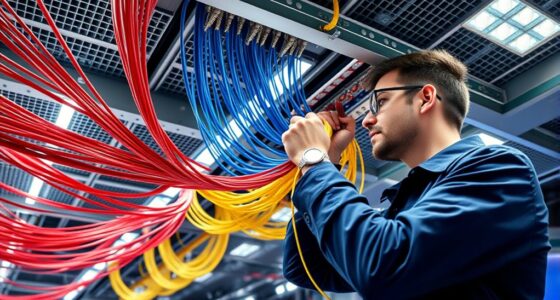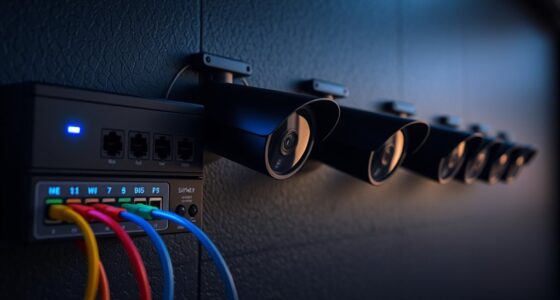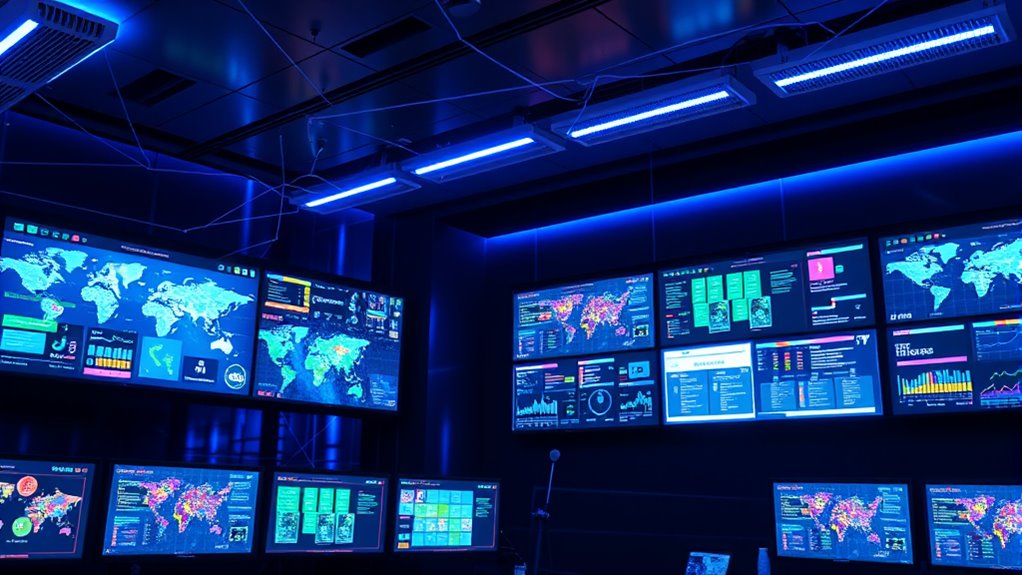

Some believe that connecting digital signage networks simply streamlines content distribution, but the real benefits go much deeper. When you link multiple displays across locations, you enable centralized control, real-time updates, and tailored messaging that can truly engage your audience. Yet, the potential for increased efficiency and reliability might be just the beginning—there’s more to contemplate about how this integration can transform your entire approach.
Key Takeaways
- Establish a centralized content management system to enable seamless, real-time updates across all digital signage displays.
- Use network protocols like Ethernet, Wi-Fi, or 4G/5G for reliable connectivity between signage devices and control hubs.
- Integrate hardware components such as media players, sensors, and kiosks to enhance system functionality and interactivity.
- Ensure hardware compatibility and scalability to support diverse display types, sizes, and future expansion.
- Implement remote management tools for easy troubleshooting, updates, and content scheduling across the entire signage network.
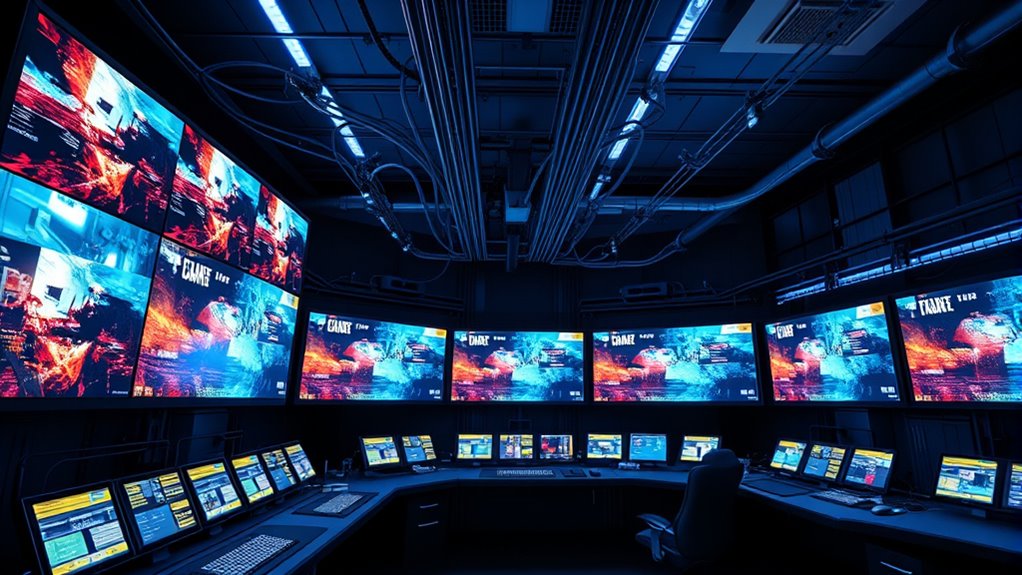
Connecting digital signage networks opens new opportunities for seamless content management and real-time updates across multiple locations. When you link your screens into a unified network, you gain centralized control that simplifies how you handle your digital content. This streamlines workflows, saves time, and reduces the risk of outdated or inconsistent messages. Whether you operate in retail, corporate, or public environments, this connectivity empowers you to deliver relevant content instantly, guaranteeing your messaging remains fresh and engaging.
One of the key advantages of connecting your signage network is the ease of content management. You can create, schedule, and distribute content across all screens with just a few clicks. This allows you to tailor messaging based on location, time of day, or audience demographics. For example, you might promote a morning special in one store and a new product launch in another—all managed centrally. The ability to update content in real-time means you can respond swiftly to changes, weather conditions, or promotional opportunities, maintaining your messaging relevant and impactful.
Hardware integration plays an essential role in making this possible. When your digital signage system integrates seamlessly with various hardware components—such as media players, sensors, and kiosks—you enhance the overall functionality and reliability of your network. Hardware integration ensures that your content displays correctly across different screen types and sizes, and it allows for more sophisticated interactions, like touch or motion sensors. It also simplifies maintenance, as updates or troubleshooting can be performed remotely without disrupting the entire system. Additionally, understanding the importance of high-quality displays and projectors can further improve your visual presentation and audience engagement.
Furthermore, a well-integrated hardware setup minimizes compatibility issues and maximizes the lifespan of your equipment. You can select hardware that best suits your environment, knowing it will work harmoniously within your connected network. This integration also opens doors for automation; for instance, your signage can respond to environmental cues or data feeds, delivering dynamic content that adapts to real-time conditions.

Ethernet Server Room Temperature Monitor, PoE Server Rack Temperature Humidity Sensor with Web Interface, SNMP Modbus MQTT Support, Dual Power, IP55, Data Logging, Alarm & Relay Output
Precision Monitoring for Critical Environments: The server room temperature monitor is a professional temperature and humidity monitor built...
As an affiliate, we earn on qualifying purchases.
Frequently Asked Questions
How Secure Are Digital Signage Networks Against Cyber Threats?
Digital signage networks face cybersecurity vulnerabilities, but you can improve their security by implementing data encryption and strong access controls. Regular updates and monitoring help prevent cyber threats, making your network more resilient. While no system is invulnerable, staying proactive about security measures considerably reduces risks. You should also train staff on cybersecurity best practices to ensure your digital signage remains safe from potential cyber threats.
What Are the Costs Involved in Scaling Digital Signage Networks?
Scaling your digital signage network involves more than just adding screens; it’s about managing cost estimation and overcoming scalability challenges. You’ll face expenses like hardware upgrades, content management systems, and network infrastructure. While initial costs may seem high, the long-term benefits of expanded reach and increased engagement can outweigh these costs. Planning carefully helps you navigate these challenges, ensuring your growth remains sustainable without unexpected financial burdens.
How Do I Troubleshoot Connectivity Issues in Digital Signage Networks?
When troubleshooting connectivity issues, start by checking remote monitoring tools to identify where the problem lies. Guarantee your network segmentation is properly configured to isolate and troubleshoot specific segments without affecting the entire network. Restart affected devices and verify their network settings. Also, test your internet connection and router. If problems persist, review firewall settings and consult your network logs to pinpoint issues and restore seamless digital signage operation.
Can Digital Signage Networks Integrate With Existing IT Infrastructure?
You can definitely integrate digital signage networks with your existing IT infrastructure; it’s not rocket science. By focusing on network integration and ensuring infrastructure compatibility, you make the process smooth sailing. Start by evaluating your current network setup, then choose signage solutions that align with your systems. Proper planning and compatibility checks prevent headaches down the road, making it easy for digital signage to work seamlessly alongside your existing IT environment.
What Are the Best Practices for Managing Content Across Multiple Screens?
To manage content across multiple screens effectively, you should implement consistent content scheduling and audience targeting strategies. Use a centralized content management system that allows you to plan and automate updates, ensuring everyone sees relevant information at the right time. Tailor content to different audiences based on location, demographics, or time of day. Regularly review analytics to refine your approach, maintaining engagement and maximizing the impact of your digital signage network.

TP-Link BE6500 Dual-Band WiFi 7 Router (BE400) – Dual 2.5Gbps Ports, USB 3.0, Covers up to 2,400 sq. ft., 90 Devices, Quad-Core CPU, HomeShield, Private IoT, Free Expert Support
𝐅𝐮𝐭𝐮𝐫𝐞-𝐑𝐞𝐚𝐝𝐲 𝐖𝐢-𝐅𝐢 𝟕 - Designed with the latest Wi-Fi 7 technology, featuring Multi-Link Operation (MLO), Multi-RUs, and 4K-QAM....
As an affiliate, we earn on qualifying purchases.
Conclusion
By connecting digital signage networks, you gain centralized control, real-time updates, and targeted messaging that truly engage your audience. Seamless hardware integration guarantees your system stays reliable and efficient, while interactive features make your content stand out. Isn’t it time you harnessed the full potential of digital signage to captivate and inform? Embrace the power of connected networks, and watch your communication efforts transform into a dynamic, impactful experience.

tempi.fi Wireless Temperature and Humidity Sensor - Developed in The USA - 24/7 Data Logger with Alarm – Bluetooth Smart Thermometer and Hygrometer - Bluetooth Only - Not WiFi
🌡️ ACCURATE AND AUTOMATIC - Made with premium Swiss components, this wireless temperature and humidity monitor is extremely...
As an affiliate, we earn on qualifying purchases.

THIRDREALITY Zigbee Temperature and Humidity Sensor Lite,Smart Thermometer and Hygrometer, Hub Required,Compatible with Echo Devices with Zigbee Hub Built-in,Home Assistant,SmartThings,Homey,Hubitat
NOTES:ZigBee Hub is required and sold separately. Alexa APP can only display temperature but no humidity.
As an affiliate, we earn on qualifying purchases.