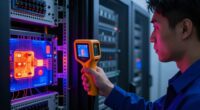
As a network installer, you should understand that heat builds up in cable bundles from electrical flow and external sources, which can degrade fiber optics, weaken insulation, and cause signal interference. Dense bundling and poor airflow trap heat, leading to cable brittleness and faster deterioration. Proper organization, cooling strategies, and airflow management are key to preventing heat-related issues. Keep these tips in mind, and you’ll discover how to maintain ideal network performance even in challenging environments.

Get networking and server gear delivered free — and shop member deals
- Fast, free delivery on millions of items
- Access to Prime Big Deal Days deals on October 6–7
- Prime Video, Amazon Music and more included
Key Takeaways
- Heat buildup from dense bundling and external sources accelerates cable degradation and signal interference.
- Proper airflow and cable organization are essential to prevent hotspots and maintain network performance.
- Elevated temperatures weaken insulation, increasing cable brittleness and risk of failure over time.
- Monitoring and managing cable bundle temperatures extend equipment lifespan and reduce troubleshooting complexity.
- Implementing effective thermal management strategies ensures reliable, high-quality network operation.
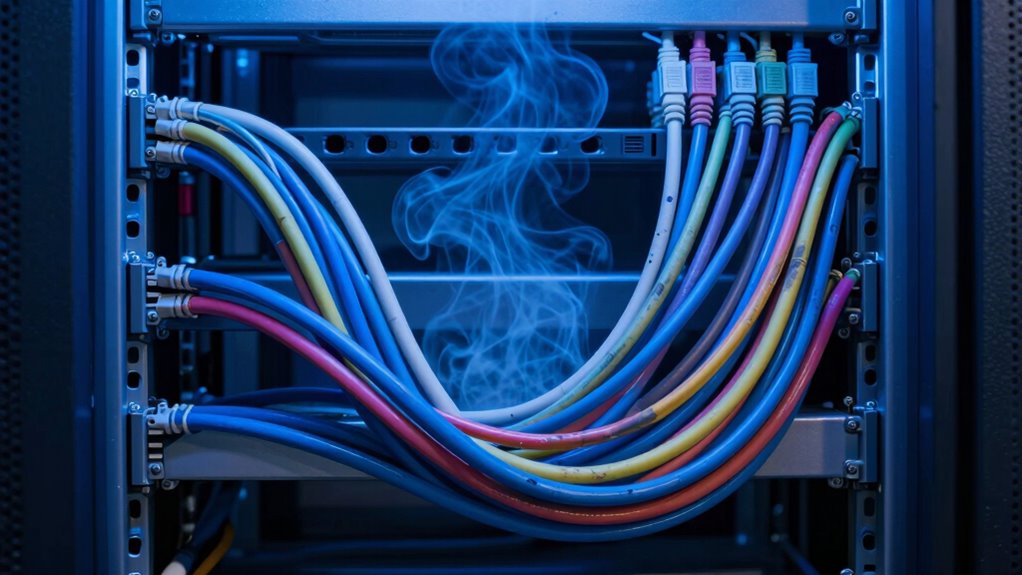
When multiple network installers and cable bundles run close together, heat buildup becomes a significant concern. This issue isn’t just about comfort or equipment longevity; it directly affects the quality of your network’s performance. High temperatures can cause fiber optics and other cables to degrade faster, leading to costly repairs and downtime. As you install or maintain these bundles, understanding how heat influences signal transmission is essential. Fiber optics, which rely on light signals, are especially sensitive to temperature changes. Excess heat can cause slight expansions or contractions in the fiber, potentially leading to signal distortion or loss. Even minor fluctuations can introduce signal interference, degrading data integrity and slowing network speeds.
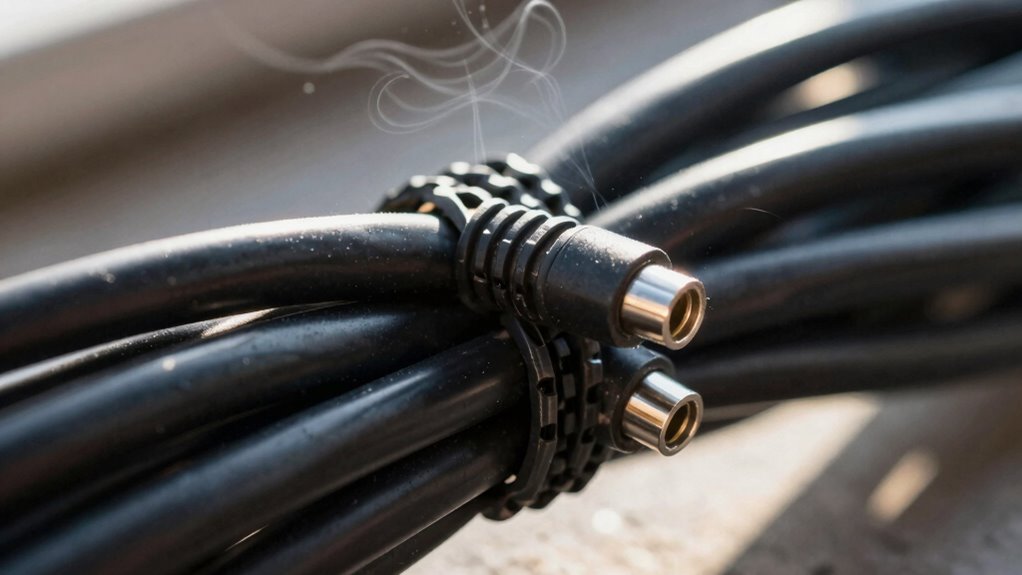
You need to recognize that heat isn’t only a product of environmental factors but also a byproduct of the cables themselves. When many cables bundle tightly together, they trap heat generated by electrical transmission and external sources. This accumulation intensifies if the cables are densely packed or if there’s inadequate airflow around the bundles. Over time, this heat can cause insulation to weaken and cables to become brittle, increasing the risk of failure. For fiber optics, sustained high temperatures can impair the core’s ability to transmit light efficiently, leading to increased signal attenuation and potential data loss. This attenuation translates to weaker signals reaching the receiver and can be mistaken for other network issues, making troubleshooting more complicated. Proper color temperature adjustments can help optimize the performance and longevity of your cables in these conditions. Additionally, understanding how heat dissipation works in cable bundles can help you implement more effective cooling strategies to maintain optimal network performance. Recognizing the importance of thermal management techniques is essential for maintaining reliable network infrastructure. Furthermore, employing cable organization strategies can help improve airflow and reduce hotspots within bundles, thereby mitigating heat-related problems.
cable bundle thermal management kit
As an affiliate, we earn on qualifying purchases.
As an affiliate, we earn on qualifying purchases.
Frequently Asked Questions
How Does Ambient Temperature Affect Cable Bundle Heat Buildup?
Ambient temperature directly impacts cable bundle heat buildup, as higher temperatures cause cables to generate more heat within their insulation. You should consider effective ventilation strategies to prevent overheating and damage. Proper ventilation allows heat dissipation, reducing the risk of cable insulation degradation. Keep the environment cool and well-ventilated, especially in warmer climates, to maintain ideal cable performance and lifespan.
What Are the Long-Term Effects of Heat on Cable Performance?
Did you know that prolonged heat exposure can reduce cable lifespan by up to 50%? Heat causes cable insulation to degrade, increasing the risk of signal loss or failure. Over time, high temperatures may damage internal components, leading to performance issues. Using heat sensors helps you monitor temperature levels, preventing long-term damage. Regularly managing heat in cable bundles guarantees reliable performance and extends your cables’ operational life.
Are There Specific Materials That Better Dissipate Heat in Bundles?
Yes, certain materials better dissipate heat in cable bundles. Using cable insulation made from heat resistant materials helps prevent overheating and performance issues. Materials like silicone, fluoropolymer, or specially formulated thermoplastics efficiently transfer heat away from the conductors. As an installer, selecting cables with these advanced heat resistant materials guarantees durability, maintains signal integrity, and reduces the risk of failure in high-temperature environments.
How Can Installers Monitor Cable Temperature During Installation?
You can keep an eye on cable temperature during installation with thermal management tools like infrared thermometers or thermal imaging cameras, which give real-time readings. Using cables with proper insulation helps prevent heat buildup. Remember, a stitch in time saves nine; routinely monitoring guarantees you catch issues early. Proper thermal management and quality cable insulation work hand-in-hand to prevent overheating, keeping your installation safe and reliable.
What Safety Precautions Are Recommended for High-Heat Cable Installations?
You should wear insulated gloves and protective gear when working with high-heat cable installations. Make certain the cable insulation and heat-resistant coatings are intact before handling. Keep a safe distance from hot cables and avoid contact with exposed conductors. Regularly check the cable’s temperature, and allow it to cool if it exceeds safe limits. Properly secure and label high-heat cables to prevent accidental contact and guarantee safety for yourself and others.
As an affiliate, we earn on qualifying purchases.
Conclusion
Understanding heat buildup in cable bundles is vital for network installers like you. Did you know that bundled cables can reach temperatures up to 60°C (140°F), risking performance issues? By keeping cables well-organized and allowing airflow, you can prevent overheating and guarantee reliable connections. Remember, a cool, properly managed bundle not only extends cable life but also keeps your network running smoothly—improving performance and avoiding costly repairs down the line.
As an affiliate, we earn on qualifying purchases.
cable heat dissipation accessories
As an affiliate, we earn on qualifying purchases.
As an affiliate, we earn on qualifying purchases.
Fall Picks
fall essentials
As an affiliate, we earn on qualifying purchases.