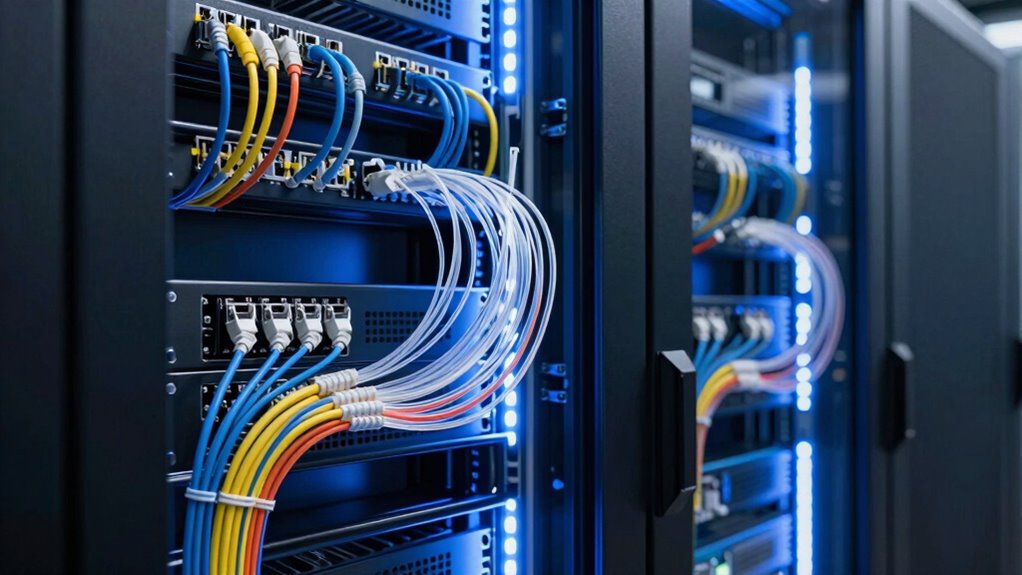

Smart building cabling is designed to support advanced connectivity, making it different from standard office wiring. It enables high-speed data transfer, energy efficiency, and easy expansion for future tech needs. You’ll find organized pathways that simplify maintenance and troubleshooting while reducing downtime. The system also supports Power over Ethernet, cutting down on power outlets and lowering costs. To discover how these features create a flexible, scalable infrastructure that adapts to your evolving building, keep exploring.

Get business pricing on networking and server gear
- Business-only prices and quantity discounts
- Tax-exempt purchasing
- Multiple users, one account, clear invoices
Key Takeaways
- Smart building cabling supports high-speed data transfer and wireless integration for seamless connectivity and device flexibility.
- It is designed for easier maintenance, troubleshooting, and scalability to accommodate future technological upgrades.
- Energy-efficient cabling reduces power consumption and supports Power over Ethernet (PoE) for combined power and data delivery.
- It incorporates dedicated pathways to minimize interference, ensuring signal integrity for advanced communication systems.
- Smart cabling infrastructure aligns with industry standards for robustness, sustainability, and long-term adaptability.
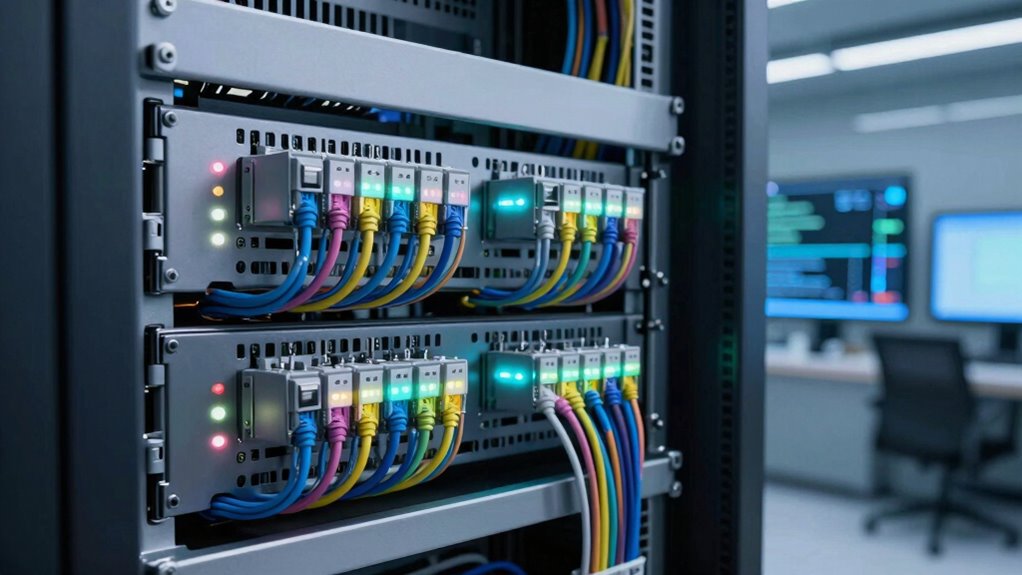
Have you ever wondered how modern buildings seamlessly support all their technological needs? The answer lies in the way their cabling systems are designed and installed. Traditional office wiring often focuses solely on basic electrical needs, but smart building cabling takes things much further. It’s tailored to accommodate advanced connectivity and technological demands, making the infrastructure more adaptable, efficient, and future-proof. One of the key differences is the emphasis on wireless integration. Instead of relying solely on physical cables for every device, smart building cabling supports high-speed data transfer that enables wireless systems to operate smoothly. This setup allows for more flexible device placement and reduces clutter, which is essential for modern workspaces where mobility and convenience matter. You’ll find that this approach makes it easier to implement wireless networks, VoIP systems, and IoT devices, all of which depend on reliable, fast connections. Additionally, the design of smart cabling often considers the importance of dedicated pathways for minimizing interference and maintaining signal integrity across the network. Incorporating smart cabling solutions also helps streamline maintenance and troubleshooting processes, saving time and reducing disruptions. These pathways are crucial for ensuring consistent performance, especially as the number of connected devices increases. Proper planning and cabling standards further enhance the system’s robustness and compliance with industry best practices.
Smart building cabling enables seamless wireless connectivity, flexible device placement, and efficient, future-proof infrastructure.
Energy efficiency is another critical element that sets smart building cabling apart. Unlike standard wiring, which might consume more power or generate excess heat, smart cabling is designed with energy conservation in mind. High-quality, efficient cables reduce energy waste and ensure that the entire building runs more sustainably. This not only lowers operational costs but also aligns with eco-friendly goals. Smart cabling systems often incorporate power over Ethernet (PoE) technology, which allows devices like security cameras, wireless access points, and sensors to receive power through the same cable that transmits data. This reduces the need for additional power outlets and simplifies installation, further enhancing energy efficiency. These energy-conscious designs are vital as buildings become smarter and more connected, emphasizing long-term sustainability.
Moreover, smart building cabling is more adaptable and scalable. As your technology needs evolve or expand, the cabling infrastructure can easily accommodate new systems without requiring complete overhauls. This flexibility ensures your building remains up-to-date with the latest innovations, and upgrade costs stay manageable. The cabling is designed with future-proofing in mind, supporting higher bandwidths and new standards as they develop. This contrasts with standard wiring, which often becomes obsolete quickly as technology advances. Proper planning in cabling design is essential to maintain this scalability and future-proofing.
In essence, smart building cabling is all about creating a robust, flexible, and energy-conscious infrastructure. It supports wireless integration, reduces power consumption, and prepares your building for the rapid technological changes ahead. If you’re aiming for a workspace that’s efficient, scalable, and ready for the future, investing in this advanced cabling system is a smart move. It’s the backbone of truly intelligent buildings that meet the demands of today and tomorrow.
high-speed Ethernet cables for smart buildings
As an affiliate, we earn on qualifying purchases.
As an affiliate, we earn on qualifying purchases.
Frequently Asked Questions
How Does Smart Building Cabling Impact Future Technology Upgrades?
Smart building cabling greatly impacts future technology upgrades by enabling seamless wireless integration and supporting energy efficiency. You can easily add new devices or upgrade systems without extensive rewiring, saving time and costs. This cabling infrastructure guarantees your building stays adaptable, allowing you to implement advanced tech solutions quickly. As a result, your building remains efficient, future-ready, and capable of integrating innovations that enhance overall performance and sustainability.
What Are the Cost Differences Between Smart and Standard Wiring?
Have you considered if smart building cabling costs outweigh the benefits? Generally, the cost comparison shows smart wiring has higher initial installation expenses due to advanced components and infrastructure. However, these costs can be offset over time through better energy efficiency and easier upgrades. While standard wiring might be cheaper upfront, investing in smart cabling could save you money long-term by reducing maintenance and future upgrade costs.
How Is Security Integrated Into Smart Building Cabling Systems?
You integrate security into smart building cabling systems through wireless integration and cybersecurity measures. Wireless systems enable remote monitoring and control, reducing physical vulnerabilities. Meanwhile, cybersecurity protocols protect data and network integrity from threats. You implement encryption, regular updates, and access controls to safeguard sensitive information. This layered security approach guarantees your building’s cabling system remains resilient against cyberattacks, maintaining operational safety and privacy at all times.
What Training Is Required for Installing Smart Building Cabling?
You need specialized training certification to install smart building cabling properly. This training covers essential installation procedures, safety protocols, and troubleshooting techniques unique to smart systems. By completing this certification, you gain the skills to handle advanced cabling infrastructure, ensuring maximum performance and security. Continuous education is also crucial, as technology evolves, so staying updated with the latest standards keeps your installations reliable and compliant with industry regulations.
Can Existing Office Wiring Be Upgraded to Smart Building Standards?
Yes, you can upgrade your existing office wiring to smart building standards, but it depends on your legacy infrastructure and wiring compatibility. You’ll need to assess whether your current cabling can support the higher bandwidth and advanced features of smart systems. Often, upgrading involves replacing or supplementing legacy infrastructure with compatible cabling types, like Cat6 or fiber optic, to guarantee seamless integration and future-proof your building’s connectivity.
Power over Ethernet (PoE) switches
As an affiliate, we earn on qualifying purchases.
As an affiliate, we earn on qualifying purchases.
Conclusion
So, are you ready to rethink what’s behind the walls? Smart building cabling isn’t just about wiring—it’s about revealing future possibilities, seamlessly connecting everything, and staying ahead in a rapidly evolving world. But what surprises lie ahead as technology advances? With smarter cabling, you’re not just keeping up—you’re setting the stage for what’s next. The question is, are you prepared to make that leap? The future of building connectivity starts now—will you take it?
structured cabling for office buildings
As an affiliate, we earn on qualifying purchases.
As an affiliate, we earn on qualifying purchases.
wireless access point installation kit
As an affiliate, we earn on qualifying purchases.
As an affiliate, we earn on qualifying purchases.
Fall Picks
fall essentials
As an affiliate, we earn on qualifying purchases.