Did you know that many networks with high bandwidth still experience slow data transfer? It’s a common issue that can confuse even experienced users. Understanding the difference between bandwidth and throughput is key to resolving these problems. While bandwidth shows the maximum potential, throughput reveals what you actually get in real-world use. Curious about how these two factors impact your network’s performance? Keep going to find out what sets them apart.
Key Takeaways
- Bandwidth is the maximum data transfer capacity of a network, while throughput is the actual data transferred over time.
- Bandwidth is measured in bits/sec or Mbps, representing potential, whereas throughput reflects real-world transfer speeds.
- Congestion, interference, and hardware limitations can reduce throughput despite high bandwidth availability.
- High bandwidth does not guarantee high throughput; actual data transfer depends on network conditions.
- Monitoring throughput helps diagnose network issues and optimize performance beyond just assessing bandwidth.

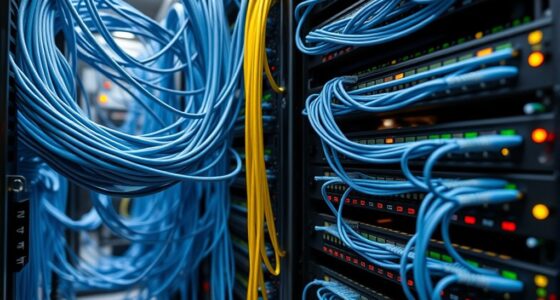
Understanding the difference between bandwidth and throughput is essential for managing and optimizing your network performance. When you’re dealing with network congestion or trying to improve data transfer speeds, knowing what each term really means helps you identify bottlenecks and make informed decisions. Bandwidth refers to the maximum capacity of your network connection—think of it as the size of the highway. It’s measured in bits per second (bps), kilobits, or megabits per second (Mbps). This capacity indicates how much data can theoretically flow through your network at once, but it doesn’t tell you how fast data actually moves. That’s where throughput comes in. Throughput measures the actual data transfer rate—how much data successfully gets transmitted from point A to point B over a certain period. If your bandwidth is like a wide highway, throughput is the number of cars that actually make it from start to finish each second.
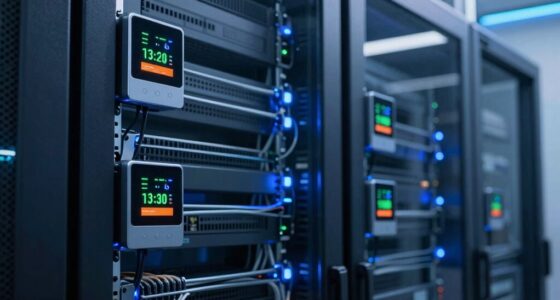
In real-world scenarios, you often see a gap between bandwidth and throughput due to network congestion. When many devices are using the network simultaneously, or if there’s interference or hardware limitations, data transfer slows down. For instance, even if your internet plan offers a bandwidth of 100 Mbps, your actual throughput might be considerably lower during peak hours or when multiple users are streaming, gaming, or downloading large files. This discrepancy is usually caused by network congestion, which creates a backlog of data waiting to be transmitted. The more devices connected and active, the more the available bandwidth gets divided, reducing the throughput. This is why understanding your network’s actual throughput helps you gauge real-world performance rather than just relying on theoretical bandwidth figures. Additionally, the quality of network hardware and signal strength can significantly impact throughput, even if bandwidth remains high.
To optimize your network, you need to recognize that having high bandwidth isn’t enough if throughput is consistently low due to congestion or other issues. For example, if you’re trying to transfer large files or stream high-definition videos, slow data transfer rates can be frustrating, even with a high-bandwidth connection. Monitoring your throughput provides a clearer picture of your network’s efficiency. When you experience slow data transfer, diagnosing whether the problem stems from limited bandwidth or network congestion can guide your next steps—whether that’s upgrading hardware, managing device usage, or adjusting your network setup. Fundamentally, understanding the interplay between bandwidth and throughput empowers you to improve your network’s performance and ensure that your data transfer is as fast and reliable as possible.

TP-Link AX1800 WiFi 6 Router (Archer AX21) – Dual Band Wireless Internet, Gigabit, Easy Mesh, Works with Alexa – A Certified for Humans Device, Free Expert Support
DUAL-BAND WIFI 6 ROUTER: Wi-Fi 6(802.11ax) technology achieves faster speeds, greater capacity and reduced network congestion compared to…
As an affiliate, we earn on qualifying purchases.
As an affiliate, we earn on qualifying purchases.
Frequently Asked Questions
How Does Latency Affect Throughput?
Latency directly impacts your throughput because increased network delay causes packets to take longer to reach their destination, reducing data transfer efficiency. When latency is high, your system may experience packet loss, which further decreases throughput as retransmissions occur. You’ll notice slower data speeds and reduced network performance, especially if latency spikes or network congestion happen regularly. Minimizing latency helps make certain of smoother, faster data flow and improves overall throughput.
Can Bandwidth Limits Impact Real-World Internet Speeds?
Yes, bandwidth limits can impact your real-world internet speeds. When your data caps are reached or your provider enforces network throttling, your connection slows down, reducing download and upload speeds. It’s like a highway with restricted lanes—less bandwidth means less data flows through, causing delays. You feel the effects during streaming, gaming, or large downloads, making your internet experience less smooth and more frustrating.
What Tools Can Measure Throughput Accurately?
You can measure your network speed and data transfer accurately using tools like Speedtest.net, Fast.com, or iPerf. These tools actively test your connection’s throughput by sending and receiving data, providing real-time results. They help you identify actual data transfer rates and assess your network’s performance, giving you clear insights into your internet speed. Regular testing guarantees your network operates efficiently and meets your bandwidth needs.
Is Higher Bandwidth Always Better for Streaming?
Imagine your internet as a highway—more lanes mean faster travel. Higher bandwidth can boost your streaming quality, but it’s not always the answer. If your bandwidth allocation isn’t managed well or your connection is congested, you won’t see improvements. So, while more bandwidth has the potential to enhance streaming, ensuring your network is optimized matters more for a smooth experience. You need balance, not just size.
How Do Network Congestion and Interference Influence Throughput?
Network congestion and wireless interference both reduce your throughput by causing delays and packet loss. When many devices use the network simultaneously, congestion slows down data transfer, while wireless interference from other electronics or signals disrupts your connection. These issues lower your effective throughput, making your internet feel sluggish even if your bandwidth is high. To improve performance, minimize congestion and interference by managing device usage and choosing less crowded channels.

ALFA NETWORK AWUS036AXML 802.11axe WiFi 6E USB 3.0 Adapter AXE3000, Tri Band 6 GHz, Gigabit Speed up to 3Gbps
Wi-Fi 6E Technology: Experience the Wi-Fi 6E (802.11ax) technology, adding the exclusive 6GHz band for less congestion, lower…
As an affiliate, we earn on qualifying purchases.
As an affiliate, we earn on qualifying purchases.
Conclusion
Remember, bandwidth shows the maximum capacity, while throughput reveals real-world performance. You might have a fast highway, but traffic jams slow you down. Similarly, high bandwidth doesn’t guarantee quick data transfer if congestion or hardware issues exist. By understanding both, you can better diagnose network problems and optimize your connection. So, don’t just chase high bandwidth—focus on throughput too, because real speed depends on how much data actually gets through.

DbillionDa Cat 8 Ethernet Cable 40Gbps 2000MHz, 6FT Heavy-Duty for Indoor/Outdoor Use, High-Speed Wired Internet Cable, Gold-Plated RJ45, Weatherproof & UV Resistant for Gaming, PC, Router, Modem
Designed for Outdoor & Direct Burial Installations – Heavy-duty double-shielded Cat8 Ethernet cable minimizes EMI/RFI interference and delivers…
As an affiliate, we earn on qualifying purchases.
As an affiliate, we earn on qualifying purchases.

TP-Link AC1200 WiFi Extender, 2023 Engadget Best Budget Pick, 1.2Gbps Signal Booster for Home, Dual Band 5GHz/2.4GHz, Covers Up to 1500 Sq.ft and 30 Devices,Support Onemesh, One Ethernet Port (RE315)
𝐒𝐭𝐫𝐨𝐧𝐠𝐞𝐫 𝐖𝐢-𝐅𝐢 𝐢𝐧 𝐄𝐯𝐞𝐫𝐲 𝐂𝐨𝐫𝐧𝐞𝐫 – Enjoy extended coverage with strong performance powered by Adaptive Path Selection and…
As an affiliate, we earn on qualifying purchases.
As an affiliate, we earn on qualifying purchases.