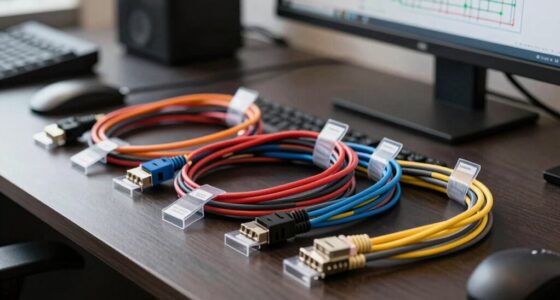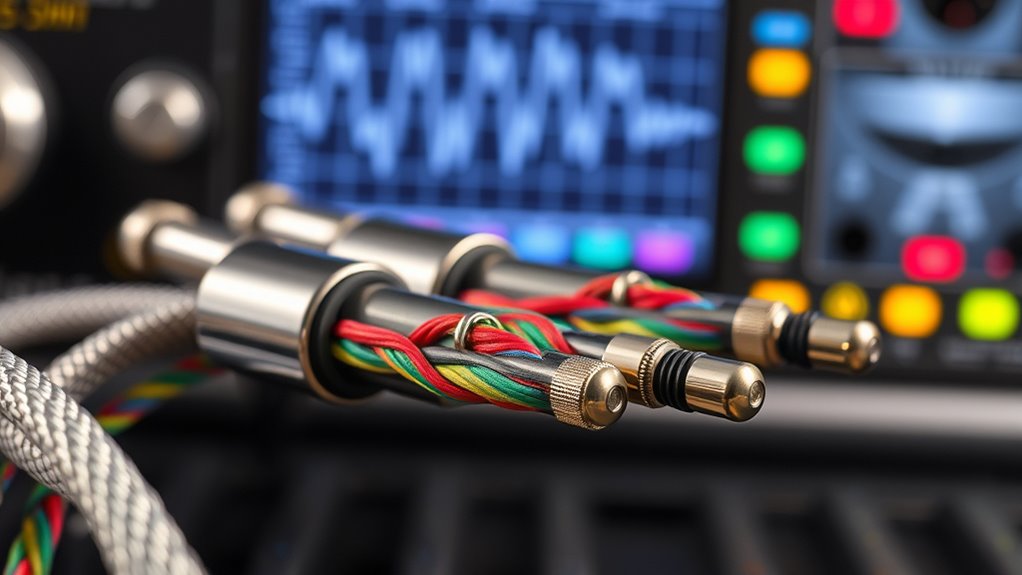
Imagine you’re on a video call, but background noise makes it hard to hear your conversation. That’s often caused by cross-talk, where signals from nearby cables interfere with each other. To prevent this, cables are designed with specific techniques like twisting conductors tightly or adding shielding layers. Understanding how these methods work can help you guarantee better signal quality, especially in environments full of electronic devices. Let’s explore how these cable features keep your connections clear.
Key Takeaways
- Cross-talk is electromagnetic interference between adjacent cables or wires that causes noise and degrades signal quality.
- Twisting conductors tightly in cables cancels out electromagnetic fields, reducing internal cross-talk.
- Shielding with metallic layers blocks external electromagnetic interference from affecting signals inside the cable.
- Combining twisting and shielding techniques provides comprehensive protection against both internal and external interference.
- Selecting cables with proper twisting and shielding ensures clearer, more reliable audio or data transmission in noisy environments.

Cross-talk occurs when signals from one cable interfere with those in another, causing noise and reducing audio or data quality. This interference can be frustrating, especially when you’re trying to achieve clear sound or reliable data transmission. To combat this, cable manufacturers use various shielding techniques and design features to minimize the impact of cross-talk. One effective strategy is cable twisting, which involves twisting two or more conductors together tightly. By doing this, the electromagnetic fields around each wire tend to cancel each other out, substantially reducing the chances of interference between adjacent wires. Cable construction plays a crucial role in how effectively cross-talk is minimized.
Cable twisting isn’t just about physical design; it plays a pivotal role in preventing cross-talk. When the conductors are twisted at regular intervals, any external electromagnetic interference affects both wires equally, allowing the signals to cancel each other out rather than interfere. This technique is especially common in twisted pair cables like Ethernet cables, where maintaining signal integrity is essential. The tighter and more consistent the twists, the better the cable is at resisting cross-talk, ensuring your data remains clear and uncorrupted.
But twisting alone isn’t enough for complete protection. That’s where shielding techniques come into play. Shielding involves wrapping the cable with metallic or conductive materials that act as a barrier against external electromagnetic interference. Common shielding options include foil shields, braid shields, or a combination of both. These shields absorb or block unwanted signals from penetrating the cable, further reducing cross-talk and noise. For instance, foil shields provide a continuous conductive layer that effectively blocks interference, while braid shields offer flexibility and durability, making them suitable for various environments.
When selecting cables for sensitive audio or high-speed data applications, you’ll want to consider cables that incorporate both shielding techniques and cable twisting. Together, these features work to substantially cut down on cross-talk, ensuring your signals stay clean and reliable. Proper shielding and twisting help maintain signal integrity over longer distances, especially in environments crowded with electronic devices that generate electromagnetic noise. They also prevent external signals from infiltrating the cable, which could distort or corrupt your data or audio.

Cable Matters 10Gbps Snagless Shielded Cat 6A Ethernet Cable, 50ft, Black
- High-Speed Network Performance: Supports 10Gbps Ethernet with reliable connectivity
- Enhanced Shielding Technology: SSTP/SFTP design reduces EMI and crosstalk
- Universal Compatibility: Compatible with PCs, routers, switches, NAS, VoIP, PoE
As an affiliate, we earn on qualifying purchases.
As an affiliate, we earn on qualifying purchases.
Frequently Asked Questions
How Does Electromagnetic Interference Differ From Cross-Talk?
Electromagnetic interference differs from cross-talk because it’s caused by external sources like motors or radio signals affecting your cables, leading to signal degradation. Cross-talk, on the other hand, happens when signals from adjacent cables interfere with each other due to proximity. While electromagnetic interference comes from outside influences, cross-talk is internal, occurring within the cable or nearby cables, both causing your signal quality to decline.
Can High-Quality Cables Completely Eliminate Cross-Talk?
High-quality cables substantially reduce cross-talk through enhanced shielding effectiveness and thoughtful cable construction. While they can’t completely eliminate it, premium cables with better shielding and twisted pair designs minimize interference. You’ll notice clearer audio and video signals, especially in noisy environments. Investing in well-made cables helps guarantee your signals stay clean, but keep in mind, no cable can entirely abolish cross-talk, only reduce it effectively.
What Are the Signs of Cross-Talk in Audio or Data Transmission?
Imagine a faint whisper sneaking into your conversation—that’s what cross-talk can feel like in your audio or data signals. You’ll notice it as background noise, muffled sounds, or unexpected data errors. Good interference mitigation relies on effective cable shielding that blocks stray signals. If you see these signs, it’s time to check your cables, ensuring they’re properly shielded to keep your transmissions clear and free from unwanted interference.
How Do Environmental Factors Influence Cable Cross-Talk?
Environmental factors like grounding issues and shielding effectiveness markedly influence cable cross-talk. If your cables aren’t properly grounded, electromagnetic interference can increase, making cross-talk worse. Poor shielding reduces the cable’s ability to block external signals, leading to signal leakage. To minimize cross-talk, guarantee your cables are well grounded and use high-quality shielding materials. These steps help maintain signal integrity and reduce interference caused by environmental conditions.
Are Wireless Signals Affected by the Same Cross-Talk Issues?
You’re right to wonder if wireless signals face similar issues. Yes, wireless interference can cause signal attenuation and disrupt communication, much like cross-talk in cables. Environmental factors like walls or other electronic devices can create noise, making it harder for your device to stay connected. While wireless signals don’t suffer from traditional cable cross-talk, they’re still vulnerable to interference that can weaken or distort the signal, so you might experience dropped calls or slow data.

RECOIL RCI23 3ft 2-Channel RCA Audio Cable Twisted Pair Noise Reduction
- Cable Length: 3ft RCA Audio Cable
- Wire Material: Oxygen Free Multi-Strand Copper
- Technology: Twisted Pair for Noise Reduction
As an affiliate, we earn on qualifying purchases.
As an affiliate, we earn on qualifying purchases.
Conclusion
By using techniques like twisting conductors and adding shielding, cables effectively prevent cross-talk and keep your signals clear. Imagine setting up a home theater; without proper shielding, nearby electronics could cause audio noise. But with shielded, twisted-pair cables, your sound stays crisp and free from interference. Understanding these methods helps you choose the right cables to guarantee reliable, high-quality connections in any environment.
Cable Matters 10Gbps Snagless Shielded Cat 6A Ethernet Cable, 50ft, Black
- High-Speed Network Performance: Supports 10Gbps Ethernet with reliable connectivity
- Enhanced Shielding Technology: SSTP/SFTP design reduces EMI and crosstalk
- Universal Compatibility: Compatible with PCs, routers, switches, NAS, VoIP, PoE
As an affiliate, we earn on qualifying purchases.
As an affiliate, we earn on qualifying purchases.
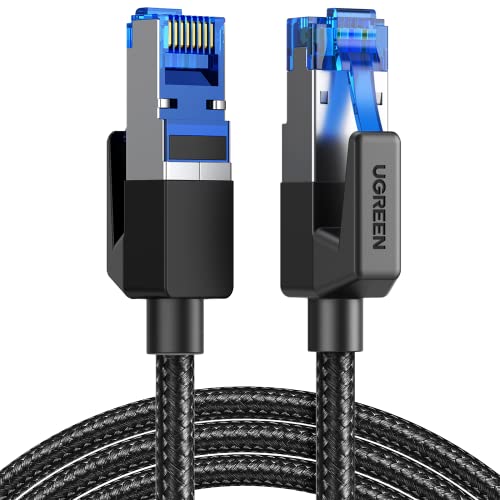
UGREEN Cat 8 Ethernet Cable 1.5FT, High Speed Braided 40Gbps 2000Mhz Network Cord Cat8 RJ45 Shielded Indoor Heavy Duty LAN Cables Compatible with Gaming PC PS5 PS4 PS3 Xbox Modem Router 1.5FT
- High-Speed Data Transfer: Supports 40 Gbps and 2000 MHz bandwidth
- Anti-Interference Design: Shielded F/FTP pairs with gold-plated connectors
- Durable and Flexible: Cotton braided exterior withstands 10,000 bends
As an affiliate, we earn on qualifying purchases.
As an affiliate, we earn on qualifying purchases.