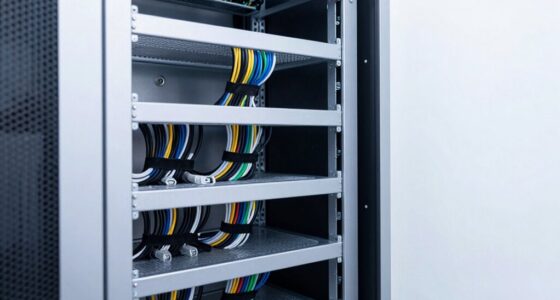

Using better rack naming conventions makes your life easier by helping you quickly locate, troubleshoot, and manage equipment. Clear, consistent names improve communication among team members and simplify cable management, reducing clutter and preventing tangles. They also boost security by controlling access and tracking inventory. As your data center grows, following a logical naming pattern keeps things organized and facilitates upgrades. Keep exploring to discover even more ways to streamline your operations.

Get business pricing on networking and server gear
- Business-only prices and quantity discounts
- Tax-exempt purchasing
- Multiple users, one account, clear invoices
Key Takeaways
- Clear naming simplifies equipment location, troubleshooting, and maintenance, saving time and reducing errors.
- Consistent rack names improve cable management and airflow, enhancing system reliability and cooling efficiency.
- Well-structured names facilitate access control, security, and inventory management for authorized personnel.
- Standardized naming conventions support seamless expansion, upgrades, and documentation in growing data centers.
- Improved organization and communication lead to more efficient operations and easier team collaboration.
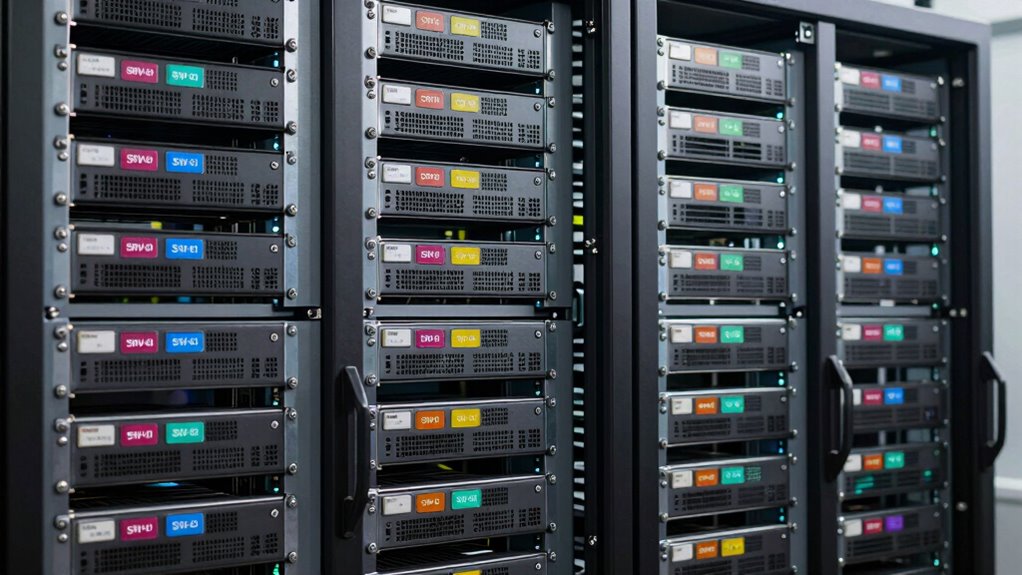
Implementing a clear rack naming convention is vital for efficient data center management. When you assign logical, consistent names to your racks, it becomes much easier to locate, troubleshoot, and maintain equipment. This clarity streamlines your operations, saving you time and reducing errors. With well-thought-out naming, you can quickly identify the purpose, contents, or location of each rack, which is especially valuable in large or complex environments. It also simplifies communication among team members, since everyone understands the naming system and can find what they need without confusion.
Clear rack naming enhances efficiency, eases troubleshooting, and improves team communication in data center management.
One of the most significant benefits of good rack naming conventions is improved cable management. When racks are named systematically, you can design your cabling layout more efficiently. For example, you might label racks based on their physical location or function, helping you plan and execute organized cable runs. Proper labeling reduces cable clutter and prevents unnecessary tangling, which can cause performance issues or make future upgrades difficult. When you know exactly where each cable connects, troubleshooting becomes faster because you can trace connections without guesswork. This organized approach minimizes downtime and maintains ideal airflow, which is essential for cooling and equipment longevity.
Access control is another key aspect that rack naming conventions influence. When your racks are clearly labeled and logically arranged, managing access becomes straightforward. You can assign permissions based on rack names, ensuring only authorized personnel work on specific equipment. This approach enhances security by preventing unauthorized access and accidental interference with sensitive hardware. When you implement a consistent naming scheme, it’s easier to maintain a detailed inventory and audit trail, knowing exactly who accessed what and when. This accountability helps you enforce security policies effectively, reducing risks of tampering or theft. Additionally, following a standardized naming convention makes it easier to incorporate automation tools for management and monitoring.
Furthermore, a standardized naming convention supports scalability. As your data center grows, adding new racks becomes simpler because you follow a predefined system. You won’t waste time figuring out how to integrate new equipment into your existing setup. Instead, you can assign names according to your established pattern, maintaining organization and clarity. This consistency also assists in documentation and reporting, making future upgrades or relocations smoother.
rack labeling system for data center
As an affiliate, we earn on qualifying purchases.
As an affiliate, we earn on qualifying purchases.
Frequently Asked Questions
How Do I Handle Naming for Temporary or Experimental Racks?
For temporary or experimental racks, you should use clear temporary labels and experimental identifiers that distinguish them from your main racks. Keep the naming simple and consistent, like adding “TEMP” or “EXP” at the start or end of the name, and include dates if relevant. This way, you can easily identify their purpose, monitor progress, and avoid confusion, ensuring your rack management stays organized during testing phases.
Should Rack Names Include Hardware Specifications or Just Location Info?
You might think including detailed hardware specs in rack names is overkill, but ironically, it saves you from digging through asset tracking records later. For regular racks, location info keeps things straightforward, but for specialized or temporary setups, adding hardware details helps quickly identify assets. Clear rack labeling with essential info minimizes confusion, streamlines maintenance, and keeps your asset tracking efficient—making your life easier, even if it seems complicated at first.
How Often Should Rack Naming Conventions Be Reviewed or Updated?
You should review your rack naming conventions at least annually to guarantee they stay clear and consistent. Regular reviews help you adapt to hardware changes and evolving infrastructure, aligning with your naming hierarchy and standardization protocols. Updating names promptly prevents confusion and maintains easy identification. Incorporate feedback from team members and document any changes thoroughly, so everyone stays on the same page and your system remains organized and efficient over time.
What Tools or Software Can Assist With Managing Rack Naming Standards?
You can use automated naming tools and standardization software to manage rack naming standards efficiently. These tools help guarantee consistency, reduce manual errors, and streamline updates across your infrastructure. By integrating automated naming tools, you can quickly generate and apply standardized rack names. Standardization software also allows you to enforce naming conventions, track changes, and maintain uniformity, making rack management more organized and less time-consuming.
How Do I Ensure Consistency Across Multiple Teams or Departments?
You guarantee consistency across teams by establishing clear, standardized procedures and fostering open communication. Address standardization challenges by creating a thorough naming hierarchy that everyone understands and follows. Implement regular training sessions, utilize shared documentation, and enforce standardized protocols. Monitor adherence consistently, gather feedback to improve, and lead by example. This structured approach helps align all departments, minimizes errors, and maintains uniform rack naming practices across your organization.
cable management labels for server racks
As an affiliate, we earn on qualifying purchases.
As an affiliate, we earn on qualifying purchases.
Conclusion
Adopting clear rack naming conventions is like giving your data center a well-organized map, guiding you through the maze with ease. When every rack has a straightforward label, troubleshooting becomes a breeze, and upgrades feel like smooth sailing. Think of it as tuning a musical instrument—everything harmonizes perfectly, saving you time and frustration. With better naming, your infrastructure transforms into a symphony of order, making your day-to-day operations a seamless, stress-free dance.
rack security access control system
As an affiliate, we earn on qualifying purchases.
As an affiliate, we earn on qualifying purchases.
data center inventory management software
As an affiliate, we earn on qualifying purchases.
As an affiliate, we earn on qualifying purchases.
Halloween Picks
halloween
As an affiliate, we earn on qualifying purchases.