
TL;DR

Get business pricing on networking and server gear
- Business-only prices and quantity discounts
- Tax-exempt purchasing
- Multiple users, one account, clear invoices
Fermilab, CERN and the Sanford Underground Research Facility have begun installing steel structures for two cryostats that will house DUNE’s far detectors nearly a mile underground in South Dakota. The project’s published schedule calls for underground facility completion by 2029, detector installation in 2030 and the long-distance neutrino beam to start operating by 2031.
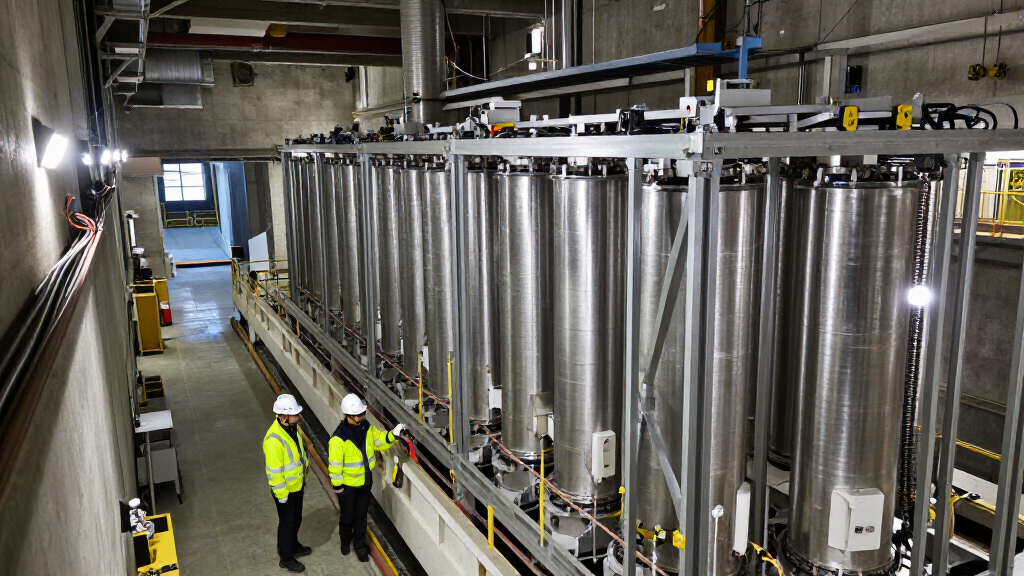
Fermilab, CERN and the Sanford Underground Research Facility have begun installing steel structures for the two cryostats that will contain the far detectors of the Deep Underground Neutrino Experiment (DUNE). The work is taking place nearly a mile underground in Lead, South Dakota, and marks a major construction step toward an experiment designed to study neutrinos traveling 1,300 kilometers from Fermilab.
Crews are assembling the structures in SURF’s South Cavern from 2,600 red steel beams, lowered individually from the surface. The steel for the cryostats is a contribution from CERN, which is leading their design, construction planning, logistics and installation in collaboration with a Minnesota-based structural steel contractor. SURF manages shaft operations and the safe movement of materials underground.
Each cryostat is planned to measure 65.8 meters long, 18.9 meters wide and 18.3 meters high. Each will hold about 17,000 tons of liquid argon kept at approximately minus 300 degrees Fahrenheit. SURF crews have also begun lowering steel components for the second cryostat into the North Cavern; assembly there is expected to start next year.
The project schedule described in the report calls for completion of the underground facility by 2029, detector installation in 2030 and operation of the long-distance neutrino beam by 2031. Those are future milestones, not completed work. DUNE is an international collaboration involving more than 1,500 researchers, hosted by Fermilab.
Building DUNE’s Underground Detectors
The cryostats are essential infrastructure for DUNE’s far detectors: they will contain the liquid argon used to detect and study neutrino interactions. Starting their assembly moves the project from underground excavation and material delivery into construction of the large detector enclosures themselves.
DUNE is planned to compare neutrinos measured near their source at Fermilab with those detected after traveling through Earth to South Dakota. The long baseline is intended to support research into neutrino properties and fundamental questions about the universe. The installation milestone does not itself produce scientific results; those depend on completing the facility, installing detector equipment and beginning beam operations.
The work also illustrates the scale of the international effort. CERN is contributing more than 6,200 tons of steel and technical expertise to a U.S.-based experiment, while Fermilab hosts the collaboration and SURF provides the underground site and logistics. The project is planned to operate into the late 2040s, according to SURF laboratory director Mike Headley.
Products Worth Considering

Apple AirPods Pro (2nd Generation) Wireless Earbuds with USB‑C Charging, Up to 2X More Active Noise Cancelling, Transparency Mode, Adaptive

Amazon Kindle Scribe (3rd Generation), 64GB, 11-inch Display, Graphite, with Premium Pen

Amazon Kindle Paperwhite (2024, 16 GB) – 7-inch Glare-Free Display, Black
As an affiliate, we earn on qualifying purchases.
From Beamline to South Dakota
DUNE is part of the Long-Baseline Neutrino Facility, linking a neutrino source at Fermilab in Illinois with far detectors at SURF in South Dakota. The planned beam will travel approximately 800 miles (1,300 kilometers) through Earth. A separate detector near Fermilab will measure the particles before their journey, providing a point of comparison with observations at the far site.
The installation follows earlier steps reported by the project, including the arrival of cryostat steel in Rapid City and the start of lowering steel underground. CERN’s Neutrino Platform developed and built ProtoDUNE, a prototype related to the detector technologies planned for the far-detector modules. CERN’s contribution to DUNE is described by the organizations as a major effort beyond Europe.
““DUNE is Fermilab’s top priority.””
— Norbert Holtkamp, Fermilab director
Milestones Still Ahead
The reported dates—facility completion by 2029, detector installation in 2030 and beam operation by 2031—are project expectations. The source does not provide a detailed construction schedule, costs, or information on whether any of those milestones have changed. It also does not specify the pace of steel assembly or give a completion date for each cryostat.
The work now underway is structural installation, not operation of the detectors. Further construction and equipment installation are required before DUNE can collect data. The report does not provide an updated estimate of when the experiment’s first scientific results could be released.
Assembly Moves to the North Cavern
Crews are continuing steel installation for the first cryostat in the South Cavern, while SURF has begun lowering components for the second structure into the North Cavern. Assembly of that second cryostat is expected to begin next year, according to the project report.
After the underground facility is completed, the published schedule calls for detector installation in 2030 and the Fermilab neutrino beam to begin operating by 2031. Those steps will determine when the experiment can move from construction to measurements.
Key Questions
What has started at the DUNE site?
Crews from Fermilab, CERN and SURF have begun installing steel structures for the two cryostats that will house DUNE’s far detectors underground in South Dakota.
What will the cryostats contain?
Each cryostat is designed to hold about 17,000 tons of liquid argon, maintained at approximately minus 300 degrees Fahrenheit. The argon will be used in DUNE’s far-detector system.
How far will DUNE’s neutrinos travel?
The planned beam will travel about 800 miles (1,300 kilometers) from Fermilab to the detectors at SURF in South Dakota. A detector near Fermilab will measure neutrinos before they make that journey.
When is DUNE expected to begin operating?
The reported schedule calls for the underground facility to be completed by 2029, detector installation in 2030 and the long-distance beam to begin operating by 2031. These are planned milestones, not completed steps.
Source: thequantuminsider.com