
When you bundle cables, it’s essential to do so carefully to prevent heat buildup that can damage insulation or cause fire hazards. Tight wrapping or overcrowding can trap heat and accelerate wear. By maintaining proper spacing and using the right fastening methods, you can keep cables cool and safe. But what specific techniques help guarantee your cables stay in good condition over time?
Key Takeaways
- Use loose cable ties or Velcro straps to prevent tight bundling and allow airflow.
- Maintain space between cables to facilitate natural ventilation and heat dissipation.
- Avoid wrapping cables in tight loops or thick bundles that trap heat and restrict airflow.
- Install cooling fans or vented cable trays in high-current or enclosed setups to improve heat management.
- Regularly inspect and replace damaged cables to prevent insulation deterioration caused by heat buildup.
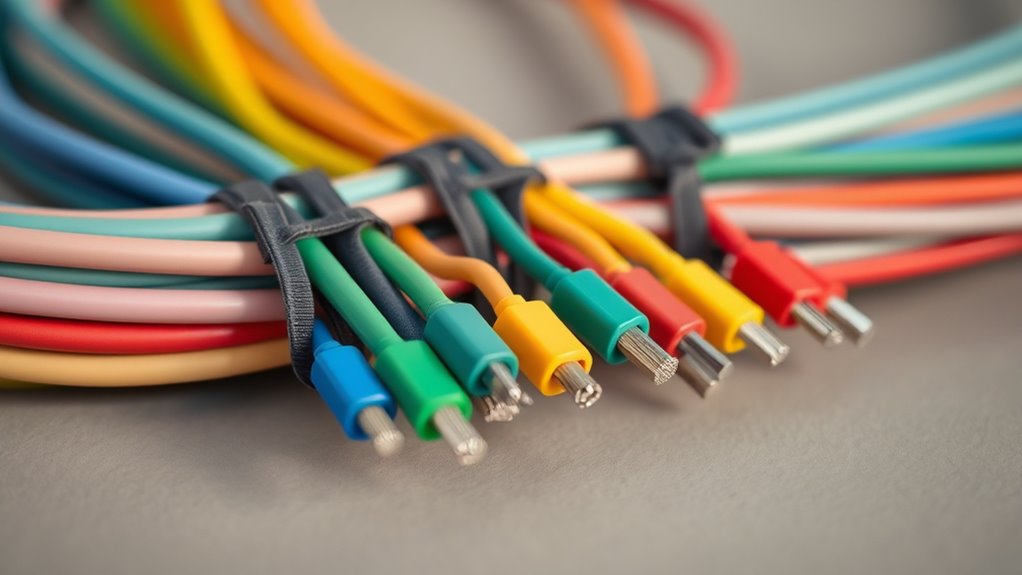
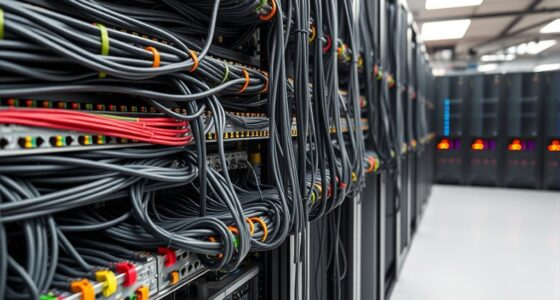
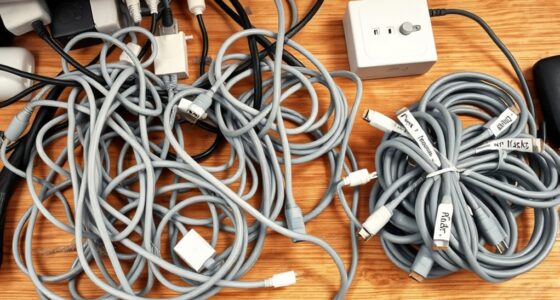
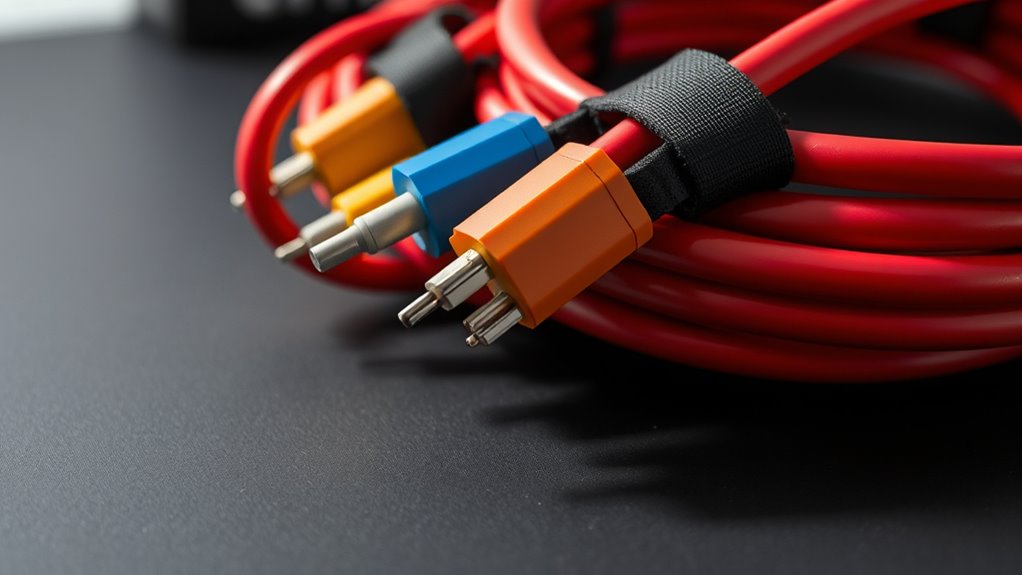
Bundling cables safely is essential to prevent damage, reduce clutter, and minimize potential hazards. When cables are grouped together tightly, heat can build up, causing insulation to deteriorate faster and increasing the risk of electrical failures or fire. Proper management requires understanding how cable insulation and heat dissipation work together to keep your setup safe. Cable insulation isn’t just about protecting against electrical shocks; it also plays a key role in managing heat. When cables are bundled too tightly, heat generated during operation gets trapped, raising the temperature of the insulation and the conductors inside. This trapped heat can weaken the insulation over time, leading to potential shorts or breakdowns. To avoid this, you need to make certain there’s enough space between cables so air can circulate and carry away excess heat. Good cable management isn’t just about keeping things neat; it’s about allowing heat dissipation to occur naturally, preventing overheating. Additionally, choosing appropriate cable materials designed for high-temperature environments can significantly improve heat resistance and safety. One effective way to promote heat dissipation is to avoid wrapping cables in tight, continuous loops or bundling them excessively thick. Instead, use cable ties or Velcro straps loosely, making sure not to compress the cables too much. This prevents the insulation from being squeezed and allows airflow around each cable. Also, consider the length of the cables you use; longer cables, if not managed properly, can lead to more heat buildup because of increased resistance and current flow. When possible, opt for cables with better insulation ratings designed to handle higher temperatures or thicker cable insulation that can withstand heat better. Additionally, maintaining a clean environment around your cables helps improve airflow and heat dissipation. Dust and debris can insulate heat, making it harder for the environment to cool down the cables naturally. Another crucial aspect is to avoid bundling cables that carry high currents together without proper spacing or ventilation. These cables generate more heat, and if they’re too close, the heat can transfer from one to another, compounding the problem. In environments where heat is a persistent issue, consider installing cooling fans or using vented cable trays that promote airflow and help carry away heat. Regular inspections and maintenance are also vital. Over time, cable insulation can degrade, especially in high-temperature settings, so replacing worn or damaged cables prevents heat buildup and potential safety hazards. Remember, safety isn’t just about avoiding shocks; it’s about making certain your entire setup remains cool and functional. By managing cable insulation properly and promoting effective heat dissipation, you protect your equipment and create a safer, more reliable environment for your electronic devices.

Aruizun 2 Pack Wire Cutters Set, 6"+5" Sharp Flush Cutters, Spring Loaded Side Cutting Pliers,Carbon Steel Wire Cutters for Crafting, Electronics, 3D Prints, Jewelry Making, Model Sprue, Zip Ties
Double Precision Wire Cutters Set: Includes a 5" Micro cutter for delicate tasks (max 16 AWG) and a...
As an affiliate, we earn on qualifying purchases.
Frequently Asked Questions
Can Bundling Cables Cause Electrical Shorts?
Yes, bundling cables can cause electrical shorts if you’re not careful. When cables are tightly packed, heat builds up and can lead to insulation damage. This damage increases the risk of a fire hazard and may cause short circuits. To prevent this, guarantee proper ventilation, avoid excessive bundling, and regularly check for signs of wear. Proper cable management keeps your system safe and reduces the chance of electrical issues.
What Materials Are Best for Cable Bundling?
Think of your cables as a team, each needing the right gear to perform safely. Use materials like heat-resistant cable insulation and soft, flexible ties for bundling techniques. Avoid metal clips or sharp objects that could damage insulation or cause shorts. Opt for non-conductive, durable materials that prevent heat buildup and protect against electrical issues, ensuring your cables stay safe and efficient in their task.
How Often Should Bundled Cables Be Inspected?
You should inspect bundled cables regularly, ideally every 3 to 6 months, to guarantee safe cable maintenance. Frequent inspection helps you identify signs of heat buildup, wear, or damage early, preventing potential hazards. Keep an eye on temperature, insulation integrity, and any signs of deterioration. Consistent inspection frequency ensures your cables stay safe, functional, and free from heat-related issues, reducing the risk of electrical failure or fire hazards.
Are There Specific Guidelines for Outdoor Cable Bundling?
If you’re bundling outdoor cables, follow specific guidelines to guarantee safety. For example, use weatherproofed, UV-resistant cables that withstand sunlight and moisture. Keep bundles loosely arranged to prevent heat buildup, and secure them properly to avoid strain. Always choose cables rated for outdoor use, and protect connections with weatherproofing materials. Regular inspections help identify wear or damage early, ensuring your outdoor setup remains safe and durable over time.
What Tools Are Recommended for Safe Cable Bundling?
You should use cable ties, Velcro strips, or cable organizers for effective cable management while ensuring proper heat dissipation. These tools allow you to bundle cables securely without restricting airflow, which helps prevent heat buildup. Avoid tight ties that can cause damage or block ventilation. By using these tools correctly, you promote safe cable bundling and maintain ideal heat dissipation, extending the lifespan of your cables and equipment.

Haiou Zip Ties Kit with Flush Cutter, 100-Pack Heavy Duty Self-Locking Nylon Cable Ties for Car Repair, Automotive Trim Bumper Clip & Outdoor DIY Use
Versatile All-Purpose Solution: Our nylon universal cable tie buckle is designed for a wide range of applications, from...
As an affiliate, we earn on qualifying purchases.
Conclusion
Think of your cables as a delicate garden that needs space to breathe and flourish. By avoiding tight wraps and overcrowding, you prevent heat from building up, much like giving your plants room to grow strong. Regularly inspecting and gently organizing your cables keeps the flow of energy smooth and safe, just as a gardener tends to each plant with care. With mindful habits, you’ll guarantee your cables stay healthy and your space remains secure.

trueCABLE Precision Sharp Flush Cutter, 1 Pack, Wire Cutting Pliers for Ethernet Cable Preparation, Electronics, Jewelry & Crafts, Hardened Carbon Steel with Non-Slip Handle, Cut Wire Up To 16 AWG
RAZOR-SHARP PRECISION: Hardened high carbon steel flush cutters with precisely aligned parallel jaws for clean, flush cuts on...
As an affiliate, we earn on qualifying purchases.

RV RHODES 42708 Zip Tie Gun/Cable Tie Install Tool, Adjustable Tension with Built-In Cutter, for Nylon Ties up to 1/4”- Black
Keep Your Cables Organized: Say goodbye to messy cables! Our zip tie gun helps you neatly tie and...
As an affiliate, we earn on qualifying purchases.