
Imagine your cables as the veins of your setup—if they’re tangled, neglected, or poorly managed, your entire system risks blood flow. Each mistake you make can lead to safety hazards, downtime, or costly repairs. Understanding the common pitfalls helps you avoid the chaos and keep everything running smoothly. But what are the most critical errors that could undermine your efforts? Let’s explore the key cable management mistakes you should avoid.
Key Takeaways
- Avoid over-tightening cable ties, which can damage cables and reduce flexibility.
- Do not neglect labeling cables, making future troubleshooting and maintenance difficult.
- Refrain from routing cables near sources of interference or heat, risking performance issues.
- Don’t ignore regular inspection and reorganization, leading to tangling and equipment stress over time.
- Steer clear of cluttered, unplanned cable pathways that hinder access and increase safety hazards.
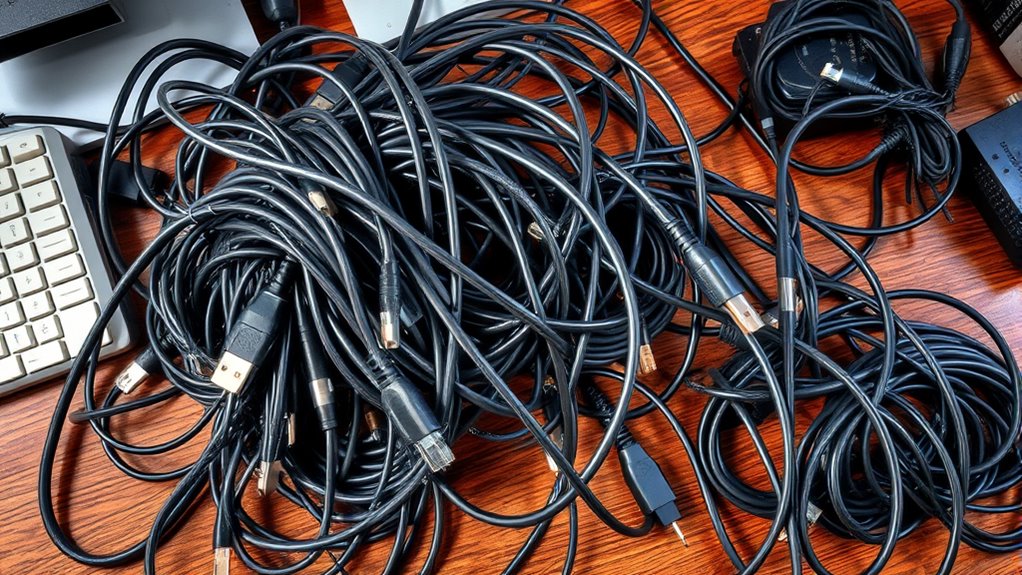
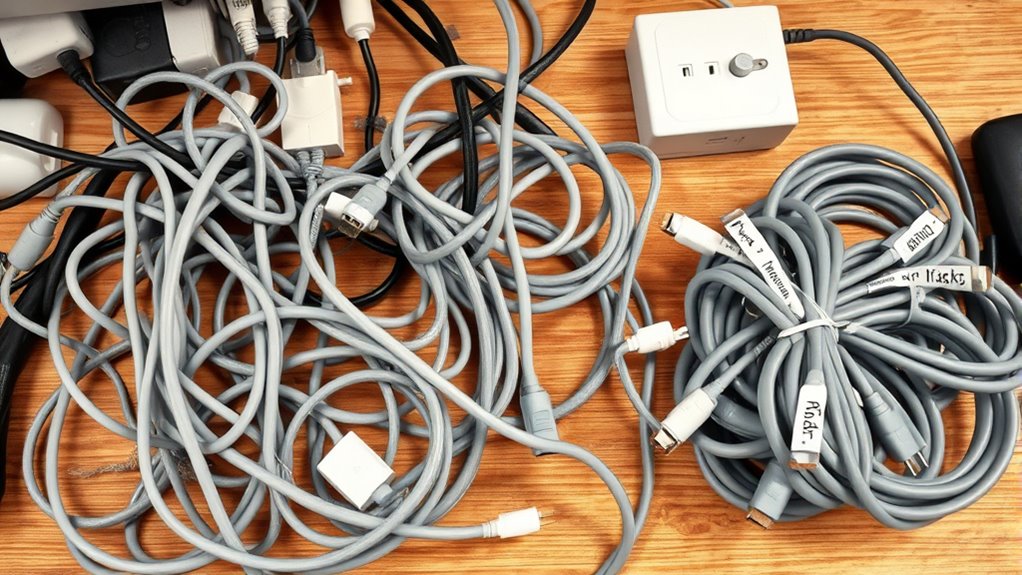
Poor cable management can lead to a variety of problems, from equipment damage to safety hazards. When cables are tangled, cluttered, or poorly organized, it becomes difficult to identify which wire belongs to what device, increasing the risk of accidental disconnections or equipment failures. To prevent this, investing in a good wire organizer is essential. A wire organizer helps keep cables neat and prevents them from tangling, making maintenance and troubleshooting much easier. With a proper system in place, you can quickly access specific cables without having to untangle a mess, saving you time and frustration.
Poor cable management causes damage, safety hazards, and frustration—use a wire organizer for a safer, cleaner setup.
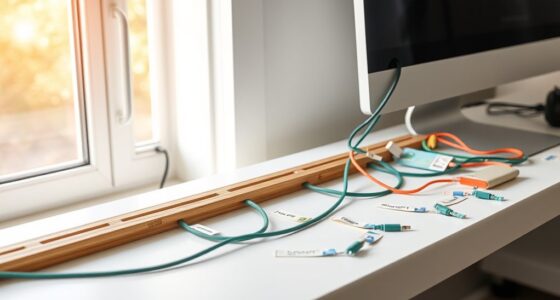
Another common mistake is neglecting to use cable labels. Without labels, you might find yourself tracing cables blindly, which can be frustrating and time-consuming. Cable labels are a simple yet effective way to identify each wire clearly. By labeling each cable at both ends, you can easily determine which cable connects to which device, reducing the chances of unplugging the wrong one during upgrades or repairs. Labels also help when expanding your setup, as new cables can be added systematically without creating chaos. Implementing labels early on can save you from headaches later and ensure smoother management of your cables.
Failing to plan the layout is another mistake that often leads to cable management issues. When you don’t think about how cables will run from device to outlet or power source, you risk creating a tangled, inefficient mess. Proper planning involves mapping out your cable routes and considering the shortest, most direct paths. It’s best to keep cables away from high-traffic areas to avoid accidental disconnections or damage. Using cable clips or ties along with your wire organizer can help maintain a clean pathway, reducing clutter and potential hazards. Additionally, understanding the importance of noise levels of modern heat pumps can help ensure that your cable setup does not interfere with other sensitive equipment, especially in home heating or HVAC systems.
Overlooking the importance of regular maintenance also causes cable management problems. Cables can shift and become tangled over time, especially if your setup changes frequently. Make it a habit to periodically check your cables, re-label if necessary, and tidy up any loose wires. This proactive approach prevents small issues from escalating into larger, more complicated problems down the line. Also, be mindful of heat buildup; avoid bending cables sharply or bundling them too tightly, which can damage the wires internally.

NETGEAR Nighthawk WiFi 7 Router (BE9300) – Router Only, 9.3Gbps Wireless Speed, 2.5 Gigabit Internet Port, Tri-Band for Gaming, Covers 2,500 sq. ft., 100 Devices, VPN – Free Expert Help
Blazing-fast WiFi 7 speeds up to 9.3Gbps for gaming, smooth streaming, video conferencing and entertainment
As an affiliate, we earn on qualifying purchases.
Frequently Asked Questions
How Often Should I Update My Cable Management System?
You should update your cable management system whenever you notice clutter, loose cables, or after adding new devices. Regular maintenance routines, like every few months, help keep your cable organization tidy and prevent tangles. By staying proactive, you guarantee your setup remains efficient and safe. Don’t wait until cables become a mess—frequent updates and inspections will save you time and frustration in the long run.
What Tools Are Best for Hidden Cable Routing?
Imagine you’re a skilled navigator, steering hidden cables through a maze. To do this, use a cable organizer like flexible clips or raceways that blend seamlessly into your space. Routing techniques such as cable trays or sleeves help keep everything tidy and concealed. These tools make it easier to hide cables, prevent tangles, and maintain a clean look—think of them as your secret map for smooth, discreet cable routing.
Can Improper Cable Management Damage My Devices?
Improper cable management can indeed damage your devices over time. Bad cable wear from constant bending or friction can cause internal wire breaks, leading to malfunctions. Additionally, poor organization may increase the risk of power surges affecting your equipment, especially if cables are tangled or exposed to electrical interference. To prevent this, keep cables neat, avoid sharp bends, and use surge protectors to safeguard your devices from unexpected power fluctuations.
How Do I Manage Cables in a Shared Workspace?
To manage cables in a shared workspace, prioritize wireless alternatives like Bluetooth keyboards and mice to reduce clutter. Use cable clips and sleeves to organize remaining cords neatly, preventing tripping hazards. Consider ergonomic considerations by positioning cables away from work areas and outlets. Regularly check and adjust cable arrangements to keep the space safe and efficient, ensuring everyone can work comfortably without tangled or loose wires causing disruptions.
What’s the Best Way to Label Cables for Easy Identification?
Your cables are a tangled jungle, but label them for easy identification. Use clear cable labeling by applying color-coded tags or labels with a permanent marker. Incorporate simple identification techniques like numbered tags or descriptive labels (e.g., “Monitor” or “Printer”). This way, you can quickly find what you need without a wild search. Consistent labeling saves time and keeps your workspace organized, making cable management a breeze!

ASUS ExpertWiFi EBG15 Gigabit VPN Wired Router, up to 3 WAN ethernet Ports + 1 USB WAN, IPS Intrusion Prevention, Layer 7 Firewall, Commercial-Grade Network Security, Remote Management with App
Easier-Than-Ever Setup — Convenient and easy router management via web browser or the ASUS ExpertWiFi mobile app through...
As an affiliate, we earn on qualifying purchases.
Conclusion
By avoiding common cable management mistakes, you create a safe, organized space that’s easy to navigate. Imagine a tangled mess of cables causing chaos versus a neat, labeled setup that simplifies maintenance. Just as a well-laid pathway guides your steps, proper cable routing keeps everything flowing smoothly. When you prioritize planning, labeling, and regular checks, you’re not just preventing problems—you’re building a foundation for efficiency and safety that lasts.

TNP for Starlink Cable Grommet Routing Kit - 1 Inch Wall Hole Feed Through Bushing, Silicone Wall Grommet for Starlink Ethernet Cable, Durable & Easy Installation, Black
Secure Cable Management: Designed for Starlink cords, this wall grommets for cables ensures a tight, rattle-free hold, preventing...
As an affiliate, we earn on qualifying purchases.

4pcs 3/4 Inch Cable Grommets for Starlink, Anti-Slip Cable Routing Kit Split Wall Hole Pass Through Bushing Grommet for Ethernet/TV Wires Waterproof Cord Protection Accessories Part(19mm Dia, White)
Versatile Cable Protection: Includes 4 pieces of white 3/4-inch cable grommets, which can reduce tripping hazards, prevent wall...
As an affiliate, we earn on qualifying purchases.