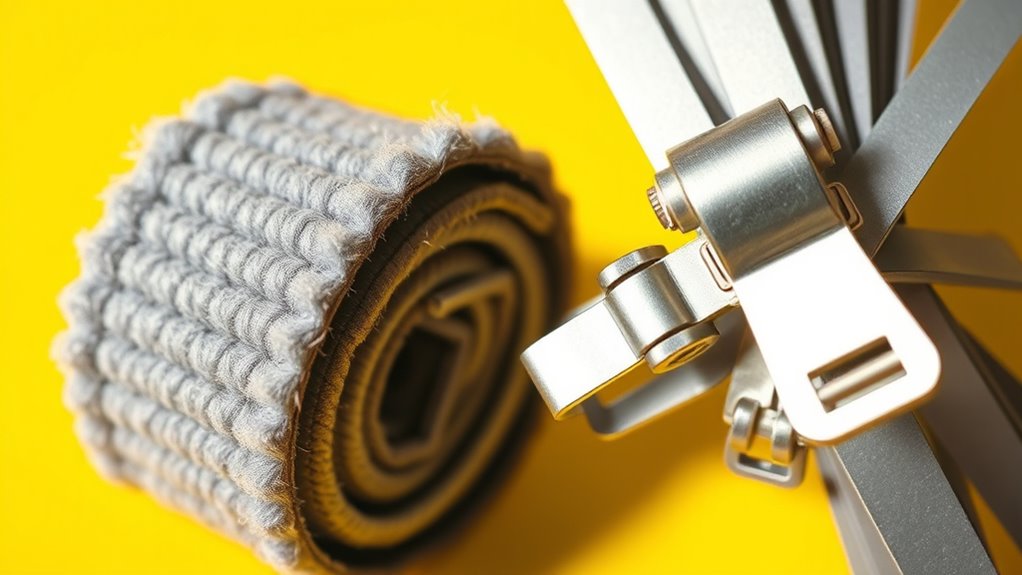

When deciding between Velcro and zip ties, you need to contemplate your project’s specific needs. Velcro offers flexibility and reusability, making it ideal for tasks that might change over time. Zip ties, on the other hand, deliver a strong, permanent hold suited for demanding environments. But which choice truly fits your application? There’s more to weigh, and understanding the differences can make all the difference in achieving a successful result.
Key Takeaways
- Velcro offers adjustability and reusability, ideal for projects needing frequent modifications.
- Zip ties provide stronger, permanent fastening suitable for heavy-duty and outdoor applications.
- Velcro is less durable outdoors, as dirt and moisture can degrade its holding power over time.
- Zip ties resist UV exposure and temperature changes, making them better for long-term, outdoor use.
- Choose Velcro for flexibility and reusability; opt for zip ties when a secure, permanent bond is required.
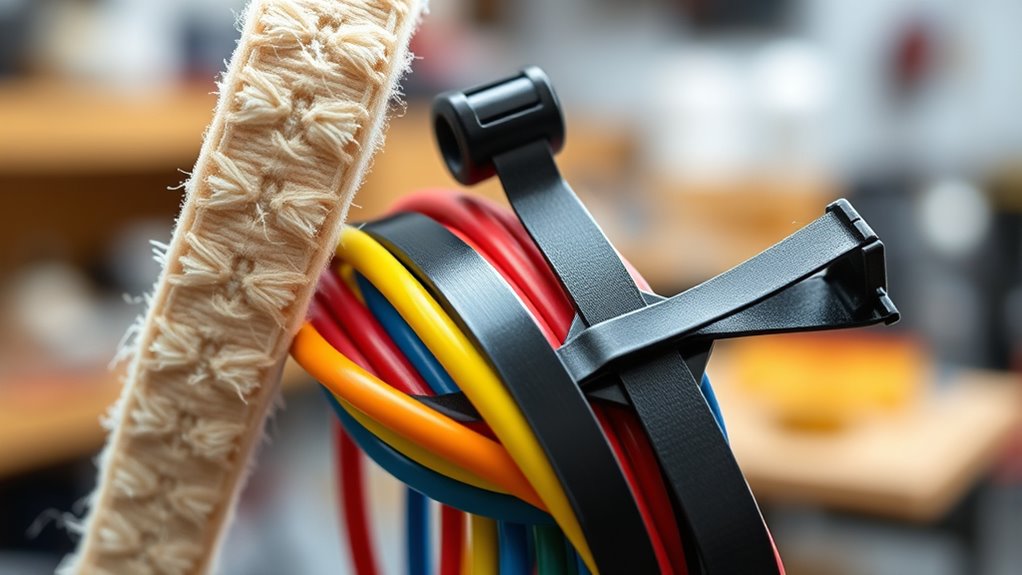
Have you ever wondered which fastening solution works best: Velcro or zip ties? When it comes to securing objects, both options have their strengths, but understanding their adjustability options and material durability can help you make the right choice. Velcro offers excellent adjustability, allowing you to fine-tune tightness with ease. You can loosen or tighten it quickly, making it perfect for applications where frequent adjustments are needed. Whether you’re bundling cables, securing clothing, or organizing tools, Velcro’s hook-and-loop design provides a flexible fit. Plus, it’s reusable, so you can modify your setup without throwing anything away. Its adjustability options make it incredibly user-friendly, especially for projects that require periodic changes. On the other hand, zip ties are less forgiving when it comes to adjustment. Once you tighten a zip tie, it stays fastened until you cut it off. If you need a precise or adjustable fit, zip ties might not be your best bet. However, this inflexibility can be an advantage in certain situations, such as securing items that shouldn’t be tampered with or for permanent fixtures. When considering material durability, both fastening methods excel in different ways. Velcro is typically made from nylon or polyester, which are resistant to wear and tear, but over time, the hook-and-loop surfaces can degrade, especially if exposed to dirt, dust, or moisture. This degradation reduces its holding power, so it’s not always suitable for outdoor or heavy-duty use. Conversely, zip ties are generally made from nylon as well, but their design makes them extremely durable under various conditions. High-quality zip ties can withstand significant weight, UV exposure, and temperature fluctuations, making them ideal for outdoor applications or situations demanding long-term strength. They won’t wear out as quickly as Velcro if used in harsh environments. That said, once a zip tie is tightened, it cannot be reused or adjusted without cutting it off, which limits flexibility but boosts security. If your project calls for frequent adjustments and reusability, Velcro’s flexibility makes it more convenient. But if you need a one-time, strong, and permanent fastening, zip ties are often more reliable. Ultimately, the decision hinges on your specific needs: if adjustability and ease of use are priorities, Velcro is likely your best choice. If durability and permanence are more important, zip ties might serve you better. Both have their place, so weigh these factors carefully before making your selection. Additionally, understanding material properties can help you select the most suitable fastening method for your project.

150PCS Reusable Cable Ties – 4+6+8+10inch Multi-Purpose Cable management Hook & Loop Cable Straps Wire Ties,Adjustable Fastening Cord Organizer,Cable Organizer for Home,Office and Data Centers,Black
Cable Ties Package includes: The bundle comes in 4 different sizes.Each fastening cable ties set includes 4 inch…
As an affiliate, we earn on qualifying purchases.
As an affiliate, we earn on qualifying purchases.
Frequently Asked Questions
Are Velcro and Zip Ties Environmentally Friendly?
Velcro tends to be more environmentally friendly than zip ties because it’s often made from recyclable or biodegradable materials, reducing waste. Zip ties, especially plastic ones, are less recyclable and can contribute to pollution if not disposed of properly. When choosing, consider recyclability considerations and opt for Velcro with biodegradable materials to minimize environmental impact. This way, you make a more sustainable choice overall.
How Do Velcro and Zip Ties Perform in Extreme Weather Conditions?
Like a knight facing a dragon, you’ll find Velcro offers decent weather resilience and material durability in extreme conditions, but zip ties tend to outperform them. Zip ties hold tight and resist UV rays, moisture, and temperature fluctuations better, making them ideal for harsh weather. Velcro may wear out faster or lose grip under extreme cold or heat, so choose zip ties if you need reliable performance in tough environments.
Can Velcro and Zip Ties Be Reused Multiple Times?
Yes, you can reuse Velcro, especially if you keep it clean and avoid damage to the hook and loop surfaces. Reusing zip ties is possible if they remain intact and haven’t been overstressed, but they might weaken over time. To get the most out of both, handle them carefully when removing and reattaching, ensuring they stay functional for multiple uses.
Which Option Is Safer for Children and Pets?
Think of Velcro as a gentle guardian, softly securing items without risking injury, making it safer for child safety and pet safety. Zip ties, like tight bonds, can pose choking or strangulation hazards if not used carefully. For households with children or pets, Velcro offers a safer, more flexible option, ensuring security without danger. Always prioritize gentle, easy-to-remove solutions to protect your loved ones effectively.
Are There Weight Limits for Velcro and Zip Ties?
Yes, there are weight limits for both Velcro and zip ties. Velcro’s weight capacity depends on the material strength of its hook-and-loop fastener, typically handling lighter loads like cables or small items. Zip ties, made from durable plastic, generally support higher weight limits based on their size and material strength, making them suitable for securing heavier objects. Always verify the product specifications to ensure you select the right fastener for your needs.

11-inch Black Zip Ties Heavy Duty UV Resistant Nylon Cable Ties, 50lb Tensile Strength, 100-Pack – Durable Wire Ties, Heavy Duty Tie Straps Indoor and Outdoor Cable Management Solution by ARMOUR TIES
Multi-Functional Design: Each tie is engineered for high performance in automotive, electrical, industrial, and household applications, ensuring versatile…
As an affiliate, we earn on qualifying purchases.
As an affiliate, we earn on qualifying purchases.
Conclusion
In the battle between Velcro and zip ties, your choice depends on your needs. If you want flexible, fuss-free fixes, Velcro’s velvety touch offers reusability and reliability. But for fierce, firm fastening in formidable environments, zip ties stand strong and steadfast. Consider your project’s demands, and decide whether you need the gentle ease of Velcro or the tough tenacity of zip ties. Either way, your fastening future is firmly in your hands.

150PCS Reusable Fastener Straps – 6 Inch Cable Management Ties, Adjustable Hook & Loop Organizer Straps for Home, Office and Data Centers (Black)
【150PCS Reusable Cable Ties】Each pack includes 150 pieces cable organizer. 6 Inch Cord Organizer Wire Ties.
As an affiliate, we earn on qualifying purchases.
As an affiliate, we earn on qualifying purchases.
11-inch Black Zip Ties Heavy Duty UV Resistant Nylon Cable Ties, 50lb Tensile Strength, 100-Pack – Durable Wire Ties, Heavy Duty Tie Straps Indoor and Outdoor Cable Management Solution by ARMOUR TIES
Multi-Functional Design: Each tie is engineered for high performance in automotive, electrical, industrial, and household applications, ensuring versatile…
As an affiliate, we earn on qualifying purchases.
As an affiliate, we earn on qualifying purchases.