
When you install a network cable labeled Cat 6A in your office, you might assume it’s just about speed, but it’s more than that. Understanding cable certification categories helps guarantee your infrastructure supports current needs and future growth. These standards define performance levels, interference resistance, and bandwidth, but how do they differ exactly? Exploring these categories reveals why choosing the right cable matters for long-term reliability and ideal network performance.
Key Takeaways
- Cable certification categories, like 5e, 6, 6A, and 7, define the performance standards for network cabling systems.
- Each category supports specific data speeds and bandwidth requirements, influencing network capacity and future scalability.
- Certification tests cables for parameters such as attenuation, crosstalk, return loss, and bandwidth to ensure compliance with standards.
- Higher categories generally offer better performance and are suitable for demanding applications like data centers or high-speed networks.
- Selecting the appropriate certification category ensures reliable, compliant, and environmentally resilient cabling for your network needs.
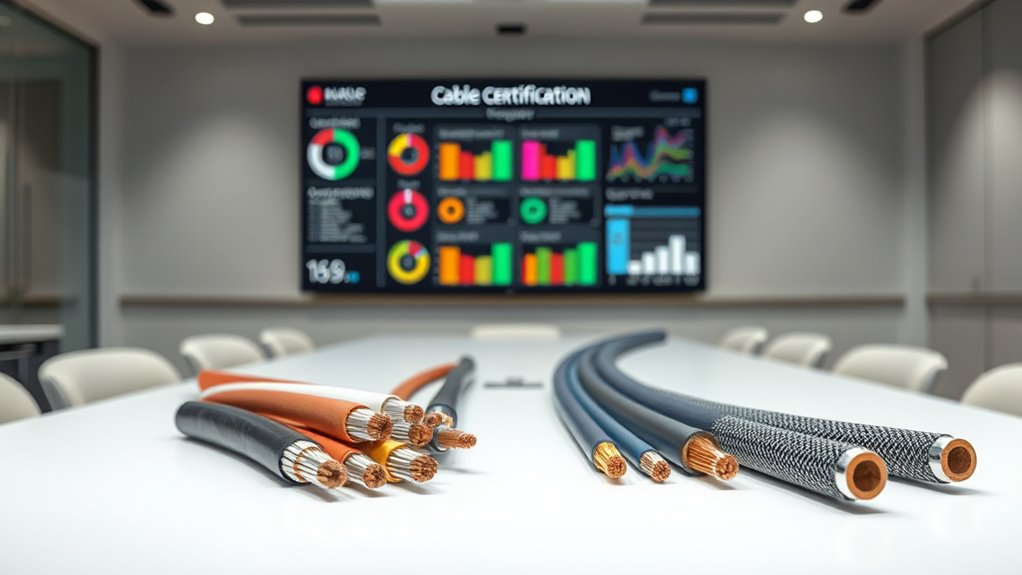
Are you familiar with the different categories of cable certification? If not, understanding these categories is essential for guaranteeing your network performs reliably and meets industry requirements. Cable certification categories are designed to verify that your cabling system adheres to specific standards, which include network standards and testing procedures. These standards guarantee that your cables can handle the data rates, bandwidth, and environmental conditions necessary for your applications. Certification isn’t just about compliance; it’s about peace of mind knowing your network infrastructure is sound. Proper testing procedures ensure that the installed cables meet the performance benchmarks set by the relevant standards. When you look into cable certification categories, you’ll find they are primarily divided into two: Category 5e, Category 6, Category 6A, Category 7, and beyond. Each category corresponds to a set of network standards that define the performance parameters for cabling systems. For example, Category 5e is designed to support networks running at up to 1 Gbps, while Category 6 can handle 10 Gbps over shorter distances. These categories are based on specific network standards like IEEE 802.3 for Ethernet, which set the performance benchmarks your cabling should meet. Testing procedures play a crucial role in certification. When a cable is certified, it undergoes rigorous testing to guarantee it complies with the relevant network standards for its category. This involves measuring parameters such as bandwidth, attenuation, crosstalk, and return loss. These tests are performed using specialized equipment that simulates real-world data transmission to verify the cable’s ability to sustain the required speeds and minimize interference. Certification testing guarantees that every segment of your cabling infrastructure is capable of delivering consistent performance, reducing the risk of network failures or slowdowns. Additionally, environmental factors like water exposure and temperature fluctuations can impact cable performance and longevity, making proper certification even more critical. Choosing the right certification category depends on your current and future network needs. If you’re installing a basic office setup, Category 5e or 6 might suffice. However, for higher-speed applications like data centers or high-definition video streaming, you’ll want to opt for Category 6A or higher, which are tested against more demanding network standards. When you select certified cables, you’re not just complying with regulations; you’re investing in a reliable, high-performance network. Proper testing procedures guarantee that the cables you install meet these standards, giving you confidence that your network can handle evolving technology demands.

Cable Matters 10Gbps 5-Pack Snagless Shielded Cat 6A Ethernet Cable – 5ft, Cat 6A Cable, Cat6A Cord, Ethernet Cord, Black
High Performance Cat6a, 26 AWG, RJ45, Shielded Ethernet Cable provides universal connectivity for LAN network components such as…
As an affiliate, we earn on qualifying purchases.
As an affiliate, we earn on qualifying purchases.
Frequently Asked Questions
How Often Should Cable Certifications Be Renewed?
You should renew your cable certification every three years to guarantee your certification remains valid. Certification renewal is essential because certification validity can lapse, impacting your compliance and credibility. Keep track of renewal deadlines and stay updated on any changes in standards or requirements. Regular renewal helps you maintain your professional status and ensures you’re working with the most current industry standards, avoiding potential compliance issues or delays.
Are Certified Cables Compatible Worldwide?
You’re right to ask if certified cables are compatible worldwide—don’t assume it’s a one-size-fits-all. While many cables meet international standards, compatibility issues can crop up due to regional differences in regulations and connector types. Always check the certification details and standards like IEC or UL, because even certified cables might not work seamlessly everywhere. It’s better to be safe than sorry when crossing borders with your tech.
What Are the Costs Associated With Certification?
You’ll find that certification expenses vary depending on the cable’s complexity and the testing standards involved. The cost implications can include testing fees, documentation, and ongoing compliance costs, which might add up quickly. While certification costs can be significant initially, they help guarantee your cables meet safety and performance standards, potentially saving you money in the long run by avoiding rework or non-compliance penalties.
Can Uncertified Cables Be Safely Used?
Using uncertified cables is like driving a car without brakes—you might get away with it temporarily, but safety hazards increase. Uncertified cables lack quality assurance, risking failures, fires, or data loss. While they may seem cheaper, they often don’t meet safety standards, putting your equipment and safety at risk. Always choose certified cables to guarantee reliability, safety, and peace of mind in your setup.
How Do Certification Standards Evolve Over Time?
Certification standards evolve over time through regular updates, guaranteeing safety and performance. You should stay informed about standards updates because they can affect your certification validity. When standards change, cables must often be re-evaluated or re-certified to meet new requirements. This process helps maintain safety, compatibility, and quality. By keeping up with these updates, you ensure your cables remain compliant and reliable for current and future applications.
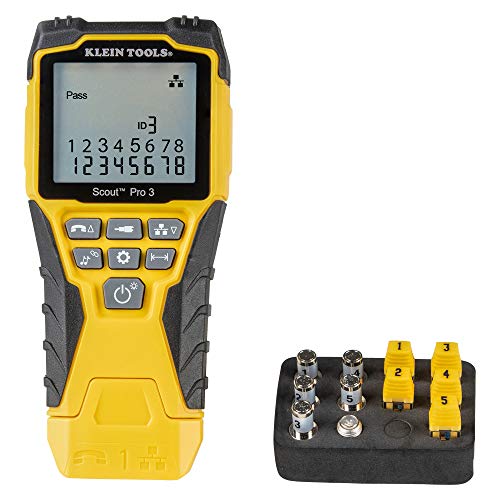
Klein Tools VDV501-851 Cable Tester Kit with Scout Pro 3 for Ethernet / Data, Coax / Video and Phone Cables, 5 Locator Remotes
VERSATILE CABLE TESTING: Cable tester tests voice (RJ11/12), data (RJ45), and video (coax F-connector) terminated cables, providing clear…
As an affiliate, we earn on qualifying purchases.
As an affiliate, we earn on qualifying purchases.
Conclusion
Understanding cable certification categories is like choosing the right gear for a journey—you need the appropriate tools to guarantee smooth sailing. By selecting the right category, you’re building a reliable network that can handle current and future demands. Proper certification acts as your trusted compass, guiding you through the complex landscape of cabling standards. When you invest in quality, your network’s performance is set to navigate any challenge with confidence and ease.
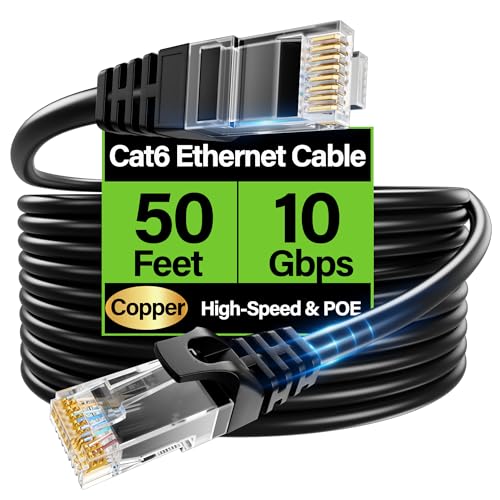
TuokaJu Cat6 Ethernet Cable 10Gbps 50 ft, UTP Ethernet Cable Cat 6, Flexible Bare Copper Cat6 Cable, Cat 6 Network Cable for Server, Data Center, Black
【10Gbps High-Speed】: Ethernet cable cat6 provide ultra-fast 10 Gbps speed with 550MHZ bandwidth. Cat 6 ethernet cable is…
As an affiliate, we earn on qualifying purchases.
As an affiliate, we earn on qualifying purchases.
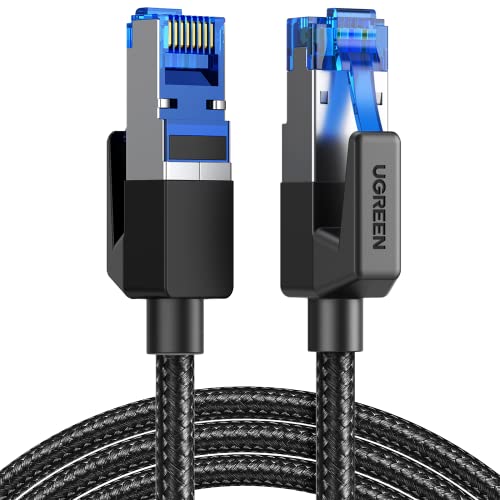
UGREEN Cat 8 Ethernet Cable 6FT, High Speed Braided 40Gbps 2000Mhz Network Cord Cat8 RJ45 Shielded Indoor Heavy Duty LAN Cables Compatible for Gaming PC PS5 Xbox Modem Router 6FT
40 Gbps 2000 Mhz High Speed: The Cat 8 Ethernet cable support max.40 Gbps data transfer and 2000…
As an affiliate, we earn on qualifying purchases.
As an affiliate, we earn on qualifying purchases.