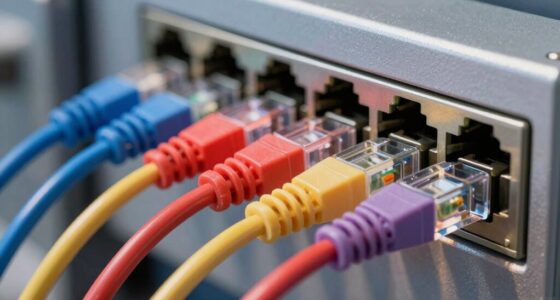
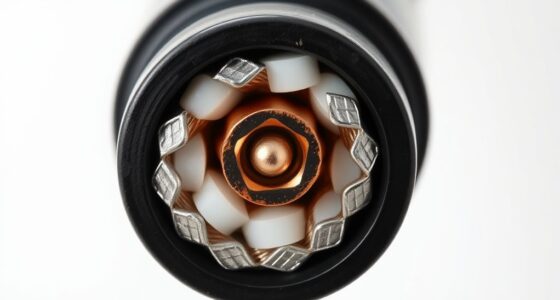
Imagine a barrier that shields your most vital connections from unseen threats—cable jackets do just that, safeguarding internal conductors from damage and hazards. But not all jackets are created equal, especially when it comes to fire safety. Understanding flame ratings like UL 1666 and IEC 60332 can make all the difference in choosing the right material. To guarantee your cables perform safely and reliably, it’s crucial to grasp how these standards influence jacket selection.

Get business pricing on networking and server gear
- Business-only prices and quantity discounts
- Tax-exempt purchasing
- Multiple users, one account, clear invoices
Key Takeaways
- Flame ratings like UL 1666 and IEC 60332 assess a cable jacket’s fire resistance and flame spread limits.
- Material choice (thermoplastic vs. thermoset) influences a cable jacket’s fire safety performance.
- Flame-rated jackets help prevent fire escalation, protecting property and lives in hazardous environments.
- Cable jackets with high flame resistance maintain integrity longer during a fire, reducing failure risk.
- Proper flame ratings ensure compliance with safety standards for industrial, commercial, and residential applications.

Understanding cable jackets and flame ratings is essential for selecting the right wiring for your application. When it comes to ensuring fire safety, choosing the proper cable jacket is critical. The jacket acts as the first line of defense, protecting the internal conductors from external damage, moisture, chemicals, and heat. Different materials offer varying levels of durability and fire resistance, so understanding these differences helps you make informed decisions. Material durability is especially important because a sturdy jacket withstands wear and tear over time, reducing the risk of damage that could lead to electrical failures or fires. The more durable the material, the longer the cable can maintain its integrity in demanding environments, which is vital for maintaining overall safety. Additionally, selecting a jacket material with high chemical resistance can prevent degradation over time in harsh industrial or outdoor settings, further enhancing safety and longevity.
Flame ratings categorize cables based on how well they resist fire and prevent the spread of flames. These ratings are crucial for applications where fire safety is a top priority, such as in commercial buildings, industrial facilities, or residential complexes. Common flame ratings include UL 1666 and IEC 60332, each indicating a cable’s ability to resist ignition and limit the spread of fire. Choosing a cable with an appropriate flame rating ensures that, if a fire does occur, the cable will not exacerbate the situation by catching fire easily or spreading flames rapidly. This not only protects property but also helps safeguard lives by reducing the risk of fire escalation.
The material used in cable jackets plays a significant role in determining the flame rating. Thermoplastic materials like PVC and polyethylene are often used because they’re cost-effective and provide decent fire resistance. However, in high-risk environments, you might opt for thermoset compounds like rubber or specialized fire-retardant materials that offer enhanced fire safety and material durability. These advanced materials can withstand higher temperatures and resist burning longer, giving you extra time to respond in an emergency. Additionally, the choice of jacket material influences the cable’s flexibility, UV resistance, and chemical resistance—factors that contribute to overall durability and fire safety.
As an affiliate, we earn on qualifying purchases.
Frequently Asked Questions
How Do Flame Ratings Affect Cable Installation Requirements?
Flame ratings directly impact your cable installation requirements by ensuring fire safety and installation safety. You need to select cables with appropriate flame ratings to prevent the spread of fire in your environment. These ratings guide you to meet building codes and safety standards, reducing risks during emergencies. By choosing cables with proper flame ratings, you help protect lives and property, making your installation safer and compliant with fire safety regulations.
Are All Cable Jackets Flame-Retardant by Default?
Not all cable jackets are flame-retardant by default. You need to examine the material properties to determine if a jacket offers fire safety. Some jackets are made from flame-retardant materials like PVC or thermoplastic compounds, while others may be less resistant. Always verify the jacket’s specifications and flame ratings to ensure it meets safety standards and provides adequate protection in fire-prone environments.
What Standards Determine Cable Jacket Flame Ratings?
Think of standards as a lighthouse guiding your choices. When selecting cable jackets, you rely on standards like UL 83 and IEC 60332 to determine flame ratings. These standards set benchmarks for cable material and the use of flame retardants, making sure cables resist fire and prevent it from spreading. By adhering to these standards, you ensure safety and compliance in your installations, like a ship staying on course amid stormy seas.
Can Flame-Rated Jackets Withstand Chemical Exposure?
Flame-rated jackets are designed primarily for fire safety, so they may not withstand chemical exposure well. Chemical resistance varies depending on the jacket material, impacting its durability against acids, solvents, or other chemicals. You should check the specific chemical resistance ratings provided by manufacturers, as this determines how well the jacket can maintain its integrity and protect the cable in chemical environments. Always select jackets suited for your application’s chemical exposure levels.
How Do Flame Ratings Impact Cable Recycling Processes?
Flame ratings influence cable recycling by determining how materials burn and break down during processes. Higher-rated cables often contain fire safety additives, which can complicate recycling and affect environmental impact. You need to sort cables carefully to reduce fire hazards and environmental harm. Proper handling guarantees that recycling minimizes toxic emissions, promoting safer, eco-friendly disposal while maintaining fire safety standards.
As an affiliate, we earn on qualifying purchases.
Conclusion
As you choose cable jackets, picture them as the sturdy armor shielding your connections from danger’s reach—standing firm against flames, chemicals, and wear. With the right flame rating and material, your cables become resilient guardians in any environment, preventing sparks from igniting chaos. Think of your selection as planting a fire-resistant shield that not only safeguards but ensures your systems run safely and smoothly through the stormy trials of demanding conditions.
IEC 60332 flame resistant cables
As an affiliate, we earn on qualifying purchases.
As an affiliate, we earn on qualifying purchases.
As an affiliate, we earn on qualifying purchases.
Halloween Picks
halloween
As an affiliate, we earn on qualifying purchases.