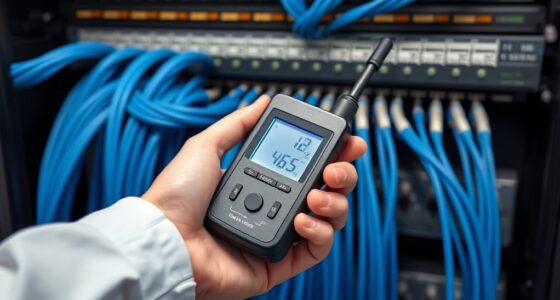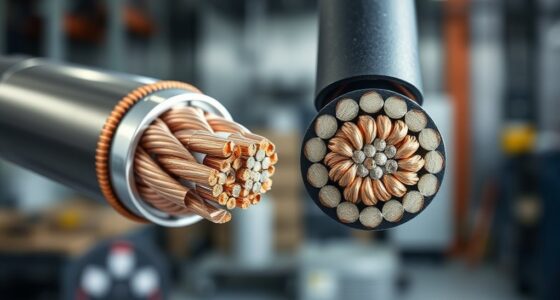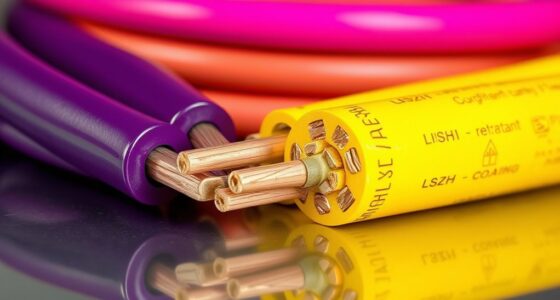
Cable length limits are crucial for maintaining signal quality because longer runs increase attenuation, which weakens signals and causes data loss. Factors like cable type, gauge, shielding, and environment influence how far signals can travel effectively. High-quality fiber optics can handle longer distances with minimal loss, while copper cables have stricter limits. Following industry standards and using techniques like repeaters can help you optimize performance. To master these strategies and guarantee reliable systems, explore further insights below.

Get business pricing on networking and server gear
- Business-only prices and quantity discounts
- Tax-exempt purchasing
- Multiple users, one account, clear invoices
Key Takeaways
- Signal attenuation increases with longer cable lengths, reducing signal quality over distance.
- Different cable types have maximum recommended lengths to prevent excessive attenuation and maintain performance.
- Thinner wires and unshielded cables generally have lower length limits due to higher resistance and interference susceptibility.
- Using signal boosters, repeaters, or amplifiers can extend effective cable lengths without losing signal integrity.
- Following industry standards and guidelines helps ensure cable runs stay within safe length limits to minimize attenuation issues.
As an affiliate, we earn on qualifying purchases.
Factors Influencing Maximum Cable Lengths

Several factors directly impact how long a cable can effectively transmit signals without notable loss or degradation. One key element is connector quality; high-quality connectors ensure a solid connection with minimal signal loss, allowing for longer cable runs. Poor connectors can introduce interference and increase attenuation, reducing effective length. Your installation environment also plays a vital role. Factors like electromagnetic interference, temperature fluctuations, and physical obstructions can weaken signals over distance. For example, running cables near electrical equipment or in areas with high humidity can considerably shorten their effective range. Additionally, understanding sound wave effects can help in designing environments that minimize interference and preserve signal quality. Considering insulation and shielding techniques can further enhance signal integrity over longer distances. Staying aware of signal attenuation principles can help optimize cable length and maintain signal integrity over longer distances. Proper connector installation is also critical to prevent additional signal loss. By choosing connectors with reliable quality and evaluating your environment carefully, you can optimize cable length and maintain signal integrity over longer distances.
Ethernet cable booster amplifier
As an affiliate, we earn on qualifying purchases.
As an affiliate, we earn on qualifying purchases.
Understanding Signal Attenuation and Its Causes
Signal attenuation refers to the reduction in signal strength as it travels along a cable, which can lead to degraded performance or loss of data. Factors like wire gauge directly impact attenuation; thinner wires tend to have higher resistance, causing more signal loss over distance. wire gauge selection is crucial for optimizing signal strength over long distances, especially in environments with high electromagnetic activity. Environmental interference also plays a significant role—external sources like electromagnetic noise from nearby devices or electrical fields can distort or weaken signals. This interference corrupts the data and forces repeaters or amplifiers to restore signal quality. Understanding these causes helps you select appropriate cable gauges and implement shielding or grounding techniques to minimize environmental interference. Additionally, shielding techniques can greatly reduce the impact of external electromagnetic interference on signal integrity. Recognizing how wire gauge and environmental factors contribute to attenuation enables you to optimize your cable setup and ensure reliable signal transmission over longer distances. Additionally, remote work habits often depend on stable connections, making it crucial to understand and address signal attenuation to maintain productivity.
As an affiliate, we earn on qualifying purchases.
Effects of Cable Type on Signal Transmission
How does the type of cable you choose influence the quality and reliability of signal transmission? Fiber optics offer high bandwidth and low attenuation over long distances, making them ideal for demanding applications. They transmit data through light signals, which are less susceptible to electromagnetic interference. Shielded cables, on the other hand, reduce external noise and interference, improving signal clarity in environments with electrical noise. While shielded cables are more resistant to interference than unshielded types, they still face limitations in length and susceptibility to signal loss. The choice between fiber optics and shielded cables depends on your specific needs, such as distance, data speed, and environmental conditions. Selecting the right cable type guarantees better signal integrity and minimizes transmission errors. Understanding signal attenuation is crucial for optimizing cable performance in various settings. Additionally, advancements in cable technology continue to improve signal robustness, helping to address some of these limitations. Recognizing how cable material influences attenuation can be essential for maintaining optimal signal quality over long distances. Moreover, considering installation environment factors can help prevent unexpected signal degradation and ensure reliable data transfer.
As an affiliate, we earn on qualifying purchases.
Measurement Standards and Industry Guidelines
Measurement standards and industry guidelines play a crucial role in ensuring consistent and reliable signal transmission across different cable types and installations. They help you determine maximum cable lengths, especially for fiber optics and copper cables, to prevent excessive attenuation. These standards also specify acceptable levels of electromagnetic interference (EMI), which can degrade signal quality. Additionally, understanding the attenuation characteristics of different cables can help in planning proper cable runs to minimize signal loss over distance. Proper adherence to these standards can also prevent issues related to signal degradation and ensure compliance with industry regulations.
Techniques to Minimize Signal Loss
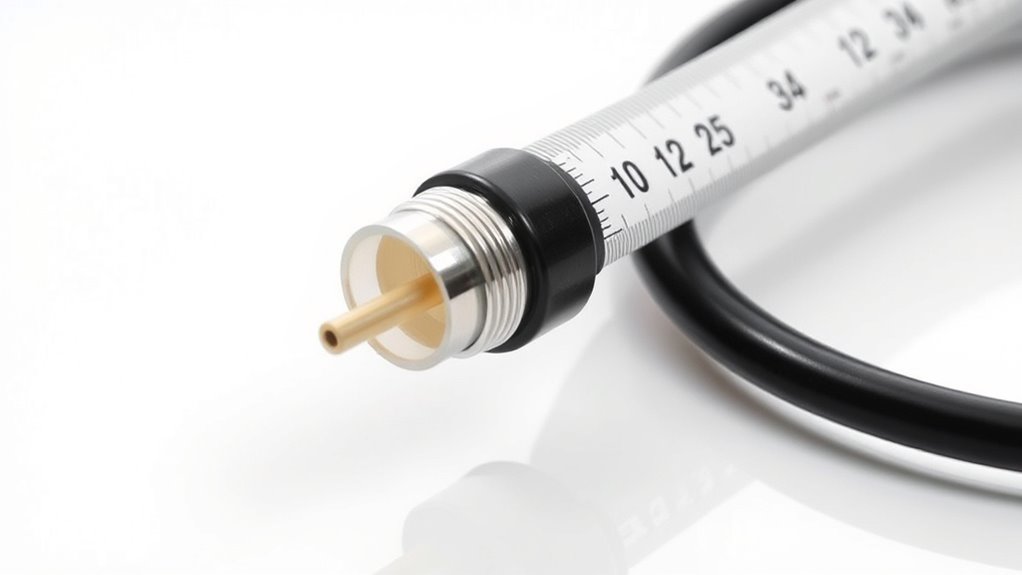
To effectively minimize signal loss, you should select high-quality cables and connectors suited for your application. Fiber optic cables are excellent for reducing attenuation over long distances because they are immune to electromagnetic interference, which can distort or weaken signals in copper cables. Using shielded cables also helps protect against electromagnetic interference, ensuring a clearer signal. Proper installation techniques, such as avoiding sharp bends and minimizing cable length where possible, further reduce loss. Regularly maintaining connectors and ensuring tight, secure connections prevent signal degradation. Additionally, employing signal repeaters or amplifiers can boost weak signals without introducing considerable noise. It is also important to stay informed about AI security challenges that could impact your system’s integrity. By choosing the right cables and paying attention to installation, you can substantially decrease signal loss and preserve signal integrity across your system.
Practical Tips for Designing Reliable Cable Systems
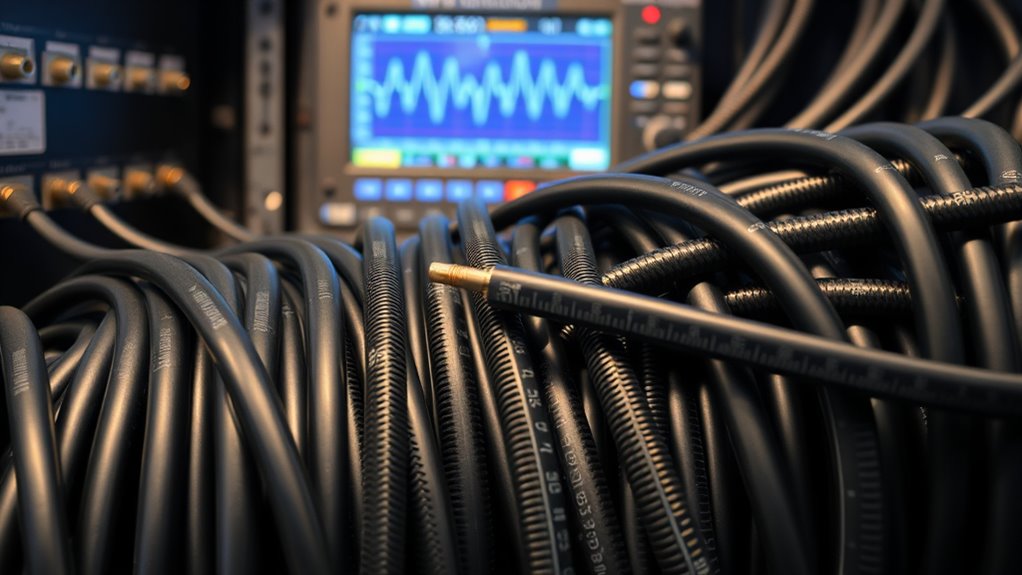
Designing reliable cable systems starts with careful planning and implementation. Begin by evaluating your needs and exploring wireless alternatives where possible to reduce cable length constraints. When installing cables, follow installation best practices, such as proper grounding, shielding, and avoiding sharp bends, to minimize signal loss. Use quality cables suited for your environment, and ensure connectors are secure and properly terminated. Keep cables away from sources of interference like power lines or heavy machinery. Plan cable routes to reduce length and avoid unnecessary extensions. Regularly inspect and maintain your system, replacing damaged cables promptly. Additionally, understanding signal attenuation can help you select appropriate cable types and lengths to maintain system integrity. Incorporating industry standards into your design can further enhance reliability and performance. Being aware of environmental factors like wave and wind can also influence cable placement and durability, especially in outdoor settings. Recognizing special occasion considerations can help in planning maintenance schedules during low-traffic periods, thus minimizing disruption. By combining thoughtful design with best practices and considering wireless options when feasible, you’ll improve reliability, signal integrity, and system longevity.
Frequently Asked Questions
How Does Temperature Affect Cable Signal Attenuation?
Temperature affects cable signal attenuation by causing thermal expansion in the cable insulation, which can lead to increased signal loss. When temperatures rise, the insulation material expands, potentially creating micro-gaps or weakening its protective qualities. This escalation in attenuation reduces signal strength, especially over long distances. To minimize this effect, you should choose cables with high-quality insulation designed to withstand temperature variations and maintain peak performance.
Can Wireless Signals Replace Long Cable Runs Effectively?
Wireless alternatives can effectively replace long cable runs in many cases, offering flexibility and ease of installation. However, you should consider potential signal interference from other wireless devices or environmental obstacles, which can impact performance. While wireless options are great for convenience, they might not always match the reliability or speed of wired connections for high-demand applications. Assess your environment to determine if wireless signals meet your specific needs.
What Are the Latest Industry Standards for Ultra-Long Cable Distances?
You can achieve ultra-long cable distances effectively by following industry standards that leverage fiber optic advancements and improved cable shielding. These standards typically support runs of several kilometers with minimal signal loss, thanks to newer fiber technologies. You might worry about installation complexity, but advancements make fiber optic setups more manageable. By prioritizing quality shielding and adhering to these standards, you guarantee reliable, high-speed connections over extended distances without signal degradation.
How Do Environmental Factors Influence Cable Signal Integrity?
Environmental factors greatly influence your cable signal integrity. Electromagnetic interference from nearby electronic devices can cause signal disruptions, leading to data loss or degraded performance. Physical cable damage from environmental elements like moisture, extreme temperatures, or pest activity can weaken or break the cable, further impairing signal quality. To maintain peak performance, make sure your cables are properly shielded, protected from environmental hazards, and regularly inspected for damage.
Are There Innovative Materials That Reduce Signal Loss in Cables?
Yes, advanced materials like graphene and specialized polymers are revolutionizing signal enhancement in cables. These innovative materials reduce signal loss by offering superior conductivity and shielding properties, ensuring your signals stay strong over longer distances. By incorporating such advanced materials, manufacturers can create cables that resist interference and attenuation better than traditional options, helping you maintain high-quality connections even in challenging environments.
Conclusion
So, next time you think long cables are the way to go, remember—they might just be the silent signal killers. With all the factors working against you—attenuation, cable type, and standards—you’ll realize that length isn’t always your friend. Ironically, sometimes keeping it short and sweet ensures your signals stay strong, proving that in the world of cables, less really can be more. Who knew that simplicity could preserve your connection?
Fall Picks
fall essentials
As an affiliate, we earn on qualifying purchases.