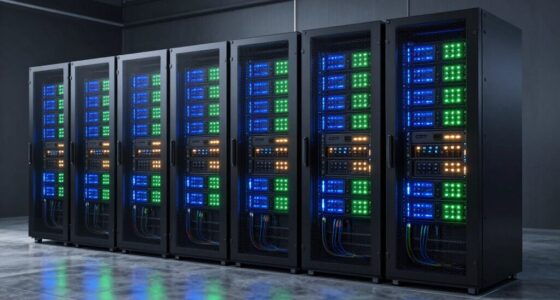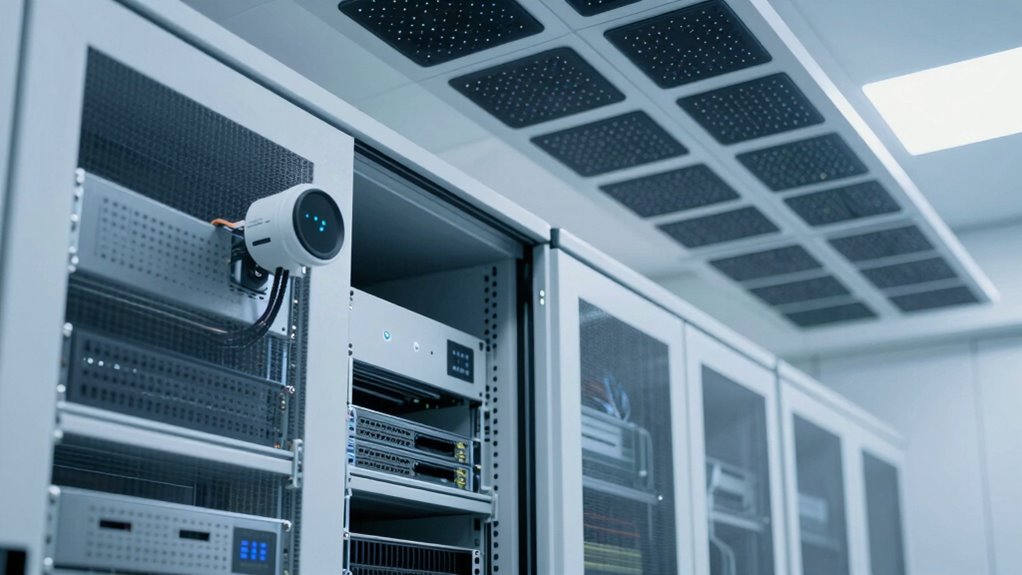

Server room environmental sensors are crucial because they continuously monitor temperature, humidity, and airflow, helping you prevent overheating, condensation, and static buildup. They provide real-time data that supports quick decision-making, reducing manual checks and potential equipment damage. Automated controls for lighting and cooling improve efficiency and safety, ultimately extending hardware lifespan. If you want to discover more about how these silent guardians protect your systems and guarantee smooth operations, keep exploring this essential technology.
Key Takeaways
- They provide continuous, real-time monitoring of temperature, humidity, and airflow, enabling proactive environment management.
- Sensors help prevent equipment damage from overheating, condensation, or static buildup, ensuring hardware longevity.
- Automated controls optimize cooling and lighting, reducing energy waste and supporting efficient data center operations.
- Integration with security systems allows early detection of environmental anomalies, minimizing risks and downtime.
- Silent and maintenance-free, sensors ensure reliable oversight without distractions, safeguarding equipment and reducing costs.

In today’s data-driven world, maintaining ideal conditions in your server room is essential to guarantee equipment runs smoothly and avoids costly downtime. Environmental sensors play a key role in this task, quietly working behind the scenes to monitor temperature, humidity, and airflow. They provide real-time data that enables you to make informed decisions, guaranteeing your servers operate within safe parameters. By continuously tracking these variables, sensors help prevent overheating, condensation, or static buildup, which could otherwise cause hardware failures. Their unobtrusive presence means you don’t have to worry about constant manual checks, freeing you to focus on other aspects of your infrastructure. Incorporating environmental monitoring tools into your management strategy ensures a proactive approach to maintaining optimal conditions. Lighting optimization is an often overlooked but fundamental aspect of maintaining a healthy server environment. Sensors can help automate lighting controls, ensuring that illumination is sufficient for maintenance tasks without wasting energy. Proper lighting not only improves visibility during inspections but also reduces the risk of accidental mishandling of sensitive equipment. When integrated with environmental sensors, lighting systems can respond dynamically to the room’s conditions, dimming or brightening as needed. This smart lighting approach conserves energy and minimizes heat output, directly contributing to cooling efficiency. Cooling efficiency is essential to keeping your server hardware safe and operational. Environmental sensors continuously monitor temperature levels, alerting you to any deviations that could threaten equipment performance. When sensors detect rising temperatures, automated cooling adjustments can kick in immediately, avoiding costly shutdowns. These sensors also help identify airflow issues or hotspots, allowing you to optimize your cooling strategies proactively. Additionally, data-driven insights derived from sensor data enable more precise temperature and humidity controls, further enhancing system stability. Efficient cooling not only extends the lifespan of your servers but also reduces energy consumption, which translates into lower operational costs. To maximize their effectiveness, integrating sensors with other security and monitoring systems ensures comprehensive oversight of your data center environment. By maintaining a balanced environment, sensors ensure that your cooling systems operate at peak efficiency, preventing overheating while avoiding unnecessary energy expenditure. A well-designed sensor network can also help detect environmental anomalies early, minimizing potential risks before they escalate. Implementing these sensors can also enhance your preventative maintenance strategies, reducing downtime and repair costs. Ultimately, server room environmental sensors are a quiet but powerful investment. They provide the data you need to optimize lighting, improve cooling efficiency, and maintain a stable environment. Their silent operation means you benefit from continuous oversight without added noise or distraction. As your data center grows, these sensors become even more valuable, helping you scale operations smoothly while safeguarding your equipment. In today’s fast-paced digital landscape, having reliable environmental monitoring isn’t just a luxury—it’s a necessity. With sensors diligently working in the background, you can rest assured that your server room remains a safe, efficient, and productive environment.

Ethernet Server Room Temperature Monitor (Swiss Sensors) PoE Server Rack Temperature Humidity Sensor with Web Interface, SNMP Modbus MQTT Support, Dual Power, IP55, Data Logging, Alarm & Relay Output
Precision Monitoring for Critical Environments: The server room temperature monitor is a professional temperature and humidity monitor built…
As an affiliate, we earn on qualifying purchases.
As an affiliate, we earn on qualifying purchases.
Frequently Asked Questions
How Often Should Environmental Sensors Be Calibrated?
You should calibrate your environmental sensors at least once a year, but sensor maintenance may require more frequent calibration depending on usage and environmental conditions. Regular calibration guarantees accurate readings, helping you maintain ideal server room conditions. Keep an eye on manufacturer recommendations and monitor sensor performance, as deviations can signal the need for calibration. Consistent calibration frequency is essential for reliable environmental data and preventing equipment failures.
Can Sensors Detect Fire or Smoke Risks?
Yes, sensors can detect fire or smoke risks through fire detection and smoke monitoring features. These sensors continuously monitor environmental conditions, alerting you quickly if they sense smoke particles or sudden temperature increases. This proactive detection helps you respond swiftly to potential fire hazards, minimizing damage and downtime. Implementing these sensors guarantees your server room remains safe, providing peace of mind knowing you’re alerted promptly to any fire or smoke risks.
Are There Wireless Options for Server Room Sensors?
Sure, wireless options for server room sensors exist, making your life easier and clutter-free. With wireless connectivity, you can place sensors anywhere without tangled wires, ensuring ideal sensor placement. No longer do you need to wrestle with cables or worry about limited locations. Instead, you get flexible, reliable monitoring that keeps your servers safe. Embrace wireless sensors, and let technology do the heavy lifting—saving time, space, and headaches.
How Do Sensors Alert for Environmental Anomalies?
You set up sensors in strategic locations to monitor environmental conditions accurately. When anomalies like temperature spikes or humidity changes occur, sensors immediately detect them and send alerts through wired or wireless connections. Proper sensor placement guarantees data accuracy, so you can respond swiftly to potential issues. These alerts help you maintain ideal server conditions, preventing hardware failures and data loss, and keeping your server room running smoothly.
What Is the Typical Lifespan of These Sensors?
Sensors typically last between three to five years, depending on sensor accuracy and environmental conditions. You should follow maintenance schedules diligently to guarantee consistent performance. Regular calibration and inspections keep sensors reliable, preventing false alarms or unnoticed anomalies. By prioritizing proper upkeep, you extend sensor lifespan and sustain secure, stable server environments, ensuring your data center remains protected and operational for years to come.

TempPro TP50 Digital Hygrometer Indoor Thermometer Room Thermometer and Humidity Gauge with Temperature Humidity Monitor(Previously ThermoPro)
Wellness Indicator: This humidity meter with humidity level icon indicates air conditions – DRY/COMFORT/WET, allowing this humidity sensor…
As an affiliate, we earn on qualifying purchases.
As an affiliate, we earn on qualifying purchases.
Conclusion
Think about the critical role your server room plays in keeping your business running smoothly. Environmental sensors act as silent guardians, alerting you to issues before they escalate. Without them, a small temperature spike or humidity fluctuation could cause major disruptions. So, aren’t these quiet, unseen protectors worth investing in? After all, safeguarding your data and infrastructure should always be a priority—because a well-monitored server room is a well-protected one.

BN-LINK Digital Cooling Thermostat Controller, Temperature Controlled Outlet for Attic Fan, Exhaust Fan, Cooling Devices 40-108°F, 8.3A 1000W, ETL Listed
EFFORTLESS COOLING SETUP: Simply place the probe, plug in digital temperature controller, and use the large 3-button interface…
As an affiliate, we earn on qualifying purchases.
As an affiliate, we earn on qualifying purchases.
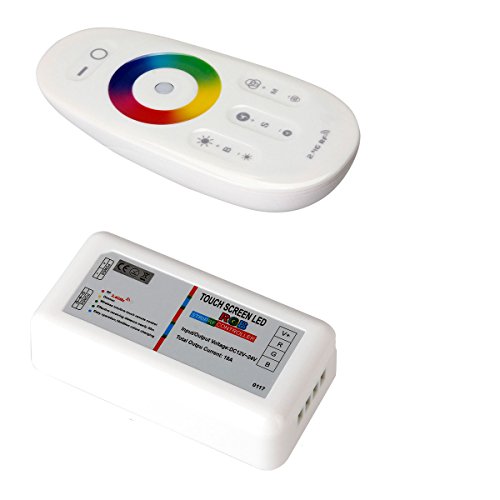
YIHONG Smart LED Controller with WiFi Adapter, 2.4GHz RF Touch Screen Remote Dimmer for 12V/24V RGB 5050/3528 Flexible LED Strip Lights, Wireless RGB Light Dimmer
Wireless RF Remote Control: DC12V -24V, MAx. 6 amps per channel at 12V to 24V DC for 12V&24V…
As an affiliate, we earn on qualifying purchases.
As an affiliate, we earn on qualifying purchases.