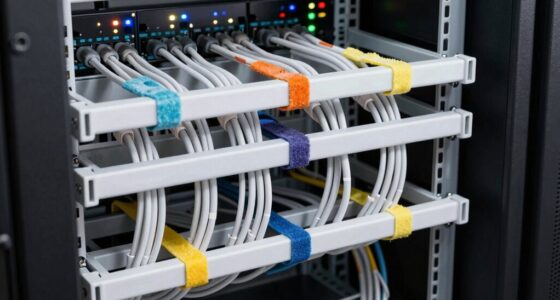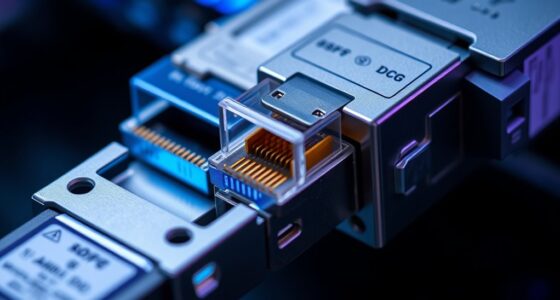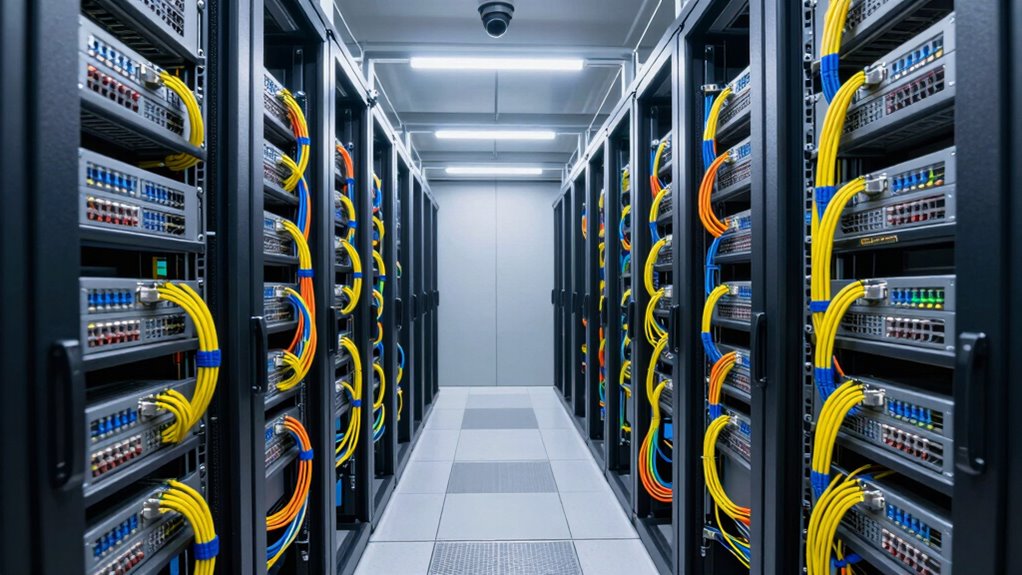

Cable path planning is essential in data centers because it guarantees proper airflow, which keeps equipment cool and prevents hotspots. It also simplifies power distribution, reducing overload risks and making troubleshooting easier. Good planning minimizes safety hazards like tripping or fire risks and allows for smooth future expansion. By organizing cables effectively, you boost efficiency and protect infrastructure longevity. Keep exploring, and you’ll discover how these strategies form the backbone of a reliable, scalable data center.

Get business pricing on networking and server gear
- Business-only prices and quantity discounts
- Tax-exempt purchasing
- Multiple users, one account, clear invoices
Key Takeaways
- Ensures efficient airflow, preventing hotspots and maintaining optimal cooling performance.
- Simplifies troubleshooting and enhances power distribution reliability.
- Reduces physical risks like trip hazards and fire hazards through organized routing.
- Facilitates scalability, allowing easy expansion and upgrades without major disruptions.
- Promotes overall infrastructure health, safety, and long-term operational efficiency.
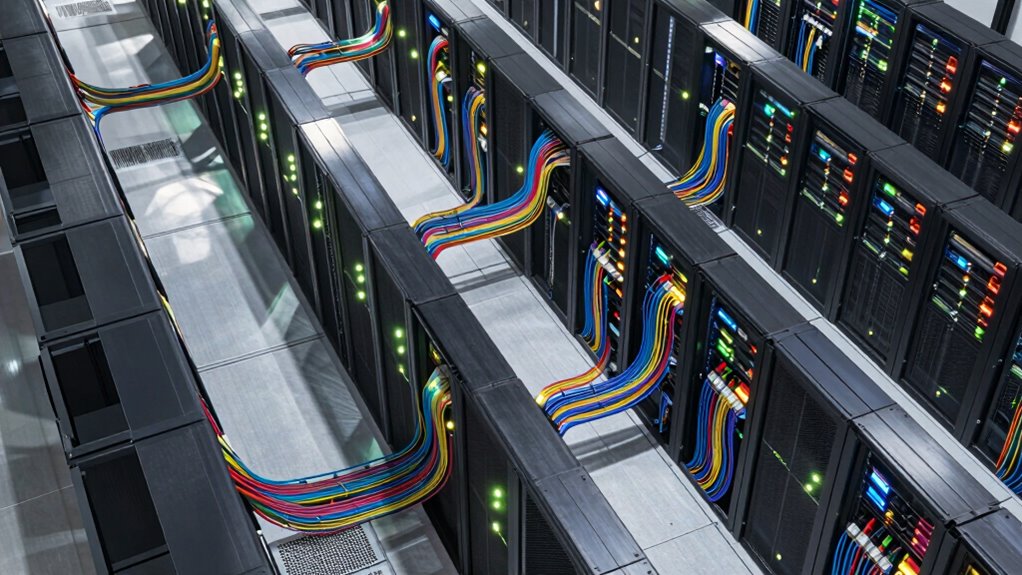
Have you ever wondered how data centers maintain organized and efficient cable layouts? The answer lies in meticulous cable path planning, which is essential for ensuring smooth operations, safety, and future scalability. When you design these pathways thoughtfully, you help optimize ventilation and power distribution—two critical components for a data center’s performance and longevity. Proper cable routing minimizes airflow obstructions, supporting ventilation optimization so that cooling systems work efficiently. Over time, poorly planned cables can block airflow, leading to hotspots that reduce equipment lifespan and increase energy costs. By carefully organizing cables, you enable cool air to circulate freely, maintaining ideal temperatures and preventing costly overheating. Additionally, incorporating natural airflow principles into your design can further enhance cooling efficiency and reduce reliance on mechanical cooling systems. Recognizing the importance of cable management tools and techniques can significantly improve the organization and safety of your setup. Power distribution is another vital aspect that depends heavily on cable path planning. When cables are routed without a clear plan, you risk creating tangled messes that can complicate maintenance, upgrades, and troubleshooting. Clear, well-organized pathways make it easier to identify circuits and isolate issues quickly. Furthermore, a logical cable flow ensures that power is distributed evenly across the infrastructure, reducing overload risks and enhancing system reliability. Efficient power distribution also helps in managing power loads better, preventing voltage drops or fluctuations that could damage sensitive equipment. Proper planning also plays a crucial role in safety by preventing accidental disconnections or electrical faults that could lead to hazards. In addition to ventilation and power concerns, cable path planning directly impacts the overall safety of the data center. When cables are arranged haphazardly, they can become trip hazards or cause fire risks due to overheating or electrical faults. Proper planning involves securing cables properly, using cable trays and conduits, and avoiding unnecessary bends or sharp turns. This not only reduces physical risks but also simplifies future upgrades or reconfigurations, saving you time and effort down the line. Another reason why cable path planning is so important is scalability. As your data center grows, you’ll need to add more cables and equipment. If the initial paths are well designed, integrating new cables becomes much easier and less disruptive. This foresight allows for seamless expansion and helps prevent the need for costly rework. It also keeps the data center neat and manageable, making routine inspections or troubleshooting more straightforward. Ultimately, your careful planning of cable routes influences every aspect of data center efficiency—from cooling to power management, safety, and scalability. When you give attention to these details, you’re ensuring that the data center operates reliably, remains safe for personnel, and is prepared for future growth. Proper cable path planning isn’t just about neatness; it’s a strategic investment in the infrastructure’s overall health and performance.
cable management tools for data centers
As an affiliate, we earn on qualifying purchases.
As an affiliate, we earn on qualifying purchases.
Frequently Asked Questions
How Does Cable Path Planning Impact Overall Data Center Energy Efficiency?
Cable path planning impacts your data center’s energy efficiency by optimizing power consumption and thermal management. When you plan cables carefully, you reduce unnecessary length and improve airflow, lowering heat buildup and cooling demands. This means your systems work more efficiently, consume less energy, and run cooler. Proper planning also minimizes the risk of overheating, extending equipment lifespan and ensuring consistent performance, ultimately saving you money and supporting sustainable operations.
What Are the Common Challenges Faced During Cable Route Optimization?
You face challenges like cable congestion and routing conflicts when optimizing cable routes. Cable congestion occurs when too many cables crowd a limited space, making maintenance difficult and increasing the risk of damage. Routing conflicts happen when cables intersect or overlap, causing signal interference and complicating upgrades. To overcome these issues, you need precise planning, clear documentation, and strategic layout to guarantee efficient, safe, and scalable cable pathways.
How Do Future Expansion Plans Influence Current Cable Pathway Designs?
Your future expansion plans profoundly influence current cable pathway designs by prioritizing future scalability and infrastructure flexibility. You need to design pathways that accommodate growth without major disruptions, allowing for easy addition of new cables and equipment. This proactive approach ensures your data center remains adaptable, minimizes costly reconfigurations, and supports evolving technology needs efficiently. By considering future needs now, you set a solid foundation for seamless expansion and optimized performance.
What Role Does Cable Management Play in Disaster Recovery Efforts?
Cable management is like the backbone of a building—crucial for disaster recovery efforts. You guarantee cable organization is essential, making it easier to identify and replace damaged connections swiftly. Proper cable pathways prevent chaos during emergencies, enhancing disaster preparedness. When cables are well-organized, you minimize downtime, protect critical data, and restore operations faster, turning a chaotic situation into a streamlined recovery process.
How Can Cable Path Planning Adapt to Emerging Data Center Technologies?
You can adapt cable path planning to emerging data center technologies by leveraging automated routing systems that optimize cable layouts in real-time. Incorporate modular infrastructure designs to guarantee flexibility for future upgrades and new equipment. This approach reduces manual errors, streamlines installation, and maintains organized pathways, making it easier to integrate innovations like edge computing and high-density servers seamlessly. Staying proactive with automation and modularity helps future-proof your data center’s cable management.
cable trays and conduits for server racks
As an affiliate, we earn on qualifying purchases.
As an affiliate, we earn on qualifying purchases.
Conclusion
So, next time you marvel at a data center’s sleek chaos, remember that behind the scenes, cable path planning is the unsung hero—or villain, depending on your perspective. Without it, your precious data could be lost in a spaghetti mess, causing chaos and frustration. Truly, a masterful layout isn’t just about neatness; it’s about avoiding the disaster of tangled wires and ensuring your digital universe runs smoothly—because nobody wants a data disaster served with a side of chaos.
As an affiliate, we earn on qualifying purchases.
airflow optimization cable management
As an affiliate, we earn on qualifying purchases.
As an affiliate, we earn on qualifying purchases.
Halloween Picks
halloween
As an affiliate, we earn on qualifying purchases.