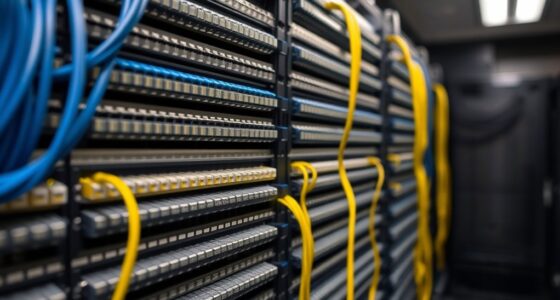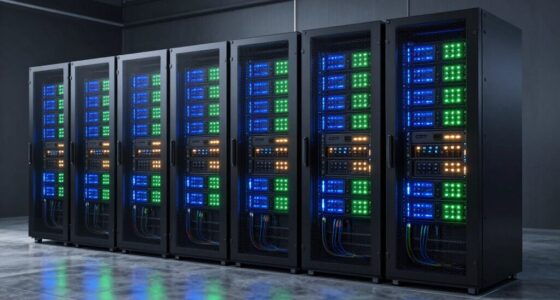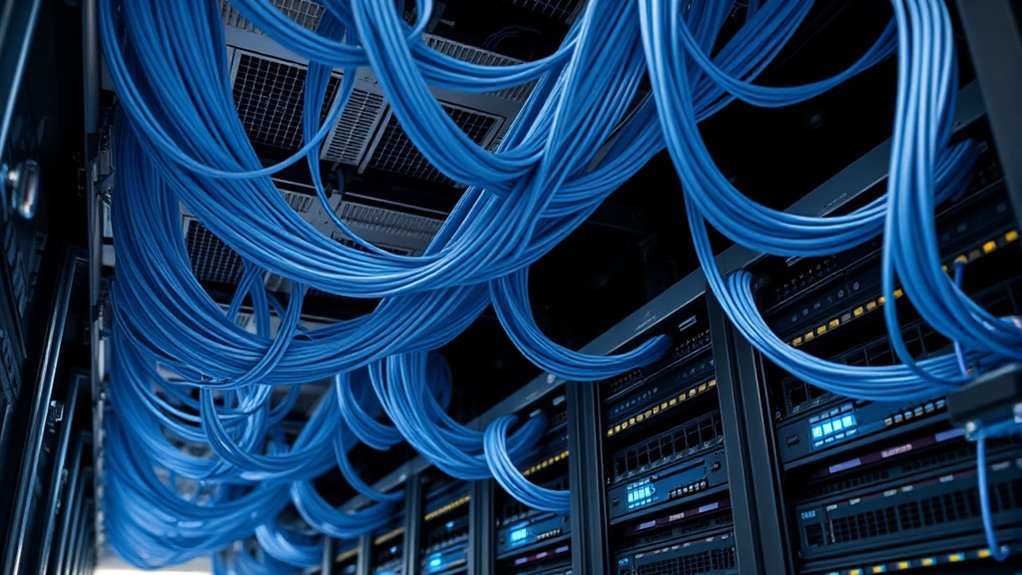

Designing a structured cabling system for your data center is vital for ensuring reliable and scalable network performance. When done correctly, it simplifies maintenance, supports future growth, and minimizes downtime. However, many overlook essential elements that can make or break your infrastructure’s efficiency. Understanding the best practices and common pitfalls can help you build a resilient foundation—something worth exploring further as your data center evolves.

Get business pricing on networking and server gear
- Business-only prices and quantity discounts
- Tax-exempt purchasing
- Multiple users, one account, clear invoices
Key Takeaways
- Develop a comprehensive layout incorporating organized pathways, trays, and racks for easy access and scalability.
- Prioritize high-quality fiber optic cables and connectors for durability and optimal performance.
- Implement modular patch panels and labeling systems to simplify troubleshooting and maintenance.
- Plan for future expansion by designing flexible infrastructure that accommodates network upgrades.
- Ensure proper cable management practices to reduce clutter, improve airflow, and minimize downtime.
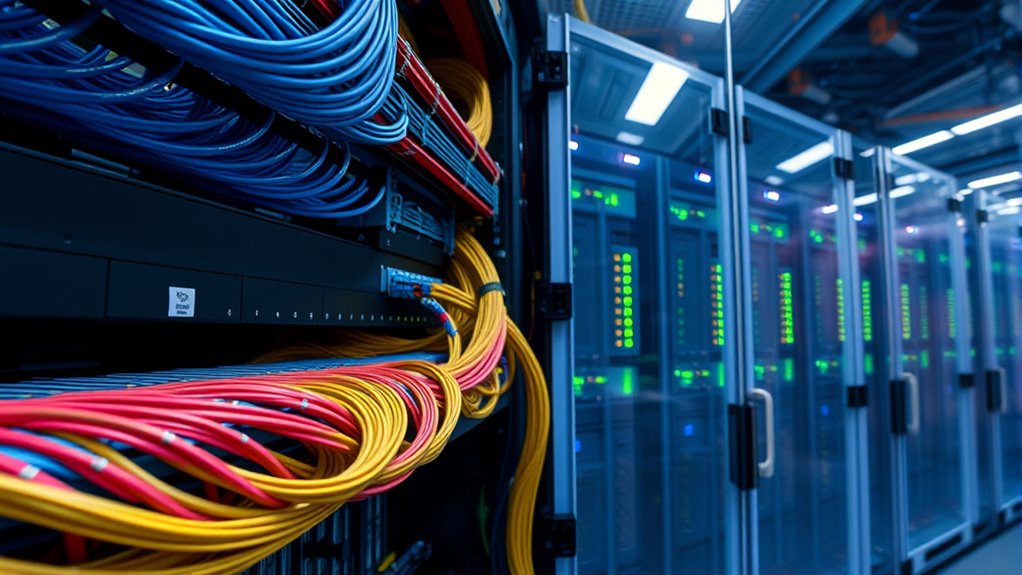
A well-designed structured cabling system is essential for guaranteeing reliable and scalable data center operations. It forms the backbone that supports all your network infrastructure, providing the foundation for efficient data transfer, easy maintenance, and future growth. When planning your cabling, consider the integration of fiber optics, which offer high bandwidth and long-distance capabilities, making them ideal for data centers that demand speed and reliability. Proper cable management is equally critical; it keeps your cables organized, reduces clutter, and minimizes the risk of damage or disconnections that can cause costly downtime. Incorporating reliable fiber optics ensures your network remains robust and capable of handling increasing data loads. Fiber optics are a game-changer in data center cabling because they deliver faster data transmission compared to traditional copper cables. Their immunity to electromagnetic interference means your network remains stable even in electrically noisy environments. Installing fiber optics requires careful planning to ensure correct termination and connectorization, which directly impacts performance. You’ll want to run fiber cables through dedicated pathways, using appropriate cable management solutions like trays, racks, and conduits. This not only protects the fibers but also simplifies future upgrades or troubleshooting. Cable management plays a pivotal role in maximizing the efficiency of your structured cabling system. When you organize your cables systematically, you streamline maintenance tasks, reduce the time needed for troubleshooting, and improve airflow within the data center. Properly labeled cables, neatly routed along cable trays or ducts, prevent tangling and make it easier to identify specific connections. Using modular patch panels and structured pathways ensures that you can add or replace components without disrupting the entire system. Remember, good cable management isn’t just about aesthetics; it’s about creating a reliable infrastructure that minimizes risks and maximizes uptime. Incorporating fiber optics alongside effective cable management practices also helps future-proof your data center. As data demands grow, fiber’s scalability allows you to upgrade your network without extensive re-cabling. Pairing this with organized pathways and secure connectors ensures your infrastructure remains robust and adaptable. This proactive approach simplifies expansion, reduces downtime, and ensures consistent performance. Ultimately, your goal should be to design a structured cabling system that is both resilient and flexible. Prioritize high-quality fiber optic cables and invest in thorough cable management solutions from the start. Doing so will save you time and money down the line, while providing the reliable, high-performance foundation your data center needs to operate smoothly today and evolve for tomorrow’s demands.
As an affiliate, we earn on qualifying purchases.
Frequently Asked Questions
How Does Future Technology Impact Cabling Design Choices?
Future technology influences your cabling design choices by pushing you to incorporate fiber optics for faster, higher-capacity data transfer. You’ll also need to plan for wireless integration, ensuring seamless connectivity without cluttering your space. As tech advances, you adapt your cabling infrastructure to support emerging standards and increased bandwidth demands, making your data center more flexible and future-proof. Staying ahead means choosing scalable, versatile solutions now.
What Are the Environmental Considerations in Cabling Infrastructure?
You should prioritize fire safety and environmental sustainability in your cabling infrastructure. Use fire-resistant cables and proper cable management to prevent fire hazards. Opt for eco-friendly materials and energy-efficient components to reduce environmental impact. Proper ventilation and cooling also help maintain safe operating temperatures, minimizing fire risk. By integrating these considerations, you guarantee a safer, greener data center that aligns with both safety standards and sustainability goals.
How Is Cable Management Optimized for Maintenance Access?
You optimize cable management by prioritizing cable organization and clear access pathways. Use labeled cables and color coding to easily identify connections, reducing maintenance time. Arrange cables neatly in cable trays or racks, leaving enough space for airflow and access. Maintain unobstructed access pathways to make certain technicians can quickly reach and service equipment without disrupting other cables, ultimately improving maintenance efficiency and reducing downtime.
What Certifications Ensure Quality and Safety Standards?
You should look for cabling certifications like TIA/EIA and ISO/IEC standards, which guarantee quality and safety. These certifications verify that your cabling meets industry safety standards and performs reliably. By choosing certified cables and components, you reduce risks of failures and safety hazards, ensuring your data center remains compliant and secure. Always verify that your cabling provider adheres to these recognized standards to maintain maximum safety and performance.
How Does Cabling Design Adapt to High-Density Data Centers?
In high-density data centers, you’ll find that 30% more fiber routing space is needed to prevent congestion. To adapt, you should optimize fiber routing for efficient airflow and easy maintenance, using organized cable labeling to prevent confusion. This approach guarantees reliable performance, simplifies troubleshooting, and accommodates future growth, making your cabling design both scalable and manageable in these demanding environments.
structured cabling cable management
As an affiliate, we earn on qualifying purchases.
As an affiliate, we earn on qualifying purchases.
Conclusion
By focusing on organized, high-quality cabling, you set your data center up for success. Proper design keeps everything running smoothly and makes future upgrades a breeze. Remember, a well-laid plan prevents headaches down the road—think of it as laying a solid foundation. When you prioritize structured cabling, you’re not just avoiding chaos; you’re building a resilient, efficient system that stands the test of time. It’s truly the backbone of reliable data center operations.
network patch panel with labeling
As an affiliate, we earn on qualifying purchases.
As an affiliate, we earn on qualifying purchases.
As an affiliate, we earn on qualifying purchases.
Halloween Picks
halloween
As an affiliate, we earn on qualifying purchases.