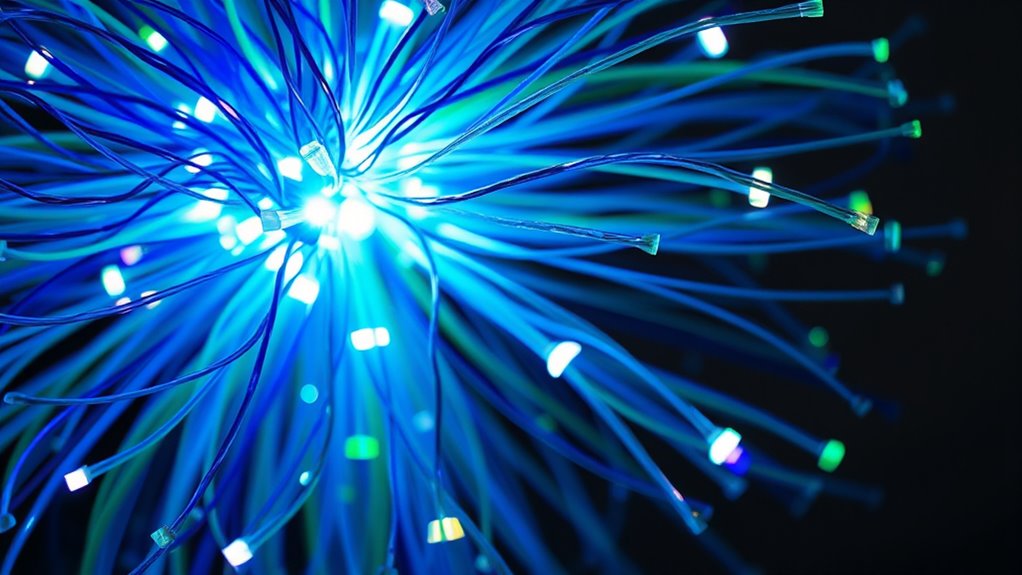

Imagine salvaging fiber optic strands from an old broken projector and turning them into a sleek, glowing lamp for your living room. With a few simple steps, you can transform discarded cables into a functional piece of decor that’s both eco-friendly and unique. The process is straightforward, but the possibilities for customization are vast. Curious about how to make this creative project a reality?
Key Takeaways
- Salvage fiber optic strands from scrap cables, ensuring careful extraction to avoid damage.
- Drill small holes in a stable base to insert and secure fibers, varying lengths for visual effects.
- Connect fibers to a small LED light source, securing them firmly for optimal light transmission.
- Arrange fibers evenly around the light to create a starry, glowing effect and test for brightness.
- Customize colors and fiber arrangements for a unique, eco-friendly lamp using recycled materials.

Creating your own fiber optic lamp is a rewarding project that combines creativity with simple electronics. When you start exploring fiber optic lighting, you realize how versatile and mesmerizing this technology can be. Using scrap cables to craft your lamp not only saves money but also gives you a personalized, eco-friendly piece of art. The key to a successful DIY fiber optic lamp lies in understanding basic lamp assembly techniques and how to manipulate fiber optics to produce stunning lighting effects.
First, gather your scrap cables—preferably fiber optic strands from old equipment or broken devices. These can often be salvaged and repurposed, making your project both affordable and environmentally conscious. Once you have your fibers, you’ll need a suitable light source, typically an LED flashlight or a small LED lamp, which will serve as the illuminator for your fibers. When you connect the fibers to the light source, ensure the connection is secure but not overly tight, as this can damage the delicate strands. This is where your lamp assembly techniques come into play. You want to create a stable, neat setup where the fibers are held in place and evenly distributed around the light source, allowing for a uniform glow.
To assemble your lamp, start by creating a base—this could be a small wooden block or a repurposed container. Drill a hole or multiple holes where you’ll insert the fiber optic cables. Make sure these holes are just wide enough to hold the fibers snugly without crushing them. As you insert the fibers into the holes, you should secure them with hot glue or a similar adhesive, ensuring they stay in place and don’t shift when you move the lamp. When arranging the fibers, consider varying their lengths or bending some gently for a more dynamic and textured lighting effect. This technique enhances the visual appeal and makes the lamp more interesting.
Once everything is assembled, test your fiber optic lighting by powering up the LED. You’ll see how the fibers transmit light along their length, creating a starry, glowing effect. Adjust the positioning of the fibers if needed to maximize the light spread and aesthetic. The beauty of this DIY project is that you can customize the design, colors, and fiber arrangements easily. Plus, using scrap cables means you’re not only saving money but also giving new life to otherwise discarded materials. With patience and a steady hand applying proper lamp assembly techniques, you’ll end up with a unique fiber optic lamp that’s both functional and visually enchanting. Additionally, understanding the industry trends can help you incorporate new lighting effects or advanced materials into future projects.

Cable Matters 12 Fibers OM4/OM3 Multimode Patch Panel with 6 x LC UPC Duplex Fiber Optic Adapters - LGX Compatible
Upgrade your network infrastructure with this rack mount compatible 6 port patch panel fiber optic; Fiber patch panel...
As an affiliate, we earn on qualifying purchases.
Frequently Asked Questions
What Safety Precautions Should I Take During Assembly?
You should prioritize electrical safety and material handling during assembly. Always unplug power sources before working on the lamp to prevent shocks. Wear insulated gloves and safety goggles to protect yourself from sharp cables and potential sparks. Handle all materials carefully, avoiding damage to cables or connectors. Work in a dry, clutter-free area to minimize risks, and double-check connections before powering the lamp on. Staying cautious guarantees safe and successful assembly.
Can I Customize the Color of the Fiber Optic Light?
Yes, you can customize the fiber color options to suit your style and lighting preferences. By choosing different colored fiber optic cables or using color filters, you achieve diverse lighting customization effects. Experiment with various fiber colors to create vibrant or subtle lighting, matching your decor or mood. Keep in mind, selecting the right fiber optic cables enhances your lamp’s overall aesthetic and allows for personalized lighting experiences.
What Types of Scrap Cables Are Best for This Project?
Coincidences often lead to great ideas, so choose flexible, thin cable types like scrap wiring from old electronics or phone chargers for this project. These cables are ideal because they readily accommodate fiber optic strands and are safe to work with. Avoid thick or rigid cables, which can be difficult to manipulate. Using flexible scrap wiring ensures you can create a neat, vibrant lamp while repurposing materials efficiently.
How Long Does the Fiber Optic Lamp Typically Last?
Your fiber optic lamp typically lasts several years, depending on usage and fiber quality. The lamp’s longevity depends on fiber durability, with high-quality fibers resisting wear and tear better. Proper maintenance, like avoiding excessive bending or pulling, can extend its life. If you handle it gently and choose durable fibers, your DIY fiber optic lamp could shine brightly for many years, providing a vibrant, long-lasting light display.
Is It Suitable for Outdoor Use or Only Indoors?
Your DIY fiber optic lamp isn’t built for outdoor weather; it’s more of an indoor star. Exposure to rain, sun, and humidity can turn it into a fleeting comet. To keep it shining, look for weather-resistant materials with UV stability. Without these protections, the lamp’s delicate fibers and components won’t survive nature’s unpredictable storms, so it’s best enjoyed indoors where it can sparkle safely and last longer.

TP-Link Omada SX3008F | 8 Port 10G SFP+ Enterprise Level Switch | L2+ Smart Managed | Omada SDN Integrated | IPv6 | Static Routing | L2/L3/L4 QoS, IGMP & LAG | 5 Year Manufacturer Warranty
【10G Lightning-Fast Connections】8× 10 Gbps SFP+ Ports enable high-bandwidth connectivity and non-blocking switching capacity.
As an affiliate, we earn on qualifying purchases.
Conclusion
Creating your own fiber optic lamp from scrap cables is a fun, eco-friendly way to add unique lighting to any space. Did you know that up to 80% of electronic waste is recyclable, yet much ends up in landfills? By repurposing old cables, you’re not only saving money but also helping reduce waste. So, get creative, experiment with different fibers, and enjoy your custom, glowing masterpiece—brightening your room and the planet at the same time.

All Features Multifunction Network Caber Tester,UTP Continuity,Cable Tracer,4" IPS Touch Screen Network Tester Support TDR,DMM,OPM,Level Meter,Network Tools,POE++ Detect,RJ45 TDR,Length,FTP,NCV
【All Features 11-in-1 Network Cable Tester】All Features ethernet cable tester with 4-inch IPS touchscreen with 800×480 resolution. Multifunction...
As an affiliate, we earn on qualifying purchases.

SGILE 9-in-1 Portable Crimping Tool Kit, 8P8C 6P6C 4P4C Connectors, RJ11/RJ12/RJ45 Cat5 Cat5e Network/Phone Cable Tester, Black
9 in 1 Network Maintenance Tools: 9-in-1 network maintenance tools meet the essential needs, which include crimping pliers,...
As an affiliate, we earn on qualifying purchases.