It’s often believed that cable management requires expensive solutions, but 3D printed clips challenge that idea. With the ability to customize and produce them at home, you can create tailored solutions that fit your specific needs. These clips promise to reduce clutter and prevent damage, yet there’s more to contemplate about their durability and practicality. Curious how this approach could transform your workspace or setup?
Key Takeaways
- 3D printed cable clips provide customizable, secure solutions tailored to various cable sizes and shapes.
- They enable easy labeling with text or symbols for quick cable identification.
- Clips can be snapped onto cables and mounted in workspaces to reduce clutter and tangling.
- Using 3D printed clips prolongs cable lifespan by preventing damage and maintaining organization.
- Custom designs allow for category-specific clips, improving overall cable management efficiency.

Keeping your cables organized can be a challenge, especially when wires become tangled and cluttered. 3D printed clips offer a simple and customizable solution that puts you in control. With these clips, you can streamline your wire management and make identifying cables much easier. Instead of sorting through a jumble of cords every time you need to find something, you can create specific clips for each cable, ensuring everything stays neat and accessible.
One of the biggest advantages of 3D printed clips is their versatility. You can design them to fit any cable diameter or shape, giving you a tailored approach to managing your wires. Want to keep your power cords separate from your data cables? You can print distinct clips for each category. Need to label your cables for quick identification? You can incorporate cable labeling directly into your design, adding text or symbols to each clip. This way, you don’t have to rely solely on visual cues or memorization—you’ll have clear labels that tell you exactly what each cable is for, saving you time and frustration.
Creating your own cable clips with a 3D printer is straightforward. You can find templates online or design your own using simple CAD software. Customization is key—if you want clips with hooks, loops, or slots, you can easily incorporate those features. Plus, you can choose the material that best suits your environment—flexible or rigid filaments, depending on your needs. Once printed, these clips can be snapped onto your cables and mounted in your workspace or entertainment area. They stay securely in place, preventing cables from slipping or falling behind furniture.
Using 3D printed clips also encourages better cable management habits. When your cables are labeled and organized, you’re less likely to create new tangles or leave cords scattered around. Over time, this reduces wear and tear on your cables, prolonging their lifespan. Additionally, because you can print multiple clips at once, maintaining your setup becomes quicker and more efficient, especially when you need to add new cables or replace old ones. Understanding the weight of wind turbine blades can also inspire ideas for designing clips that are both lightweight and durable, ensuring they hold your cables securely without adding unnecessary bulk.
Ultimately, investing in customized 3D printed clips transforms cable management from a tedious chore into a manageable, even satisfying task. With the ability to label, tailor, and securely hold each wire, you gain clearer control over your space. It’s a practical and innovative way to keep your cables tidy, accessible, and well-organized—making your workspace safer and more efficient every day.
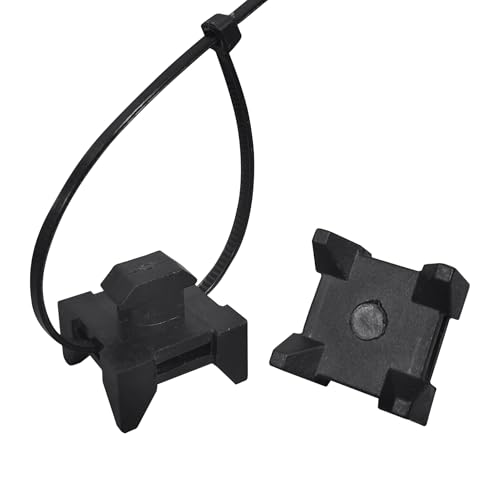
Abeicy 25 Pieces Plastic Cable Zip Tie Mounting Block, Cables Base Fixture, Wire Clips, Management Fastener for 40 Series Aluminum T-Slot Extruded Profiles
The zip ties mount is suitable for 3D printers, DIY and CNC machines or equipment, especially for cable…
As an affiliate, we earn on qualifying purchases.
As an affiliate, we earn on qualifying purchases.
Frequently Asked Questions
Can 3D Printed Clips Fit All Cable Sizes?
3D printed clips may not fit all cable sizes perfectly, but their size compatibility depends on design. Many clips are customizable, allowing you to adjust dimensions for your specific cables. The clip flexibility also plays a role, as flexible materials can accommodate different cable thicknesses. If you need a perfect fit, consider designing or choosing clips that match your cable sizes closely or are adjustable for better compatibility.
Are 3D Printed Clips Heat-Resistant?
Yes, 3D printed clips can be heat-resistant, depending on the material options you choose. For better heat resistance, opt for filaments like ABS, PETG, or nylon, which withstand higher temperatures without deforming. Keep in mind that standard PLA isn’t ideal for heat-sensitive environments, so selecting the right material guarantees your clips stay durable and effective even in warmer conditions.
How Durable Are 3D Printed Cable Clips?
You’ll find that 3D printed cable clips are quite durable, especially if you choose high-quality filament materials like PETG or ABS. Material durability varies based on the filament used, but with good print quality, these clips can withstand daily wear and tear, bending, and moderate heat. While not as tough as commercial plastic, they’re perfect for organizing cables at home or in the office, lasting months or even years with proper care.
Can I Customize the Color of 3D Printed Clips?
Yes, you can customize the color of your 3D printed clips. With a variety of color options available, you can choose shades that match your style or workspace. Your material choices, like PLA or ABS, also influence color availability, so select a filament that offers the hues you want. This allows you to create personalized, visually appealing cable clips tailored to your preferences.
What Materials Are Best for 3D Printed Cable Clips?
In today’s tech-driven world, you want cable clips that are both durable and eco-friendly. PLA plastic is a top choice because it offers good material flexibility and has a lower environmental impact. ABS is also popular for its strength, but it’s less eco-conscious. Choose materials like PETG for a balance of flexibility and sustainability, ensuring your cable organization is both functional and kind to the planet.

Personalized Name Cable Clip – Custom Cable Clip with Name (Up to 12 Characters), Secure Screw Design, Universal Charging Cable Holder for Desk
CUSTOM NAME & COLOR SELECTION Personalized cable clip customized with a name in uppercase letters (up to 12…
As an affiliate, we earn on qualifying purchases.
As an affiliate, we earn on qualifying purchases.
Conclusion
By embracing 3D printed clips, you transform chaos into harmony, turning tangled wires into a neatly choreographed dance. These clips act as silent guardians, holding each cable in its rightful place like a conductor guiding an orchestra. With every snap and label, you craft a workspace that’s not just organized but alive with purpose and precision. In the symphony of your environment, these clips are the steady beats that keep everything in perfect rhythm.

32Pcs Nearockle Cable Labels and Silicone Cable Ties Value Cable Management Set, 20 Cable Ties+12 Cord Labels for Electronics, Travel Home Office Desk Wire Organization(Multicolor)
Cord Organizer+Identify Cords: The new combination by Nearockle – cable ties + cable labels, you can organize the…
As an affiliate, we earn on qualifying purchases.
As an affiliate, we earn on qualifying purchases.

KGROTE 100PCS Cable Clips, Adhesive Wire Clips Strong Cord Clips Wire Holders, Cable Management Clips for Desk, Wall, Car, TV, Ethernet Cable (Clear, Small)
Adhesive Cable Clips: Made of high-quality PC plastic and strong adhesive, strong and durable. No drilling is required…
As an affiliate, we earn on qualifying purchases.
As an affiliate, we earn on qualifying purchases.