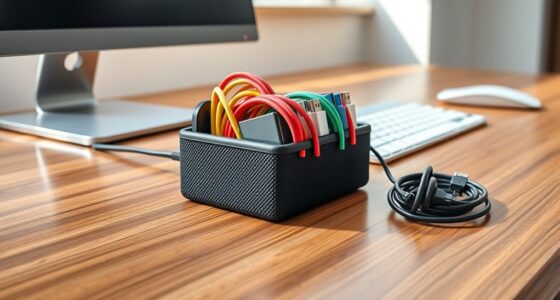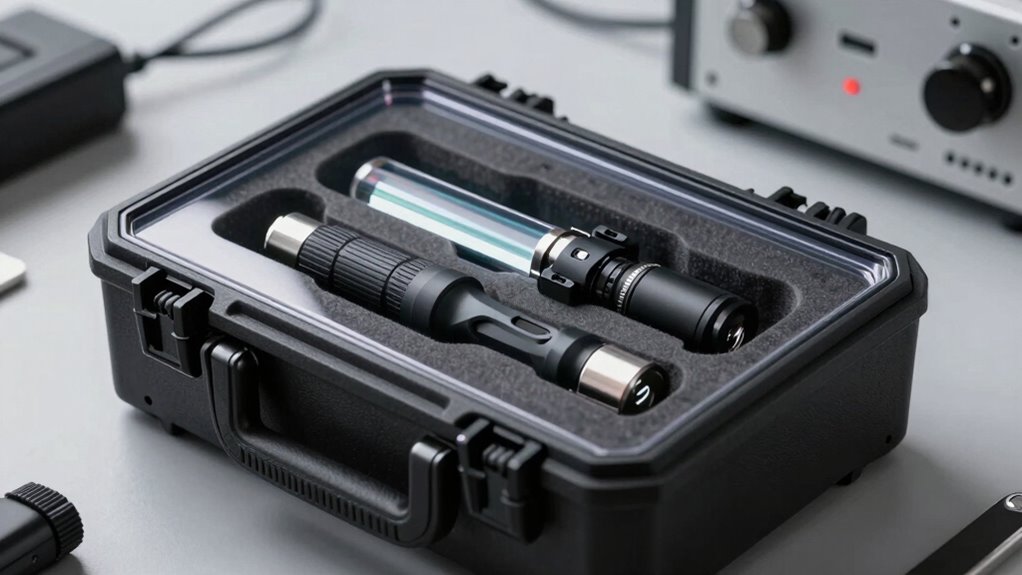

Choosing a protective case for fiber tools comes down to what needs a safer ride: a fusion splicer, a collection of hand tools, or one delicate cutter. I rank the Fiber Optic Bag Fusion Splicing Machine Carrying Case first for its backpack carry and organized storage, while the Fiber Fusion Splicer Bag is a simpler option for technicians seeking a handle-style case. For small tools, the Compact Oxford Storage Pouch keeps the load minimal; the Empty Cloth Bag offers more room for everyday hand tools.

Get business pricing on networking and server gear
- Business-only prices and quantity discounts
- Tax-exempt purchasing
- Multiple users, one account, clear invoices
The tradeoff is protection versus capacity and convenience. The backpack lists multiple pockets and water-resistant, scratch-resistant Oxford cloth, but its stated dimensions may not fit every splicer. The universal nylon case claims broad compatibility but does not specify internal padding. Smaller bags are easier to carry, yet they cannot replace a protective case for larger equipment. I compare them by intended tool size, organization, materials, and carrying style—not by assuming protection details the listings do not provide.
Key Takeaways
- For a splicer plus accessories: the Oxford backpack is the most organized pick, with padded shoulder straps and multiple pockets; check your machine dimensions before ordering.
- For hand tools rather than a splicer: the polyester bag has three compartments and an enlarged bottom, but its 1,000 g maximum weight recommendation limits heavy loads.
- For one compact cutter or cleaver: the 0.4 L pouch is the lightest choice, with a scratch-proof lining and belt or bag attachment options.
- For a simple handled splicer case: the nylon universal case is described as fitting most splicers, but internal padding is not specified.
- Do not treat water resistance as impact protection: none of these descriptions establishes crush resistance or confirms a protective hard shell.
| Fiber Optic Bag Fusion Splicing Machine Carrying Case |  | Best Overall — organized backpack carry for a splicer and field tools | Material: Oxford cloth | Dimensions: 13.50 × 9.06 × 8.27 inches | Water resistance: Water resistant | VIEW ON AMAZON | See Our Full Breakdown |
| Fiber Fusion Splicer Bag Nylon Universal Storage Case for Networking Tools and Equipment |  | Best Simple Splicer Case — straightforward handle carry | Material: Nylon | Closure: Zipper | Water resistance: Water resistant | VIEW ON AMAZON | See Our Full Breakdown |
| Fiber Optic Tool Kit Empty Cloth Bag |  | Best Value for Hand Tools — roomy, divided storage without a splicer focus | Material: Polyester | Listed size: 25 × 20 × 14 cm | Other listed dimensions: 9.84 in L × 5.51 in H | VIEW ON AMAZON | See Our Full Breakdown |
| Compact Oxford Storage Pouch for Fiber Optic Cleaver and Cable Cutter |  | Best Compact — lightweight protection for one small tool | Material: 1680D Oxford cloth | Lining: Scratch-proof | Capacity: 0.4 L | VIEW ON AMAZON | See Our Full Breakdown |
| protective cases for fiber tool | Material | Water resistance | Color | Dimensions |
|---|---|---|---|---|
| Fiber Optic Bag Fusion Splicin | Oxford cloth | Water resistant | Black | 13.50 × 9.06 × 8.27 inches |
| Fiber Fusion Splicer Bag Nylon | Nylon | Water resistant | Black | — |
| Fiber Optic Tool Kit Empty Clo | Polyester | Water repellent | Black | — |
| Compact Oxford Storage Pouch f | 1680D Oxford cloth | — | — | Approximately 9 × 8 cm |
More Details on Our Top Picks
Fiber Optic Bag Fusion Splicing Machine Carrying Case
This is the strongest all-round match for a technician who needs to carry a fusion splicer alongside accessories, rather than just a few loose hand tools. Its Oxford cloth shell is described as water-resistant and scratch-resistant, and the multiple pockets give small components a place apart from the main equipment. The padded shoulder straps also make it more practical to carry between work areas than the handle-only nylon case.
The listed size, 13.50 × 9.06 × 8.27 inches, is useful for screening fit, but it does not confirm compatibility with every splicer. I would check the machine’s dimensions and any required accessories before choosing it. It has no stated rigid structure or internal impact padding, so the backpack format should not be read as crush protection. Compared with the three-compartment polyester bag, it is more clearly aimed at larger equipment; compared with the nylon splicer case, it offers more explicit organization and shoulder carry. Its black-only styling and lack of details about room for oversized gear are the main limits.
Pros:- Water-resistant, scratch-resistant Oxford cloth
- Multiple pockets separate tools and accessories
- Padded shoulder straps support hands-free carrying
- Sized and described for fiber splicing equipment
Cons:- The stated dimensions may not fit every splicer
- No hard shell or internal impact padding is specified
- Only black is listed, with no confirmed space for larger equipment
Best for: Field technicians carrying a compact fusion splicer and assorted accessories who want shoulder straps and organized pockets.
Not ideal for: Buyers with a larger splicer that exceeds the stated dimensions, or anyone requiring a confirmed hard shell or impact-rated protection.
- Material:Oxford cloth
- Dimensions:13.50 × 9.06 × 8.27 inches
- Water resistance:Water resistant
- Color:Black
- Carry style:Backpack with padded shoulder straps
- Organization:Main compartment and multiple pockets
Our verdict“I recommend this backpack first for an organized splicer-and-tool load, provided the equipment fits its stated dimensions.”
Fiber Fusion Splicer Bag Nylon Universal Storage Case for Networking Tools and Equipment
This nylon case is a more pared-back alternative to the backpack: it is described as a universal storage case for most fusion splicers, with a zipper closure and handle strap. That makes it a plausible choice for someone who prefers a compact carry format and does not need shoulder straps or a clearly stated pocket system. Water resistance is listed, which may help with light exposure while moving between job sites.
The key limitation is that the listing leaves fit and protection details broad. “Most” splicers is not a dimension, and there is no mention of internal padding or a rigid frame. By comparison, the leading Oxford backpack gives a specific exterior size, multiple pockets, and padded straps, making its intended organization easier to judge. This nylon option can still suit a technician who already knows the case fits their machine, but buyers seeking a known fit or extra cushioning should verify those details rather than rely on the universal label. The lack of a stated weight also makes it harder to judge how much it adds to a kit.
Pros:- Nylon construction is described as durable
- Water-resistant exterior
- Zipper closure keeps the case closed during carry
- Handle strap offers a simple way to move the case
Cons:- No dimensions are supplied to verify splicer fit
- Internal padding is not specified
- Weight and internal organization are not detailed
Best for: Technicians who want a simple, water-resistant, handle-carried case and can confirm their splicer fits.
Not ideal for: Buyers who need confirmed dimensions, organized accessory pockets, or documented internal padding and impact protection.
- Material:Nylon
- Closure:Zipper
- Water resistance:Water resistant
- Carry style:Handle strap
- Stated compatibility:Most fusion splicer models
- Color:Black
- Internal padding:Not specified
Our verdict“I would choose this over the backpack only when a handle-style case is preferred and the fit has been confirmed.”
Fiber Optic Tool Kit Empty Cloth Bag
For a working set of small hand tools, this polyester bag has a clearer role than either splicer case. Its three compartments and enlarged bottom are intended to hold items such as pliers, screwdrivers, and mini-flashlights, while two strap closures help keep contents in place. The wide fabric handle makes it easy to grab and carry, and water-repellent polyester offers some protection from light moisture.
It is not a general replacement for a fusion-splicer case: the listing focuses on hand tools and accessories, and gives a maximum weight recommendation of 1,000 g. Its dimensions are presented in two different formats, so I would confirm the usable interior before planning a bulky load. Compared with the compact 0.4 L pouch, this bag holds a broader selection of tools; compared with the Oxford backpack, it is less suited to carrying a splicer and lacks padded shoulder straps. It is sold empty, so buyers building a kit need to supply their own tools. Its water-repellent claim also does not mean it is sealed against heavy rain.
Pros:- Three compartments help separate small tools
- Enlarged bottom provides room for a hand-tool selection
- Water-repellent polyester exterior
- Wide fabric handle and two strap closures
Cons:- Bag only; tools and accessories are not included
- Maximum weight recommendation is 1,000 g
- No internal padding or hard-shell protection is specified
Best for: Technicians organizing a modest set of lightweight hand tools and accessories in one grab-and-go bag.
Not ideal for: Anyone looking for a fusion splicer carrier, a heavy-duty equipment case, or a bag with tools included.
- Material:Polyester
- Listed size:25 × 20 × 14 cm
- Other listed dimensions:9.84 in L × 5.51 in H
- Water resistance:Water repellent
- Compartments:3
- Maximum weight recommendation:1,000 g
- Closure and carry:Two strap closures; fabric handle
- Color:Black
Our verdict“I favor this for a light, organized hand-tool kit, not for transporting a fusion splicer.”
Compact Oxford Storage Pouch for Fiber Optic Cleaver and Cable Cutter
This pouch is the most focused pick in the group. At about 0.4 L and 30 g, it is designed for a cleaver, cable cutter, or similarly small splicing tool rather than a complete field kit. The 1680D Oxford exterior and scratch-proof inner lining offer a more specific description of surface protection than the other bags provide. Its belt perforation and bag-attachment option also make it convenient to keep a small tool close at hand during repairs.
That compactness is both its advantage and its clear boundary. The stated dimensions are approximately 9 × 8 cm, and the small capacity rules out larger tools or multiple accessories. Compared with the polyester bag, it carries much less, but it is far lighter and can attach to a belt or another bag. Compared with the splicer-focused options, it is not a case for a machine. The listing says the package includes one cable-cutter bag, so buyers should confirm that their intended tool’s shape and size will fit; the product description does not establish impact resistance or a padded structure.
Pros:- Very light at approximately 30 g
- 1680D Oxford cloth exterior with a scratch-proof lining
- Belt perforation and bag-hanging carry options
- Zipper gives quick access to the stored tool
Cons:- Only 0.4 L of capacity and approximately 9 × 8 cm in size
- Not intended for a full kit or fusion splicer
- Tool fit and impact protection are not confirmed
Best for: Technicians who carry one small cleaver or cable cutter and want a lightweight pouch that can attach to a belt or larger bag.
Not ideal for: Buyers needing space for a full tool kit, a fusion splicer, or confirmed impact cushioning.
- Material:1680D Oxford cloth
- Lining:Scratch-proof
- Capacity:0.4 L
- Dimensions:Approximately 9 × 8 cm
- Weight:Approximately 30 g
- Carry options:Waist or bag hanging
- Closure:Metal zipper
- Package includes:One fiber optic cable cutter bag
Our verdict“I recommend this pouch for a single small cutter or cleaver when low bulk matters more than capacity.”

How We Picked
I ranked these options around the job implied by protective cases for fiber tools: keeping tools together and reducing exposure to scratches, light moisture, and bumps during transport. I gave more weight to an explicit fit or organization feature than to broad claims. The Oxford backpack leads because it is specifically described for a fusion splicer and tools, with multiple pockets and padded straps. The nylon case follows as another splicer-oriented choice, though its internal padding and exact dimensions are missing.
The two smaller bags serve different loads. The polyester bag is meant for a selection of hand tools and offers three compartments, while the compact pouch is built around very small items such as a cleaver or cable cutter. I compared their stated capacity and carrying methods rather than treating either as a substitute for a larger equipment case. Across all four, I counted material, closure or organization details, water resistance claims, listed dimensions, and the gaps buyers should verify. Product descriptions do not establish drop ratings, crush resistance, or a universal fit, so I do not assign those protections.
| protective cases for fiber tool | Water resistance | Carry style | Closure |
|---|---|---|---|
| Fiber Optic Bag Fusion Splicin | Water resistant | Backpack with padded shoulder straps | — |
| Fiber Fusion Splicer Bag Nylon | Water resistant | Handle strap | Zipper |
| Fiber Optic Tool Kit Empty Clo | Water repellent | — | — |
| Compact Oxford Storage Pouch f | — | — | Metal zipper |
Factors to Consider When Choosing Protective Cases For Fiber Tools
I would start with the tool that needs a case, then check fit and the type of protection actually stated. These four options cover different loads rather than four equivalent versions of the same bag.
Match the case to the tool
A fusion splicer needs substantially more room than a cleaver or screwdriver. The backpack and nylon case are the splicer-oriented options, while the polyester bag targets hand tools and the compact pouch targets one small item. I would not stretch a small tool pouch into an equipment case simply because it is easy to carry. Measure the tool, including protruding handles or attached parts, and compare it with listed dimensions. For the nylon case, no dimensions are provided, so fit needs direct confirmation.
Separate water resistance from impact protection
Water-resistant and water-repellent fabrics can help with light moisture, but those labels do not establish a waterproof seal. They also say little about what happens if a case is crushed or dropped. The compact pouch lists a scratch-proof lining, a useful detail for limiting surface scuffs, yet it does not claim impact cushioning. Neither splicer case specifies a hard shell or impact rating. If delicate equipment needs crush or drop protection, look for an explicitly padded or rigid design and check the manufacturer’s protection details.
Choose organization for your workflow
Pockets and compartments matter when a kit includes small adapters, cutters, screwdrivers, and other pieces that are easy to misplace. The backpack lists multiple pockets, and the polyester bag has three compartments. The nylon case does not describe its internal layout, while the compact pouch is intentionally limited to a small tool. I would favor divided storage for a mixed kit, but avoid assuming a compartment will fit a specific accessory unless its dimensions are listed.
Think about carry style and load
The backpack’s padded shoulder straps suit technicians who move between sites with a larger load. A handle is simpler for short carries: both the nylon case and polyester tool bag use handle-style carry. The compact pouch can attach to a belt or a larger bag, keeping one frequently used tool accessible. For the polyester option, the stated 1,000 g maximum recommendation is a useful limit; do not infer its capacity from the enlarged bottom alone.
Check what the listing leaves out
Before choosing, confirm the interior dimensions, whether the listed case includes any tools, and whether the specific machine or cutter fits. The polyester bag is explicitly empty. The backpack gives exterior dimensions but does not specify larger-equipment compartments. The nylon case claims compatibility with most splicers without providing measurements, and its padding is unspecified. These gaps do not automatically make a case unsuitable, but they affect how confidently I can match it to a particular tool.
Frequently Asked Questions
Which case is best for carrying a fusion splicer?
I rank the Fiber Optic Bag Fusion Splicing Machine Carrying Case first because it is described for a splicer and tools, lists its dimensions, and includes multiple pockets plus padded shoulder straps. Check your machine against the stated 13.50 × 9.06 × 8.27-inch size before buying. The nylon case is another splicer-oriented option, but its dimensions and internal padding are not specified.
Does water-resistant fabric make these cases waterproof?
No. Water-resistant and water-repellent describe some resistance to moisture, not a guaranteed waterproof seal. The product details do not provide immersion or heavy-rain protection claims. I would keep sensitive equipment shielded from sustained wet conditions unless the manufacturer confirms a suitable protection level.
Which option is best for a small cleaver or cable cutter?
The Compact Oxford Storage Pouch is the most targeted choice for a single small cutter or cleaver. It has a scratch-proof inner lining, weighs about 30 g, and can attach to a belt or another bag. Its roughly 0.4 L capacity and approximately 9 × 8 cm dimensions limit what it can carry, so verify the tool’s size first.
Are tools included with the polyester tool bag?
No. The Fiber Optic Tool Kit Empty Cloth Bag is described as an empty bag, so pliers, screwdrivers, flashlights, and other accessories need to be supplied separately. Its three compartments and enlarged bottom are intended to organize a hand-tool selection, while the stated maximum weight recommendation is 1,000 g.
Do any of these cases confirm drop or crush protection?
None of the supplied product details confirms a drop rating, crush resistance, or a rigid protective shell. The compact pouch describes a scratch-proof lining, and the backpack lists padded shoulder straps, but those features are not evidence of impact-rated protection. For fragile equipment, check for explicit internal cushioning or a hard case and confirm how the manufacturer defines its protection.
Conclusion
My recommendation depends on what you carry. Choose the Oxford backpack for a splicer and accessories when its stated dimensions fit your machine. Pick the nylon universal case if you prefer a simple handle carry and can confirm both fit and padding details. For a divided selection of lightweight hand tools, the polyester bag makes more sense; for one small cutter or cleaver, choose the compact Oxford pouch. None of these listings confirms impact-rated protection, so buyers moving delicate equipment through rough conditions should seek a case with documented cushioning or a rigid shell.