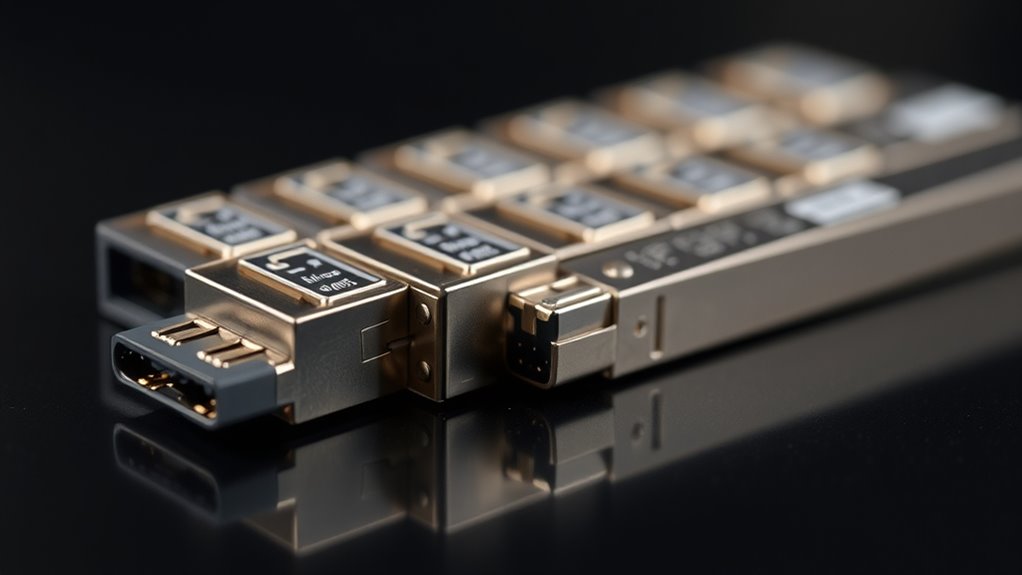

Like a master key that opens many doors, transceivers such as SFP, SFP+, and QSFP unlock a range of network possibilities, but choosing the right one requires understanding their differences and compatibility. Each type supports specific speeds and fiber types, making it essential to match them with your equipment and needs. Getting this right can prevent costly errors and improve your network’s performance—so, let’s explore what makes each transceiver unique.
Key Takeaways
- Transceivers like SFP, SFP+, and QSFP vary in size, data rates, and supported fiber types, serving different network needs.
- SFP modules support standard data rates (e.g., 1G, 10G) and are used with single-mode or multimode fibers.
- QSFP transceivers enable multi-lane, high-speed data transfer, commonly used for 40G and 100G connections.
- Compatibility depends on device specifications and matching fiber type, connector, and transceiver standards.
- Proper selection ensures optimal network performance, reliability, and seamless integration between transceivers and hardware.

A transceiver is a device that combines the functions of a transmitter and a receiver, allowing seamless communication between electronic systems. When you’re working with network infrastructure, understanding the different types of transceivers and how they fit into your setup is essential. Specifically, knowing about fiber optic types and transceiver compatibility can help you optimize your network performance and avoid costly mismatches.
Fiber optic transceivers come in various types, each designed to support specific fiber optic standards and distances. You’ll encounter SFP (Small Form-factor Pluggable), SFP+, QSFP (Quad Small Form-factor Pluggable), and other variants. These types differ primarily in their data rates and the fiber optic types they support. For example, some transceivers are optimized for single-mode fiber, which is ideal for long-distance links spanning kilometers, while others are suited for multimode fiber, suitable for shorter ranges within data centers. Choosing the right fiber optic type is essential because it affects signal quality, transmission speed, and overall network reliability.
Transceiver compatibility is another key factor you need to consider. Not all transceivers work with every device or switch; they must be compatible with your hardware and network setup. Many network devices specify specific transceiver modules they support, often outlined in the manufacturer’s documentation. Using an incompatible transceiver can result in connection failures or degraded performance. For instance, a switch designed to support SFP modules may not recognize a QSFP transceiver, or it may require a specific firmware update to guarantee compatibility. It’s also important to verify if the transceiver is compatible with your network’s data rate requirements—whether you need 1G, 10G, 40G, or even higher speeds.
You should also pay attention to the form factor and connector types, as these are essential for proper integration. Transceivers come with different connectors, such as LC, SC, or MPO, depending on the fiber type and application. Ensuring that the transceiver’s connector matches your fiber cabling is crucial for a seamless setup. Additionally, understanding the different fiber types involved can help you select the most suitable transceiver for your specific networking environment.
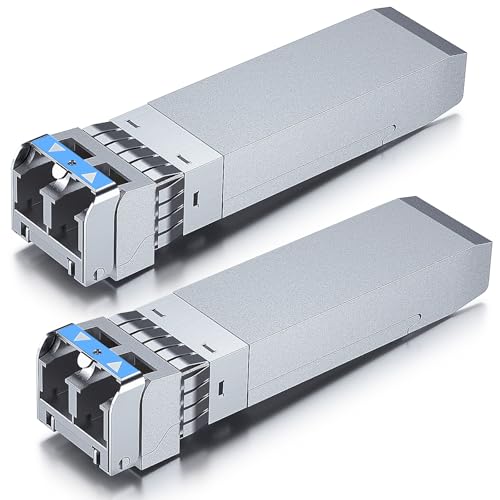
10Gtek 10GBase-LR SFP+ Transceiver, 10G 1310nm SMF SingleMode Fiber Optic Module, 10km, for Cisco SFP-10G-LR, Meraki MA-SFP-10GB-LR, Ubiquiti UniFi UF-SM-10G, Fortinet, Mikrotik, Netgear, Pack of 2
Data Rate: 10G
As an affiliate, we earn on qualifying purchases.
As an affiliate, we earn on qualifying purchases.
Frequently Asked Questions
How Do Transceiver Types Affect Network Scalability?
Transceiver types directly impact your network’s scalability by influencing fiber compatibility and adhering to transceiver standards. Using the right transceiver guarantees you can upgrade or expand your network smoothly, as different standards support various speeds and distances. Choosing versatile transceivers like SFP or QSFP allows you to adapt fiber types and maintain compatibility across devices, making future growth easier and more cost-effective.
Are There Compatibility Issues Between Different Transceiver Brands?
Like trying to fit a key into the wrong lock, using transceivers from different brands can lead to compatibility issues. You might face manufacturer compatibility problems or brand interoperability challenges, which can cause network disruptions. To avoid this, always check if your transceivers are compatible with your equipment, and prefer brands that support open standards. This guarantees seamless integration and maximum performance across your network.
What Are the Environmental Requirements for Transceiver Operation?
You need to guarantee proper thermal management and minimize electromagnetic interference for your transceiver operation. Keep the device within recommended temperature ranges, avoid exposing it to excessive heat or cold, and ensure adequate airflow. Shield your transceivers from electromagnetic interference by maintaining proper grounding and keeping cables away from sources of interference. These measures help maintain ideal performance, prevent damage, and extend your transceiver’s lifespan.
Can Transceivers Be Upgraded Without Replacing the Entire Device?
Yes, you can upgrade transceivers without replacing the entire device. Just make certain the new transceiver matches your fiber compatibility and power consumption requirements. Check that it’s compatible with your device’s specifications to avoid issues. Upgrading allows you to improve performance or add features while keeping your existing hardware intact. Always verify compatibility details before installing a new transceiver for a seamless upgrade.
How Do Transceiver Warranties Vary Across Manufacturers?
You’ll find that warranty policies vary widely across manufacturers, often reflecting their brand reliability. Some brands offer limited warranties, typically covering defects for a year, while others provide extended or lifetime coverage. It is crucial to review each manufacturer’s warranty terms before purchasing transceivers. Trusted brands tend to stand behind their products more confidently, giving you peace of mind. Always check warranty details to ensure you’re protected against potential defects or issues.

40G QSFP+ MPO Multi-Mode Transceiver, 40GBASE-SR4 Module for Cisco QSFP-40G-SR4, 850nm, DDM, 100m
40GBASE-SR4 QSFP+ to MPO Optical 40G Ethernet transceiver module, Multimode, 4-lanes, 850nm, 12-fiber MPO/MTP connector, DDM, up to…
As an affiliate, we earn on qualifying purchases.
As an affiliate, we earn on qualifying purchases.
Conclusion
So, now you see, choosing the right transceiver isn’t just a small detail—it’s the heartbeat of your entire network! Get it wrong, and your data could crawl or crash like a runaway train. Picking the perfect SFP, SFP+, or QSFP is like wielding a superpower—unlocking lightning-fast speeds and unstoppable performance. Master this, and you’ll be unstoppable, turning your network into a blazing, flawless highway that leaves all others in the dust!

Elfcam® – 1 Pair 10G SFP+ BIDI Transceiver Module with SC Fiber Port Simplex Single-Mode, Support 10Gb/2.5Gb/1.25Gb, Compatible with Cisco and Open Switch, DDM 20km
1 pair of 10Gbps SFP+ BIDI Fibre Optic Transceiver Modules 1270nm/1330nm, Backward compatible with 2.5G and 1.25G standards,…
As an affiliate, we earn on qualifying purchases.
As an affiliate, we earn on qualifying purchases.

4Pcs 25G SFP28 Multi-Mode SFP+ Fiber Module Network Transceiver, SR MM850nm 100m, Duplex LC for Data Center Switch, Router, Firewall, Server etc.,
【High Performance】 Multi-mode duplex 25Gbps SFP28 transceiver, supports up to 100m fiber length connection and 0~70℃ operating temperature.
As an affiliate, we earn on qualifying purchases.
As an affiliate, we earn on qualifying purchases.