
Implementing structured cabling in your smart home ensures reliable, stable, and fast network connectivity for all your devices. It keeps wiring organized and neat, making troubleshooting easier and system expansion seamless. This setup supports higher bandwidth for data-intensive tasks, enhances safety, and improves the home’s aesthetics. Additionally, it future-proofs your infrastructure, saving costs long-term. If you want to discover how this setup can transform your home, keep exploring the benefits in detail.
Key Takeaways
- Ensures reliable, high-speed network connectivity capable of supporting multiple smart home devices and future technology upgrades.
- Simplifies wiring, maintenance, troubleshooting, and system expansion through organized and accessible cabling.
- Enhances home aesthetics and safety by reducing cable clutter and preventing tripping hazards.
- Provides increased bandwidth for high-definition streaming, cloud applications, and secure device integration.
- Offers a cost-effective, durable infrastructure that adapts to evolving smart home technology and reduces long-term expenses.
Enhanced Network Reliability and Stability
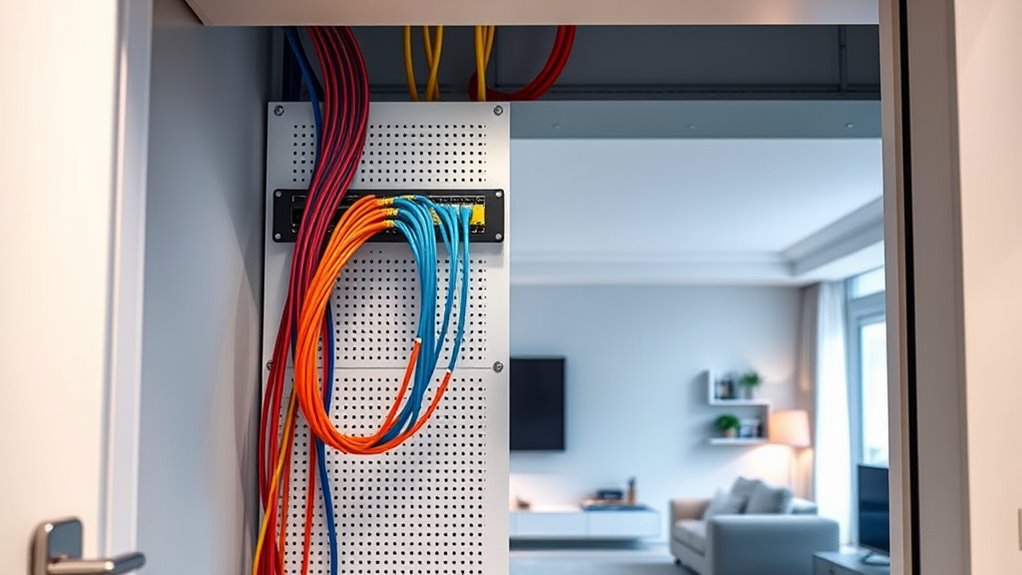
Structured cabling considerably improves network reliability and stability by providing a well-organized and consistent infrastructure. This setup ensures your smart home devices maintain strong wireless connectivity, reducing disruptions caused by signal interference. When cables are properly managed and standardized, they minimize the chances of crosstalk and electromagnetic interference that can weaken signals. As a result, your network stays steady even when multiple devices are connected simultaneously. With fewer connection drops and less lag, your smart home operates smoothly and efficiently. You won’t have to worry about unreliable internet or spotty wireless signals that interrupt streaming, gaming, or remote work. Overall, structured cabling creates a dependable foundation that enhances your home’s connectivity, guaranteeing consistent performance across all connected devices.
Simplified Wiring and Reduced Clutter
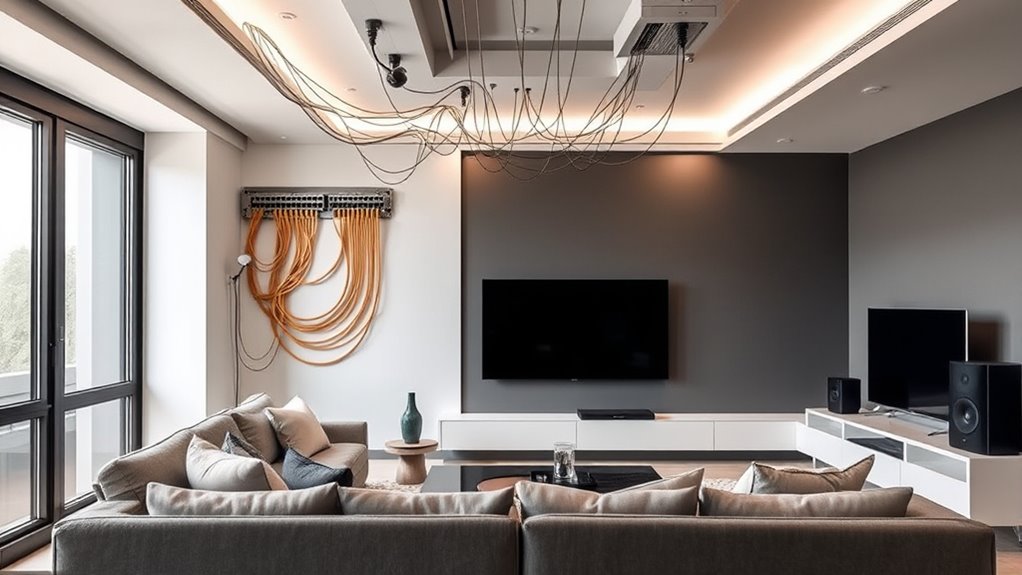
With structured cabling, your setup stays neat and organized, making it easier to manage. You’ll notice a cleaner home appearance without tangled wires everywhere. Plus, troubleshooting becomes simpler when everything is clearly labeled and orderly.
Organized Cable Management
Effective cable management makes your wiring easier to install, troubleshoot, and maintain. Proper cable routing ensures cables are neatly organized, reducing tangles and preventing damage. When planning your setup, think about creating clear pathways that minimize crossing cables and keep everything accessible. Label management is essential — by clearly marking each cable, you’ll quickly identify connections during repairs or upgrades, saving time and reducing errors. Using cable ties, clips, and trays keeps everything in place, preventing clutter from accumulating over time. This organized approach not only simplifies daily maintenance but also enhances safety by avoiding tripping hazards. Additionally, understanding the importance of cable lifespan can help you select durable materials that last longer and require less frequent replacement. Incorporating structured cabling standards can further improve your system’s reliability and scalability. For optimal performance, considering power management solutions can help prevent overloads and extend your system’s longevity. Choosing high-quality connectors and materials can also reduce signal interference, ensuring a more stable and efficient network. Overall, structured cable management creates a streamlined system that’s easier to manage, making your smart home more reliable and user-friendly.
Aesthetic Home Appearance
A tidy wiring setup instantly enhances your home’s appearance by reducing visual clutter and creating a clean, organized look. With structured cabling, you can use decorative covers to hide cables neatly, preventing unsightly spaghetti behind furniture or along walls. Wall concealment options allow you to run wires inside walls or behind panels, making cables virtually invisible. This streamlined approach keeps your space looking sleek and modern, without sacrificing functionality. By minimizing exposed wires and clutter, your home’s aesthetic improves markedly, giving it a tidy, well-maintained feel. Structured cabling makes it easier to achieve a seamless, minimalist design while maintaining easy access when needed. Additionally, implementing cable management solutions can further enhance the overall neatness and safety of your smart home environment. Properly planned cable routing can prevent damage and interference, ensuring your system’s longevity and performance. Using structured cabling also allows for easier upgrades and reconfigurations as your technology needs evolve, helping maintain a clutter-free environment over time. Incorporating organized wiring techniques is a key step in maintaining a safe and efficient smart home setup. Overall, it elevates your home’s appearance, making your environment more visually appealing and less chaotic.
Easier System Troubleshooting
Structured cabling simplifies troubleshooting by organizing and reducing clutter in your wiring setup. When issues arise, it’s easier to identify problems without wading through tangled wires. Clear labeling and standardized connections mean you can quickly pinpoint faulty devices or connections. This setup also makes wireless troubleshooting smoother, as a clean wiring system improves signal stability. Plus, it ensures better device compatibility, minimizing conflicts caused by inconsistent wiring. Here’s a quick look at the benefits:
| Benefit | Explanation |
|---|---|
| Reduced Clutter | Simplifies locating and fixing issues |
| Faster Troubleshooting | Less time spent diagnosing problems |
| Improved Wireless | Stronger signals with organized wiring |
A well-structured cable system also supports attention to detail, making maintenance and upgrades more efficient. Properly designed wiring can also help compliance with safety standards, reducing potential hazards and ensuring your smart home operates safely. Incorporating efficient organization practices can further enhance overall system reliability and ease of management. Additionally, following established standards for cabling infrastructure can prevent future connectivity issues and facilitate scalability.
Increased Bandwidth for Data-Intensive Devices
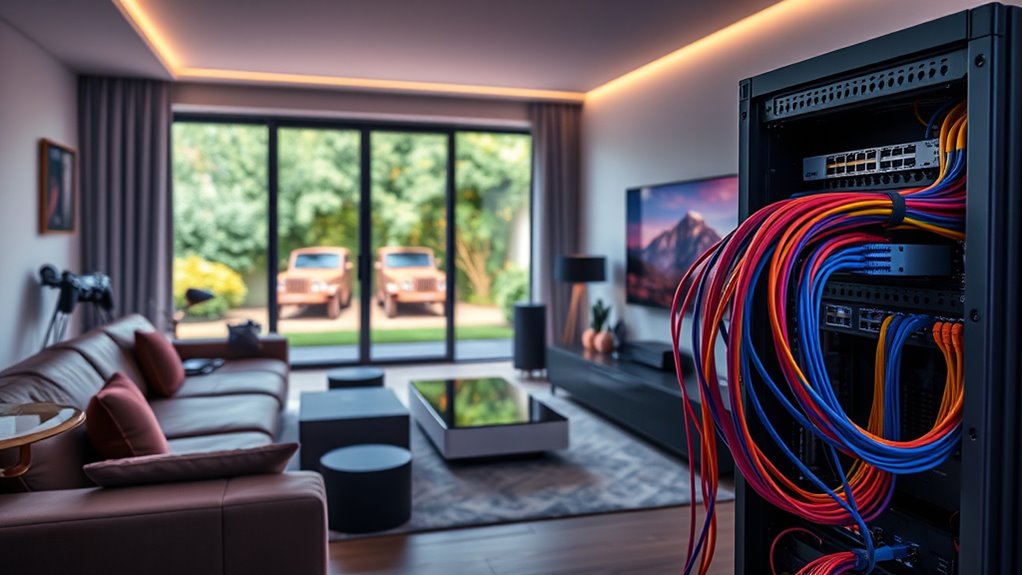
As data-intensive devices like high-definition video streams, cloud applications, and large file transfers become more common, having sufficient bandwidth is vital. Structured cabling provides a reliable, high-speed network that supports these demanding tasks without lag or interruptions. Unlike wireless alternatives, which can suffer from interference or signal degradation, wired connections ensure consistent performance. This helps you maximize your devices’ capabilities and prevents bottlenecks. Additionally, structured cabling minimizes clutter and maintains aesthetic considerations by eliminating the need for multiple exposed cables and adapters. With a robust infrastructure in place, your smart home remains sleek and organized while delivering the bandwidth necessary for all your data-heavy activities. This investment ensures your network can handle future growth and increasing data demands seamlessly. Trusted infrastructure is essential for maintaining reliable connectivity in a smart home environment.
Seamless Integration of Smart Home Technologies
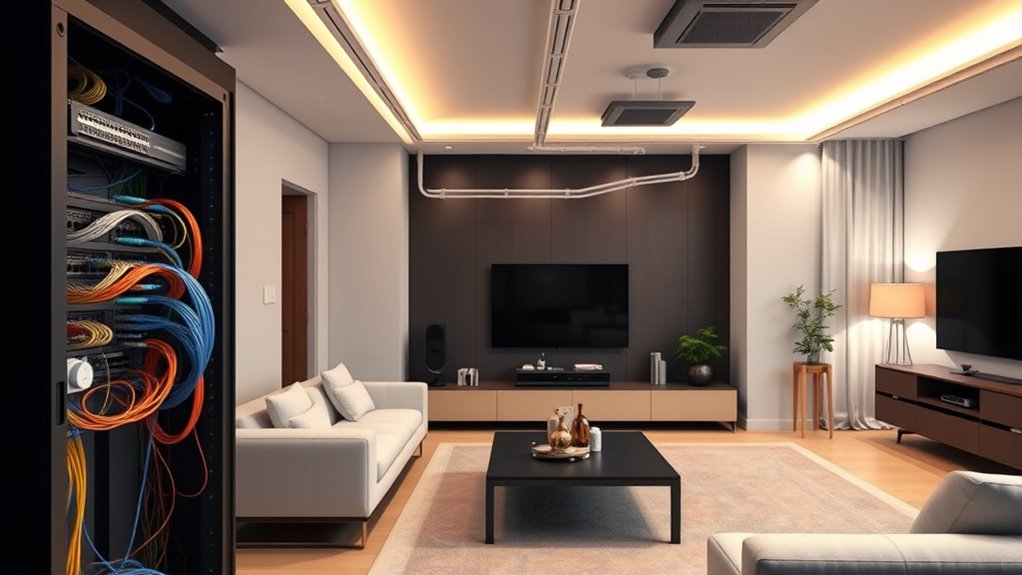
Seamless integration of smart home technologies hinges on a reliable and organized cabling infrastructure. When your cabling is structured correctly, connecting devices becomes effortless, and systems work smoothly together. You’ll notice:
- Enhanced wireless compatibility, reducing dead zones and lag
- Reliable voice control integration for hands-free operation
- Simplified setup of new smart devices without rewiring
- Consistent performance across all connected gadgets
- Proper Smart Home Integration ensures that all devices communicate effectively and securely. A well-designed cabling system can also accommodate local culture and traditions, ensuring your smart home adapts to your unique lifestyle. Additionally, advancements like the Snapdragon 8 Gen 3 highlight the importance of supporting high-performance hardware within your smart home infrastructure.
With a solid cabling backbone, your smart home can effortlessly communicate between systems, ensuring voice commands and wireless features perform at their best. This infrastructure minimizes interference and provides a stable platform for future upgrades, making your smart home truly integrated and easy to manage. Proper structured cabling is essential for achieving a cohesive, efficient smart home experience.
Future-Proofing Your Smart Home Infrastructure
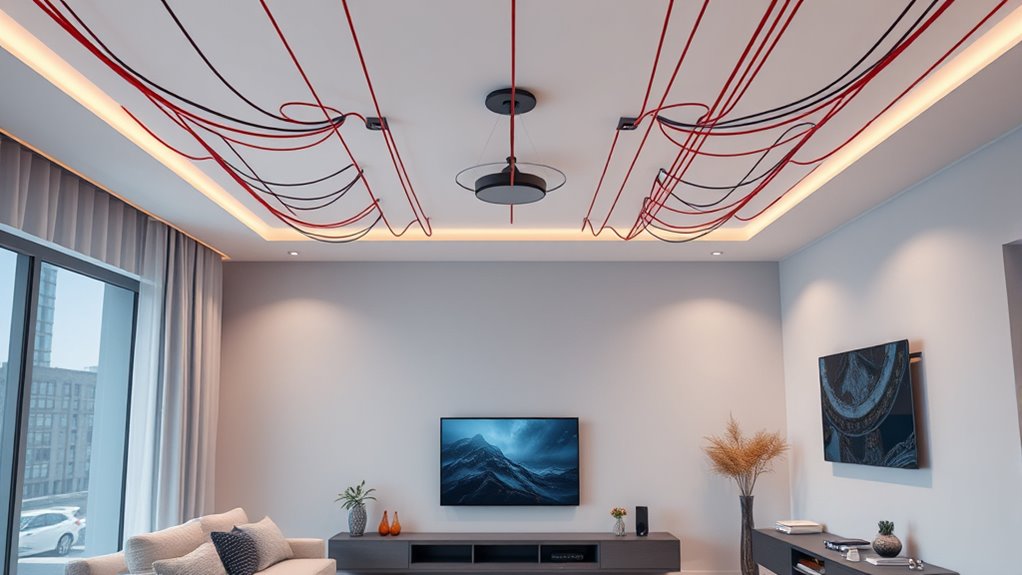
Investing in a flexible cabling infrastructure now guarantees your smart home can adapt to future technology advancements. Structured cabling provides a solid backbone that supports both current and emerging devices, reducing the need for frequent upgrades. While wireless alternatives are convenient, they can face interference and bandwidth issues down the line. Relying solely on manual wiring methods may limit scalability and flexibility as your smart home expands. A well-designed cabling system allows you to easily add new devices or upgrade existing ones without major disruptions. Additionally, understanding store hours can help you plan visits for installations or upgrades conveniently. Ensuring proper cable management enhances the longevity and reliability of your entire system. Incorporating future-proofing strategies into your setup guarantees your infrastructure remains adaptable in the face of rapidly evolving technology. This proactive approach ensures your home stays compatible with upcoming innovations, saving you time and money. By future-proofing your infrastructure, you create a smart home environment that’s adaptable, resilient, and ready for whatever technology advancements lie ahead.
Improved Security and Data Protection
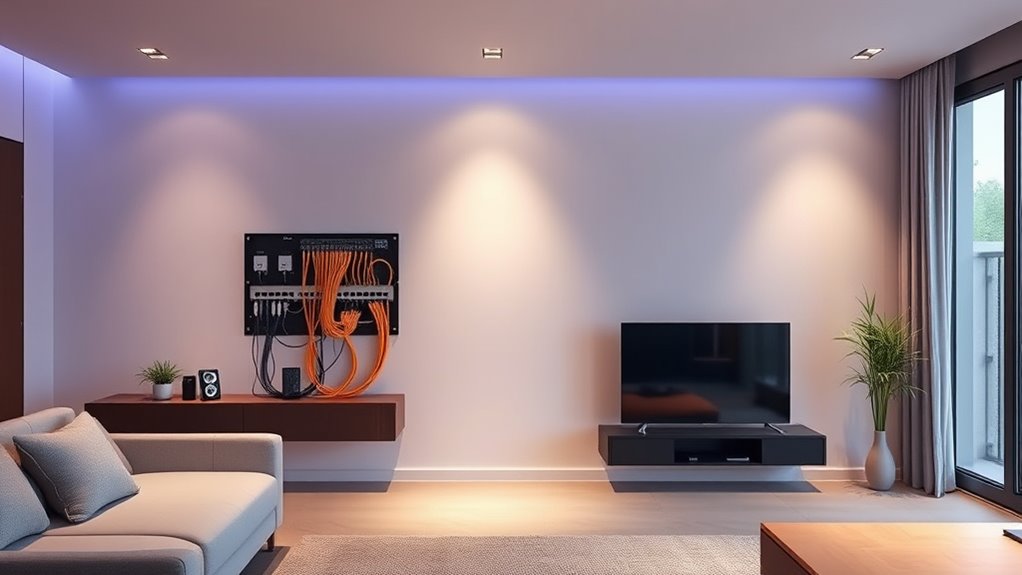
Structured cabling enhances security and data protection by providing a centralized and organized network system that reduces vulnerabilities. With this setup, you can implement robust encryption protocols to safeguard your data during transmission. Access controls become more effective, allowing you to restrict network entry to authorized users only. Imagine:
Structured cabling centralizes your network, bolsters security, and simplifies encryption and access controls.
- A secure main hub managing all connections
- Encrypted data streams preventing eavesdropping
- User authentication protocols controlling access
- Segmented network zones limiting potential breaches
This architecture minimizes weak points and makes it easier to monitor and respond to security threats. Incorporating reliable cabling infrastructure further ensures consistent performance and integrity of your network. Moreover, implementing security protocols within your structured cabling setup can significantly reduce the risk of cyber threats, ensuring your smart home remains protected. By integrating encryption protocols and access controls into your structured cabling, you ensure your smart home’s sensitive information stays protected from cyber threats and unauthorized access.
Easier Maintenance and Troubleshooting

When your network is organized with structured cabling, troubleshooting becomes considerably easier because all connections are clearly documented and systematically arranged. This clarity simplifies wireless troubleshooting, allowing you to quickly identify signal issues or interference sources without wading through tangled cables. Additionally, when hardware upgrades are needed, structured cabling makes the process smoother since components are accessible and labeled properly. You won’t waste time searching for cables or ports, reducing downtime. If a device malfunctions, pinpointing the problem is straightforward, saving you from unnecessary frustration. Incorporating industry standards can further ensure your system remains reliable and compliant, enhancing overall maintenance efficiency. Overall, this organized setup minimizes the effort required for maintenance and helps you resolve issues promptly, keeping your smart home running efficiently and reliably.
Greater Flexibility for Expanding Systems

A well-designed structured cabling system provides you with the flexibility to easily add or upgrade devices as your needs grow. It supports wireless compatibility, making it simple to integrate new smart devices without rewiring. You can effortlessly expand your system’s device scalability, ensuring future upgrades are smooth and cost-effective. Imagine effortlessly adding security cameras, smart lighting, or entertainment systems without disrupting your existing setup. With a solid backbone, you won’t be limited by outdated wiring or connectivity issues. This adaptability means your smart home can evolve with the latest technology, keeping you connected and in control. Whether you’re upgrading your Wi-Fi or adding new sensors, a structured cabling system makes system expansion quick, reliable, and hassle-free.
Cost-Effective Long-Term Solution
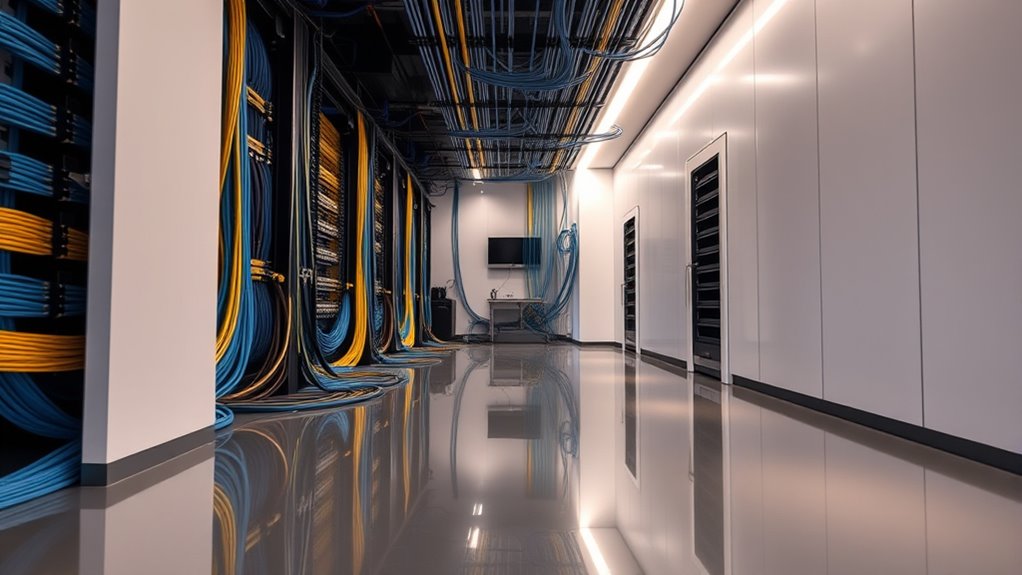
Investing in a well-designed cabling system saves you money over time by reducing the need for frequent upgrades and repairs. Unlike wireless alternatives that may require constant maintenance or signal boosters, structured cabling offers a reliable, long-term solution. Although DIY installation might seem tempting, professional setup guarantees performance and reduces future costs caused by incorrect wiring. Over time, the durability and scalability of a structured cabling system minimize the expenses associated with replacing outdated infrastructure. It also supports your smart home’s growth without the need for costly retrofits. By choosing a thorough cabling system now, you avoid the recurring costs of short-term fixes and temporary solutions, making it a truly cost-effective long-term investment for your home’s connectivity needs.
Better Aesthetics and Space Optimization
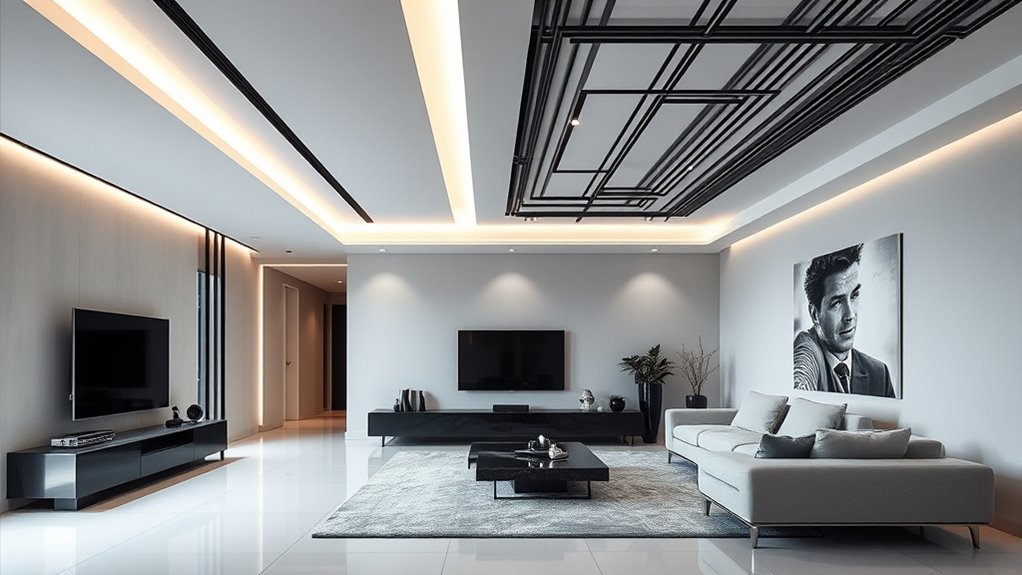
Structured cabling enhances your home’s appearance by creating a clean, organized environment, free from tangled wires and clutter. You can hide cables behind walls, using wall concealment techniques that keep everything out of sight. Decorative covers add a stylish touch, blending seamlessly with your decor. With proper cable management, you gain more space for furniture and decorations, making rooms look spacious and tidy. Imagine:
Structured cabling keeps your home sleek and clutter-free by hiding wires and adding stylish covers.
- Concealed cables behind walls, maintaining a sleek look
- Decorative covers that match your interior design
- Clear pathways free from loose wires
- Increased usable space without sacrificing connectivity
These features not only improve aesthetics but also make maintenance easier. Your home becomes more visually appealing, with everything neatly tucked away, giving you a clutter-free, modern environment.
Frequently Asked Questions
How Does Structured Cabling Support Future Smart Home Technology Upgrades?
Structured cabling supports future smart home upgrades by providing a solid, reliable foundation that guarantees wireless flexibility and easy integration of new devices. With organized wiring, you can effortlessly add or upgrade systems without clutter or disruption. It also blends seamlessly into your home’s aesthetic, maintaining a clean look. This adaptability means your smart home can evolve smoothly, keeping up with emerging technologies without costly rewiring or renovations.
What Are the Environmental Benefits of Installing Structured Cabling Systems?
By installing structured cabling, you reduce electronic waste and energy consumption, which benefits the environment. Its durable cables last longer, decreasing the need for frequent replacements, and help minimize wireless interference, ensuring a more efficient network. This setup supports sustainable living by lowering your carbon footprint, providing a reliable infrastructure that promotes eco-friendly smart home technology use.
Can Structured Cabling Reduce Energy Consumption in Smart Homes?
Yes, structured cabling can decrease energy consumption in your smart home. It enhances energy efficiency by supporting optimized device performance and reducing energy waste. Plus, with better cable management, you avoid clutter and overheating, which can lead to power surges or higher energy use. This organized setup ensures your smart devices run smoothly and efficiently, helping you save on electricity bills while maintaining a reliable, eco-friendly home environment.
How Does Structured Cabling Enhance Home Automation Security Measures?
Think of structured cabling as the backbone of your smart home’s security. It minimizes wireless interference, ensuring signals stay clear and reliable, like a steady heartbeat. Plus, cabling redundancy acts as a safety net, keeping your automation systems operational even if one line fails. By providing a secure, stable, and interference-free connection, structured cabling helps protect your home from cyber threats and unauthorized access.
Is Professional Installation Necessary for Effective Structured Cabling in Smart Homes?
You don’t necessarily need professional installation for effective structured cabling in your smart home, but DIY installation might save you money upfront. However, consider the complexity of your system and your technical skills, as improper setup can lead to costly issues later. Weigh the cost considerations carefully—professional installation may cost more initially but guarantees reliable performance and future-proofing, making it worth the investment for a seamless smart home experience.
Conclusion
Investing in structured cabling for your smart home is a smart move that pays off in the long run. It keeps your setup running smoothly, giving you peace of mind and room to grow. Don’t put all your eggs in one basket—future-proof your system now to avoid headaches later. With reliable wiring, your smart home will be as easy to manage as pie, making your life simpler and more efficient every day.