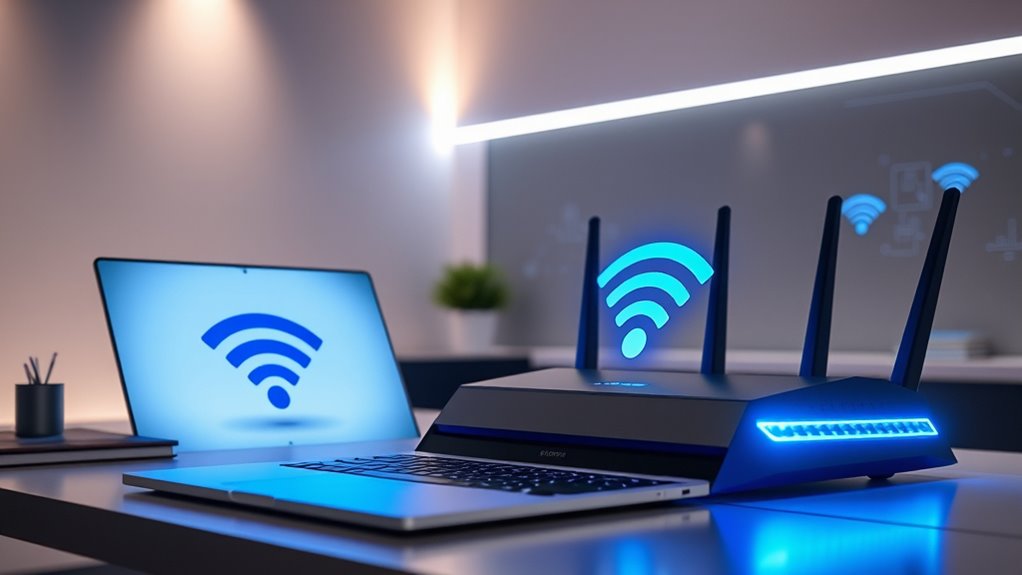

Upgrading to Wi-Fi 7 promises faster speeds and lower latency, but it also means considering device compatibility and potential hardware updates. While the technology offers clear advantages for streaming, gaming, and smart devices, not everyone will see immediate benefits. As the ecosystem evolves, understanding what to expect can help you decide if an upgrade makes sense now or later. So, what exactly will this new standard bring to your network?
Key Takeaways
- Compatibility varies; not all devices support Wi-Fi 7 immediately, requiring hardware upgrades for full benefits.
- Expect enhanced security features, including advanced encryption and authentication methods, to protect your network.
- Wi-Fi 7 offers faster speeds and lower latency, ideal for streaming, gaming, and high-bandwidth applications.
- Upgrading involves hardware replacements and ensuring your internet plan can handle increased data demands.
- Adoption will be gradual; early upgrades maximize security and performance benefits as more Wi-Fi 7 devices become available.

Are you ready to experience faster, more reliable wireless connections? Upgrading to Wi-Fi 7 promises just that, bringing significant improvements over previous standards. As you prepare for this upgrade, one of the first things you’ll need to take into account is device compatibility. Not all devices will support Wi-Fi 7 right away, so it’s crucial to verify whether your current gadgets can connect to the new network or if you’ll need to upgrade routers, smartphones, laptops, or smart home devices. Manufacturers are gradually releasing Wi-Fi 7-compatible products, but widespread adoption will take time. Until then, you might find some devices still operating on older Wi-Fi standards, which can limit your network’s overall performance. To truly harness Wi-Fi 7’s capabilities, investing in compatible devices will be necessary, especially if you want to maximize speed, reduce latency, and enjoy seamless connectivity across all your gadgets.
Another critical aspect to take into account with Wi-Fi 7 is security enhancements. As wireless technology evolves, so do the threats and vulnerabilities that come with it. Wi-Fi 7 introduces advanced security features designed to protect your data and maintain privacy more effectively than ever before. These improvements include stronger encryption protocols and better authentication methods, making it harder for unauthorized users to access your network. With cyber threats becoming increasingly sophisticated, these security enhancements are essential for safeguarding personal information, financial details, and sensitive work data. When upgrading, verify your new Wi-Fi 7 router supports these latest security standards to prevent potential breaches. It’s also wise to update your network settings and enable any new security features offered, giving you peace of mind as you enjoy faster and more reliable wireless connections. Additionally, ensuring your network hardware supports advanced security features can help prevent potential vulnerabilities associated with emerging wireless standards.
Beyond device compatibility and security, Wi-Fi 7 delivers impressive speed boosts, aiming to support high-bandwidth activities like 4K and 8K streaming, gaming, virtual reality, and smart home automation without lag. It operates on wider channels and uses more efficient data encoding, allowing more data to transfer simultaneously. This means less buffering, smoother streaming, and a more responsive online experience overall. However, to benefit fully, your hardware must be capable of handling these speeds. As you plan your upgrade, take into account not only the hardware but also your internet plan, ensuring it can support the increased data flow Wi-Fi 7 provides. With these upgrades, you’re set to enjoy a future-proof network that can handle the growing demands of your digital lifestyle while keeping your data secure with the latest protections.

TP-Link BE6500 Dual-Band WiFi 7 Router (BE400) – Dual 2.5Gbps Ports, USB 3.0, Covers up to 2,400 sq. ft., 90 Devices, Quad-Core CPU, HomeShield, Private IoT, Free Expert Support
𝐅𝐮𝐭𝐮𝐫𝐞-𝐑𝐞𝐚𝐝𝐲 𝐖𝐢-𝐅𝐢 𝟕 – Designed with the latest Wi-Fi 7 technology, featuring Multi-Link Operation (MLO), Multi-RUs, and 4K-QAM….
As an affiliate, we earn on qualifying purchases.
As an affiliate, we earn on qualifying purchases.
Frequently Asked Questions
When Will Wi-Fi 7 Become Widely Available?
Wi-Fi 7 is expected to become widely available around 2025, as the future rollout depends on industry adoption and device compatibility. You’ll likely see early versions in high-end routers and devices by late 2024, but mainstream adoption will take a bit longer. As manufacturers embrace the new standard, expect faster speeds and lower latency to become more common, transforming your internet experience over the next couple of years.
Will Existing Devices Support Wi-Fi 7?
Your existing devices won’t support Wi-Fi 7 without upgrades. Device compatibility depends on whether your device’s hardware and firmware can handle the new standard. Typically, you’ll need new Wi-Fi 7-compatible hardware, such as routers and network cards, to enjoy its benefits. Upgrading requirements may involve replacing or updating your current devices, so check with manufacturers for compatibility details before planning your upgrade.
How Much Will Wi-Fi 7 Upgrades Cost?
Think of upgrading to Wi-Fi 7 as investing in a new car—costs can vary. You might spend around $100 to $300 for the hardware, depending on your device and setup. The upgrade expenses include new routers and compatible devices, but prices are expected to decrease as technology matures. Keep in mind, early adopters often pay more, so budgeting wisely helps manage the cost estimation.
Is Wi-Fi 7 Compatible With Previous Wi-Fi Standards?
Wi-Fi 7 is designed with device compatibility and backward support in mind. You’ll find that it works seamlessly with many previous Wi-Fi standards, ensuring your older devices stay connected. While newer devices will benefit from Wi-Fi 7’s advanced features, your existing gear can still connect and function properly. This compatibility makes upgrading easier, so you won’t need to replace all your devices immediately.
What Security Features Will Wi-Fi 7 Include?
Wi-Fi 7 will include advanced security features like enhanced encryption to protect your data and network segmentation to isolate devices, reducing risks from malware or breaches. These improvements help guarantee your connections remain private and secure. You’ll benefit from stronger defenses, making it harder for unauthorized users to access your network. As a result, your online activities stay safer, whether you’re streaming, gaming, or working remotely.

ULTRALOQ Bolt SE Smart Lock, Built-in Wi-Fi, Matter Over Thread, Works with Apple Home, Alexa, Google, 7-in-1 Keyless Entry Deadbolt with Fingerprint ID, App, Keypad, Remote Control, 18 Months Battery
𝟕-𝐢𝐧-𝟏 𝐊𝐞𝐲𝐥𝐞𝐬𝐬 𝐄𝐧𝐭𝐫𝐲 𝐃𝐨𝐨𝐫 𝐋𝐨𝐜𝐤: Fingerprint ID + Passcodes + Smartphone App + Web Portal + EKey /…
As an affiliate, we earn on qualifying purchases.
As an affiliate, we earn on qualifying purchases.
Conclusion
Upgrading to Wi-Fi 7 promises impressive speed and reliability, but remember, your devices and internet plans play a big role too. As technology advances, staying current feels like a natural part of progress—almost like your network is catching up with your needs before you even realize. Embrace the upgrade, knowing that as your devices evolve, so will your experience, creating a seamless connection that keeps pace with your life’s ever-changing demands.

TP-Link Tri-Band BE11000 Wi-Fi 7 Gaming Router Archer GE650 | 6-Stream 11 Gbps supports 320MHz | 2×5G + 3×2.5G Ports USB 3.0 | Game Acceleration, Dedicated Gaming Port & Panel, RGB Lighting|HomeShield
𝐁𝐥𝐚𝐳𝐢𝐧𝐠-𝐅𝐚𝐬𝐭 𝐁𝐄𝟏𝟏𝟎𝟎𝟎 𝐓𝐫𝐢-𝐁𝐚𝐧𝐝 𝐖𝐢-𝐅𝐢 𝟕 – Achieve up to 5764 Mbps (6 GHz), up to 4320 Mbps (5…
As an affiliate, we earn on qualifying purchases.
As an affiliate, we earn on qualifying purchases.

TP-Link Deco 7 Pro BE63 Tri-Band WiFi 7 BE10000 Whole Home Mesh System – 6-Stream 10 Gbps, 4×2.5G Ports Wired Backhaul, 4X Smart Internal Antennas, VPN, HomeShield, Free Expert Support (3-Pack)
𝗦𝘂𝗽𝗲𝗿𝗰𝗵𝗮𝗿𝗴𝗲𝗱 𝐃𝐞𝐜𝐨 𝟕 𝐏𝐫𝐨 𝗕𝗘𝟭𝟬𝟬𝟬𝟬 𝗧𝗿𝗶-𝗕𝗮𝗻𝗱 𝗪𝗶-𝗙𝗶 𝟳 𝗦𝗽𝗲𝗲𝗱𝘀: Features cutting-edge Wi-Fi 7 technology, including Multi-Link Operation, Multi-RUs,…
As an affiliate, we earn on qualifying purchases.
As an affiliate, we earn on qualifying purchases.