
Like a conductor orchestrating a symphony, the success of your machine vision system depends on the cabling that connects every component. Choosing the right cables isn’t just about avoiding disruptions; it’s about ensuring reliable, high-performance operation in demanding environments. From fiber optics to Power over Ethernet, the options can be complex. Understanding how these choices influence system durability and scalability is essential—so, let’s explore how to build a robust infrastructure that stands the test of time.
Key Takeaways
- Use fiber optic cables for high-bandwidth, long-distance data transmission immune to electromagnetic interference.
- Integrate Power over Ethernet (PoE) to simplify wiring, reduce costs, and ensure reliable power and data delivery.
- Select durable, weather-resistant cabling materials and connectors suitable for industrial environments.
- Ensure compliance with relevant cabling standards to maintain system performance and safety.
- Minimize physical connections and points of failure through integrated fiber and PoE solutions for easier maintenance.
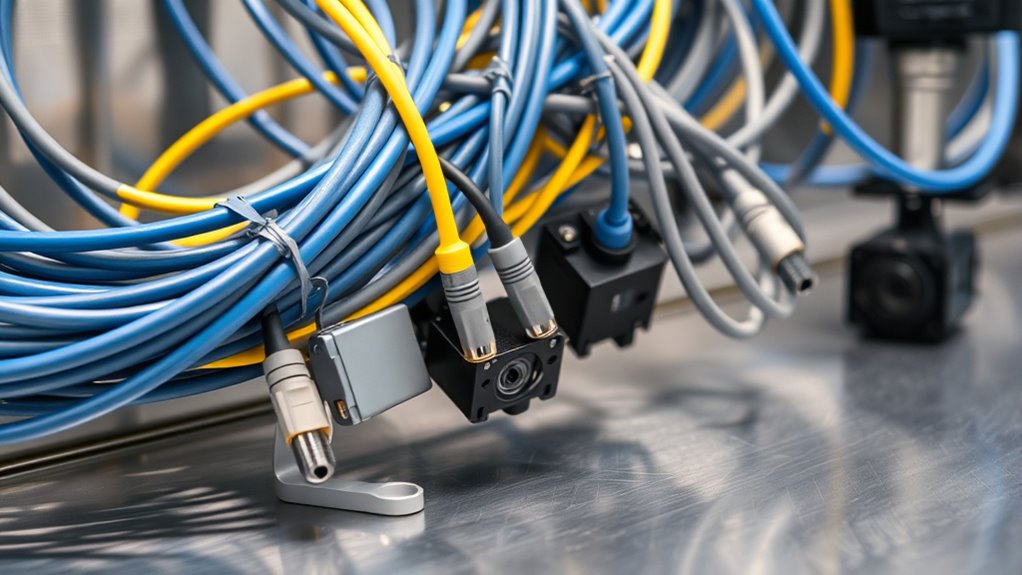
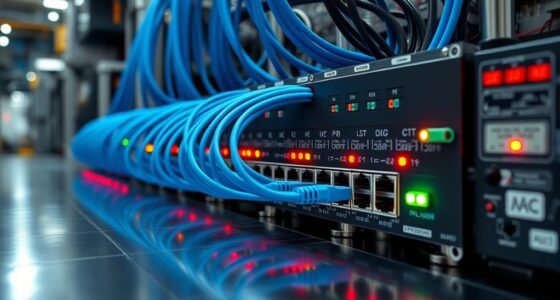
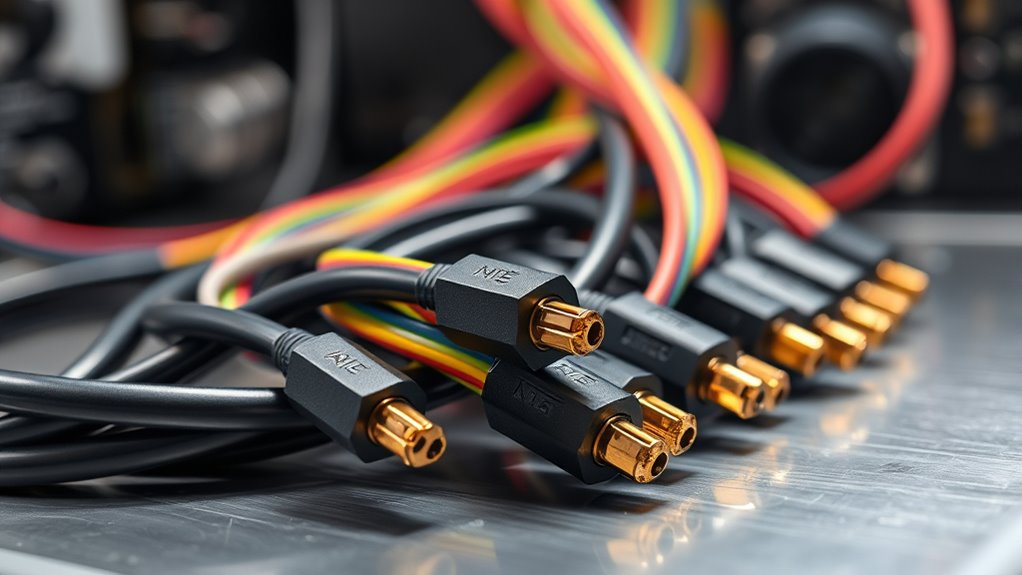
Effective cabling is fundamental for the reliable performance of machine vision systems, as it guarantees seamless data transfer and stable power supply. When setting up these systems, choosing the right cabling infrastructure can make all the difference in achieving high-speed processing and consistent operation. Fiber optics are a popular choice because they provide high bandwidth and immunity to electromagnetic interference, ensuring your system’s data remains fast and secure even in electrically noisy environments. With fiber optics, you can transmit large volumes of image data over long distances without loss in quality, which is essential when your machine vision setup spans multiple stations or a large factory floor. Their durability and low signal attenuation mean fewer disruptions and maintenance, ultimately saving you time and money.
Reliable machine vision relies on high-quality cabling like fiber optics for seamless data and power transfer.
In addition to fiber optics, power over Ethernet (PoE) technology plays a critical role in simplifying your wiring setup. PoE allows both data and power to run through a single Ethernet cable, reducing clutter and easing installation. This is particularly advantageous in environments where running separate power lines would be challenging or costly. By leveraging PoE, you guarantee your cameras and sensors receive consistent power and data connectivity, which minimizes downtime and maintains system reliability. It also means you can easily add or relocate components without extensive rewiring, making your system more flexible and scalable.
When combining fiber optics with PoE, you create a robust infrastructure that maximizes system stability and efficiency. Fiber optics handle the heavy data transfer, while PoE supplies the necessary power with minimal cabling. This synergy simplifies maintenance and troubleshooting since you have fewer physical connections and points of failure. Furthermore, many modern network switches support PoE, so integrating these systems becomes straightforward, even in complex setups.
You should also consider the environmental conditions when selecting cabling. Fiber optics are well-suited for harsh environments due to their resistance to moisture, chemicals, and temperature fluctuations. Similarly, PoE devices are designed to operate reliably under various conditions, ensuring your machine vision system remains operational even in demanding industrial settings. Properly shielding cables and using high-quality connectors further enhances performance and longevity. Additionally, understanding the importance of appropriate cabling standards can help ensure compliance and optimal system performance.

USB C Fiber Optic Cable 50 FT, 10Gbps Active Optical USB C Cable with German SiliconLine Chip, USB 3.2 Gen2 Long Distance for Machine Vision,Logitech 4K Camera,VR/AR,Video Conference,Industrial System
10Gbps Active USB C Cable: This fiber optic usb c to usb c cable is engineered with the…
As an affiliate, we earn on qualifying purchases.
As an affiliate, we earn on qualifying purchases.
Frequently Asked Questions
What Are the Key Differences Between Fiber Optic and Copper Cabling?
Fiber optic cables offer higher bandwidth and longer-distance transmission with minimal signal loss, giving you clear advantages in high-speed machine vision systems. In contrast, copper cabling has limitations like susceptibility to electromagnetic interference and shorter reach, which can affect performance. You’ll find fiber optics ideal for demanding setups, while copper remains suitable for shorter, less complex connections. Choosing wisely guarantees your system runs smoothly and efficiently.
How Does Cable Length Affect Data Transmission Quality?
As your cable length stretches, it’s like a river that starts to lose its flow—signal quality diminishes, and data transmission suffers. Longer cables are more vulnerable to electromagnetic interference, causing ripples in your signal’s clarity. To keep your data flowing smoothly and maintain signal integrity, keep cables as short as possible or choose higher-quality shielding. This way, your machine vision system stays sharp, precise, and interference-free.
What Are the Best Practices for Protecting Cables From Environmental Hazards?
You should use cables with proper shielding to prevent electromagnetic interference and guarantee signal integrity. Additionally, apply environmental sealing, such as protective sleeves or conduits, to guard against moisture, dust, and chemicals. Regularly inspect your cables for damage and replace worn shielding or seals promptly. This proactive approach helps maintain reliable data transmission and extends cable lifespan in challenging environments.
How Do Power Requirements Influence Cabling Choices?
Your power requirements are the backbone of your cabling choices, shaping everything from cable insulation to overall system efficiency. If you neglect this, your setup could be as fragile as glass, risking failure. Focus on power optimization to ensure minimal energy loss and reliable operation. Use high-quality cables with proper insulation to handle voltage loads safely, preventing overheating and damage. Prioritize these factors to keep your vision system running smoothly and safely.
What Are the Latest Advancements in Machine Vision Cabling Technology?
You should explore the latest advancements like wireless connectivity and modular cabling, which greatly enhance machine vision system flexibility. Wireless options reduce clutter and simplify installation, while modular cabling allows quick upgrades and easy maintenance. These innovations improve data transfer speeds, reliability, and system scalability, helping you optimize your setup. Staying updated on these technologies guarantees your machine vision system remains efficient, adaptable, and ready for future demands.

TP-Link LS108GP | 8 Port PoE Gigabit Ethernet Switch | 8 PoE+ Port @ 62W | Plug & Play | Extend Mode | PoE Auto Recovery | Desktop/Wall Mount | Silent Operation
𝗙𝘂𝗹𝗹 𝗚𝗶𝗴𝗮𝗯𝗶𝘁 𝟴-𝗣𝗼𝗿𝘁 𝗣𝗼𝗘 𝗖𝗼𝗻𝗳𝗶𝗴𝘂𝗿𝗮𝘁𝗶𝗼𝗻 – 8 PoEplus (802.3at/af) Gigabit RJ45 providing up to 30W per port and…
As an affiliate, we earn on qualifying purchases.
As an affiliate, we earn on qualifying purchases.
Conclusion
By choosing the right cabling, you guarantee reliability, enhance performance, and boost longevity. By prioritizing quality, you prevent downtime, reduce maintenance, and build resilience. By adhering to standards, you protect investments, simplify troubleshooting, and foster confidence. Your commitment to proper cabling creates a system that’s robust, scalable, and dependable. In doing so, you pave the way for seamless operation, flawless results, and ongoing success in your machine vision applications.
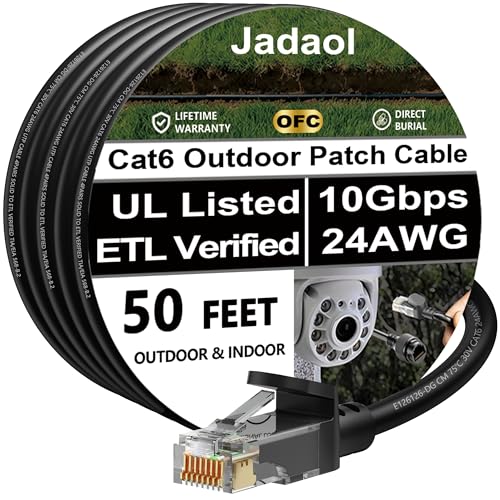
Cat6 Outdoor Ethernet Cable 50ft, 24AWG 10Gbps Support Cat8/7 Network, Pure Copper, Direct Burial Waterproof Underground Anti-UV (1Ft 3Ft 5Ft 10Ft 15Ft 20Ft 30Ft 40Ft 50Ft 60Ft 75Ft 100Ft 150ft 200ft)
【High-Speed 10Gbps Performance】: Achieve data transmission speeds of up to 10Gbps with our Cat6 round Ethernet Cable. Designed…
As an affiliate, we earn on qualifying purchases.
As an affiliate, we earn on qualifying purchases.

HangTon Data Transmission Ethernet Cable for Allied Vision Basler Baumer Cognex Dalsa HikRobot iDS Jai Imaging Camera to Vision System, GigE RJ45 Locking Screw to RJ45, Drag Chain, Flexible PVC 50m
Gigabit Ethernet Cat6A RJ45 cable for connecting a industrial GigE camera and image frame grabber to a vision…
As an affiliate, we earn on qualifying purchases.
As an affiliate, we earn on qualifying purchases.