
TL;DR

Get business pricing on networking and server gear
- Business-only prices and quantity discounts
- Tax-exempt purchasing
- Multiple users, one account, clear invoices
E.ON Chief Quantum Scientist Corey O’Meara described the utility’s five-person quantum computing program and its work exploring energy-sector applications, including peer-to-peer trading. He said E.ON does not expect near-term return on investment and is preparing for potential applications when fault-tolerant quantum computers become available.
E.ON’s five-person quantum computing team is investigating applications in energy trading and grid-related optimization, but the utility does not expect near-term commercial returns, Chief Quantum Scientist Corey O’Meara said in an interview published October 10 by The Quantum Insider. His account offers a view of how a major European energy company is building expertise ahead of quantum systems that can run more powerful, fault-tolerant computations.
O’Meara said he technically leads E.ON Digital Technology’s applied quantum computing program. The team began around 2020, after interest in quantum computing reached the company’s board and staff in its data and AI department developed a proof of concept tied to a business use case. It has since gained internal and external funding and broader support, he said.
The team is exploring where quantum methods might help with business problems, including peer-to-peer energy trading and other grid applications. O’Meara described optimization and machine learning as areas where conventional approaches can encounter bottlenecks, while stressing that finding suitable problems requires detailed work with business units and engineers who understand the systems involved.
He said E.ON’s leadership understands that fault-tolerant quantum computing is still years away and that the company sees no immediate return on investment. The interview also covered cloud access and hybrid deployment, but the supplied transcript excerpt does not provide detailed implementation plans or performance results from E.ON’s projects.
Preparing Energy Firms for Quantum Use
E.ON’s approach highlights a practical challenge facing utilities: identifying valuable computational problems before quantum hardware can reliably solve them at scale. Grid operations involve complex decisions, and any future advantage would need to be shown against strong classical methods on relevant tasks—not inferred from the use of quantum technology alone.
O’Meara’s emphasis on educating management and working with domain engineers points to the organizational work required alongside technical development. Building that knowledge takes time, which may matter if useful fault-tolerant machines arrive, but the interview does not report a demonstrated quantum advantage or a commercial deployment.
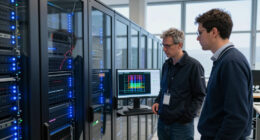
quantum computing hardware for energy grid optimization
As an affiliate, we earn on qualifying purchases.
As an affiliate, we earn on qualifying purchases.
E.ON’s Program Since 2020
O’Meara traced the program’s origins to 2019 and 2020, when quantum computing was gaining attention in industry. E.ON’s board asked its data and AI department to examine the technology; O’Meara, who said he had completed a PhD in quantum computing, helped develop an initial proof of concept.
He described the current group as five full-time employees. Its remit is to work across the company to locate potential applications, rather than to treat quantum computing as a ready-made replacement for existing systems. The source interview discusses the team’s direction and expectations, not validated benchmark comparisons or quantified business outcomes.
“We’re five full-time employees on the project and the team. And we started in around 2020.”
— Corey O’Meara, E.ON Digital Technology chief quantum scientist, in The Quantum Insider interview
As an affiliate, we earn on qualifying purchases.
No Results or Timeline Yet
The interview does not identify a specific E.ON grid problem that has achieved a quantum advantage, nor does it provide test results, cost comparisons, or projected savings. It is also unclear which quantum hardware providers or algorithms the team is using for particular applications.
O’Meara said fault-tolerant computing remains some years away, but gave no firm arrival date. The source material does not establish when E.ON expects a use case to move from research into operational deployment, or whether any current project has progressed beyond exploration and proof-of-concept work.
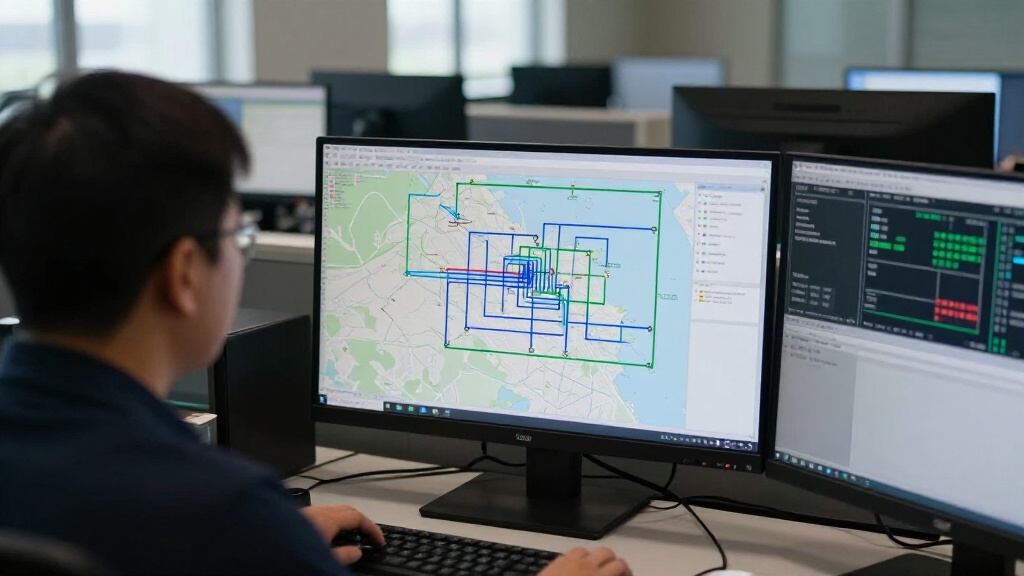
energy trading optimization software
As an affiliate, we earn on qualifying purchases.
As an affiliate, we earn on qualifying purchases.
Use-Case Testing and Hardware Progress
E.ON’s stated work is to continue collaborating with business units and engineers to locate problems where quantum methods could offer a measurable advantage. The next meaningful evidence would be published or independently reviewable results comparing a quantum or hybrid approach with classical methods on a defined energy-sector task.
For now, the company’s program remains focused on building capability and preparing for future hardware. O’Meara did not announce a deployment date or a new project milestone in the interview, so the timing of any commercial application remains open.
As an affiliate, we earn on qualifying purchases.
Key Questions
What did E.ON announce?
The source is an interview, not a new product or deployment announcement. E.ON Chief Quantum Scientist Corey O’Meara described the company’s five-person applied quantum team and its exploration of energy-related use cases.
Is E.ON already using quantum computers to optimize the grid?
The interview discusses research and potential applications, including grid-related work and peer-to-peer energy trading. It does not confirm an operational quantum grid-optimization system or report measured results.
When does E.ON expect a return on investment?
O’Meara said E.ON does not expect immediate ROI and is waiting for further progress toward fault-tolerant quantum computing. He did not give a specific date for returns or deployment.
How large is E.ON’s quantum team?
O’Meara said the team has five full-time employees and began around 2020.
Source: rss
Halloween Picks
halloween
As an affiliate, we earn on qualifying purchases.