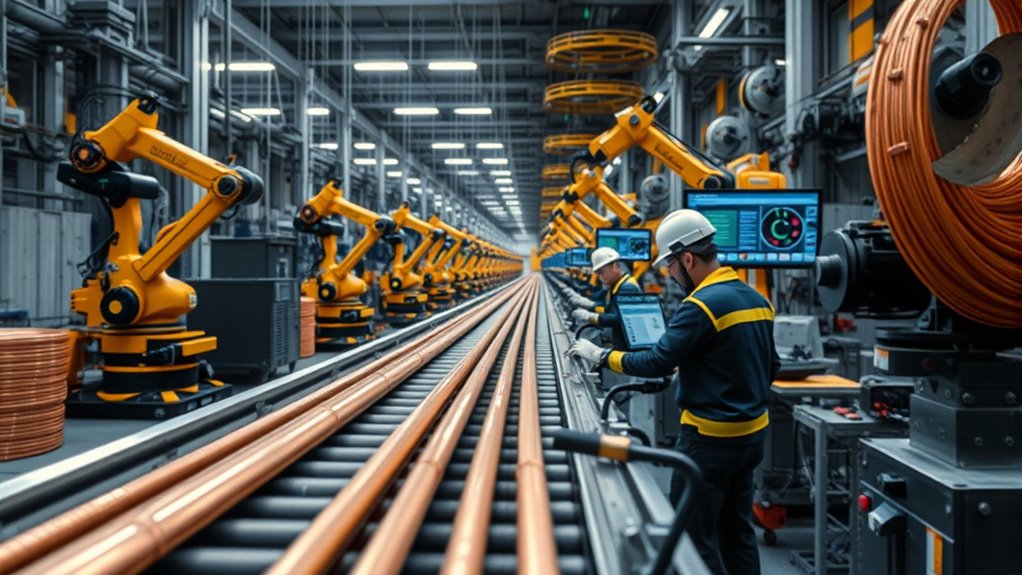

Have you ever wondered how cable manufacturers balance fluctuating raw material costs with competitive pricing? The economics behind cable production is a complex dance involving supply chain management, raw material availability, and market demand. Small changes in the price of copper or plastic can profoundly impact profitability. Understanding these factors reveals how companies stay afloat amid market shifts and technological advances—an insight worth exploring if you want to grasp the true challenges of the industry.
Key Takeaways
- Raw material costs, such as copper and plastic, significantly influence manufacturing expenses and profit margins.
- Supply chain reliability and diversification reduce disruptions, helping control costs and maintain steady production.
- Pricing strategies balance competitiveness with profitability, considering market demand, customer expectations, and cost structures.
- Technological advancements can lower production costs, enabling competitive pricing and improved profit margins.
- Market demand and industry standards shape product pricing, impacting revenue and overall economic sustainability.
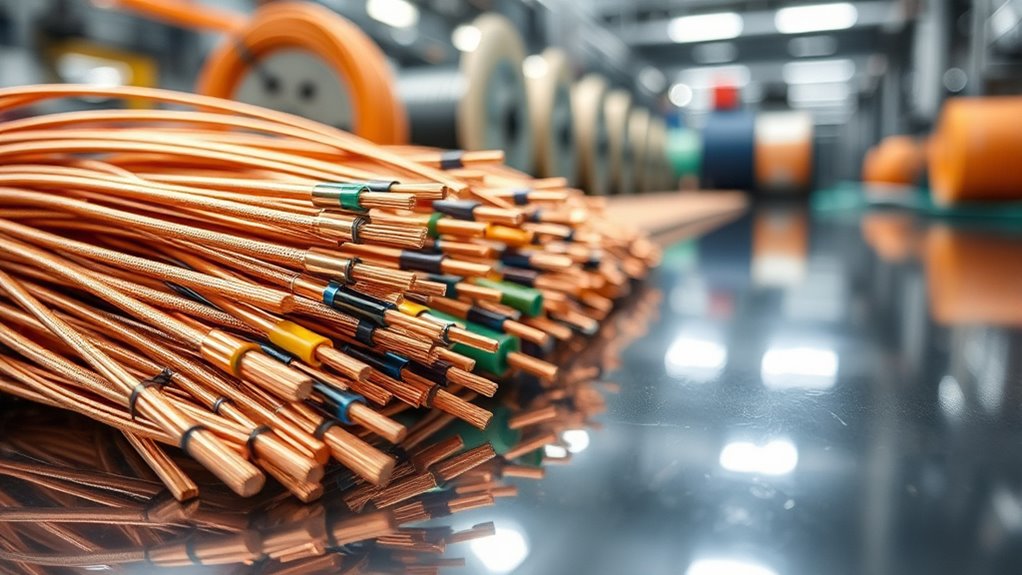
Understanding the economics of cable manufacturing is essential for anyone involved in the industry, as it directly impacts profitability and competitiveness. At the core of this understanding lies the complex web of supply chain dynamics. You need to be aware of how raw materials flow from suppliers to your manufacturing plant, as delays or disruptions can substantially increase costs and lead times. For example, shortages of copper or plastic can cause price spikes, forcing you to adjust your procurement strategies. Maintaining strong relationships with reliable suppliers and diversifying your sources helps mitigate these risks, ensuring a steady flow of materials. Additionally, keeping a close eye on inventory levels prevents overstocking or stockouts, both of which can harm your bottom line. Recognizing the importance of raw material availability can help you better anticipate market fluctuations and plan accordingly.
Supply chain management and raw material sourcing are crucial for profitable, resilient cable manufacturing.
Pricing strategies are another crucial aspect that influences your financial health. You must strike a balance between competitive pricing and maintaining healthy profit margins. If you set prices too low, you might attract more customers but risk eroding your profits or even losing money on each unit sold. Conversely, pricing too high can push customers toward competitors, especially in a market where quality and cost-effectiveness are key. To optimize your pricing strategies, you need to analyze production costs meticulously, including raw materials, labor, and overhead. Understanding your cost structure allows you to determine the minimum price you can charge without incurring losses and to identify opportunities for premium pricing on specialized or high-performance cables.
Furthermore, market demand and customer expectations influence your pricing decisions. For instance, in sectors like telecommunications or construction, the demand for durable, high-quality cables can justify premium pricing. Conversely, commodity cables may require more aggressive pricing strategies to stay competitive. You also need to weigh how technological advancements and industry standards impact your costs and pricing. Investing in new manufacturing processes might increase initial expenses but can reduce long-term costs and improve product quality, enabling you to command higher prices.
In this landscape, understanding supply chain dynamics and crafting effective pricing strategies aren’t standalone tasks—they’re interconnected. A disruption in your supply chain can increase costs, forcing you to reconsider your pricing approach. Similarly, your pricing decisions can influence procurement choices and inventory management. Staying adaptable and informed about market trends, raw material costs, and technological developments equips you to navigate these challenges successfully. Ultimately, mastering these aspects ensures you can sustain profitability and maintain a competitive edge in the ever-evolving cable manufacturing industry.
Top picks for "economic cable manufactur"
Open Amazon search results for this keyword.
As an affiliate, we earn on qualifying purchases.
Frequently Asked Questions
How Do Raw Material Prices Influence Cable Manufacturing Costs?
You’ll find that raw material prices greatly impact your cable manufacturing costs. Raw material volatility and commodity price trends can cause sudden increases or decreases in expenses. When raw material costs rise due to market shifts, your production costs go up, squeezing profit margins. Conversely, falling commodity prices help lower costs, but unpredictability makes planning tricky. Staying aware of market trends allows you to better manage costs and adjust pricing strategies accordingly.
What Are the Key Economies of Scale in Cable Production?
Think of your factory as a mighty river, growing stronger with volume consolidation. As you increase production, you benefit from economies of scale, lowering per-unit costs. This growth enhances your supplier bargaining power, enabling you to negotiate better prices and terms. The larger your output, the more streamlined your operations become, making your business more resilient and competitive, much like a river that carves deeper channels as it swells.
How Does Technology Adoption Impact Cable Manufacturing Efficiency?
You see, technology adoption boosts cable manufacturing efficiency by streamlining processes through automation integration and innovation adoption. When you incorporate automation, you reduce manual labor costs, minimize errors, and speed up production. Embracing new innovations allows you to stay competitive and improve product quality. Overall, adopting advanced technology helps you cut costs, increase output, and respond more swiftly to market demands, making your manufacturing process more efficient and profitable.
What Are the Main Environmental Regulations Affecting Cable Manufacturing?
Environmental regulations, like emission standards, act as strict gatekeepers for cable manufacturing. You must prioritize environmental compliance by reducing hazardous waste and limiting air emissions. These rules are as essential as a compass guiding sustainable practices, ensuring your operations stay within legal limits. Meeting emission standards not only protects the environment but also enhances your company’s reputation, making it indispensable to stay updated and adapt to evolving environmental policies.
How Does Global Trade Affect Cable Manufacturing Supply Chains?
Global trade influences your cable manufacturing supply chains through international tariffs and trade agreements. When tariffs rise, your costs increase, making it harder to compete. Trade agreements can streamline import/export processes, reducing delays and costs. You need to stay informed about changing policies to adjust sourcing strategies quickly. Steering these trade dynamics helps you maintain efficiency and competitiveness in a global marketplace, ensuring your supply chain remains resilient and adaptable.
Conclusion
So, there you have it—mastering the thrilling world of cable manufacturing is all about juggling raw material prices, supply chain chaos, and the art of pretending quality doesn’t matter. Just keep those costs down, prices up, and hope your competitors don’t catch on. After all, who knew that turning copper and plastic into profit was such a high-stakes game of economic chess? Happy cable crafting—may your margins be ever in your favor!