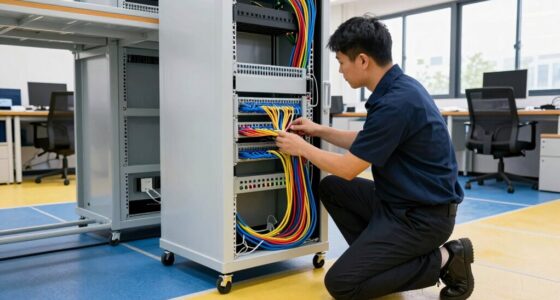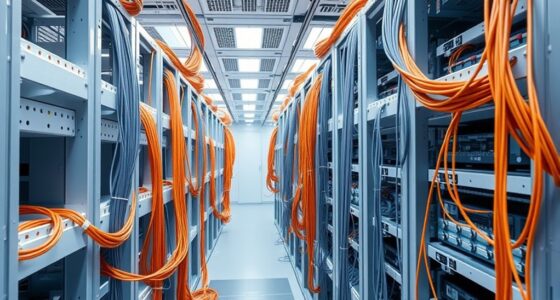
To avoid damage while pulling cable, you need to manage tension carefully using proper tools like tension meters and tools to monitor force in real-time. Keep tension within manufacturer limits, especially around bends and through conduits, to prevent insulation damage. Reducing friction with lubricants and smooth surfaces also helps. Understanding your cable’s material and tension limits ensures safe, efficient pulls. Continue exploring to learn how to fine-tune your process for ideal results.

Get business pricing on networking and server gear
- Business-only prices and quantity discounts
- Tax-exempt purchasing
- Multiple users, one account, clear invoices
Key Takeaways
- Use tension meters to monitor pulling force and stay within manufacturer-specified limits.
- Reduce friction with lubricants and smooth conduit surfaces to prevent excessive tension.
- Adjust pulling techniques during installation to avoid sudden tension spikes.
- Consider cable type, length, and bend radius to determine safe tension levels.
- Proper planning and steady pulling help protect insulation and ensure long-term cable integrity.

Cable pulling tension is a critical factor that directly affects the safety and efficiency of your installation process. When you pull cable with too much tension, you risk damaging the insulation, which can lead to costly repairs and safety hazards down the line. To prevent this, you need to understand how to properly manage tension during installation. The key lies in accurate tension calculation, which helps you determine the best pulling force that keeps the cable safe without compromising its integrity.
Performing tension calculation is essential because it considers various factors such as cable type, length, bend radius, and the pulling method you plan to use. By calculating the appropriate tension, you ensure that you’re not applying excessive force that could crush or crack the insulation. Keep in mind that different cables have different maximum pulling tensions specified by manufacturers. Ignoring these limits can result in insulation damage, weakening the cable’s protective layer and exposing conductors to environmental risks or electrical faults.
Before starting your pull, always review the manufacturer’s specifications for the cable. This information provides the maximum tension it can withstand without damage. Use a tension meter or a dynamometer to monitor the force as you pull. This real-time feedback allows you to stay within safe limits and adjust your pulling technique if necessary. Remember that pulling too fast or using excessive force can cause sudden spikes in tension, increasing the risk of damage. It’s better to use slow, steady pulls, especially around bends or through conduit sections, where tension tends to increase.
Another important aspect is managing friction, which directly impacts tension calculation. The more friction present in the conduit or pathway, the higher the tension required to move the cable. To reduce friction, you can use lubricants or smooth out rough surfaces inside the conduit. This not only makes the pulling process smoother but also minimizes the risk of insulation damage caused by jerks or sudden pulls. Additionally, understanding the material properties of the cable can help you select the best techniques for minimizing tension and protecting the insulation during installation.
Products Worth Considering

Amazon Kindle Scribe Colorsoft 64GB (1st Generation)

Apple iPad Air 13-inch (M4), 128GB, Wi-Fi 7, Space Gray

Jackery Explorer 300 Portable Power Station, 292Wh
As an affiliate, we earn on qualifying purchases.
Frequently Asked Questions
How Do Environmental Factors Affect Cable Pulling Tension?
Environmental conditions notably impact your cable pulling tension, especially when you consider the cable material. Extreme temperatures, moisture, or chemical exposure can weaken the cable, making it more susceptible to damage under tension. You should account for these factors by adjusting your pulling methods accordingly. Properly protecting the cable from harsh environmental conditions helps maintain ideal tension levels, preventing damage and ensuring a safe, efficient installation process.
What Are the Signs of Excessive Tension During Pulling?
You’ll notice signs of excessive tension during pulling, such as tension overload and increased pulling resistance. If the cable suddenly resists movement or the pulling effort feels unusually high, these are clear indicators that tension might be too high. You might also see cable deformation or damage, or hear unusual noises. Always monitor the pulling process closely to prevent damage from excessive tension and adjust your efforts accordingly.
How Often Should Tension Be Monitored During Installation?
Think of tension monitoring like tuning a guitar; you check regularly to keep the sound right. During installation, you should monitor tension constantly, especially when pulling long distances or through complex pathways. Use cable slack to gauge if tension remains within safe limits and perform tension calibration often. Frequent checks help prevent damage, ensuring the cable stays flexible and intact, just like a well-tuned instrument producing perfect sound.
What Tools Can Help Measure Pulling Tension Accurately?
You can use tension gauges and digital dynamometers to measure pulling tension accurately. Tension gauges are simple, handheld tools that give quick readings, while digital dynamometers provide precise, real-time data, making them ideal for critical installations. By regularly using these tools during cable pulling, you guarantee tension stays within safe limits, preventing damage and ensuring the integrity of your installation. Always calibrate your tools for reliable measurements.
Can Improper Tension Cause Long-Term Cable Failure?
Yes, improper tension can cause long-term cable failure. Excessive tension leads to cable fatigue over time, weakening the material and increasing the risk of breakage. Conversely, uneven tension disrupts tension uniformity, causing stress concentrations that accelerate wear. Maintaining proper tension guarantees even load distribution, reducing fatigue and extending the cable’s lifespan. Regularly monitoring tension helps prevent these issues, safeguarding your cable installation’s durability and safety.
Conclusion
To keep your cables safe, always monitor pulling tension closely. Excessive tension can cause damage that’s costly to repair—studies show that 60% of cable failures are due to improper pulling techniques. By maintaining proper tension levels and using the right equipment, you prevent costly repairs and ensure reliable performance. Remember, a small investment in tension management today saves you from bigger headaches tomorrow. Stay vigilant and prioritize safety with every pull.