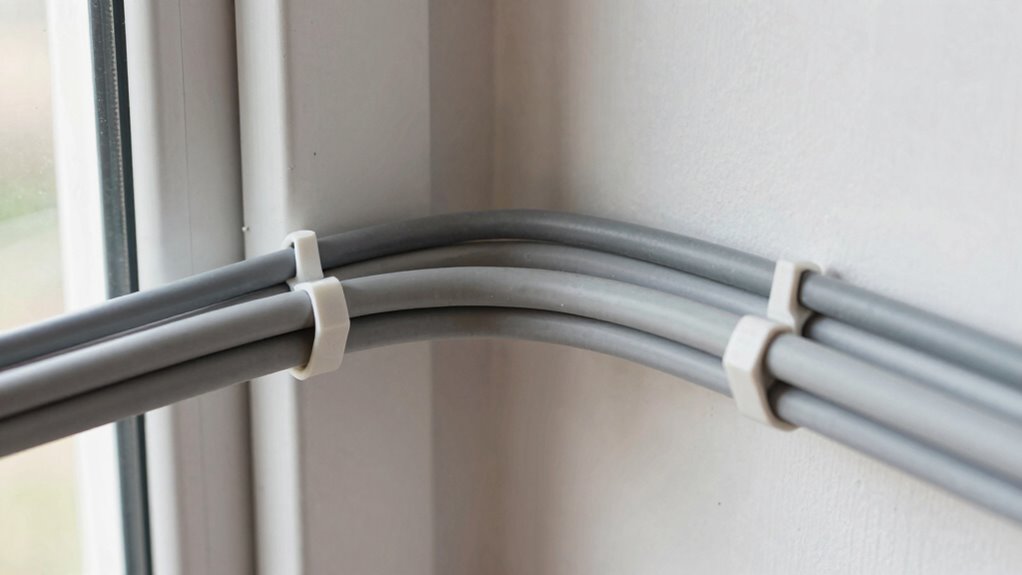

To reduce cable stress around doors and corners, plan your routing carefully by avoiding sharp bends and tight pulls. Use accessories like cable trays or clips to keep cables elevated and away from door hinges or frames. Leave enough slack to accommodate door movement and install gentle curves that mimic natural pathways. Regularly inspect your cables for signs of wear and adjust routes as needed. Keep exploring to learn more tips for maintaining safe, long-lasting cable setups.

Get business pricing on networking and server gear
- Business-only prices and quantity discounts
- Tax-exempt purchasing
- Multiple users, one account, clear invoices
Key Takeaways
- Leave ample space between cables and door hinges or frames to prevent tension.
- Use gentle, wide curves instead of sharp bends when routing cables around corners.
- Elevate cables away from door swing paths using clips or hooks for smooth movement.
- Incorporate flexible or retractable sleeves to accommodate door movement and reduce stress.
- Regularly inspect cables for wear and adjust routes proactively to maintain safety and longevity.
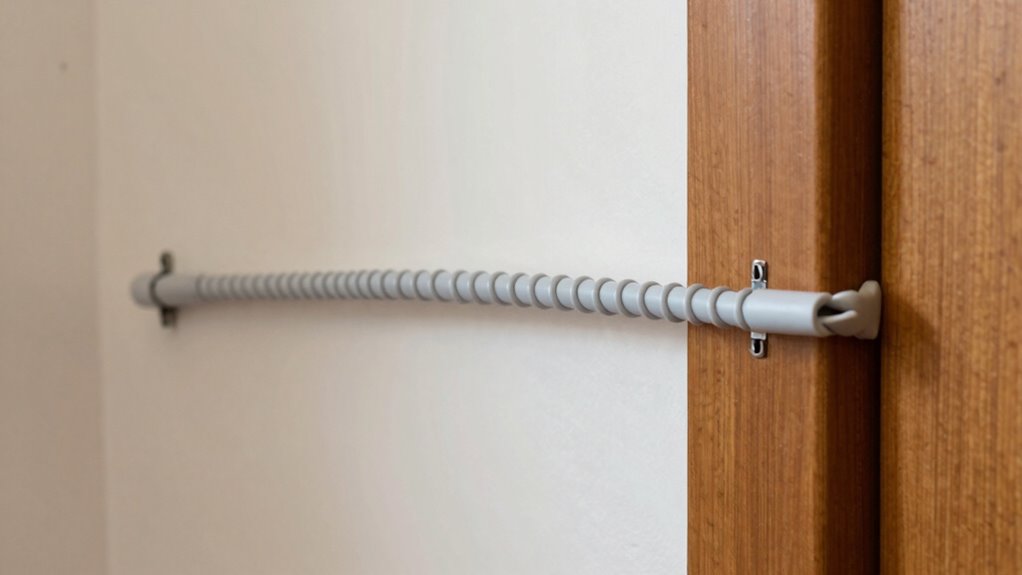
Have you ever noticed cables bending sharply or pulling tightly around doors and corners? If so, you’re probably aware of the stress this puts on your wiring and the potential damage it can cause. Proper cable management is vital to keep your cables safe, organized, and functional. When cables are forced into tight bends or pulled taut around obstacles like doors and corners, they experience stress that can lead to wear and tear, eventually causing failures or safety hazards. Addressing this issue means you need to focus on both cable management techniques and guaranteeing adequate door clearance.
Proper cable management and door clearance prevent damage and ensure safety and longevity of your wiring.
One of the most effective ways to reduce cable stress is to plan your cable routes carefully. Instead of letting cables snake around corners or get pinched between door frames, consider using cable management accessories like cable trays, conduits, or spiral wraps. These tools help guide the cables smoothly around corners, preventing sharp bends that can weaken the internal wiring. When cables are properly routed, they experience less strain, which prolongs their lifespan and maintains peak performance. Proper planning also involves understanding cable stress and how to minimize it through strategic placement.
Door clearance plays an essential role in protecting your cables from damage. If cables are routed too close to door hinges or frames, everyday door movements can cause them to bend sharply or even get caught. To prevent this, you should leave a clear space between the door and the cables, or elevate the cables away from the door’s swing path. Installing cable clips or hooks along the wall at a safe height ensures the cables stay out of the way when doors open and close. This simple step not only prevents stress but also enhances safety by avoiding tripping hazards or accidental disconnections. Additionally, proper planning for cable placement can help minimize unnecessary tension and reduce the risk of damage over time. Incorporating cable flexibility can also help accommodate door movement without stressing the cables.
Another practical approach involves using flexible or retractable cable sleeves. These sleeves allow cables to bend gently and accommodate door movements without applying excessive pressure. Additionally, using longer cables gives you more slack, reducing tension at critical points. When setting up your cable routes, avoid forcing them into tight corners or wrapping them around door frames; instead, use gentle curves that mimic natural pathways. This reduces localized stress points that could otherwise lead to cable failure.
Finally, regularly inspecting your cable routes helps identify problem areas before they become serious. Look for signs of wear, such as fraying or kinks, especially near doors and corners. Implementing effective cable management strategies and making adjustments as needed will help maintain smooth, safe pathways. By combining thoughtful cable management with proper door clearance strategies, you’ll ensure your cables stay protected, functional, and safe for years to come.
cable management clips for doors
As an affiliate, we earn on qualifying purchases.
As an affiliate, we earn on qualifying purchases.
Frequently Asked Questions
What Types of Cables Are Most Prone to Stress Damage?
You’ll find that flexible cables with thin insulation are most prone to stress damage, especially at stress points like doorways and corners. Cables with fragile insulation may crack or tear when bent repeatedly. To prevent this, choose cables with durable insulation and reinforce stress points with protective sleeves or cable organizers. Regularly inspecting and properly routing cables also helps reduce strain, ensuring your cables last longer and perform safely.
How Often Should I Inspect Cables Near Doors and Corners?
You should inspect cables near doors and corners monthly, visualizing their cable insulation like delicate armor protecting essential wiring. Use stress relief techniques during inspections—gently adjusting or repositioning cables to prevent tight bends. Look for fraying or cracks, and guarantee no sharp edges press against the cable. Regular checks help catch wear early, keeping your cables resilient and safe from damage, and guarantee smooth, uninterrupted connections.
Can Cable Stress Cause Safety Hazards or Electrical Failures?
Yes, cable stress can cause safety hazards or electrical failures. When the cable material is subjected to uneven stress distribution, it can weaken the cable over time, leading to potential breaks or shorts. Excessive stress around doors and corners increases the risk of damage, which might result in electrical failures or fire hazards. Properly managing stress distribution and using flexible cables helps guarantee safety and longevity.
Are There Specific Tools Recommended for Cable Management?
Think of managing cables like taming a wild river—you need the right tools to guide it smoothly. Cable clips are your trusty anchors, holding cables firmly against surfaces, preventing tangles and stress. Cable sleeves act like cozy blankets, protecting wires from abrasion and bending damage. Using these tools guarantees your cables stay neat, safe, and durable, making your setup not only functional but also a sight to behold.
How Does Cable Length Affect Stress Around Doorways?
Cable length directly impacts stress around doorways by influencing cable slack. If the cable is too short, it creates tension at stress points, risking damage or disconnection. Conversely, too much slack can cause tangling or snagging. To prevent this, leave enough cable length to accommodate door movement comfortably, ensuring there’s no excessive tension. Properly managing cable slack helps minimize stress points and prolongs cable lifespan.
flexible cable sleeves for doorways
As an affiliate, we earn on qualifying purchases.
As an affiliate, we earn on qualifying purchases.
Conclusion
By following these simple tips, you can considerably reduce cable stress around doors and corners, extending the lifespan of your cables and preventing costly repairs. Did you know that improper cable management can cause up to 40% of equipment failures? Taking a few extra minutes to organize and protect your cables not only saves you money but also keeps your setup safe and efficient. Stay proactive, and your cables will thank you for it!
cable trays for organized wiring
As an affiliate, we earn on qualifying purchases.
As an affiliate, we earn on qualifying purchases.
As an affiliate, we earn on qualifying purchases.
Halloween Picks
halloween
As an affiliate, we earn on qualifying purchases.