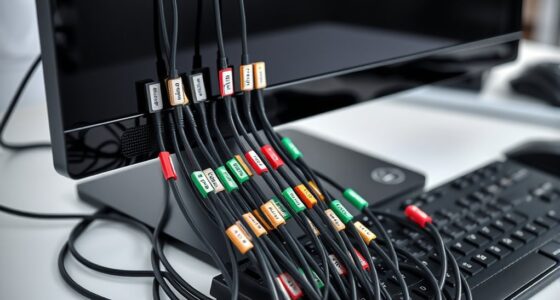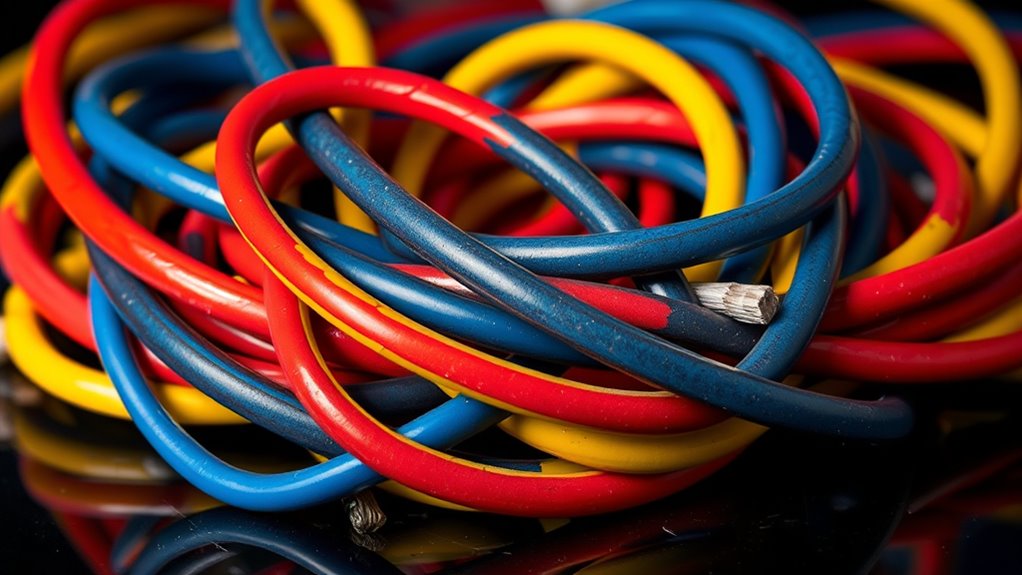

It’s easy to assume that more twists in a cable mean better quality, but that’s not always the case. While twisting can help reduce interference, excessive twists may actually weaken the cable’s internal structure and lead to early failure. If you want reliable performance, understanding what truly matters—materials, manufacturing standards, and design—becomes essential. The truth might surprise you, especially when considering how much is often overlooked in cable construction.

Get business pricing on networking and server gear
- Business-only prices and quantity discounts
- Tax-exempt purchasing
- Multiple users, one account, clear invoices
Key Takeaways
- Excessive twists can weaken internal structures and cause insulation cracking, not improve overall cable quality.
- Proper cable quality depends on materials and manufacturing standards, not solely on the number of twists.
- Optimal twist rates balance flexibility and interference reduction; more twists do not necessarily mean better performance.
- Well-designed cables with appropriate twists outperform heavily twisted, poorly manufactured ones.
- More twists may appear to enhance robustness but do not guarantee increased durability or signal integrity.

Have you ever wondered if more twists in a cable actually mean better quality? It’s a common belief that tightly twisted cables are more reliable, but that’s not always true. While twisting can influence some aspects of a cable’s performance, it’s not a straightforward indicator of quality. One thing to take into account is cable durability. A cable with more twists might seem more robust, but excessive twisting doesn’t necessarily make it more durable. Over-twisting can weaken the internal structure, cause insulation to crack, or lead to early failure. Instead, durability depends on the materials used, how well the cable is manufactured, and how it’s handled during its lifespan. Simply adding extra twists doesn’t make a cable inherently tougher; in fact, it can have the opposite effect if done improperly.
Another essential factor affected by twisting is signal interference. The idea behind twisting wires or cables is to reduce electromagnetic interference (EMI) and crosstalk between conductors. The more tightly twisted pairs are, the better they can cancel out external noise, which helps maintain signal integrity. However, this doesn’t mean that increasing the number of twists indefinitely improves signal quality. There’s an ideal twist rate designed to minimize interference without compromising flexibility or ease of installation. When twists are too tight, they can distort the cable, cause internal stress, and eventually lead to signal degradation. Conversely, if the twists are too loose, the cable becomes more susceptible to interference. So, the right balance is key—manufacturers carefully calibrate the twist rate to maximize performance, not simply to add more twists.
It’s also worth noting that cable quality depends on other factors beyond twisting, such as shielding, conductor quality, and insulation. A well-made cable with an appropriate twist rate can outperform a thicker, more heavily twisted cable that’s poorly manufactured. Additionally, manufacturing standards ensure that cables meet specific performance criteria, regardless of the number of twists. In essence, more twists don’t necessarily mean better quality; they’re just one part of a complex design that aims to balance durability, flexibility, and interference mitigation.
As an affiliate, we earn on qualifying purchases.
Frequently Asked Questions
Does Cable Twist Count Affect Audio or Video Clarity?
The cable twist count doesn’t substantially affect audio or video clarity. Instead, focus on cable aesthetics and manufacturing standards, which ensure quality construction and shielding. Higher twists can sometimes improve durability, but they don’t directly enhance signal transmission. Choose cables from reputable brands that follow strict manufacturing standards. Proper shielding and quality materials are key for clear audio and vivid video, regardless of twist count.
Are There Specific Twist Counts for Different Cable Types?
You’ll find that different cable types often have specific twist counts for guaranteed performance. For example, Ethernet cables typically use around 2-3 twists per centimeter, emphasizing twist uniformity for consistent signals. In cable manufacturing, this precision ensures minimal interference. Interestingly, a study shows that proper twist counts can reduce crosstalk by up to 50%, highlighting the importance of matching twist rates to cable type for the best audio and video clarity.
How Does Twist Density Impact Cable Durability?
Twist density directly impacts cable durability by balancing flexibility and strength. Higher twist densities can improve cable manufacturing standards, making cables more resistant to wear and tear. However, excessive twists may reduce flexibility, leading to potential breakage over time. You should choose a cable with an ideal twist density tailored to your needs, ensuring it remains durable while maintaining enough flexibility for your application.
Can Excessive Twisting Damage the Internal Conductors?
Excessive twisting can damage the internal conductors, reducing cable flexibility and risking breakage. When you twist a cable beyond manufacturing standards, you strain the internal wiring, causing potential fractures or insulation damage. Maintaining proper twist density guarantees your cable remains flexible, durable, and safe. Always follow manufacturer guidelines to prevent internal conductor damage, ensuring your cable performs reliably without compromising its integrity or longevity.
What Are the Signs of a High-Quality Twisted Cable?
You can tell a high-quality twisted cable by its twist uniformity and insulation integrity. The twists should be even and consistent throughout, ensuring reliable performance. Look for tightly wound twists without gaps or irregularities, and check that the insulation remains intact without cracks or signs of wear. These features indicate the cable is well-made, durable, and designed to maintain signal quality, regardless of the number of twists.
As an affiliate, we earn on qualifying purchases.
Conclusion
Remember, more twists aren’t the threads that weave quality into a cable’s fabric. Think of it like a tightly wound ball of yarn—too tight, and it risks snapping; too loose, and it falls apart. True quality lies in the careful craftsmanship, materials, and design, not in the number of twists alone. Focus on the artistry behind the cable, and you’ll find durability and performance, like a well-knit tapestry that holds strong through time.
As an affiliate, we earn on qualifying purchases.
interference reducing audio cable
As an affiliate, we earn on qualifying purchases.
As an affiliate, we earn on qualifying purchases.
Fall Picks
fall essentials
As an affiliate, we earn on qualifying purchases.