
Many people assume fiber optics always deliver faster internet than copper, but the truth might surprise you. While fiber generally offers higher speeds and better performance over long distances, factors like installation quality, hardware, and network configuration can markedly impact actual speeds. This means that a well-maintained copper connection could perform just as well in certain situations. Curious about what really determines internet speed and whether fiber always wins?
Key Takeaways
- Fiber optics generally offer higher speeds and bandwidth but depend on proper installation and equipment.
- Copper cables can sometimes match fiber speeds over short distances with advanced hardware.
- Installation complexity and quality significantly influence the actual performance of fiber versus copper.
- Signal interference affects copper wiring more, making fiber more reliable in noisy environments.
- The overall network setup, including hardware and configuration, determines whether fiber is always faster.
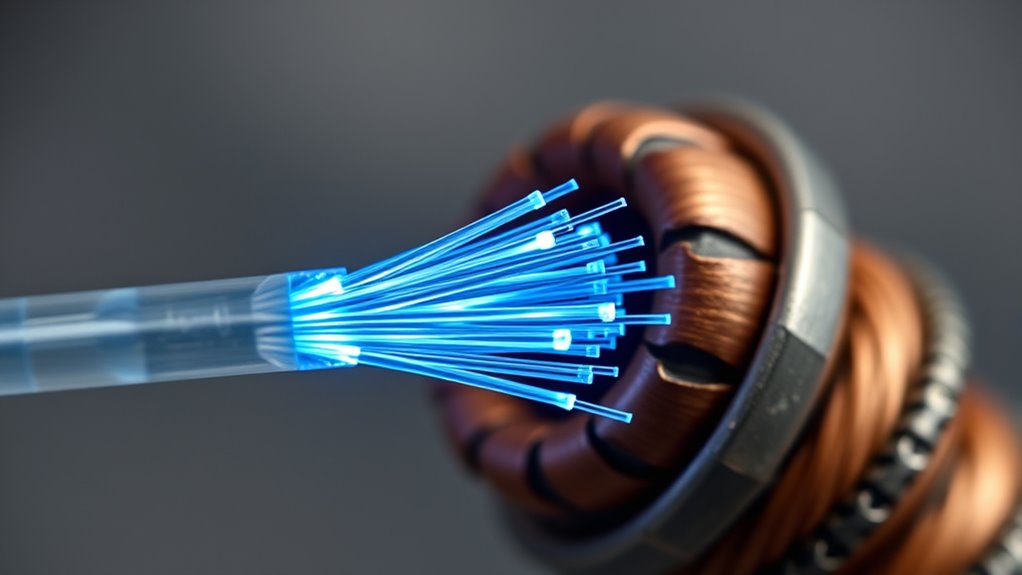
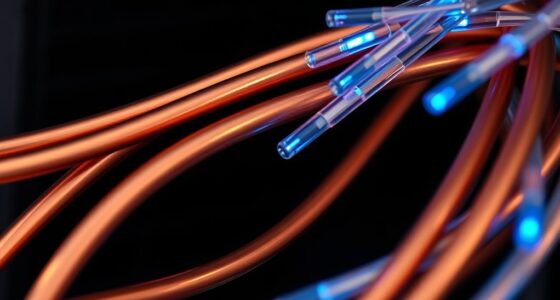
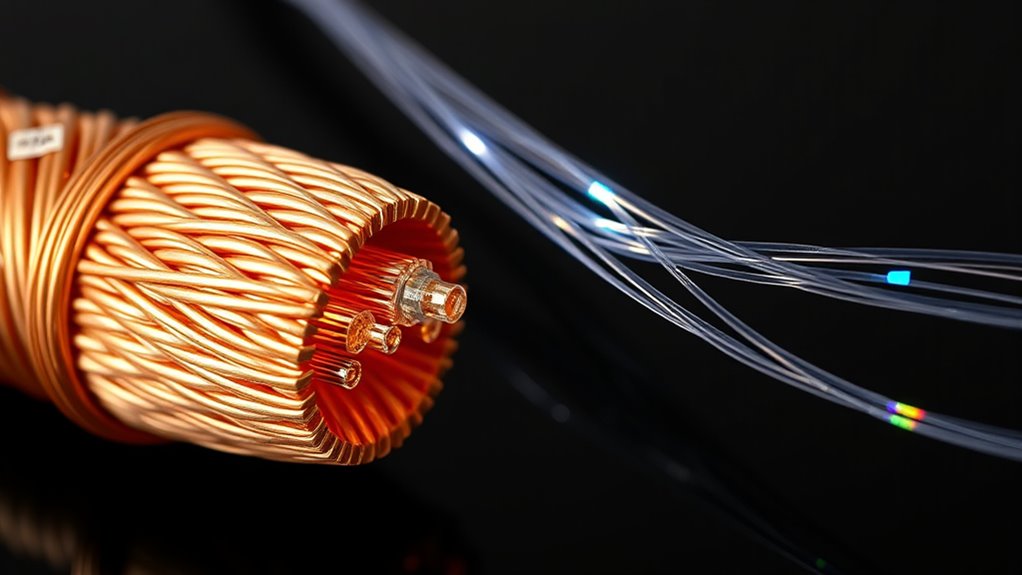
Many people assume that fiber optic connections are always faster than copper, but this isn’t necessarily true. While fiber optics generally offer higher bandwidth and faster speeds over long distances, several factors can influence actual performance. One key issue is signal interference. Copper cables are more susceptible to electromagnetic interference (EMI) from nearby electrical devices, radio signals, or power lines. This interference can cause signal degradation, resulting in slower speeds and less reliable connections. In contrast, fiber optic cables transmit data as pulses of light, making them immune to EMI and less prone to signal loss over distance. However, this advantage doesn’t automatically guarantee faster speeds in every scenario.
Another important aspect to take into account is installation complexity. Installing fiber optic cables can be more challenging and costly than copper wiring. Fiber installation requires specialized skills and equipment, including precise handling to prevent damage to the delicate glass or plastic fibers. In many cases, installation involves pulling new cables through existing conduits or drilling through walls, which can be time-consuming and disruptive. Copper wiring, on the other hand, is more straightforward to install, especially in existing infrastructure, and can often be done quickly and more affordably. If the installation process is complex or poorly executed, the expected speed benefits of fiber optics may be compromised or delayed, reducing their practical advantages. Additionally, the presence of proper safety standards and regulations during installation can impact the quality and longevity of the network setup.
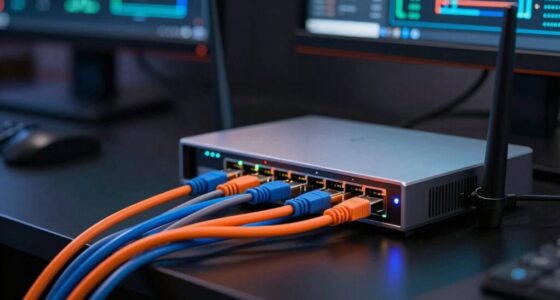
Furthermore, the type of network setup and equipment used can influence whether fiber optics truly outperform copper. For example, if your network relies on older or lower-quality hardware, the potential benefits of fiber may not be fully realized. Conversely, a well-designed copper network with advanced technology can sometimes match or approach fiber speeds over short distances.
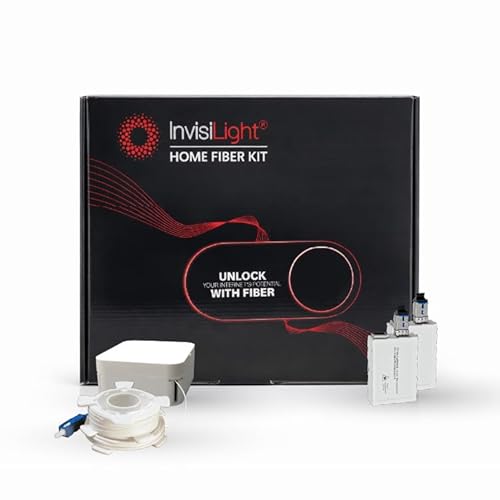
InvisiLight Home Fiber Kit: Wired Internet Where You Need It – Create a Nearly Invisible Wired Connection for Wi-Fi, Gaming, and More – Ultra-Thin 0.6mm Fiber, DIY Installation, Up to 1Gbps Speed
- Invisible Fiber Path: Connects devices discreetly without drywall damage
- Complete Installation Kit: Includes fiber, cables, converters, and tools
- Easy Plug-and-Play Setup: No configuration needed for quick installation
As an affiliate, we earn on qualifying purchases.
As an affiliate, we earn on qualifying purchases.
Frequently Asked Questions
Can Copper Cables Still Outperform Fiber in Short Distances?
Yes, copper cables can still outperform fiber in short distances. You’ll notice less signal attenuation over short runs, which helps maintain strong signal quality. Additionally, copper cables offer high bandwidth capacity for local connections, making them suitable for quick, short-range data transfer. While fiber excels over longer distances, copper remains a reliable choice for short-distance setups where speed and signal integrity are key.
How Does Installation Cost Compare Between Fiber and Copper?
You’ll find that installation costs for copper cables are generally lower upfront because they’re easier and quicker to set up, requiring less specialized equipment. However, fiber optic installation can be more expensive initially due to the need for specialized tools and training. Over time, upgrade expenses may favor fiber since it supports higher speeds and bandwidth, reducing future upgrade costs. So, consider your long-term needs when comparing installation costs.
Are There Specific Applications Where Copper Remains Preferable?
You’ll find copper still king in legacy systems where cost efficiency matters most. If you’re upgrading a long-standing setup, sticking with copper saves money and avoids the hassle of replacing decades-old infrastructure. Plus, for short-distance connections and low-bandwidth needs, copper’s simplicity and affordability outweigh fiber’s speed. So, while shiny new fiber dazzles, copper remains the pragmatic choice for specific applications where cost and compatibility take precedence.
Does Fiber Require More Maintenance Than Copper Wiring?
Fiber generally requires less maintenance than copper wiring because of its durability and resistance to corrosion. Unlike copper, which can corrode over time and need repairs, fiber optics are less affected by environmental factors. You’ll find fiber’s durability makes it a reliable choice for long-term use, reducing the need for frequent upkeep. So, overall, fiber tends to demand less maintenance compared to copper wiring.
How Does Signal Interference Affect Copper Versus Fiber?
Signal interference impacts copper wiring more than fiber optics because electromagnetic interference often causes signal degradation in copper cables. This interference leads to weaker signals and slower data transmission, especially over long distances. Fiber optics are immune to electromagnetic interference, ensuring a stronger, clearer signal. So, if you’re concerned about maintaining high-quality, interference-free communication, fiber optics offer a significant advantage over copper wiring.
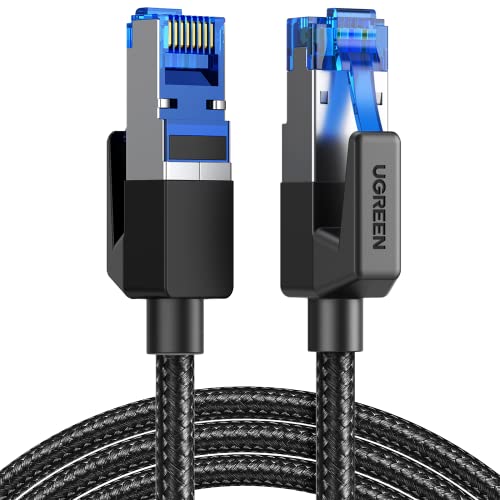
UGREEN Cat 8 Ethernet Cable 1.5FT, High Speed Braided 40Gbps 2000Mhz Network Cord Cat8 RJ45 Shielded Indoor Heavy Duty LAN Cables Compatible with Gaming PC PS5 PS4 PS3 Xbox Modem Router 1.5FT
- High-Speed Data Transfer: Supports 40 Gbps and 2000 MHz bandwidth
- Anti-Interference Design: Shielded F/FTP pairs with gold-plated connectors
- Durable and Flexible: Cotton braided exterior withstands 10,000 bends
As an affiliate, we earn on qualifying purchases.
As an affiliate, we earn on qualifying purchases.
Conclusion
Don’t be fooled into thinking fiber optics will turn your internet into lightning speed overnight. Even with fiber’s potential for blazing fast connections, a poor installation or outdated gear can turn your setup into a sluggish, clunky mess. Sometimes, a well-maintained copper network can surprisingly keep up, making you wonder if the myth of fiber’s unstoppable speed is just a flashy illusion. Remember, it’s not just the cable—it’s how you set it up that counts.

StarTech USB to Fiber Optic Converter, 100Mbps, 2Km, MMF
- Easy USB to Fiber Conversion: Compatible with USB-enabled computers
- High-Speed Data Transfer: 100Mbps over multi-mode fiber
- Long-Distance Connectivity: Supports 2 km fiber link
As an affiliate, we earn on qualifying purchases.
As an affiliate, we earn on qualifying purchases.

Cat6A Ethernet Cable Shielded 10Gbps 100 ft, Slim Shielded (F/UTP) Ethernet Cable Cat 6, Flexible 28AWG Bare Copper Cat6 Cable, Space-saving Cat 6a Network Cable for Server, Data Center, Black
- High-Speed Data Transfer: 10Gbps speed with 550MHz bandwidth
- Shielded for EMI Protection: Prevents electromagnetic interference in noisy environments
- Flexible and Slim Design: 50% more bendable with 4.5mm diameter
As an affiliate, we earn on qualifying purchases.
As an affiliate, we earn on qualifying purchases.