

As a network team, you need to understand that hybrid work increases cabling demand to support seamless connectivity, whether employees are on-site or remote. Reliable cabling infrastructure is essential for high bandwidth, wireless optimization, and future scalability while ensuring security and minimizing dead zones. Proper deployment of cabling and wireless devices forms a solid foundation for security measures and growth. If you want to learn more about adapting to these demands and best practices, keep exploring the details.

Get business pricing on networking and server gear
- Business-only prices and quantity discounts
- Tax-exempt purchasing
- Multiple users, one account, clear invoices
Key Takeaways
- Hybrid work increases demand for reliable, high-capacity cabling to support seamless connectivity and data transfer across diverse locations.
- Proper cabling infrastructure is essential for optimal placement and powering of wireless access points, reducing dead zones.
- Network teams must prioritize security-focused cabling solutions that support secure deployment of security devices and prevent tampering.
- Scalability and future-proofing cabling setups ensure capacity for growth and evolving technology needs in hybrid environments.
- Adhering to standards and thorough documentation streamline troubleshooting, upgrades, and compliance in dynamic hybrid work settings.
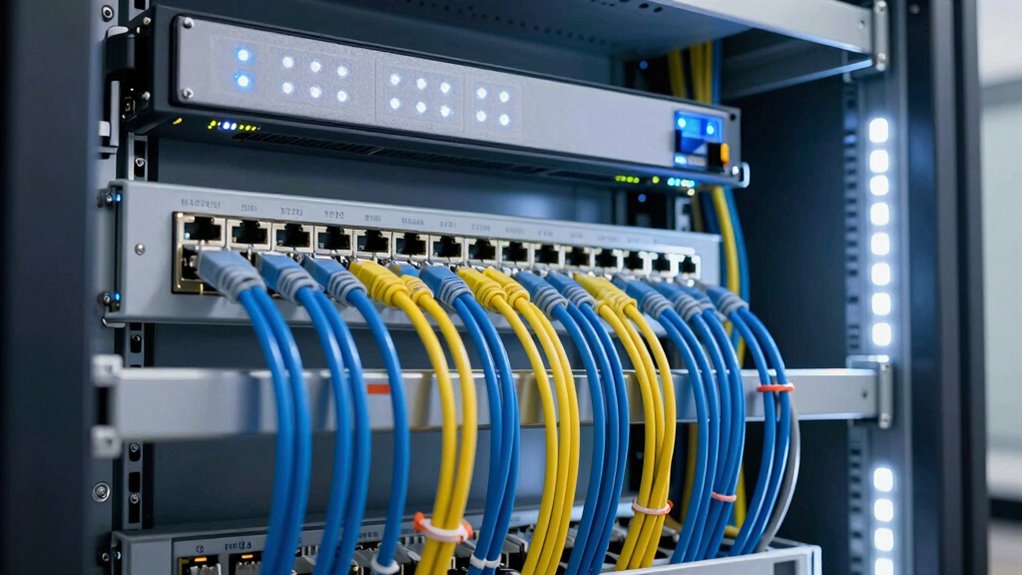
As more organizations adopt hybrid work models, network teams face the challenge of supporting both on-site and remote employees seamlessly. With employees split between office desks and home setups, your role involves guaranteeing reliable connectivity across diverse environments. This shift considerably impacts cabling demands, especially as wireless optimization becomes a top priority. While Wi-Fi has improved vastly, supporting a high density of users requires robust cabling infrastructure to back up wireless networks, especially in the office. You need to plan for sufficient bandwidth and high-quality cabling that can handle increased data loads, reducing bottlenecks and ensuring smooth, uninterrupted access. Ensuring color accuracy in your network equipment can also improve the reliability of visual communications and collaboration tools. Security protocols also take center stage in managing hybrid work environments. With employees accessing company resources from various locations, your network must be fortified against potential threats. Proper cabling supports these security measures by providing a solid physical foundation for deploying secure wireless access points, firewalls, and other security devices. You should prioritize cabling that can handle future upgrades and integrate seamlessly with security solutions, allowing your network to adapt swiftly to evolving threats. Additionally, secure cabling installations help prevent unauthorized access and physical tampering, which are critical concerns when employees work remotely or in shared spaces. Supporting hybrid work also means accommodating different device types and user needs. Employees might connect via laptops, smartphones, tablets, or IoT devices, all of which demand reliable wireless connections. Your infrastructure must be flexible enough to support wireless optimization, reducing dead zones and ensuring high signal strength throughout the workspace. Proper cabling ensures that wireless access points are correctly positioned and powered, maximizing coverage and network performance. This setup minimizes disruptions and enhances productivity, whether employees are in the office or working remotely. You’ll also need to evaluate scalability. As hybrid work continues to grow, your cabling infrastructure should be easily expandable to support new devices, increased traffic, and additional access points. Using high-quality cables and standardized installations makes future upgrades less cumbersome and more cost-effective. It’s equally important to maintain proper documentation and adhere to best practices for cabling and security protocols to protect your network from vulnerabilities and facilitate troubleshooting. Additionally, staying informed about cabling standards can help ensure your infrastructure meets industry benchmarks for safety and performance. Incorporating modern cabling solutions can further optimize your network’s efficiency and resilience in a hybrid environment. Furthermore, investing in future-proof cabling now can save significant costs and effort as your organization’s needs evolve.
As an affiliate, we earn on qualifying purchases.
Frequently Asked Questions
How Does Hybrid Work Impact Network Security Protocols?
Hybrid work impacts your network security protocols by increasing reliance on remote access, which requires robust authentication and secure VPNs. You need to prioritize data encryption to protect sensitive information transmitted over less secure networks. Implementing multi-factor authentication and monitoring remote connections become essential. These steps help you safeguard your data and maintain security standards, even as employees work from various locations and devices.
What Are the Cost Implications of Increased Cabling for Hybrid Setups?
Cabling costs climb cumulatively with increased demands, compelling you to contemplate careful cabling budget planning. As hybrid work expands, infrastructure upgrades become essential, often escalating expenses. You’ll face financing more fiber and flexible fittings, which can strain your budget. Strategically, you must balance basic bandwidth needs with future-proofing investments. By managing your cabling costs now, you reinforce reliable, robust network resilience for tomorrow’s hybrid work hurdles.
How Do Different Cabling Standards Support Hybrid Work Environments?
Different cabling standards, like Cat6, Cat6a, and fiber optics, support hybrid work environments by offering varied levels of hybrid compatibility. For instance, Cat6 provides reliable high-speed connections suitable for most remote setups, while fiber optics support greater bandwidth for large data transfers. By choosing appropriate standards, you guarantee your network infrastructure is flexible, scalable, and ready to handle both current and future hybrid work demands seamlessly.
What Training Is Needed for Network Teams Managing Hybrid Infrastructure?
Think of your team as navigators steering through a stormy sea—you need the right map. To manage hybrid infrastructure effectively, focus on training essentials like understanding cloud integration, Wi-Fi management, and security protocols. Skill development in troubleshooting, cabling standards, and remote network monitoring keeps your team afloat. Regular updates and hands-on practice guarantee you’re prepared for evolving technologies, turning challenges into opportunities on your networking voyage.
How Can Cabling Infrastructure Be Future-Proofed for Evolving Hybrid Needs?
To future-proof your cabling infrastructure, you should prioritize wireless flexibility and fiber scalability. Invest in high-quality fiber optic cables that can handle increased bandwidth demands and adapt to future upgrades. Incorporate flexible cabling solutions that support seamless wireless access point deployment, ensuring your network can evolve with hybrid work needs. Regularly assess your infrastructure and plan for scalable upgrades, so you stay ahead as hybrid work continues to grow.
network security cabling solutions
As an affiliate, we earn on qualifying purchases.
As an affiliate, we earn on qualifying purchases.
Conclusion
As the wise often remind us, adaptability is the hallmark of resilience. Embracing the evolving demands of hybrid work and cabling guarantees your network remains robust, like the enduring pillars of history. Stay proactive, anticipate future needs, and weave flexibility into your infrastructure. By doing so, you’ll not only meet today’s challenges but also stand prepared for the innovations of tomorrow—because, in this ever-changing landscape, foresight is your greatest asset.
wireless access point power cables
As an affiliate, we earn on qualifying purchases.
As an affiliate, we earn on qualifying purchases.
hybrid work network infrastructure
As an affiliate, we earn on qualifying purchases.
As an affiliate, we earn on qualifying purchases.
Halloween Picks
halloween
As an affiliate, we earn on qualifying purchases.