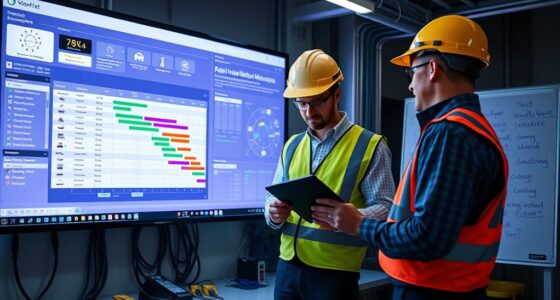
Evaluating your current infrastructure is about examining hardware, network architecture, and policies, and identifying vulnerabilities, performance issues, and areas for improvement. It’s an essential step before making any upgrades to guarantee compatibility, security, and scalability. Skipping this assessment can lead to costly mistakes or overlooked weaknesses. Understanding your existing systems helps you plan targeted, effective upgrades that support future growth. How do you start this important process?
Key Takeaways
- Evaluate hardware compatibility to ensure it supports new software updates and security features without performance issues.
- Conduct network assessments to verify bandwidth, latency, security, and support for cloud interactions.
- Review organizational policies and staff readiness to ensure alignment with cloud security standards and proper training.
- Assess existing security measures to confirm they meet requirements for cloud environments and distributed systems.
- Identify scalability and maintenance needs to plan targeted upgrades that enhance performance, security, and future growth.

Have you ever wondered how cities determine whether their infrastructure is up to the task? It’s a pivotal question, especially when considering upgrades that will support future growth and technology integration. The first step in this process involves a thorough evaluation of what’s already in place. You need to understand not just the current state but also how well your infrastructure aligns with emerging demands, such as cloud security and hardware compatibility. These factors play a critical role in guaranteeing your systems are resilient, scalable, and secure.
Start by evaluating your existing hardware. Are your servers, networking equipment, and storage systems compatible with the latest technologies? Hardware compatibility isn’t just about making sure devices can connect; it’s about confirming they can handle new software updates and security protocols without compromising performance. Outdated hardware may seem cost-effective initially, but it often becomes a bottleneck, limiting your ability to adopt cloud solutions or advanced security measures. You want your infrastructure to be flexible enough to integrate with cloud security frameworks that protect sensitive data across distributed environments. This means assessing whether your current hardware supports encryption, multi-factor authentication, and other security features essential for cloud-based operations.
Next, look at your network architecture. Is it designed to support cloud security measures? A robust network must facilitate secure data transmission and access controls, especially if you’re considering hybrid or multi-cloud setups. Check your bandwidth, latency, and redundancy options. If your network isn’t optimized for secure cloud interactions, you risk vulnerabilities or performance issues down the line. Conduct vulnerability scans and penetration tests to identify potential weaknesses, then compare these findings against cloud security best practices. This step helps you determine whether your existing security measures are sufficient or if upgrades are necessary.
Beyond hardware and network considerations, you should also examine your policies and procedures. Are they aligned with modern cloud security standards? Do your staff know how to manage and maintain secure systems? An infrastructure evaluation isn’t just technical; it’s also about understanding your organization’s readiness for change. If gaps are identified in security protocols or staff training, addressing these early on can prevent costly breaches or compliance issues later.
In essence, assessing your current infrastructure involves a comprehensive review of hardware compatibility, security readiness, network capacity, and organizational policies. It’s also important to evaluate filter maintenance practices, ensuring they align with manufacturer recommendations and industry best practices. This due diligence guarantees you’re not just upgrading for the sake of it but making targeted improvements that enhance performance, security, and future scalability. By taking these steps, you set a solid foundation for smarter, safer growth—making sure your infrastructure can handle whatever the future throws at it.

SHEGOTO CPU Socket Tester for AM5 CPU Socket Testing Board Diagnostic Tool for Desktop with LED Display and High Stability
Optimizes your testing accuracy with the Desktop CPU Socket Tester, design specifically for seamlessly compatibility for AM5 platforms…
As an affiliate, we earn on qualifying purchases.
As an affiliate, we earn on qualifying purchases.
Frequently Asked Questions
How Often Should Infrastructure Assessments Be Conducted?
You should conduct infrastructure assessments annually to keep your asset management up-to-date and guarantee safety. Regular assessments help identify potential issues early, allowing you to address risks proactively through risk analysis. If your infrastructure faces high traffic or harsh conditions, consider more frequent evaluations. Staying consistent with assessments enables you to plan upgrades efficiently, minimize downtime, and extend your infrastructure’s lifespan.
What Tools Are Best for Infrastructure Evaluation?
You should use tools like network mapping software and capacity analysis tools for infrastructure evaluation. Network mapping helps you visualize your entire network, identifying potential bottlenecks and vulnerabilities. Capacity analysis tools allow you to measure current performance and plan for future growth. Combining these tools gives you a thorough view of your infrastructure, ensuring you can make informed upgrade decisions and optimize performance effectively.
Who Should Be Involved in the Assessment Process?
Think of your assessment as a symphony—every stakeholder plays a vital role. You should involve IT teams, facility managers, finance experts, and end-users, ensuring stakeholder collaboration hits all the right notes. Set a clear assessment timeline to keep everyone on rhythm. By engaging these key players, you’ll gain an extensive view of your infrastructure’s health, making upgrades smoother and more effective.
How Do Assessment Results Influence Upgrade Planning?
Your assessment results directly influence your upgrade priorities and risk mitigation strategies. They highlight areas needing urgent attention, helping you allocate resources effectively. By understanding current vulnerabilities and performance gaps, you can plan upgrades that maximize efficiency and minimize risks. This ensures you address the most critical issues first, reducing potential disruptions and enhancing overall system resilience. Ultimately, data-driven insights guide you to make smarter, safer upgrade decisions.
What Are Common Challenges During Infrastructure Assessment?
You often face challenges like incomplete asset management data and limited access to critical infrastructure during assessments. These issues hinder accurate risk analysis and can lead to overlooked vulnerabilities. Additionally, outdated documentation and resource constraints slow down the process. To overcome these, prioritize data collection, involve experienced personnel, and use advanced tools to guarantee a thorough assessment, which ultimately guides effective upgrade planning and risk mitigation.

NetAlly CyberScope Air Wi-Fi Edge Network Vulnerability Scanner (Wireless Only Version). Validate Edge Infrastructure Hardening, Hunt Down Rogue Devices, Investigate Suspect RF Interference
Portable, handheld form factor – Take it anywhere for on-site security testing. This field-ready tool gives you visibility…
As an affiliate, we earn on qualifying purchases.
As an affiliate, we earn on qualifying purchases.
Conclusion
Don’t skip the assessment stage before upgrading your infrastructure. It might seem time-consuming, but skipping it risks costly mistakes, compatibility issues, or security gaps down the line. Taking the time now to evaluate your current systems guarantees your upgrades are targeted and effective, saving you money and headaches later. Investing in a thorough assessment isn’t just a step—it’s the foundation for a secure, scalable, and future-proof infrastructure you can rely on.

Securing Your World: Techniques, Tools, and Frameworks for Physical Security Testing Professionals (Second Edition)
As an affiliate, we earn on qualifying purchases.
As an affiliate, we earn on qualifying purchases.

Cyber Security and IT Infrastructure Protection
As an affiliate, we earn on qualifying purchases.
As an affiliate, we earn on qualifying purchases.