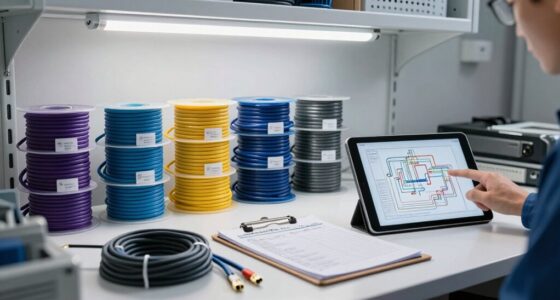

When planning for PoE and high-power devices, it’s essential to develop a clear power budget and network layout that can support their demands without risking overloads. Proper segmentation and device placement help optimize performance and security, but the process can quickly become complex. Understanding these key considerations guarantees your network remains reliable and scalable—yet, the specific steps to achieve this can vary depending on your setup.

Get business pricing on networking and server gear
- Business-only prices and quantity discounts
- Tax-exempt purchasing
- Multiple users, one account, clear invoices
Key Takeaways
- Establish a comprehensive power budget to allocate sufficient PoE capacity for high-power devices.
- Segment the network to isolate high-power devices, ensuring stable operation and security.
- Choose switches with adequate PoE power ratings and plan device placement within infrastructure limits.
- Map out power distribution to prevent overloads and support reliable operation of all devices.
- Optimize cable routing and equipment placement to reduce maintenance complexity and ensure consistent power supply.

Once you’ve established a clear power budget, the next essential consideration is network segmentation. Network segmentation involves dividing your network into smaller, manageable segments to optimize performance and enhance security. For high-power devices, this means isolating critical systems on dedicated segments to prevent power fluctuations or network congestion from affecting other parts of your infrastructure. Segmentation helps contain potential issues, making troubleshooting more straightforward and minimizing downtime. It also allows you to apply targeted security measures, reducing the risk of cyber threats impacting your entire network. When planning for PoE and high-power devices, segmenting your network ensures that each device receives consistent power and bandwidth, which is crucial for maintaining operational efficiency. Proper planning also involves understanding power distribution, which is vital for ensuring your infrastructure can support high-demand devices reliably. Additionally, proper network segmentation complements your power budgeting efforts by aligning device placement with infrastructure capacity. For example, placing high-power devices on switches designed to handle their power requirements prevents overloading and ensures stable operation. This strategic placement also minimizes cable runs and simplifies maintenance, saving you time and resources in the long run. As you plan, keep in mind that not all switches support the same power levels; choosing equipment with sufficient PoE capabilities is essential. Your goal should be to balance power requirements with network performance, ensuring that each device is adequately powered without compromising the overall system.
PoE switch with high power rating
As an affiliate, we earn on qualifying purchases.
As an affiliate, we earn on qualifying purchases.
Frequently Asked Questions
What Are the Common Pitfalls When Planning for High-Power Device Deployment?
When planning for high-power device deployment, you might overlook the importance of a proper power budget and cable management. Failing to accurately calculate your power needs can lead to overloads or insufficient power, causing device failures. Poor cable management results in clutter, overheating, or difficulty troubleshooting. Make certain you assess your power requirements precisely and organize cables neatly to maintain a safe, efficient, and reliable high-power device setup.
How Do Environmental Factors Impact Poe and High-Power Device Performance?
Environmental factors can dramatically affect Poe and high-power device performance, sometimes causing issues that seem like they could shut down the universe. Extreme temperatures, humidity, and dust can hinder power efficiency and thermal management, leading to overheating or electrical faults. You need to guarantee proper ventilation and climate control to maintain ideal operation. Ignoring these factors risks damaging your devices and compromising overall system reliability.
What Are the Cost Considerations for Upgrading Existing Network Infrastructure?
When upgrading your network infrastructure, you should conduct a thorough cost analysis to understand expenses involved. Consider hardware costs, installation, and ongoing maintenance. Budget planning helps you allocate funds effectively, ensuring you don’t overspend. Factor in potential savings from improved performance and energy efficiency. By carefully evaluating these costs, you can make informed decisions that balance your upgrade needs with your financial resources, ensuring a seamless progression.
How Can Future Scalability Be Integrated Into Current Planning Strategies?
To guarantee future scalability, you should incorporate scalability planning into your current strategies. Focus on future proofing networks by choosing adaptable hardware and flexible architecture that can handle increased demand. Regularly evaluate your infrastructure’s capacity, upgrade components proactively, and consider cloud integration for seamless expansion. This proactive approach helps you avoid costly overhauls later, ensuring your network remains efficient and capable of supporting high-power devices and Poe requirements as your needs grow.
What Safety Standards Should Be Adhered to When Installing High-Power Poe Devices?
You must follow strict safety standards when installing high-power PoE devices, especially to prevent catastrophic power surges that could destroy your equipment. Make sure grounding requirements are fully met to avoid dangerous electrical faults. Adhere to IEEE standards, local electrical codes, and manufacturer guidelines. Proper grounding and surge protection are essential to guarantee safety, prevent damage, and maintain reliable operation of your high-power PoE installations.
network segmentation tools for high-power devices
As an affiliate, we earn on qualifying purchases.
As an affiliate, we earn on qualifying purchases.
Conclusion
By carefully planning your PoE and high-power devices, you guarantee a reliable, scalable network that meets your needs today and tomorrow. Don’t overlook the importance of a detailed power budget or proper segmentation; skipping these steps can lead to costly disruptions. Investing time upfront prevents future issues, saves money, and keeps your network running smoothly. Remember, proactive planning is key—your network’s performance depends on it.
PoE cable management accessories
As an affiliate, we earn on qualifying purchases.
As an affiliate, we earn on qualifying purchases.
power distribution units for network infrastructure
As an affiliate, we earn on qualifying purchases.
As an affiliate, we earn on qualifying purchases.
Halloween Picks
halloween
As an affiliate, we earn on qualifying purchases.