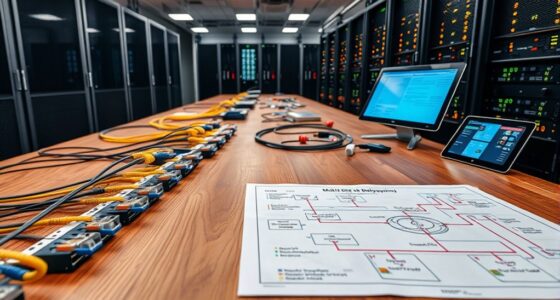
When tenants or teams change, accurate cable records help you guarantee seamless connectivity and avoid service disruptions. Updated records make troubleshooting faster, reducing downtime and costly mistakes. They also prevent accidental disconnections and support security by controlling access. Reliable documentation helps you plan for upgrades and maintain smooth operations. Keeping your records current is essential for service quality and security—stay with us to discover how to manage this process effectively.

Get business pricing on networking and server gear
- Business-only prices and quantity discounts
- Tax-exempt purchasing
- Multiple users, one account, clear invoices
Key Takeaways
- Accurate cable records prevent service interruptions during tenant or team transitions.
- Updated documentation ensures only authorized users retain network access, enhancing security.
- Precise records enable quick troubleshooting, minimizing downtime during staff or tenant changes.
- Reliable data supports billing accuracy and reduces disputes with new tenants or teams.
- Maintaining current records aids in planning infrastructure upgrades and future expansion.

When tenants or team members change, updating cable records promptly is essential to guarantee seamless connectivity and accurate billing. If you neglect to keep your records current, you risk service interruptions that can frustrate new occupants and disrupt daily operations. Accurate cable records serve as the backbone for maintaining service continuity, ensuring that everyone who’s supposed to have access to the network can connect without delay. When records are outdated, you might accidentally disconnect existing tenants or fail to provide necessary access to new ones, leading to unnecessary downtime and complaints. Keeping data accurate in your cable records not only prevents these issues but also helps you respond quickly to any troubleshooting needs. When you have precise information about the cabling infrastructure, resolving problems becomes faster and less costly. Proper documentation of your infrastructure is crucial for effective troubleshooting and maintenance. Additionally, up-to-date infrastructure records help prevent security vulnerabilities that could be exploited by unauthorized individuals. Regularly reviewing these records also supports compliance standards, ensuring your organization adheres to regulatory requirements. Incorporating digital asset management**** practices can further streamline this process and improve overall record accuracy.
The importance of updating cable records goes beyond just avoiding service disruptions. When tenant or team changes occur, inaccurate records can lead to billing errors. You might overcharge or undercharge, which can damage your reputation and cause financial discrepancies. Correct cable records enable you to generate accurate invoices based on actual services provided, preventing disputes and fostering trust with tenants. Additionally, as your organization grows or changes, maintaining current records helps you plan for future upgrades or expansions. You’ll know exactly what infrastructure exists and what needs to be added or modified, saving time and resources. Data accuracy plays a vital role in ensuring operational efficiency and security.
Inaccurate data can also pose security risks. If old tenant information isn’t removed from the system, unauthorized individuals might gain access to sensitive networks or data. Updating your cable records ensures that only authorized personnel and tenants retain access, reinforcing your security protocols. It also helps you stay compliant with regulatory standards that may require detailed documentation of your infrastructure and access controls. Moreover, digital frames and interactive murals are increasingly part of modern wall art, making it even more important to manage the infrastructure supporting these advanced features. Regularly reviewing and updating these records can prevent potential vulnerabilities.
Furthermore, maintaining the integrity of your cable records simplifies asset management. When you know exactly what cabling, equipment, and connections are in place, you can make informed decisions about maintenance, upgrades, or troubleshooting. This level of data accuracy reduces guesswork, minimizes downtime, and improves overall efficiency. When tenants or team members transition, taking the time to update and verify cable records might seem like a small task, but it pays off by preserving service quality, financial accuracy, and security. Ultimately, keeping your cable records current is a proactive step that safeguards your network’s reliability while supporting your operational goals.
cable management documentation software
As an affiliate, we earn on qualifying purchases.
As an affiliate, we earn on qualifying purchases.
Frequently Asked Questions
How Long Should Cable Records Be Retained After a Tenant Moves Out?
You should retain cable records, including cable inventory and related documentation, for at least seven years after a tenant moves out. This guarantees record accuracy and helps resolve any disputes or audits that may arise later. Keeping these records long enough allows you to track changes, verify installations, and maintain compliance with legal or contractual requirements. Regularly updating and securely storing your cable records safeguards your operational integrity over time.
Who Is Responsible for Updating Cable Records During Team Changes?
During tenant relocation, you’re responsible for updating cable records to maintain record accuracy. Promptly, you should notify the relevant team or department to guarantee the details are precise and current. This proactive approach prevents problems and preserves proper documentation. By taking charge of record updates, you keep cable data dependable, diminish misunderstandings, and facilitate seamless shifts, strengthening system security and supporting smooth tenant or team changes.
Can Outdated Cable Records Cause Security Issues?
Outdated cable records can definitely cause security vulnerabilities. If your records aren’t current, unauthorized individuals might retain access or sensitive data could be exposed, risking security breaches. Accurate data is essential to prevent gaps in security. Regularly updating cable records guarantees you maintain control over access points, reducing vulnerabilities. Neglecting this can compromise your network’s integrity and expose your organization to avoidable risks.
What Are the Legal Requirements for Maintaining Cable Records?
You need to guarantee cable documentation complies with legal standards, which often require maintaining accurate records of all installations and modifications. Record accuracy is vital for security and compliance, so you should regularly update cable records to reflect any changes. Laws may vary by jurisdiction, but generally, you’re responsible for keeping detailed, precise documentation to support safety, accountability, and legal obligations, especially during tenant or team shifts.
How Do Cable Records Impact Troubleshooting or Service Disputes?
You might think cable records are just paperwork, but they’re vital for troubleshooting and resolving disputes. Accurate records help you quickly pinpoint service issues, ensuring better service accuracy. When a problem arises, having detailed records speeds up issue resolution, saving time and reducing frustration. Without proper documentation, you risk misdiagnosing problems or facing disputes, making cable records essential for maintaining smooth, reliable service and customer satisfaction.
network infrastructure cable records
As an affiliate, we earn on qualifying purchases.
As an affiliate, we earn on qualifying purchases.
Conclusion
Keeping cable records is like tending a garden; it guarantees every vine is accounted for, preventing chaos when tenants or teams shift. When you maintain meticulous records, you’re cultivating a landscape where shifts bloom smoothly, and connections remain strong. Without this careful stewardship, the tangled roots of forgotten cables threaten the harmony of your space. So, treat your records as the essential soil—nurturing order, growth, and resilience amid change.
As an affiliate, we earn on qualifying purchases.
network troubleshooting cable tester
As an affiliate, we earn on qualifying purchases.
As an affiliate, we earn on qualifying purchases.
Halloween Picks
halloween
As an affiliate, we earn on qualifying purchases.