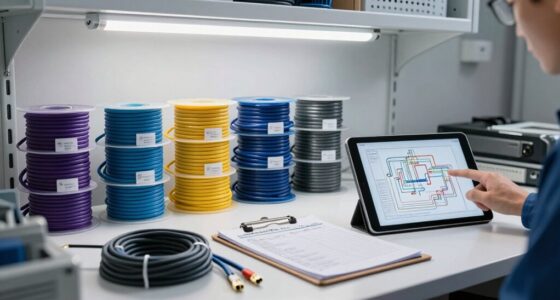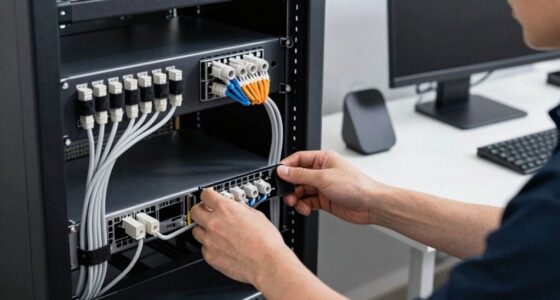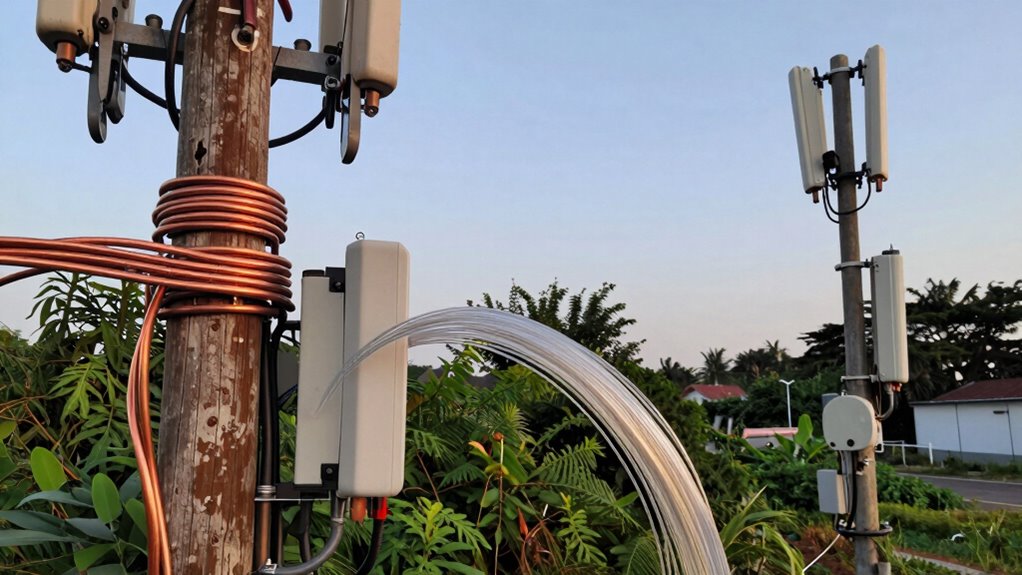

To compare the real costs of copper and fiber deployments, consider not just the initial expenses but also long-term factors like durability, maintenance, scalability, and reliability. Copper may seem cheaper at first, but fiber’s resistance to interference and longer lifespan reduce ongoing repair and replacement costs, making it more cost-effective over time. By evaluating these aspects carefully, you’ll discover which option truly fits your needs. Keep exploring to learn more about their detailed impacts.

Get business pricing on networking and server gear
- Business-only prices and quantity discounts
- Tax-exempt purchasing
- Multiple users, one account, clear invoices
Key Takeaways
- Evaluate initial installation costs versus long-term maintenance and replacement expenses for both copper and fiber.
- Consider durability, interference resistance, and lifespan to assess ongoing operational costs.
- Analyze scalability and future-proofing capabilities to determine adaptability to increasing data demands.
- Compare reliability and downtime costs, including impacts on productivity and repair frequency.
- Account for technological advancements and potential future upgrades influencing total ownership costs.
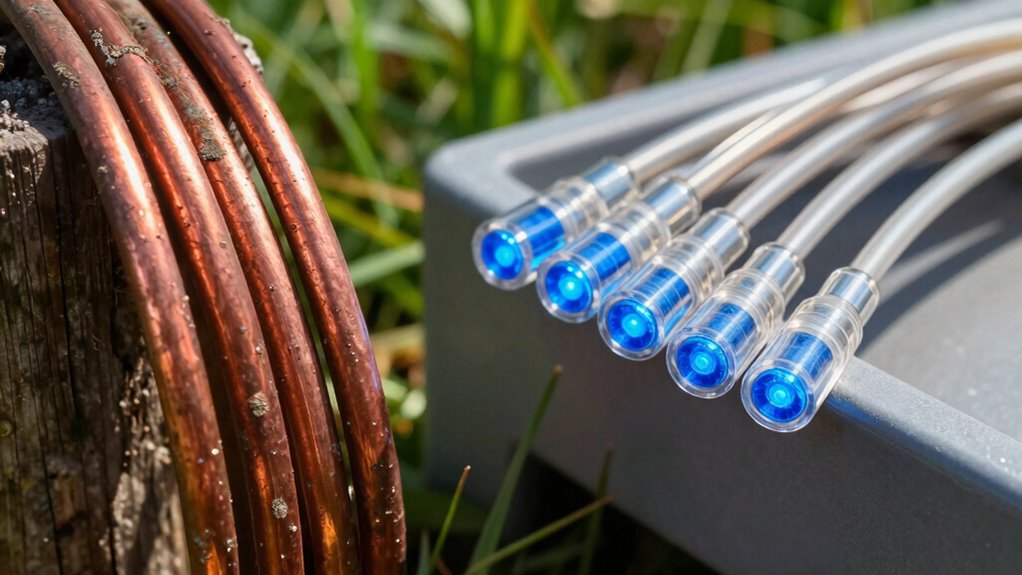
When evaluating the true costs of deploying copper versus fiber networks, it’s essential to look beyond initial expenses and consider long-term factors. While copper might seem cheaper upfront, its durability and ongoing maintenance often make fiber a more cost-effective choice over time. Infrastructure longevity plays a significant role here. Copper cables tend to degrade faster due to corrosion, interference, and physical wear, meaning you’ll need to replace or upgrade them sooner. Fiber optic cables, on the other hand, are built with durability in mind, resistant to electromagnetic interference and capable of lasting for decades with proper installation. This difference in longevity impacts your total cost of ownership, as fewer replacements and repairs translate into savings over the network’s lifespan.
Fiber offers greater longevity and lower maintenance costs, making it a smarter long-term investment over copper networks.
Maintenance expenses are another vital aspect to consider. Copper networks typically require more frequent inspections, repairs, and upgrades because they’re more vulnerable to environmental damage and signal degradation. These ongoing costs can accumulate quickly, especially in challenging conditions or remote locations. Fiber networks tend to demand less maintenance, thanks to their robust construction and immunity to interference. Although fiber installation can initially be more expensive, the reduced need for repairs and routine upkeep often offsets this investment over time. When you factor in the recurring costs of maintaining copper infrastructure, fiber’s long-term savings become clear. Additionally, technological advancements in fiber deployment continue to reduce installation costs, making it an increasingly attractive option. As technology progresses, the cost-efficiency of fiber deployment continues to improve, further supporting its long-term benefits.
You should also consider scalability and future-proofing. Fiber networks provide higher bandwidth and are better prepared to handle increasing data demands without substantial upgrades. Copper lines, limited by their physical properties, often require costly overhauls or additional infrastructure to meet growing needs. This means that what might appear as a cheaper solution now could cost you more down the line, especially if your organization’s data requirements expand. Additionally, infrastructure durability plays a critical role in ensuring long-term performance and cost savings. Investing in durable infrastructure not only prolongs the lifespan of your network but also minimizes unexpected expenses caused by damage or obsolescence. Furthermore, advancements in fiber technology continue to enhance its performance and lifespan, making it a more resilient choice for future needs. In this context, the evolving digital landscape underscores the importance of choosing a network infrastructure that can adapt and grow with technological innovations.
Finally, don’t forget to evaluate the overall reliability and downtime costs associated with each option. Copper networks are more susceptible to outages caused by interference or physical damage, leading to potential productivity losses and repair expenses. Fiber offers a more stable connection, reducing downtime and the associated costs. When assessing the true costs, it’s not just about the initial price but how these factors influence your long-term operational expenses. In the end, investing in fiber can lead to lower maintenance expenses, greater infrastructure longevity, and better scalability—making it a smarter choice for sustainable, future-ready networks.
fiber optic cable installation kit
As an affiliate, we earn on qualifying purchases.
As an affiliate, we earn on qualifying purchases.
Frequently Asked Questions
How Do Maintenance Costs Impact Overall Deployment Expenses?
Maintenance costs greatly impact overall deployment expenses because they influence your ongoing expenses. By performing a thorough cost analysis, you’ll understand these long-term costs better. Regular maintenance scheduling helps prevent costly repairs or replacements, ultimately reducing total expenses. Ignoring maintenance can lead to unexpected breakdowns, increasing costs. So, factoring in maintenance costs and scheduling effectively guarantees your deployment remains cost-efficient over its lifespan.
What Are the Environmental Considerations for Copper Versus Fiber?
You should consider that copper cables are more susceptible to electromagnetic interference, which can affect performance and durability. Additionally, recycling and disposal are essential since copper is recyclable but can cause environmental harm if not properly managed. Fiber optics, on the other hand, have minimal electromagnetic interference and are easier to recycle, making them a more environmentally friendly choice. Your decision should factor in these environmental impacts for a sustainable deployment.
How Do Future Scalability and Upgrades Affect Total Costs?
Future scalability and upgrades considerably impact total costs because you need to contemplate the technology lifespan and material durability of each option. Fiber generally offers a longer lifespan and better durability, reducing future upgrade expenses. Copper, however, may require more frequent replacements or upgrades, increasing long-term costs. When evaluating, think about how each infrastructure’s ability to adapt to technological advances affects your investment’s overall value.
What Is the Impact of Geographic Location on Deployment Costs?
Geographic location considerably impacts deployment costs due to geographic challenges and location-specific costs. If you’re in a remote or rugged area, expect higher expenses for labor, equipment, and permits. Urban locations might offer easier access and infrastructure, reducing costs. Consider these factors when planning your deployment, as tough terrains or dense city environments can increase overall expenses and influence your choice between copper and fiber options.
How Do Government Policies Influence Deployment Financials?
Have you ever wondered how government policies shape deployment costs? They can considerably influence your project through regulatory incentives and subsidy programs, making fiber or copper more affordable. These policies reduce financial barriers, encouraging infrastructure expansion. By leveraging government support, you can optimize your deployment budget and accelerate rollout. Isn’t it smart to tap into these incentives to maximize your investment and ensure wider access?
copper network cable repair tools
As an affiliate, we earn on qualifying purchases.
As an affiliate, we earn on qualifying purchases.
Conclusion
So, next time you’re dazzled by shiny fiber or nostalgic for good old copper, remember: it’s not just about the initial price tag. Dig a little deeper—costs, maintenance, and future-proofing matter more than you think. After all, choosing the cheapest option might turn out to be the most expensive mistake. Don’t let short-term savings fool you; in the end, only a true cost comparison can save you from a fiber-fueled financial fiasco.
As an affiliate, we earn on qualifying purchases.
network cable tester for copper and fiber
As an affiliate, we earn on qualifying purchases.
As an affiliate, we earn on qualifying purchases.
Halloween Picks
halloween
As an affiliate, we earn on qualifying purchases.