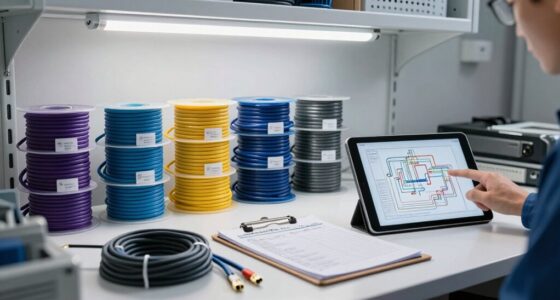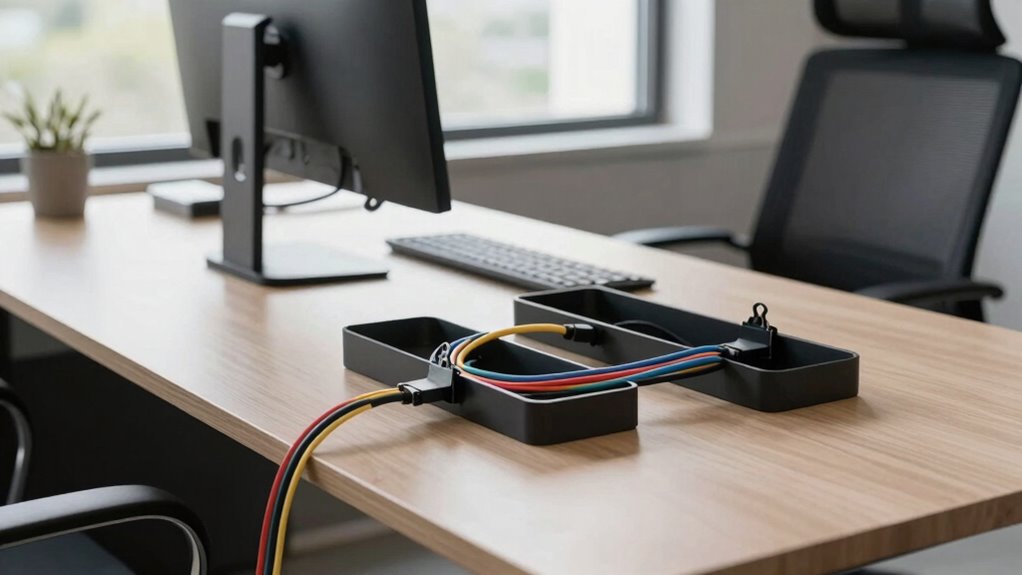
When designing for cable accessibility, focus on planning clear pathways and placing outlets and power strips within easy reach. Secure cables properly using trays or clips and avoid hiding cords behind furniture or in tight spots. Think about future needs by designing routes that allow for easy upgrades and maintenance. Keep pathways open and cables organized to prevent hazards. If you want to know more, you’ll discover useful tips to make your setup both safe and flexible.

Get business pricing on networking and server gear
- Business-only prices and quantity discounts
- Tax-exempt purchasing
- Multiple users, one account, clear invoices
Key Takeaways
- Position outlets and power sources at accessible heights for easy reach and maintenance.
- Plan clear, unobstructed pathways for quick access and adjustments.
- Use cable management solutions that allow for future modifications and simple re-routing.
- Label or color-code cables to facilitate quick identification and troubleshooting.
- Incorporate outdoor-rated wiring and conduits for durability and safe maintenance in external environments.

When designing spaces that rely on cable systems, thinking about accessibility from the start is crucial. You want to guarantee that wire management is straightforward, safe, and adaptable to future needs. Proper planning minimizes clutter, reduces hazards, and keeps your workspace efficient. As you consider cable routes, pay attention to where cords will run, how they’ll be secured, and how easily they can be accessed for maintenance or adjustments. This proactive approach helps prevent tangled wires and accidental disconnections, which can disrupt your workflow or cause safety issues. Incorporating accessible pathways for cables also means thinking about the height and placement of outlets, power strips, and cable conduits. If these are hidden behind furniture or placed in inconvenient spots, you’ll find yourself struggling to reach or troubleshoot cables later. So, plan for open, clear routes that allow quick access without having to move large furniture or equipment. Additionally, considering fire pits or outdoor ovens, which often require specialized wiring, can influence how you route and secure cables to ensure safety and durability in outdoor environments. Furthermore, understanding the importance of cable management solutions can help you choose the most effective methods for organizing and securing cables. Using well-designed cable pathways also enhances overall safety and makes future modifications easier. Proper calibration of cable management systems ensures consistent performance and reduces wear on the cables over time. Ergonomic considerations play a crucial role in making your cable system user-friendly. Think about how users will interact with the cables daily. For example, if someone needs to plug or unplug devices frequently, outlets should be positioned at comfortable heights, avoiding awkward bending or stretching. Use cable management solutions like trays, clips, and sleeves to keep cords organized and out of the way. This not only prevents tripping hazards but also reduces strain on the user’s body. When cables are neatly arranged, you minimize unnecessary movements and awkward positions, promoting better ergonomics. Keep in mind that in shared workspaces, accessibility features like color coding or labeling can make it easier for individuals to identify and handle cables quickly, saving time and effort. Considering wire routing techniques can further enhance the longevity and safety of your cable system, especially when planning for future upgrades or expansions.
As an affiliate, we earn on qualifying purchases.
Frequently Asked Questions
What Are Common Mistakes to Avoid in Cable Accessibility Design?
You should avoid neglecting cable management and ignoring accessibility guidelines. Don’t place cables in hard-to-reach spots or create tangled messes that hinder access. Overlooking proper cable pathways can cause safety hazards and maintenance issues. Make certain your design incorporates clear, accessible routes for cables, following established accessibility guidelines. By planning ahead, you improve usability and safety, preventing common mistakes that limit cable accessibility and complicate future adjustments or repairs.
How Does Cable Accessibility Impact Overall User Safety?
Imagine a sudden emergency—your cable setup is vital. When cables are accessible, you quickly identify hazards, reducing trip risks and enabling swift responses. This enhances emergency preparedness and minimizes injuries. Ergonomic considerations guarantee cables are easy to reach and manage, preventing strain and accidents. Prioritizing cable accessibility directly boosts overall user safety, ensuring everyone can respond confidently during urgent situations and maintain a safe, functional environment.
Are There Industry Standards for Cable Accessibility During Design?
Yes, there are industry standards for cable accessibility during design, focusing on standard compliance and ergonomic considerations. You should follow guidelines from organizations like OSHA and ANSI, which specify safe cable routing and accessibility for maintenance. Prioritizing ergonomic considerations guarantees cables are easy to reach and adjust, reducing strain and safety risks. Incorporating these standards early in your design process helps create safer, more efficient environments for users and maintenance personnel alike.
How Can I Balance Aesthetics With Cable Accessibility?
To balance aesthetics with cable accessibility, prioritize cable concealment without sacrificing functionality. Use aesthetic integration techniques like concealed channels, cable covers, or raceways that blend seamlessly with your design. Position access points strategically for easy maintenance, ensuring they don’t disrupt visual harmony. By thoughtfully combining concealment methods with accessible layouts, you can maintain a sleek look while ensuring cables are reachable when needed, creating a harmonious and practical space.
What Tools Can Help Evaluate Cable Accessibility in My Design?
You can use tools like cable routing software to visualize and plan cable paths effectively, guaranteeing accessibility. Additionally, conducting accessibility testing with physical mock-ups or virtual simulations helps identify potential issues early. These tools allow you to evaluate how easily cables can be routed and maintained, balancing aesthetics with functional accessibility. Incorporating them into your design process streamlines decision-making and ensures your setup remains user-friendly and visually appealing.
As an affiliate, we earn on qualifying purchases.
Conclusion
Thinking about cable accessibility isn’t just a good idea—it’s essential for a functional, user-friendly design. By planning ahead and considering how users will interact with cables, you create a space that’s safer and more convenient. So, when you’re designing, ask yourself: am I making this easy for everyone to access and use? After all, a well-thought-out cable setup can make all the difference in everyday comfort and safety.
As an affiliate, we earn on qualifying purchases.
As an affiliate, we earn on qualifying purchases.
Evergreen bestsellers Picks
bestsellers
As an affiliate, we earn on qualifying purchases.