
To build a network plan for high-density device areas, you should analyze the space, user count, and device types to place access points effectively. Stagger AP locations, use the right antenna types, and optimize power levels to guarantee coverage while minimizing interference. Manage spectrum with dual or tri-band options and adapt dynamically to congestion. Monitoring and adjusting your setup regularly will keep the network efficient. Keep exploring to uncover detailed strategies that can maximize your network’s performance.

Get business pricing on networking and server gear
- Business-only prices and quantity discounts
- Tax-exempt purchasing
- Multiple users, one account, clear invoices
Key Takeaways
- Analyze physical space, user density, and device types to determine optimal access point placement and coverage.
- Deploy dual-band or tri-band access points with strategic channel planning to reduce spectrum congestion.
- Use directional antennas and filtering techniques to focus signals and minimize interference.
- Implement real-time monitoring and dynamic adjustments for interference mitigation and network performance.
- Continuously review and optimize network layout, spectrum allocation, and security measures to sustain high-density performance.

Have you ever wondered how networks handle areas crowded with countless devices? In high-density environments like stadiums, airports, or urban centers, managing a successful network requires careful planning. One of the biggest challenges is dealing with device interference, which occurs when multiple devices compete for the same wireless signals, causing disruptions and slowing down connections. To combat this, spectrum management becomes essential. Spectrum management involves allocating and optimizing frequency bands to minimize overlapping signals, guaranteeing devices can communicate effectively without stepping on each other’s toes.
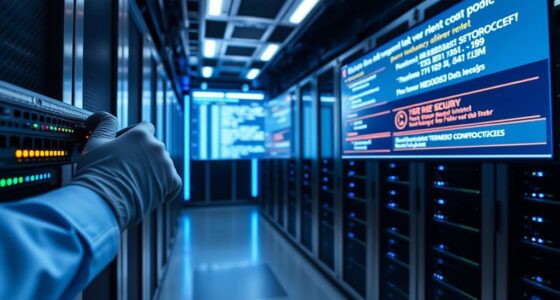
Designing a network for high-density areas starts with understanding the environment. You need to analyze the physical space, the number of expected users, and their device types. This information helps determine the best placement for access points (APs). Proper placement ensures overlapping coverage zones are minimized, reducing interference. It’s also critical to avoid placing APs too close together, as this can lead to co-channel interference, where signals clash, degrading performance. Instead, stagger their locations and adjust transmission power to balance coverage and interference. Additionally, considering antenna types can improve signal distribution and reduce interference further. Utilizing frequency planning techniques can further optimize spectrum use and reduce congestion. Implementing interference mitigation strategies, such as directional antennas and filtering, can also help improve overall network performance.
Another essential aspect is frequency planning. You should consider deploying dual-band or even tri-band access points that operate on multiple frequencies, such as 2.4 GHz and 5 GHz bands. The 2.4 GHz band covers larger areas but is more crowded and prone to interference, while 5 GHz offers higher speeds and less congestion. By intelligently assigning devices to different bands based on their needs, you can alleviate spectrum congestion. Additionally, using channel bonding and dynamic channel assignment helps optimize spectrum utilization, ensuring each device gets a clear path to communicate. Incorporating spectrum management techniques can further improve overall network efficiency.
Implementing advanced network management tools can further enhance performance. These tools monitor real-time network activity, identify sources of interference, and automatically adjust settings to optimize spectrum use. They can also detect rogue devices or sources of interference, allowing you to address issues proactively. Security measures, such as encryption and authentication, are essential to prevent unauthorized access, which can contribute to interference and network degradation. Regularly updating firmware and configurations also helps mitigate vulnerabilities that could affect spectrum performance.
Ultimately, building a network for high-density device areas requires ongoing oversight. Regularly reviewing performance metrics, updating spectrum allocations, and adjusting access point placements ensure the network adapts to changing demands. By focusing on effective spectrum management and minimizing device interference, you create a resilient, high-performing network that keeps everyone connected smoothly, no matter how crowded the environment gets.
As an affiliate, we earn on qualifying purchases.
Frequently Asked Questions
What Are the Best Tools for High-Density Network Planning?
You should use tools like Ekahau and iBwave for high-density network planning. These tools excel in wireless optimization and spectrum management, helping you analyze coverage, capacity, and interference. They provide detailed simulations to guarantee your network handles many devices efficiently. By leveraging these tools, you can design a reliable, high-performance network that minimizes congestion and maximizes user experience in dense environments.
How Do Interference and Signal Overlap Impact Network Performance?
Interference can be a double-edged sword, seriously affecting your network’s performance. Signal overlap causes devices to compete for the same bandwidth, leading to slower speeds and dropped connections. To keep things running smoothly, you need effective interference mitigation strategies. By carefully managing channel allocation and reducing signal overlap, you guarantee a stronger, more reliable network, even in high-density areas where many devices are vying for attention.
What Are Cost Considerations for Deploying Dense Networks?
When deploying dense networks, you should consider the cost analysis and budget planning carefully. Dense networks require more access points, which increases hardware and installation expenses. You’ll need to account for ongoing maintenance, spectrum management, and potential interference mitigation. Prioritize investments based on your capacity needs, and balance performance with budget constraints to optimize your deployment cost-effectively. Proper planning guarantees you maximize coverage without overspending.
How to Ensure Scalability for Future Device Increases?
To guarantee scalability for future device increases, you should implement future-proofing strategies like modular hardware and flexible architecture. Regularly monitor scalability metrics such as network capacity, throughput, and latency to identify growth trends. Plan for incremental upgrades and ensure your network design accommodates additional devices without major overhauls. By proactively addressing these factors, you’ll create a resilient, adaptable network ready to handle future demands seamlessly.
What Are Common Troubleshooting Challenges in High-Density Areas?
In high-density areas, you often face unexpected signal interference, making troubleshooting tricky. Device density can overwhelm your network, leading to dropped connections and slow speeds. You might struggle to pinpoint the source of interference or overload, creating frustrating delays. Staying vigilant and proactive helps—monitor signal quality, optimize channel assignments, and manage device load. This way, you can identify issues faster and keep your network running smoothly despite the chaos.
As an affiliate, we earn on qualifying purchases.
Conclusion
Think of your network as a garden, where each device is a blooming flower needing careful tending. By planning thoughtfully, you create a lush landscape where connections flourish, and interference is kept at bay. Your strategic layout is the sunlight and water, nurturing a vibrant, resilient ecosystem. With patience and precision, you’ll harvest a thriving network that’s as beautiful and bountiful as a well-tended garden, ready to blossom in even the densest of device areas.
As an affiliate, we earn on qualifying purchases.
As an affiliate, we earn on qualifying purchases.
Halloween Picks
halloween
As an affiliate, we earn on qualifying purchases.