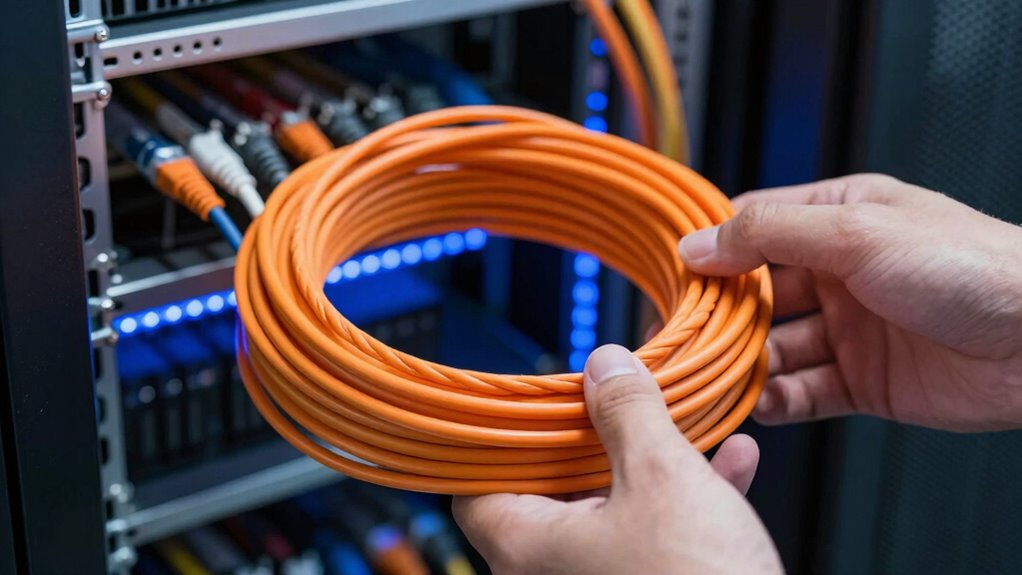

When planning new cable runs, you should always consider leaving spare capacity for future growth and upgrades. This means choosing higher-capacity cables, installing extra runs, and ensuring your physical pathways can support additional cables. Proper planning helps prevent costly rewiring later and keeps your network flexible and stable as demands increase. Keep an eye on your current and future needs, and you’ll find ways to make your setup more adaptable and resilient over time.
Key Takeaways
- Plan for future expansion by adding extra cable runs and higher-capacity cables during installation.
- Leave sufficient physical space and slack to accommodate additional cables easily.
- Incorporate spare capacity to handle increased data loads and new devices without upgrades.
- Design network pathways with flexibility to allow for seamless future modifications.
- Regularly review and adjust capacity planning to ensure ongoing network scalability.
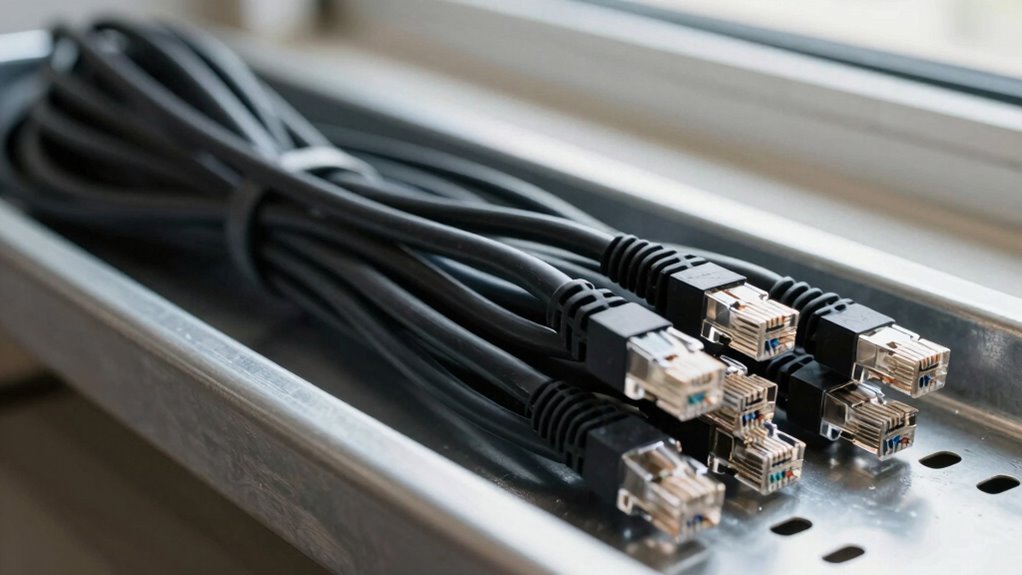
Having some spare capacity in cable runs is essential for future upgrades and troubleshooting. When you’re planning new cable installations, it’s tempting to focus solely on current needs, but leaving room for growth can save you significant time and hassle later. Properly considering spare capacity ensures you can handle additional devices, increased data loads, or new technologies without having to tear into your wiring again. This foresight is especially critical for load balancing, where evenly distributing traffic across multiple cables prevents bottlenecks and maintains network stability. By allocating extra capacity, you give yourself the flexibility to adjust loads as demands evolve, avoiding potential performance issues.
Thinking about future expansion is key. You want your cable infrastructure to be scalable, so it can accommodate growth without requiring costly or disruptive upgrades. When selecting cable types and sizes, consider not just what you need today but also what you might need in the next few years. This might mean choosing higher-capacity cables or installing additional runs alongside your current setup. Planning for future expansion also involves considering how your cabling will fit within your physical space—leaving enough slack and proper pathways to allow for easy addition of new cables later on. It’s better to invest a little more now than to face a complete overhaul when your network needs grow. Additionally, understanding your spare capacity can help you optimize your overall network design, ensuring it remains adaptable to changing demands. Recognizing future-proofing as a key component of your cabling strategy can lead to more resilient and efficient network performance over time. Moreover, regularly reviewing your network’s capacity requirements can help you stay ahead of potential bottlenecks before they impact performance.
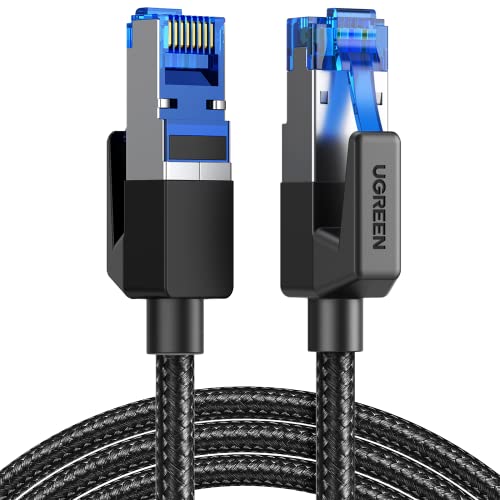
UGREEN Cat 8 Ethernet Cable 6FT, High Speed Braided 40Gbps 2000Mhz Network Cord Cat8 RJ45 Shielded Indoor Heavy Duty LAN Cables Compatible with Gaming PC PS5 PS4 PS3 Xbox Modem Router 6FT
40 Gbps 2000 Mhz High Speed: The Cat 8 ethernet cable support max. 40 Gbps data transfer and…
As an affiliate, we earn on qualifying purchases.
As an affiliate, we earn on qualifying purchases.
Frequently Asked Questions
How Does Future Expansion Impact Current Cable Capacity Planning?
Future expansion considerably influences your current cable capacity planning by prompting you to incorporate cable redundancy and prioritize capacity optimization. You should leave extra room in your runs to accommodate future devices or upgrades, avoiding bottlenecks later. Strategic planning ensures your network remains scalable, reliable, and easy to upgrade, minimizing disruptions. This proactive approach helps balance current needs with future growth, saving costs and reducing the risk of network limitations down the line.
What Are the Risks of Overestimating Spare Capacity?
Overestimating spare capacity is like building a fortress with too many redundant pathways—it wastes resources and inflates costs. You risk tying up funds on unnecessary capacity buffers that could be better allocated elsewhere. Plus, excess spare capacity can lead to increased maintenance and management complexity, making it harder to identify real issues. Ultimately, overestimating can slow your network’s agility, hampering growth and adaptability.
How Often Should Cable Capacity Be Reassessed?
You should reassess cable capacity regularly, ideally every 1-2 years, to guarantee ideal cable redundancy and capacity redundancy. Changes in your network’s load or infrastructure can impact spare capacity, so frequent evaluations help prevent overloading and maintain reliable performance. By periodically reviewing your cable setup, you can identify when upgrades are necessary, ensuring sufficient capacity redundancy and avoiding potential failures or bottlenecks in your system.
What Tools Are Best for Measuring Cable Capacity?
You should use specialized tools for measuring cable capacity, like cable testers and network analyzers, to guarantee accurate results. These tools perform cable testing to evaluate current capacity and identify potential issues. Incorporate capacity planning software to analyze test data and project future needs, helping you decide if additional cables are necessary. Regular testing and capacity planning keep your network reliable and scalable, avoiding bottlenecks and downtime.
How Does Environmental Change Affect Spare Capacity Requirements?
Environmental factors are like the weather for your cable infrastructure—shifting conditions that can expand or shrink your spare capacity needs. When temperatures rise, cables may need more room for heat dissipation, while humidity can cause corrosion, reducing effective capacity. By understanding these environmental influences, you can optimize capacity more accurately, ensuring your cable runs remain reliable and efficient amid changing conditions. This is key for smart capacity optimization.
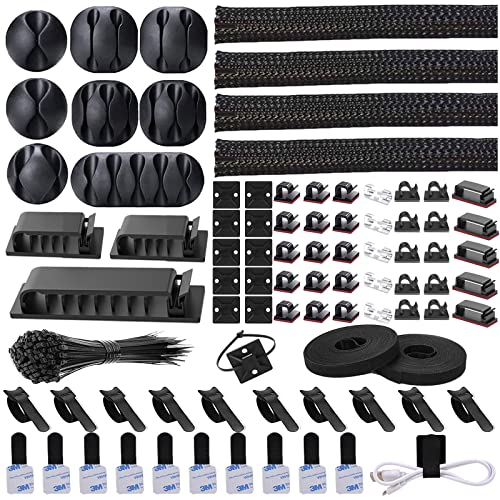
N NOROCME 192 PCS Cable Management Kit 4 Wire Organizer Sleeve,11 Cable Holder,35Cord Clips 10+2 Roll Cable Organizer Straps and 100 Fastening Cable Ties for Computer TV Under Desk, black,clear
Cable Management Kit: 4pcs Cable Sleeves( 20 in L x 0.4 in w), 20pcs reusable wire ties,35Cable Clips…
As an affiliate, we earn on qualifying purchases.
As an affiliate, we earn on qualifying purchases.
Conclusion
Think of spare capacity in cable runs as your safety net, ready to catch you when you need to expand or upgrade. It’s like planting a few extra seeds today, so when tomorrow’s growth comes, you’re prepared without starting from scratch. By planning ahead, you avoid the headache of re-wiring later. Keep this buffer in mind, and you’ll build a network that’s flexible and resilient—ready to grow with your needs, like a sturdy tree in a changing landscape.

Cable Matters 200-Pack Nail-in Cable Clips Cord Organizer, 7mm / 0.27 inches, Ethernet Cable Wall Clip, Wire Wall Clips, White
Nail-in cable organizer provides snug and secure placement of an LMR 240, RG8X, RG58 or RG59 coax cable,…
As an affiliate, we earn on qualifying purchases.
As an affiliate, we earn on qualifying purchases.

BIQU 2PCS Panda AMS Slack 2/5-pin 11.81Inch Upgrade Internal Extension Cable Kit, for Bambu-Lab P1S/P1P/X1C 3D Printers Plug in Play Highly Stable Connection with AMS Original Port
Customized Mold Making: BIQU Panda AMS Slack made of High-quality cable can better connect AMS to transmit data…
As an affiliate, we earn on qualifying purchases.
As an affiliate, we earn on qualifying purchases.